
Beim Kauf von industriellem Titan entscheidet nicht das Wort Titan über die Bestellung, sondern ob Grade, Form, Abmessungen und Korrosionsbeanspruchung übereinstimmen. Diese Seite behandelt Titanelektroden, einschließlich platinbeschichteter Elektroden, Titanrohr und Titanplatte in den gängigen Graden (Grade 2, 5, 7), metrische Anfragefelder, die UNS/ASTM-Querverweise und das EN 10204 3.1-Abnahmeprüfzeugnis. Sie richtet sich an Technik und Einkauf, nicht an Konsumgüter.
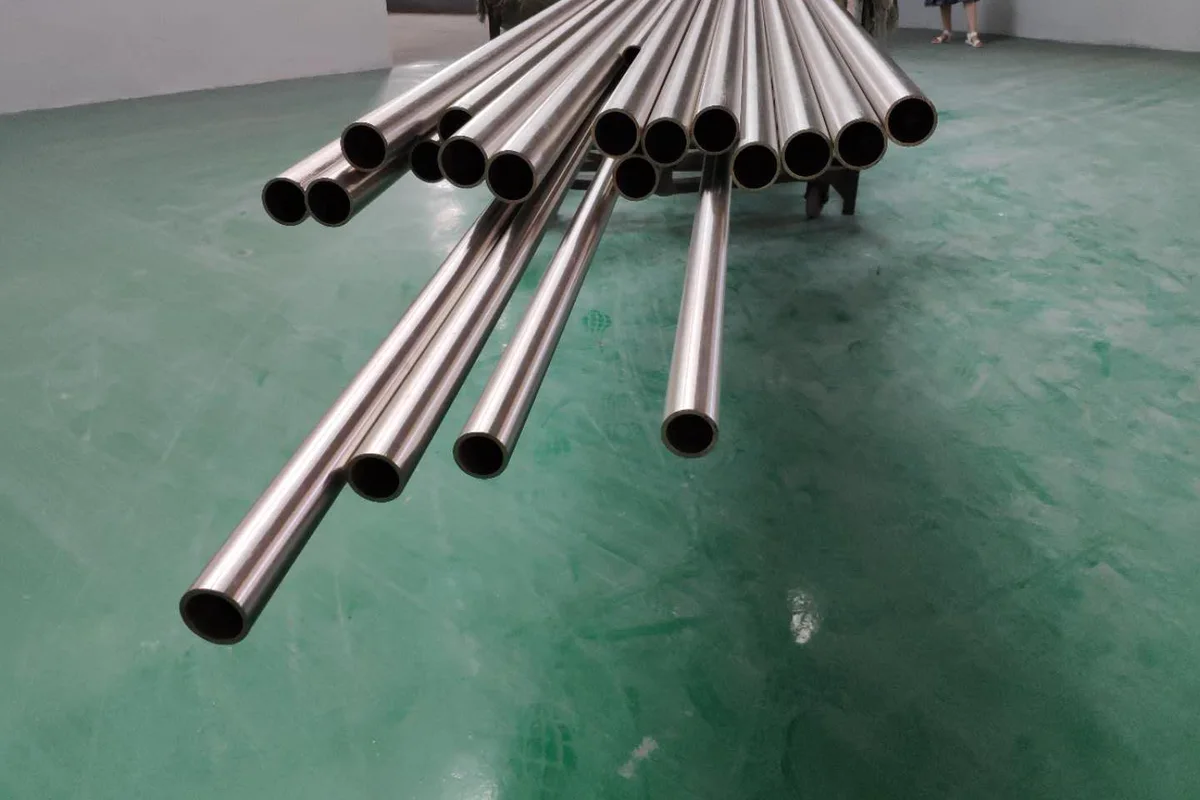
Titanelektroden und platinbeschichtete Titananoden
Titan ist ein gängiges Substrat für Elektroden in der elektrochemischen Verarbeitung, galvanischen Beschichtung und im kathodischen Schutz, da es in vielen chloridhaltigen Umgebungen einen schützenden Oxidfilm aufrechterhalten kann. Die Beschichtung bestimmt die Funktion: Eine platinbeschichtete Titananode wird zur Beschichtung und Elektrolyse eingesetzt, während eine MMO-Anode (Mischmetalloxid, zum Beispiel Ru-Ir) für die Chloralkali-Produktion und den kathodischen Schutz eingesetzt wird.
| Form | Norm, die der Leitfaden nennt |
|---|---|
| Platte | ASTM B265 |
| Rohr | ASTM B338 |
| Stange | ASTM B348 |
- Platinbeschichtete Titananode für galvanische Beschichtung und Elektrolyse, siehe platinbeschichtete Titananode.
- MMO-Ru-Ir-Anode für Chloralkali und kathodischen Schutz, siehe Ru-Ir Titananode.
Das Elektrodensubstrat ist üblicherweise Titanplatte oder -stab in Grade 1 oder Grade 2; die Beschichtung wird für die elektrochemische Umgebung separat festgelegt.
Gängige Güten für Rohr und Platte
Industrielles Titan besteht überwiegend aus Reintitan und wenigen Legierungen; der Grade wird nach Korrosions- und Festigkeitsbedarf gewählt, nicht danach, welcher Grade die höchste Nummer trägt.
| Güte | UNS | Eigenschaften und Verwendung |
|---|---|---|
| Grade 2 (CP) | R50400 | Standardwerkstoff für Chemie, Meerwasser und Wärmetauscher; gute Korrosionsbeständigkeit, leicht zu schweißen und umzuformen |
| Grade 5 (Ti-6Al-4V) | R56400 | Hohe Festigkeit für Strukturteile; geringere Korrosionsbeständigkeit als CP |
| Grade 7 (Ti-Pd) | R52400 | CP-Titan plus Palladium; wird geprüft, wenn eine bessere Korrosionsbeständigkeit als Grade 2 in reduzierenden Säuren wie HCl oder H2SO4 benötigt wird |
Normen nach Form: Platte ASTM B265, Rohr ASTM B338, Stab ASTM B348; das EN 10204 3.1 Zeugnis wird auf internationalen Märkten verwendet. Für Wärmetauscherarbeiten sind die beiden üblicherweise zusammen angebotenen Artikel die Grade 2 Titan-Rohrboden und den Titan-Rohrbündelwärmetauscher Baugruppe.
So geben Sie metrische RFQ-Abmessungen an
Vietnamesische Käufer suchen und fragen überwiegend nach metrischen Größen (Durchmesser, Dicke) an. Damit ein Lieferant die Norm, Toleranz und den Herstellweg prüfen kann, geben Sie die folgenden Felder anstatt nur "titanium tube" oder "titanium plate" an:
| Form | Anzugebende RFQ-Felder | Norm |
|---|---|---|
| Titanrohr | Außendurchmesser (OD/phi), Wanddicke, Länge, nahtlos oder geschweißt, Toleranz | ASTM B338 |
| Titanplatte | Dicke, Breite x Länge, Toleranz, Oberflächenzustand und Menge | ASTM B265 |
| Titanstab | Durchmesser, Länge, Materialzustand, Toleranz und Oberflächenzustand | ASTM B348 |
Für Meerwasser- und Chemieeinsatz finden Sie die Logik zur Grade-Auswahl in unserem Leitfaden zur Meerwasser-Korrosionsbeständigkeit.
Werkstoffzeugnis: Was bei der Einfuhr zu prüfen ist
Bei Lieferungen von Titanelektroden, Rohren und Platten lesen Sie das Prüfzeugnis gegen die Bestellung, die bestellte Produktnorm und den tatsächlich angegebenen Dokumenttyp. Ein EN 10204 3.1 Zeugnis enthält die spezifischen Prüfergebnisse für das gelieferte Material und wird durch den vom Fertigungsbereich unabhängigen bevollmächtigten Prüfbeauftragten des Herstellers validiert. Die Rückverfolgbarkeitskennung muss das Dokument mit dem gelieferten Material verknüpfen. Wenn 3.2 oder eine andere unabhängige Prüfung erforderlich ist, definieren Sie die verantwortlichen Parteien, Überwachungspunkte, Berichte und den Termin in der RFQ. Die vollständige Feldliste für RFQs finden Sie in unserem Checkliste für Titanstab-Anfragen.
Häufig gestellte Fragen
Wofür wird eine platinbeschichtete Titananode verwendet?
Das Titansubstrat bleibt in einer chloridhaltigen elektrochemischen Umgebung stabil, während die Platinbeschichtung die Anodenoberfläche für Galvanik und Elektrolyse bereitstellt. Für die Chloralkaliproduktion und den kathodischen Schutz wird üblicherweise eine MMO Ru-Ir Anode anstelle von Platin verwendet.
Was ist der Unterschied zwischen Titan Grade 2 und Grade 5?
Grade 2 ist technisch reines Titan mit guter Korrosionsbeständigkeit und mittlerer Festigkeit und der Standardwerkstoff für Meerwasser- und Chemieeinsatz; Grade 5 (Ti-6Al-4V) enthält Aluminium und Vanadium für hohe Festigkeit, jedoch geringere Korrosionsbeständigkeit. Wählen Sie Grade 2 für Korrosionseinsatz, Grade 5 für strukturelle Festigkeit.
Was ist das EN 10204 3.1 Materialzeugnis?
EN 10204 legt Typen von Prüfunterlagen fest; es enthält keine Produktanforderungen. Ein Abnahmeprüfzeugnis 3.1 liefert die spezifischen Prüfergebnisse für die gelieferten Produkte unter dem unabhängigen Prüfbeauftragten des Herstellers und steht neben der maßgeblichen Produktspezifikation, anstatt sie zu ersetzen. Benennen Sie den Dokumenttyp in der Anfrage und Bestellung und prüfen Sie dann, dass das ausgestellte Zeugnis die Ergebnisse und Rückverfolgbarkeit enthält, die das bestellte Material, die Form und Größe erfordern.
Substrat und Beschichtung sind zwei separate Positionen in der Bestellung
Eine beschichtete Titananode umfasst zwei Abnahmefragen, die durch unterschiedliche Dokumente geklärt werden. Das darunterliegende Titan ist ein Walzwerkprodukt mit einem Grade, einer Produktspezifikation und einem Zeugnis. Die darüberliegende Beschichtung ist ein Prozess mit einer eigenen Beschreibung, und keine Titanproduktspezifikation deckt sie ab. Eine Bestellung, die nur die Beschichtung nennt, überlässt das Substrat einer Vorgabe, und eine Bestellung, die nur den Grade nennt, lässt die Arbeitsoberfläche undefiniert.
| Position auf der Bestellung | Zu welcher Schicht es gehört | Was es festlegt |
|---|---|---|
| Güte mit ihrer UNS-Nummer | Substrat | Die Zusammensetzungsgrenzen, gegen die das Zeugnis berichtet |
| Produktspezifikation und Form | Substrat | Ob Anforderungen für Rohr, Platte oder Stab gelten |
| Abmessungen mit Toleranz | Substrat | Die Maßabnahme beim Wareneingang |
| Oberflächenzustand vor der Beschichtung | Substrat | Der Zustand, auf den die Beschichtung aufgebracht wird, getrennt vom metallurgischen Zustand angegeben |
| Beschichtungsbeschreibung | Beschichtung | Was aufgebracht wird und auf welche Flächen |
| Erforderliche Berichte | Beide | Ob das Substratzeugnis und das Beschichtungsprotokoll beide eintreffen |
Die Stab- und Vorblock-Spezifikation ASTM B348 führt die erforderlichen Berichte und den Verbleib zurückgewiesenen Materials als Punkte auf, die eine Bestellung enthalten soll (ASTM B348, ordering information). Sie gilt für Stab und Vorblock statt für beschichtete Baugruppen, doch der Punkt bleibt trotz des Formwechsels bestehen: Bei einem zweischichtigen Artikel müssen diese beiden Punkte zweimal beantwortet werden, einmal für das Metall und einmal für die Arbeitsoberfläche.
Spezifikationsdetails mit Quellenangabe
Die Formnormen von ASTM enthalten die Zahlen, die eine metrische Anfrage wiederholen sollte: Platte nach B265, Rohr nach B338 und Stab nach B348, wobei die oben aufgeführten Grades für Grade 2 zu UNS R50400, für Grade 5 zu R56400 und für Grade 7 zu R52400 führen, dessen Palladiumzugabe von 0.12 bis 0.25 Prozent den Spielraum für reduzierende Säuren schafft. EN 10204 selbst definiert das auf dieser Seite beschriebene Abnahmeprüfzeugnis 3.1, ein Zeugnis, dessen spezifische Prüfergebnisse durch den vom Fertigungsbereich unabhängigen bevollmächtigten Prüfbeauftragten des Herstellers validiert werden.
Beiyu Titanium bietet die drei Formen auf dieser Seite aus einem einzigen Lieferbereich eines Werks an: geschweißtes Titanrohr von 6,35 bis 1219 mm Außendurchmesser mit Wanddicken von 0,5 bis 25,4 mm und Längen bis 22000 mm, nahtloses Rohr von 5 bis 325 mm Außendurchmesser sowie Platte mit 0,5 bis 70 mm Dicke. Für Elektrodenanwendungen liefert Beiyu das Grade 1 oder Grade 2 Substrat aus demselben Bereich, wobei die Platin- oder MMO-Beschichtung für die elektrochemische Beanspruchung separat spezifiziert wird, wie auf dieser Seite angegeben, und jede Beiyu Lieferung wird mit einem EN 10204 3.1 Zeugnis mit Chargenrückverfolgbarkeit freigegeben.
Fordern Sie ein Angebot für Titanelektroden, Rohr oder Platte an
Um Industrietitan anzubieten, benötigt Beiyu: Grade (Grade 2/5/7 oder den UNS/ASTM-Code), Form und Norm, metrische Abmessungen (Rohr Außendurchmesser x Wanddicke / Plattendicke / Stabdurchmesser), Menge, Einsatz oder Medium, bei einer Elektrode den Beschichtungstyp sowie den erforderlichen Prüfunterlagentyp. Geben Sie den Umfang von EN 10204 3.1 oder 3.2 Dokumenten, Prüfungen, Validierungen und der Chargenrückverfolgbarkeit in der Anfrage an, damit Beiyu ihn vor der Bestellfreigabe bestätigen kann. Kontaktieren Sie Beiyu Titanium für eine Anfrage.
| Anzugebendes Feld | Detail |
|---|---|
| Güte | Grade 2, 5 oder 7, oder der UNS- oder ASTM-Code |
| Form und Norm | Beide |
| Metrische Abmessungen | Rohr-Außendurchmesser x Wanddicke oder Plattendicke |