
ASTM F136 erhält die meiste Aufmerksamkeit bei medizinischem Titan, doch Implantatzeichnungen nennen regelmäßig zwei benachbarte Spezifikationen, zu denen Käufer deutlich weniger Material zum Lesen finden: ASTM F1472, das Ti-6Al-4V mit Standardgehalten an interstitiellen Elementen für chirurgische Implantate abdeckt, und ASTM F620, das Schmiedeteile aus Titan-Ausgangsmaterial für Implantate abdeckt. Dieser Leitfaden erläutert, was jeweils abgedeckt wird, wie sich F1472 von F136 unterscheidet und welches Detail Bestellungen erschwert: Die UNS-Nummer eines Schmiedeteils folgt der Spezifikationskette, nach der es hergestellt wird. Er ist für die Materialbeschaffung geschrieben, die Gerätequalifizierung und behördliche Zulassung liegen beim Gerätehersteller und sind hier nicht Gegenstand.
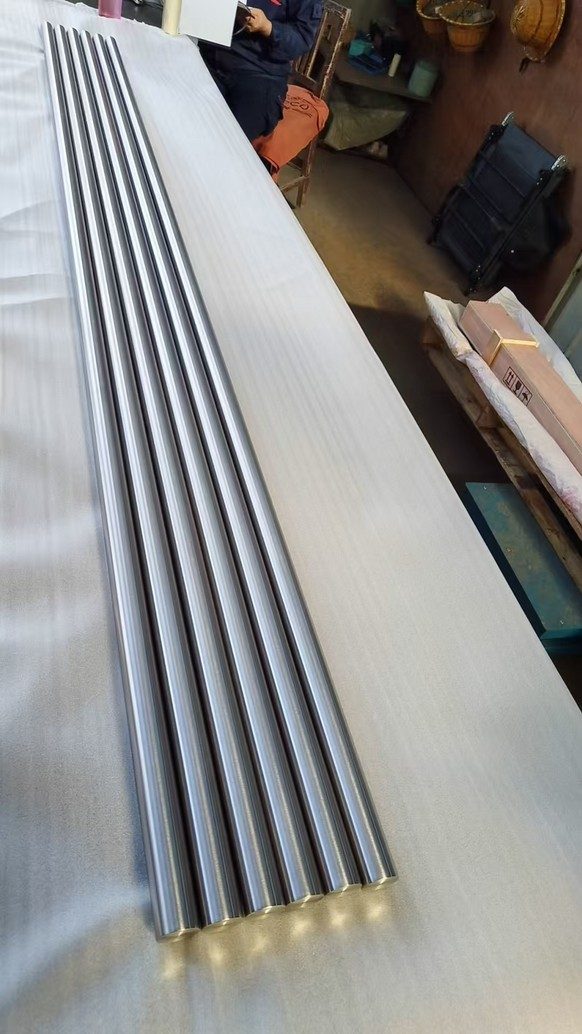
Was ASTM F1472 abdeckt
ASTM F1472 ist die Spezifikation für chirurgische Implantate aus verformtem Ti-6Al-4V mit Grenzwerten für Standardgehalte an interstitiellen Elementen, UNS R56400, derselben Legierung und UNS-Nummer wie bei industriellem Grade 5. Der Unterschied für Implantate liegt im Geltungsbereich und in den Abnahmeanforderungen, nicht in einer neuen Legierungsbezeichnung: F1472 deckt Band, Blech, Platte, Stab, Schmiedestab und Draht ab, die durch Mehrfachschmelzen hergestellt werden, mit Anforderungen an das Gefüge im Implantatbereich, die ein allgemeines ASTM B348 Grade 5 Zeugnis nicht behandelt.
| Spezifikation | Legierung | UNS | Zwischengitterelementgehalt | Anwendungsbereich |
|---|---|---|---|---|
| ASTM B348 Grade 5 | Ti-6Al-4V | R56400 | Norm | Industriestäbe und Vorblöcke |
| ASTM F1472 | Ti-6Al-4V | R56400 | Norm | Chirurgische Implantate, verformte Formen |
| ASTM F136 | Ti-6Al-4V ELI | R56401 | Besonders niedrig | Chirurgische Implantate, verformte Formen |
Die praktische Lesart ist einfach: F1472 und B348 haben chemische Zusammensetzung und UNS gemeinsam, aber nicht den Geltungsbereich; F1472 und F136 haben den Implantat-Geltungsbereich gemeinsam, aber nicht die Obergrenze für interstitielle Elemente oder die UNS. Wenn die Zeichnung F1472 fordert, muss das Zeugnis F1472 statt einer allgemeinen Grade 5 Norm nennen. Für den schnellen Vergleich der Implantatgüten aus Käufersicht siehe die von Beiyu F136 vs F67 Schnellreferenz.
F1472 gegenüber F136: Standard-Zwischengitterelementgehalt gegenüber ELI
Beide Normen decken verformtes Ti-6Al-4V für chirurgische Implantate ab. F136 ist die ELI-Version, UNS R56401, mit strengeren Obergrenzen für Sauerstoff und die anderen interstitiellen Elemente, wodurch etwas Spitzenfestigkeit gegen höhere Bruchzähigkeit, Duktilität und Schadensverträglichkeit eingetauscht wird. F1472 behält die Grenzwerte für interstitielle Elemente von Standard Grade 5 und die damit verbundene höhere Festigkeitsobergrenze bei. Welche Variante zu einem Gerät gehört, ist eine Konstruktions- und Regulierungsentscheidung des Geräteherstellers; Aufgabe des Lieferanten ist es, das Metall nach der in der Bestellung genannten Norm zu bescheinigen. Weitere Details zur ELI-Lieferung finden Sie in unserem Leitfaden zu ELI-Stäben nach ASTM F136.
| Norm | Aussage des Leitfadens |
|---|---|
| ASTM F136 | Die ELI-Version, UNS R56401, mit strengeren Grenzwerten für Sauerstoff und die anderen interstitiellen Elemente, die etwas Spitzenfestigkeit gegen höhere Bruchzähigkeit, Duktilität und Schadentoleranz eintauscht |
| ASTM F1472 | Behält die standardmäßigen Grade 5-Grenzwerte für interstitielle Elemente und die damit verbundene höhere Festigkeitsobergrenze bei |
Was ASTM F620 abdeckt und warum die UNS-Nummer von der Ausgangsspezifikation abhängt
ASTM F620 ist die Spezifikation für Titanlegierungs-Schmiedeteile für chirurgische Implantate im Alpha-Beta-Zustand. Sie definiert keine neue Legierung. Stattdessen deckt sie Schmiedeteile ab, die aus Implantatmaterial hergestellt werden, das bereits einer der medizinischen Spezifikationen für verformte Erzeugnisse entspricht: F136 Ti-6Al-4V ELI (UNS R56401), F1472 Ti-6Al-4V (UNS R56400), F1295 Ti-6Al-7Nb (UNS R56700) oder F2066 Ti-15Mo (UNS R58150). Das Schmiedeteil wird durch Hämmern, Pressen, Strangpressen oder Stauchen des Stabs oder Drahts hergestellt, anschließend nach dem Warmschmieden geglüht und nach dem Anforderungssatz von F620 geprüft.
Der Punkt, der Bestellungen verwirrt, ist, dass ein F620-Schmiedeteil die UNS-Nummer seiner Ausgangsmaterialspezifikation behält. Ein nach F620 aus F136-Ausgangsmaterial hergestelltes Schmiedeteil bleibt UNS R56401; ein nach F620 aus F1472-Ausgangsmaterial hergestelltes Schmiedeteil bleibt R56400. Dies unterscheidet sich von ASTM B381, bei dem das industrielle Grade F-23 Schmiedeteil UNS R56407 verwendet. Die Nummern stehen nicht im Widerspruch; sie gehören zu unterschiedlichen Spezifikationsketten, und das Zeugnis muss der von der Zeichnung geforderten Kette entsprechen. Für den produktseitigen Schmiedeweg siehe unser Titan-Schmiedeteile für Hüftimplantate Seite.
| Ausgangsmaterialspezifikation | UNS, die das F620-Schmiedeteil behält |
|---|---|
| ASTM F136 Ti-6Al-4V ELI | R56401 |
| ASTM F1472 Ti-6Al-4V | R56400 |
| ASTM F1295 Ti-6Al-7Nb | R56700 |
| ASTM F2066 Ti-15Mo | R58150 |
Was in einer F1472- oder F620-Anfrage anzugeben ist
Das Zeugnis und die Rückverfolgbarkeit haben bei einer Bestellung in der Implantat-Spezifikationskette ebenso viel Gewicht wie das Metall. Eine eindeutige Anfrage sollte die Spezifikation und den Grade, die Ausgangsmaterialspezifikation für Schmiedeteile, die Form und Abmessungen mit Toleranzen, den Zustand und die Oberfläche sowie jede über die Grundnorm hinausgehende Prüf- oder Gefügeanforderung angeben. Wenn die Bestellung von einem Werk bezogen werden muss, das nach einem medizinischen Qualitätsmanagementsystem arbeitet, geben Sie dies in der Anfrage an, damit die Dokumentationskette vor der Angebotserstellung abgestimmt ist.
| Feld in einer F1472- oder F620-Anfrage | Detail |
|---|---|
| Spezifikation und Güte | ASTM F1472 Ti-6Al-4V (UNS R56400) oder ASTM F620 mit angegebener Ausgangsmaterialspezifikation. |
| Form und Abmessung | Stab, Platte, Draht oder Schmiedeausgangsmaterial nach Zeichnung, mit angegebenen Toleranzen. |
| Zustand und Oberfläche | geglüht; entzundert, geschliffen, zerspant, geschält oder poliert, wie erforderlich. |
| Prüfumfang | chemische Zusammensetzung einschließlich interstitieller Elemente, Zugeigenschaften sowie bei Schmiedeteilen Härte, Bruchdehnung und Einschnürung, wenn die Zeichnung dies verlangt. |
| Rückverfolgbarkeit | einer Schmelze zugeordnete Chargennummer mit EN 10204 3.1 Dokumentation. |
Beiyu liefert Titan-Stab-, -Platten-, -Draht- und Schmiedeteilmaterial für die Implantatlieferkette gemäß der in der Bestellung genannten Spezifikation, mit EN 10204 3.1 Abnahmeprüfzeugnissen und Rückverfolgbarkeit über die Chargennummer nach Bestellumfang. Die allgemeine Feldliste finden Sie in unserer Checkliste für Titanstab-Anfragen, und der umfassendere Überblick darüber, wie Titan in Implantatqualität spezifiziert und beschafft wird, befindet sich in der Leitfaden zu Titan für medizinische Implantate.
FAQ
Ist ASTM F1472 dasselbe wie Grade 5 Titan?
Chemisch ja: F1472 umfasst Ti-6Al-4V mit standardmäßigen Grenzwerten für interstitielle Elemente unter UNS R56400, derselben UNS-Nummer wie industrielles Grade 5. Der Unterschied liegt im Geltungsbereich. F1472 ist eine Spezifikation für chirurgische Implantate mit Anforderungen an Implantatmikrostruktur und Prüfung, die ein industrielles B348 Grade 5 Zeugnis nicht behandelt.
Was ist der Unterschied zwischen ASTM F1472 und F136?
Beide umfassen verformtes Ti-6Al-4V für chirurgische Implantate. F136 ist die ELI-Version, UNS R56401, mit engeren Grenzwerten für interstitielle Elemente zur Verbesserung der Bruchzähigkeit und Schadenstoleranz. F1472 ist die Version mit Standardgehalten an interstitiellen Elementen, UNS R56400, mit der höheren Festigkeitsobergrenze, die mit der chemischen Zusammensetzung von Grade 5 verbunden ist.
Welche UNS-Nummer hat ein ASTM F620 Schmiedeteil?
Die UNS-Nummer seiner Ausgangsmaterial-Spezifikation. F620 Schmiedeteile aus F136 Material behalten R56401; Schmiedeteile aus F1472 Material behalten R56400. Dies unterscheidet sich von ASTM B381, bei dem das industrielle Grade F-23 Schmiedeteil R56407 verwendet.
Kann dasselbe Ti-6Al-4V ELI Schmiedeteil in einer Bestellung R56401 und in einer anderen R56407 sein?
Zwei Schmiedeteile mit derselben nominalen ELI-Chemie können unterschiedliche UNS-Nummern tragen, weil die Nummern zu unterschiedlichen Normenketten gehören: Die medizinische Kette F620 über F136 behält R56401, während die industrielle Kette ASTM B381 Grade F-23 R56407 verwendet. Stimmen Sie das Zeugnis auf die Spezifikationskette der Zeichnung ab.
Wie viel Spielraum eine dokumentierte Schmelze gegenüber den F1472-Mindestwerten aufwies
F1472 legt Mindestwerte fest. Ein Käufer, der dies spezifiziert, möchte wissen, was das Produktionsmaterial tatsächlich im Vergleich dazu liefert und ob sich mehrere Durchmesser aus derselben Schmelze konsistent verhalten. Die nachstehenden Werte stammen aus einer dokumentierten dreifach geschmolzenen Schmelze, die zu vier Stablosen verarbeitet und bei 750 °C eine Stunde lang mit Luftkühlung geglüht wurde. Jedes Los wurde getrennt durch ein unabhängiges Titan-Prüflabor geprüft.
| Los aus derselben Schmelze | Durchmesser | Rm MPa | Rp0,2 MPa | Bruchdehnung A % | Einschnürung Z % | Wasserstoff % |
|---|---|---|---|---|---|---|
| Los A | Φ7,5 mm | 961 | 897 | 15.5 | 42 | 0.0021 |
| Los B | Φ8,5 mm | 1049 | 1012 | 14.5 | 48 | 0.0028 |
| Los C | Φ10,5 mm | 1082 | 1014 | 14.5 | 49 | 0.0022 |
| Los D | Φ12 mm | 1016 | 948 | 17.5 | 55 | 0.0022 |
| ASTM F1472 Referenzgrenzwerte | in den Berichten angewandte Referenzgrenzwerte | 860 | 795 | 10 | 25 | ≤0.015 |
Zwei Merkmale dieser Tabelle verdienen die Aufmerksamkeit eines Ingenieurs. Das erste ist die Streuung: Die Zugfestigkeit lag über vier Durchmesser aus einer Schmelze zwischen 961 und 1082 MPa. Vier Ergebnisse erklären nicht, warum dies so ist, daher sollten Sie den Bereich als beobachtete Variation über die Durchmesser und nicht als erklärten Effekt betrachten. Das zweite Merkmal ist, dass sich Festigkeit und Duktilität über die vier Lose nicht gemeinsam verändern, was eine hilfreiche Erinnerung beim Lesen eines Zeugnisses für mehrere Durchmesser ist: Das höchste Zugfestigkeitsergebnis und die höchste Bruchdehnung stammten aus unterschiedlichen Losen.
Der Wasserstoffgehalt lag über die vier Lose hinweg zwischen 0,0021 und 0,0028 Prozent gegenüber einer Obergrenze von 0,015 Prozent, sodass das Material weniger als ein Fünftel der zulässigen Menge nutzte. Die chemische Zusammensetzung des Barrens wurde sowohl am Kopf als auch am Fuß des Barrens analysiert, was in einer Anfrage genannt werden sollte, weil eine einzelne Probenahmestelle einem Käufer über einen großen Barren weniger aussagt als zwei.
Lesen Sie diese als Ergebnisse von dokumentiertem Fertigungsmaterial, nicht als typische Werte und nicht als ein Niveau, das jede Charge wiederholt. Sie zeigen, was die Route bei dem geprüften Material erzeugt hat. Fragen Sie bei der Anfrage, welche Belegunterlagen für das angebotene Material verfügbar sind, da Dokumentumfang und etwaige Schwärzungen von Fall zu Fall vereinbart werden und nicht hier veröffentlicht sind.
Was an Stab für Implantate untersucht wird und mit welcher Abdeckung
Bei Implantatmaterial lautet die Frage selten, ob eine Prüfung durchgeführt wurde. Sie lautet, ob sie am gesamten Los oder an einer Probe durchgeführt wurde und nach welcher Abnahmeklasse. Die Abdeckung wird daher als Spalte und nicht als Adjektiv angegeben.
| Prüfpunkt | Abdeckung | Was es festlegt |
|---|---|---|
| Ultraschall-Fehlerprüfung | 100 Prozent des Loses | Innere Ungänzen gegen die in der Bestellung genannte Abnahmeklasse |
| Wirbelstrom | 100 Prozent des Loses | Oberflächen- und oberflächennahe Ungänzen |
| Optische Oberflächenprüfung | 100 Prozent des Loses | Sichtbarer Oberflächenzustand über die gesamte Länge |
| Infrarot-Laser-Durchmessermessung | 100 Prozent des Loses | Durchmesser über die gesamte Länge, keine Stichprobe an den Enden |
| Geradheit | 100 Prozent des Loses | Durchbiegung gegenüber dem veröffentlichten Wert über eine angegebene Messlänge |
Dies sind die Prüfungen, die auf dem angebotenen Präzisionsweg durchgeführt werden und als Produktionsfähigkeit geprüft werden, nicht als Lagerbestandsaussage angeboten. Wenn eine Bestellung eine strengere Abnahmeklasse oder eine zusätzliche Untersuchung erfordert, gehört dies in den Bestelltext und wird geprüft, bevor die Anfrage bepreist wird.
Die Dokumentfelder, die eine Anfrage für Implantatmaterial im Voraus festlegen sollte
| Feld | Beiyu-Position |
|---|---|
| Zeugnistyp | Abnahmeprüfzeugnis 3.1 nach EN 10204 |
| Rückverfolgbarkeit | Chargennummer, durchgängig bis zu den gelieferten Teilen |
| Berichtsumfang | Durch die Bestellung festgelegt, weshalb die Bestellung sie angeben sollte |
| Schmelzroute | Dreifach vakuumgeschmolzen für medizinische Güten, in der Bestellung angegeben |
| Lieferzustand | Getrennt von der Oberflächengüte angegeben |
Ein Zeugnis berichtet, was die Bestellung verlangte. Wenn der Berichtsumfang nie angegeben wurde, kann ein vollständig konformes Dokument dennoch weniger beantworten, als die Wareneingangsprüfung erwartet.
Spezifikationsdetails mit Quellenangabe
Bei mechanischen Kennwerten und interstitiellen Gehalten ASTM F1472 und ASTM F136 unterscheiden sie sich auf dem Papier. ASTM F1472 behält die Standard-Grenzwerte für interstitielle Elemente von Grade 5 bei und verlangt, dass geglühte Knetprodukte eine Zugfestigkeit von 930 MPa und eine Streckgrenze von 860 MPa erreichen, während ASTM F136 Sauerstoff auf 0,13 Prozent begrenzt und für geglühte Standard-Stabquerschnitte Mindestwerte von 860 MPa Zugfestigkeit und 795 MPa Streckgrenze festlegt, wodurch etwa 70 MPa Festigkeit gegen Bruchzähigkeit getauscht werden. Diese beiden Anforderungssätze und nicht die gemeinsame Legierungsbezeichnung übernimmt ein F620 Schmiedeteil aus seiner Ausgangsmaterial-Spezifikation.
Beiyu Titanium bietet das geschmiedete Ende dieser Kette nach ASTM F136 und ISO 5832-3 an, mit warmgeschmiedeten Scheiben von 50 bis 2000 mm Außendurchmesser bei 20 bis 500 mm Dicke und geschmiedeten Blöcken von 50 bis 600 mm, geliefert mit gedrehter Oberfläche im schmiedewarmen oder geglühten Zustand. Bei einer F620 Anfrage fragt Beiyu vor dem Angebot, welcher der vier Ausgangsmaterial-Spezifikationen die Zeichnung folgt, weil die Scheibe oder der Block nach den Grenzwerten dieses Dokuments zertifiziert wird und die Antwort den Prüfumfang im Zeugnis verändert.
Angebot für Titan der Implantat-Spezifikationskette anfordern
Um Titan nach ASTM F1472 oder F620 anzubieten, benötigt Beiyu die Spezifikation und Grade mit der UNS-Nummer, die Ausgangsmaterial-Spezifikation für Schmiedeteile, die Form und Abmessungen mit Toleranzen, Zustand und Oberfläche, Menge, Prüf- oder Mikrostrukturumfang sowie die Zeugnisart. Senden Sie die Zeichnung oder Spezifikation, und wir prüfen jede Zeile vor dem Angebot anhand der Fähigkeiten des Werks, mit EN 10204 3.1 Dokumentation und Rückverfolgbarkeit der Chargennummer nach Bestellumfang. Kontaktieren Sie Beiyu Titanium für eine Anfrage.