
Titan erreicht medizinische Implantate als zwei Werkstofffamilien: technisch reines (CP) Titan in den Güten 1 bis 4 und die Legierung Ti-6Al-4V in Standard- und extrem interstitialarmer (ELI) Ausführung. Welche davon ein Implantat verwendet, hängt von der Belastung ab. CP-Titan nach ASTM F67 bewältigt korrosionsgetriebene und geringer belastete Teile; Ti-6Al-4V ELI nach ASTM F136 (Grade 23) trägt lasttragende orthopädische, spinale und Trauma-Implantate. Die Güte, die maßgebliche Norm und die Abnahmekriterien gehören alle auf die Bestellung.
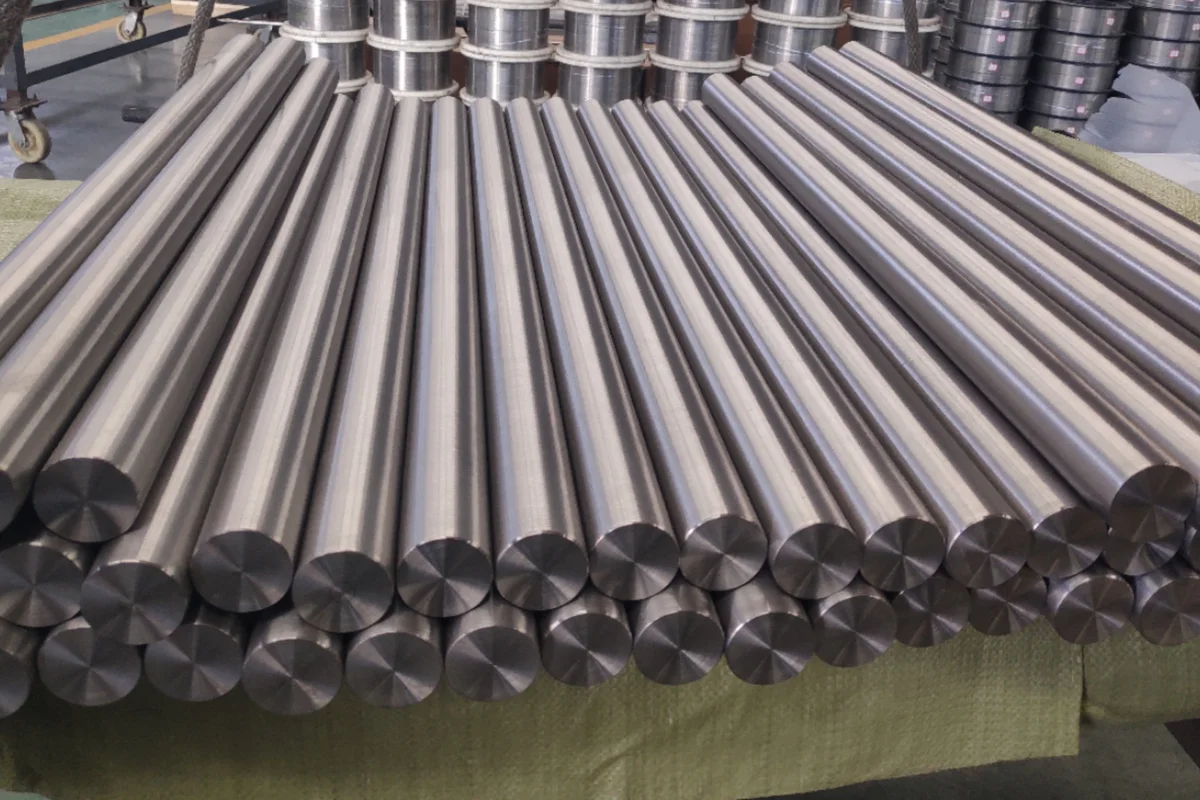
Beiyu Titanium liefert Titan in Implantatqualität als Halbzeug, CP-Stabmaterial und Draht nach ASTM F67 sowie Ti-6Al-4V ELI nach ASTM F136, einschließlich präziser spitzenlos geschliffener Routen, zur Bearbeitung zu fertigen Produkten durch den Hersteller. Wenn EN 10204 3.1 Dokumentation und Chargen- oder Losrückverfolgbarkeit erforderlich sind, geben Sie den gewünschten Berichtsumfang in der Anfrage an. Dieser Leitfaden ist die Übersichtsseite für unsere medizinischer Titangehalt: Er ordnet die Grades und Normen zu und verweist dann auf die ausführlichen Leitfäden für jede davon. Er verwendet die Sprache der Implantatnormen statt der ungenauen Bezeichnung „Titan in medizinischer Qualität“, die durch das Marketing für Körperschmuck mehrdeutig geworden ist; für ein Implantat ist die ASTM- oder ISO-Norm zu spezifizieren.
Warum wird Titan für medizinische Implantate verwendet?
Titan wird für medizinische Implantate verwendet, weil es Korrosionsbeständigkeit, nachgewiesene Biokompatibilität, ein hohes Verhältnis von Festigkeit zu Gewicht und einen niedrigeren Elastizitätsmodul als Kobalt-Chrom-Legierungen oder Edelstähle vereint. Sein stabiler Oxidfilm unterstützt die Korrosionsbeständigkeit in physiologischen Umgebungen. Geeignet vorbereitete Titanoberflächen können die Osseointegration unterstützen und ermöglichen es dem Knochen, an eine Implantatoberfläche anzuwachsen oder in sie hineinzuwachsen. Der niedrigere Modul kann Stress Shielding zudem verringern, wenn auch nicht ausschließen. CP-Titan und Ti-6Al-4V werden beide für die Implantatherstellung eingesetzt; die Zeichnung, der Lastfall und die maßgebliche Werkstoffnorm bestimmen die Auswahl.
| Eigenschaft | Aussage des Leitfadens |
|---|---|
| Korrosionsbeständigkeit | Sein stabiler Oxidfilm unterstützt die Korrosionsbeständigkeit in physiologischen Umgebungen |
| Biokompatibilität | Etabliert |
| Festigkeit zu Gewicht | Hoch |
| Elastizitätsmodul | Niedriger als bei Kobalt-Chrom-Legierungen oder Edelstählen, was das Stress Shielding verringern, aber nicht beseitigen kann |
| Oberflächenverhalten | Geeignet vorbereitete Titanoberflächen können die Osseointegration unterstützen, sodass Knochen an eine Implantatoberfläche heran oder in sie hinein wachsen kann |
Welche Titangüten werden für medizinische Implantate verwendet?
Diese sechs ASTM-Güten decken gängige Implantatwerkstoff-Auswahlen ab, aufgeteilt zwischen unlegiertem CP-Titan und der Legierung Ti-6Al-4V. Die Tabelle fasst die ASTM-Güte-Familien zusammen; jede wird in den unten verlinkten Anleitungen ausführlich behandelt.
| Güte | UNS | Typ | Festigkeit gegenüber Umformbarkeit | Übliche Implantatfunktion | Implantatnorm |
|---|---|---|---|---|---|
| CP Grade 1 | R50250 | Unlegiertes CP | Geringste Festigkeit, am besten umformbar | Umgeformte, gering belastete CP-Teile | ASTM F67 |
| CP Grade 2 | R50400 | Unlegiertes CP | Ausgewogenes Verhältnis von Festigkeit und Umformbarkeit | Nicht lasttragende CP-Bauteile | ASTM F67 |
| CP Grade 3 | R50550 | Unlegiertes CP | Höhere CP-Festigkeit | CP-Teile mit höherer Belastung | ASTM F67 |
| CP Grade 4 | R50700 | Unlegiertes CP | Höchste CP-Festigkeit | Zahnstifte, höher belastetes CP | ASTM F67 |
| Grade 5 Ti-6Al-4V | R56400 | Alpha-Beta-Legierung, Standard-Interstitialgehalt | Hohe Festigkeit | Implantate mit spezifiziertem Standard-Interstitial | ASTM F1472 |
| Grade 23 Ti-6Al-4V ELI | R56401 | Alpha-Beta-Legierung, extra niedriger Interstitialgehalt | Hohe Festigkeit plus Bruchzähigkeit | Lasttragend orthopädisch, Wirbelsäule, Trauma | ASTM F136 |
UNS und Normumfang sind; die Implantatrolle spiegelt gängige Praxis wider. Bestätigen Sie die genaue Güte und Norm auf der Zeichnung.
Die Korrosionsbeständigkeit ist im Wesentlichen bei allen sechs gleich, daher ist die Entscheidung eine Frage von Festigkeit und Zähigkeit. CP-Güten unterscheiden sich nur durch kontrolliertes Sauerstoff- und Eisenniveau; die Legierungsgüten unterscheiden sich durch die Zwischengitterelement-Obergrenze. Für das breitere Bild Legierung versus CP über Implantate hinaus siehe unseren Vergleichsleitfaden für Titangüten.
Welche ASTM und ISO Normen gelten für Implantat Titan?
Diese Zuordnung fehlt auf den meisten Güteübersichtsseiten, ist jedoch genau der Teil, den ein Käufer benötigt, um eine saubere Bestellung zu schreiben. Implantat-Titan trägt eine Werkstoffnorm für chirurgische Implantate (die F-Serie oder die ISO-5832-Serie) und für Stab und Draht zusätzlich eine allgemeine Produktnorm.
Wenn die Zeichnung von der allgemeinen Implantatübersicht zu Ti-6Al-4V mit Standard-Zwischengehalten oder Implantatschmiedeteilen übergeht, verwenden Sie Beiyus Leitfaden zu ASTM F1472 und F620 für die Details der Zertifikatskette rund um R56400, R56401 und B381 F-23 / R56407.
| Norm | Werkstoffumfang | UNS | Formen | Rolle auf der Bestellung |
|---|---|---|---|---|
| ASTM F67 | Unlegiertes Titan für chirurgische Implantatanwendungen, Grades 1-4 | R50250 / R50400 / R50550 / R50700 | Band, Blech, Platte, Stab, Vorblock, Schmiedeteil, Draht | ASTM CP-Implantatspezifikation |
| ASTM F136 | Geschmiedetes, geglühtes Ti-6Al-4V ELI für chirurgische Implantatanwendungen | R56401 | Band, Blech, Platte, Stab, Schmiedestab, Draht | ASTM ELI-Implantatspezifikation |
| ASTM F1472 | Geschmiedetes, geglühtes Ti-6Al-4V für chirurgische Implantatanwendungen | R56400 | Band, Blech, Platte, Stab, Schmiedestab, Draht | ASTM Implantatspezifikation mit Standard-Interstitialgehalt |
| ASTM B348/B348M | Stab und Vorblock aus Titan und Titanlegierungen | Gütenspezifisch | Stab, Vorblock | Allgemeine kommerzielle Stabspezifikation; ersetzen Sie deren Gütebezeichnungen nicht durch F136 |
| ASTM B863 | Titan- und Titanlegierungsdraht | Gütenspezifisch | Draht | Allgemeine kommerzielle Drahtspezifikation; nur verwenden, wenn die Zeichnung dies separat fordert |
| ISO 5832-2:2025 | Unlegiertes Titan für die Herstellung chirurgischer Implantate | Sechs Güten nach Zugfestigkeit | Schmiedewerkstoff | Getrenntes ISO-Werkstoffsystem; keine direkte Umrechnungstabelle zu Grade 1-4 |
| ISO 5832-3:2021 | Knet-Ti-6Al-4V für die Fertigung chirurgischer Implantate | Ti-6Al-4V | Schmiedewerkstoff | Getrennte ISO-Anforderungen an Chemie und Prüfung |
Normgeltungsbereiche und UNS-Nummern sind es. ASTM F136 und F1472 kennzeichnen unterschiedliche UNS-Güten. ISO 5832-2 und ISO 5832-3 verwenden eigene Werkstoffdefinitionen. Rechnen Sie daher nicht allein anhand des Trivialnamens zwischen ASTM und ISO um; gleichen Sie Chemie, mechanische Anforderungen und Revision mit der Zeichnung ab.
ASTM F67, F136 und F1472 decken jeweils Stabmaterial im Rahmen ihres eigenen Anwendungsbereichs ab. Eine Zeichnung kann zusätzlich eine Produktspezifikation der B-Serie fordern, aber Käufer und Lieferant müssen die Gütebezeichnung und alle chemischen, mechanischen und dimensionalen Anforderungen abgleichen, statt eine automatische Doppelzertifizierung anzunehmen. Europäische Bestellungen können statt einer ASTM Implantatspezifikation die ISO 5832 Reihe zitieren; die Systeme sind nicht wortgleich, daher sind Zeichnung und Zertifikatsrevision maßgeblich.
Technisch reines Titan: welche der Güten 1 bis 4?
CP-Titan ist das Arbeitspferd der Korrosionsbeständigkeit in der Implantatwelt und wird dort gewählt, wo ein Bauteil keine hohe Last trägt. Alle vier Güten zeigen nahezu identisches Korrosionsverhalten und unterscheiden sich nur in Festigkeit und Umformbarkeit: Der kontrollierte Sauerstoffgehalt steigt von Grade 1 zu Grade 4, sodass die Festigkeit steigt und die Umformbarkeit sinkt. Grade 2 ist der Standard für die meisten CP-Anwendungen; Grade 1 gewinnt, wenn die Umformung entscheidend ist; Grade 4 ist die festeste CP-Güte und kommt in Dentalanwendungen und höher belasteten CP-Bauteilen vor. Da die Korrosionsbeständigkeit bei allen vieren vergleichbar ist, ist der Wechsel von Grade 2 eine Entscheidung zu Festigkeit oder Umformung, keine Korrosionsentscheidung. Die vollständige Auswahllogik, Anwendung für Anwendung, wird ausführlich in unserem Auswahlleitfaden CP-Titan Grade 1-4.
| Reintitan-Güte | Aussage des Leitfadens |
|---|---|
| Grade 1 | Gewinnt, wo Umformbarkeit maßgeblich ist |
| Grade 2 | Der Standard für die meisten CP-Arbeiten |
| Grade 4 | Die festeste CP Güte; kommt in Dentalanwendungen und höher belasteten CP Teilen vor |
Spezifizierung von CP-Implantatstab nach ASTM F67
Wenn ein CP-Teil ein Implantat ist, regelt ASTM F67 das Implantatmaterial. F67 umfasst Grade 1 bis 4 in Band, Blech, Platte, Stab, Vorblock, Schmiedeteil und Draht. Bei der Anfrage entscheiden Oberfläche, Durchmessertoleranz, Korngröße und Wasserstoffgrenze darüber, ob der Stab sauber auf einer Schweizer Drehmaschine läuft und die Wareneingangsprüfung besteht, nicht die Güteangabe allein. Wie diese Anforderungen anzugeben sind, ist ausführlich beschrieben in unserem Leitfaden für ASTM F67 medizinischen CP-Stab.
Ti-6Al-4V ELI nach ASTM F136 für tragende Implantate
Für viele lasttragende Bauteile wird die Titanlegierung Ti-6Al-4V spezifiziert. Wo Ermüdung und Bruchzähigkeit maßgeblich sind, ist eine gängige Wahl die Güte mit extra niedrigem Interstitialgehalt: Ti-6Al-4V ELI, Grade 23, UNS R56401, nach ASTM F136. ELI behält die nominelle Legierungsbasis von 6 % Aluminium und 4 % Vanadium bei, wendet jedoch engere Interstitialgrenzen an als die Standard-Güte Grade 5. Wo eine Zeichnung einen Standard-Interstitialgehalt zulässt, gilt stattdessen ASTM F1472 (Grade 5, R56400); die beiden sind nicht austauschbar, und die UNS-Nummer auf dem Zertifikat muss übereinstimmen. Was ELI bedeutet, F136 im Vergleich zu F1472, und wie Stab und Feindraht spezifiziert werden, wird ausführlich in unserem Leitfaden zu ELI-Stäben nach ASTM F136.
Korngröße und Wasserstoff: die Abnahmekriterien
Über Güte und Abmessungen hinaus sind Korngröße und Wasserstoff zwei metallurgische Kriterien, die der Abnahme von Implantat-Stabmaterial hinzugefügt werden können. Sie werden normalerweise über den Werksprüfbericht oder einen gesondert geforderten Prüfbericht geprüft; eine unabhängige Prüfung bleibt möglich, wenn die Einkaufsspezifikation dies verlangt. Die nachstehende Kurzübersicht fasst gängige Vorgaben zusammen; die Messmethoden und die RFQ-Formulierung werden ausführlich in unserem Anleitung zu Korngröße und Wasserstoff.
| Abnahmekriterium | Typische medizinische Angabe | Wie geprüft | Quelle |
|---|---|---|---|
| Korngröße | ASTM-E112-Kennzahl, höher ist feiner; üblich ≥5.0 allgemein, ≥8.0 Präzision | Metallografischer, polierter und geätzter Schliff | / |
| Wasserstoff, CP (F67) | 0,015% (150 ppm) max | Inertgasschmelzverfahren im Werk | |
| Wasserstoff, Ti-6Al-4V ELI (F136) | 0,012% (120 ppm) max, aktuelle Ausgabe bestätigen | Inertgasschmelzverfahren im Werk | |
| Engere Wasserstoff-Vorgaben | Bis 0,0034% (34 ppm) bei Präzisionsware | Geprüft im Werk, nicht beim Wareneingang | |
| Durchmessertoleranz | ±0,0005 in (±0,0127 mm); einseitig +0/-0,0004 in bei Swiss-Stangenmaterial | Maß nach dem Endschliff | |
| Oberflächenbeschaffenheit | 32 RMS (≈0,8 µm) geschliffen | Wareneingangsprüfung | |
| Gefüge | Gleichachsiges Alpha (CP) oder gleichachsiges Alpha-Beta, kein durchgehendes Korngrenzen-Alpha (ELI) | Metallographischer Bericht bei Bedarf |
Jeder Grenzwert, der enger ist als die Norm, muss in der Anfrage angegeben werden, da das Werk ihn während der Fertigung nachweisen muss und er beim Wareneingang nicht mehr nachgeholt werden kann. Beiyu prüft jeden über die Norm hinausgehenden Grenzwert für Korngröße oder Wasserstoff je Bestellung gegen die Werkskapazität.
Welche Produktform für welche Implantatanwendung?
Implantathersteller beziehen Titan als Halbzeug und bearbeiten oder formen das fertige Produkt selbst. Die Form bestimmt die zugehörige Produktnorm und die Endbearbeitung.
| Form | Typische Implantatanwendungen | Gängige Normen | Anmerkungen |
|---|---|---|---|
| Stange | Orthopädische Schrauben und Stäbe, Dentalstifte, Material für Traumaplatten | F67 oder F136, mit B348 | Präzise spitzenlos geschliffen für Schweizer Drehautomaten |
| Draht | Feine Gerätekomponenten, Spinalkabel, K-Draht-Material | F67 oder F136, mit B863 | Fein bis unter einen Millimeter auf Spulen, Ø0,58 mm gesehen |
| Platte und Blech | Knochenplatten, maxillofaziale Platten; Titanlegierungsplatte für lasttragende Stellen | F67 für CP, mit B265; legierte Platte gemäß der zutreffenden Schmiedespezifikation | Dicke und Ebenheit angeben |
| Folie / Dünnblech | Barrieremembranen, dünne Gerätekomponenten | B265 | 0,127 mm ist eine gängige dünne Angabe |
| Schmiedeteil / Vorblock | Near-net-shape Implantat-Vorformen wie Hüftschaft-Rohlinge | F136 oder F1472 | Aus dem Schmiedeteil bearbeitet |
| Poröse Struktur | Osseointegrationsoberflächen und Gerüststrukturen | Anwendungsspezifisch | Gesintert oder additiv gefertigt; eine von Knet-Halbzeug unterschiedliche Form |
Beiyu liefert CP-Titan als Stab, Draht, Blech und Platte sowie Ti-6Al-4V ELI als Stab und Draht, über eine einheitliche Dokumentationskette; feiner Implantatdraht wird auf unserer Seite für dünnen Titandraht. Poröses Titan wird branchenweit eingesetzt, um das Knocheneinwachsen an Implantatoberflächen zu fördern, ist jedoch eine eigene Produktform, die anders spezifiziert wird als Knetstab oder -platte.
Was bedeutet das Titan-Versorgungsbild 2026 für Implantatkäufer?
Expert Market Research‘s veröffentlichte Titan-Preisindexserie setzte ihren globalen Durchschnitt für Walzwerkerzeugnisse auf USD 9.42/kg in Q1 2026, gegenüber USD 7.92/kg in Q1 2025. Derselbe Index meldete regionale Indexpunkte für Q1 2026 von USD 14.48/kg für Europa und USD 6.49/kg für Nordamerika. Dies sind breite regionale Indexwerte, keine Angebote für ASTM F136 oder andere implantatzertifizierte Bestände; Grade, Schmelzroute, Prüfung, Oberfläche, Menge und Dokumentation können eine tatsächliche Anfrage weit vom Index entfernen.
Für einen Käufer im Medizinbereich ist die praktische Schlussfolgerung einfach: Qualifizierte Kapazität in Implantatqualität ist der knappste Teil dieses Marktes, daher lohnt es sich 2026 mehr, Spezifikationen frühzeitig festzulegen, Lieferzeiten bereits bei der Anfrage zu bestätigen und eine zweite, dokumentationsvollständige Quelle zu qualifizieren, als dem Spotpreis hinterherzujagen. Was den zugrunde liegenden Preis bewegt, behandelt unser Leitfaden zu was die Titanpreise treibt.
Wie wird Material in Implantatqualität zertifiziert und zurückverfolgt?
Medizinische Käufer qualifizieren die Dokumentation ebenso streng wie das Metall, daher ist das Zeugnis der Abnahmenachweis. Für Implantatanwendungen kann Material von Werken bezogen werden, die zertifizierte ISO 13485-Qualitätssysteme betreiben, und die Werkstoffzeugnisse des produzierenden Werks begleiten das Material gemäß Bestellung, sodass die zeugnisausstellende Stelle stets dem Werk auf dem Werkstoffzeugnis entspricht. Wenn die Bestellung EN 10204 3.1-Dokumentation erfordert, sollte die Anfrage die Rückverfolgbarkeit der Charge oder des Loses, die chemische Zusammensetzung, mechanische Ergebnisse sowie jede von der Zeichnung geforderte Berichterstattung zu Korngröße oder Wasserstoff definieren. Insbesondere der ELI-Status ist nur durch die chemische Zusammensetzung nachweisbar: Das Zeugnis muss die eingehaltenen Grenzwerte für interstitielle Elemente und UNS R56401 ausweisen, da ein Stab, der nur nach Standard Grade 5 (R56400) zertifiziert ist, kein F136-Material ist. Beiyu liefert Halbzeuge in Implantatqualität für Hersteller zur Zerspanung zu fertigen Medizinprodukten und liefert keine fertigen Implantate.
Was in eine RFQ für Titan-Implantatmaterial gehört
Eine Anfrage für Titan-Implantatmaterial, die sich in einem Durchgang bepreisen lässt, nennt die Güte, die Normen, die Form und Abmessungen sowie die Abnahmekriterien gemeinsam.
Wenn der Auftrag speziell für Stab aus der Implantatkette gilt, statt für eine breitere Übersicht an Implantatwerkstoffen, siehe unser Checkliste für Anfragen zu medizinischem Titanstab verwandelt die Positionen in eine Feld für Feld Prüfung vor Versand der Anfrage.
| Anfragefeld | Was anzugeben ist |
|---|---|
| Güte und Typ | CP Grade 1/2/3/4, oder Ti-6Al-4V ELI (Grade 23) / Standard (Grade 5) |
| Maßgebliche Normen | Implantatwerkstoff-Spezifikation (F67, F136, F1472 oder der zutreffende ISO-5832-Teil); fügen Sie eine separate Produktnorm nur hinzu, wenn die Zeichnung dies erfordert und alle Güteanforderungen abgeglichen sind |
| Form und Abmessungen | Stab, Draht, Platte oder Schmiedeteil; Durchmesser oder Dicke, Länge oder Spule |
| Toleranz | Durchmesser- oder Dickentoleranz, bei Bedarf einseitig |
| Oberflächenbeschaffenheit | Ziel-Schleifoberfläche, zum Beispiel 32 RMS (≈0,8 µm) |
| Zustand | Geglüht oder nach Vorgabe |
| Korngröße | Mindestwert nach ASTM E112, auf dem Zertifikat angegeben |
| Wasserstoff | Höchstgehalt, und jeder engere Grenzwert gegenüber dem Standard |
| Gefüge | Erforderlicher Alpha- oder Alpha-Beta-Zustand, wenn die Zeichnung dies vorschreibt |
| Zertifikat | EN 10204 3.1 mit Rückverfolgbarkeit über die Chargennummer |
Senden Sie die Zeichnung oder Spezifikation, und Beiyu prüft jede Position vor der Angebotserstellung gegen Schleif- und metallurgische Kapazität.
Für den Zweig mit Standard-Zwischengitterelementgehalt von Implantat-Ti-6Al-4V, einschließlich der Unterschiede zwischen ASTM F1472 und F136 und wie ASTM-F620-Schmiedeteile die UNS des Ausgangsmaterials beibehalten, siehe unseren Leitfaden zur Spezifikation ASTM F1472 Standard Interstitial.
Häufig gestellte Fragen
Welcher Titan-Grade wird für medizinische Implantate verwendet?
Das hängt von der Belastung ab. Unlegiertes Reintitan in den Grades 1 bis 4, nach ASTM F67, wird für korrosionsgetriebene und gering belastete Teile verwendet. Für tragende Implantate wird die Legierung Ti-6Al-4V verwendet: Grade 23 mit extra niedrigem Interstitialgehalt nach ASTM F136 für ermüdungskritische orthopädische, spinale und Traumateile, oder Grade 5 mit Standard-Interstitialgehalt nach ASTM F1472, sofern es die Zeichnung zulässt. Die Zeichnung und die darin zitierte Norm legen die genaue Güte fest.
Welche Titanlegierung wird für medizinische Implantate verwendet?
Die für medizinische Implantate verwendete Titanlegierung ist Ti-6Al-4V. Sie liegt in zwei Implantatgüten vor: der extraniedrig-interstitielle Grade 23 (UNS R56401) nach ASTM F136, üblicherweise für lasttragende und ermüdungskritische Implantate spezifiziert, und der standard-interstitielle Grade 5 (UNS R56400) nach ASTM F1472. ELI wird gewählt, wenn die Zeichnung dessen engere Interstitial-Grenzwerte fordert; die UNS-Nummer auf dem Zertifikat muss der spezifizierten Güte entsprechen.
Ist Titan in Implantatgüte dasselbe wie medizinisches Titan?
„Titan in medizinischer Qualität“ ist ein informeller Sammelbegriff. Für ein Implantat bedeutet er Titan, das nach einer Norm für chirurgische Implantate zertifiziert ist: CP-Titan nach ASTM F67 oder ISO 5832-2 oder Ti-6Al-4V nach ASTM F136, F1472 oder ISO 5832-3. Dieselbe Bezeichnung wird im Marketing für Körperschmuck ungenau verwendet und bedeutet üblicherweise Grade 23 oder Grade 5 ohne Zertifizierung nach einer Implantatnorm. Für ein Implantat ist die ASTM- oder ISO-Norm zu spezifizieren, nicht die Bezeichnung selbst.
Welche Titangüte eignet sich am besten für orthopädische Implantate?
Für tragende orthopädische Implantate wird häufig Ti-6Al-4V ELI (Grade 23) nach ASTM F136 spezifiziert, weil seine engeren Grenzwerte für interstitielle Elemente die Anforderungen an Bruchzähigkeit und Ermüdung unterstützen. Reintitan nach ASTM F67 wird für orthopädische Teile eingesetzt, bei denen Korrosion oder geringere Lasten maßgebend sind und nicht die Ermüdungskritikalität. Die Zeichnung entscheidet.
Wird poröses Titan für medizinische Implantate verwendet?
Ja. Poröses Titan, gesintert oder additiv gefertigt, wird verwendet, um Oberflächen zu schaffen, in die Knochen einwachsen und dadurch die Fixierung bei orthopädischen und dentalen Implantaten verbessert. Es ist eine eigenständige Produktform gegenüber Knetstab, Draht oder Platte und wird nach eigenen Anwendungsanforderungen spezifiziert, nicht nach einem Stab- oder Plattenstandard.
Gegen welche Normen werden Implantat-Titanstäbe geliefert?
Implantatstab wird gegen eine Werkstoffnorm für chirurgische Implantate geliefert, ASTM F67 für CP oder ASTM F136 für Ti-6Al-4V ELI, und wird auf dem erforderlichen Werkstoffzeugnis mit Chargennummer-Rückverfolgbarkeit dokumentiert. Eine Zeichnung kann zusätzlich eine allgemeine Stabnorm verlangen, doch Güte und alle Abnahmeanforderungen müssen abgeglichen und nicht als gleichwertig angenommen werden. Europäische Käufer können anstelle einer ASTM-Implantatspezifikation ISO 5832-2 oder ISO 5832-3 angeben.
Wie eine vollständige Rückverfolgbarkeitskette bei einer Implantat-Charge aussieht
Chargen-Rückverfolgbarkeit ist leicht zu behaupten und schwierig nachzuweisen. Die konkrete Version ist ein Dokumentensatz, in dem jede Ebene dieselbe Chargennummer nennt und in dem die Ebenen von mehr als einer Partei ausgestellt werden. Die untenstehende Struktur ist der dokumentierte Datensatz für eine von Beiyu gelieferte Implantatstab-Charge.
| Ebene | Aufzeichnung | Ausgestellt von |
|---|---|---|
| Barren | Chemische Analyse, entnommen am oberen und unteren Ende des Barrens | Unabhängiges Prüflabor |
| Stablos | Produktqualitätszeugnis | Fertigungswerk |
| Stablos | Ultraschallprüfbericht | Fertigungswerk |
| Stablos | Prüfbericht mit Chemie, Zugeigenschaften, Makro- und Mikrogefüge sowie Oberflächenkontamination | Unabhängiges Prüflabor |
Die entscheidende Struktur ist ein Barren zu mehreren Stablosen zu drei Dokumentebenen pro Los. Bei einer dokumentierten dreifach geschmolzenen Charge erzeugte der Barren vier Stablose mit unterschiedlichen Durchmessern, und jedes Los führte ein eigenes Qualitätszeugnis, einen eigenen Ultraschallbericht und einen eigenen unabhängigen Laborprüfbericht, die alle auf denselben Barren verwiesen. In Verbindung mit der eigenen Materialzuordnung und den Komponentenaufzeichnungen des Medizinprodukteherstellers unterstützt diese Kette die Rückverfolgbarkeit vom eingehenden Stab bis zurück zur Schmelze.
Zwei dieser vier Schichten werden von einem unabhängigen Labor ausgestellt, nicht vom herstellenden Werk oder vom Verkäufer des Materials. Das ist der Punkt, der beim Lieferantenvergleich zu beachten ist: Ein Werkstoffzeugnis allein ist eine Eigenerklärung, und was der unabhängige Bericht hinzufügt, ist, dass er von einer Partei erstellt wurde, die das Material nicht verkauft. Welche Schichten bei einer bestimmten Bestellung ausgestellt werden, wird durch den bei der Anfrage vereinbarten Prüfumfang festgelegt, gehört also in die Anfrage und sollte nicht vorausgesetzt werden.
Oberflächenkontamination: die Prüfung, die es wert ist, in der Anfrage genannt zu werden
Bei dieser dokumentierten Charge umfasste der unabhängige Bericht eine Untersuchung der Oberflächenkontamination nach GB/T 23603 und wies für das geprüfte Material keine sauerstoffangereicherte Schicht aus. Die sauerstoffangereicherte Schicht, meist Alpha Case genannt, ist hart und spröde, sie entsteht, wenn Titan ohne ausreichenden Schutz heiß an Luft gehalten wird, und lässt sich durch eine gewöhnliche Sichtprüfung allein nicht ausschließen. Bei Implantatmaterial ist das von Bedeutung, denn wenn der Fertigungsprozess sie nicht vollständig entfernt, bleibt sie an der fertigen Oberfläche des bearbeiteten Teils bestehen. Ein Werkstoffzeugnis deckt dies nicht zwangsläufig ab. Wenn es für die Anwendung relevant ist, lohnt es sich daher, dies als geforderte Prüfung in die Anfrage zu schreiben, anstatt anzunehmen, dass sie durchgeführt wurde.
Spezifikationsdetails mit Quellenangabe
Die ASTM-Serie für chirurgische Implantate endet nicht bei Ti-6Al-4V: zwei vanadiumfreie Schmiedelegierungen tragen eigene Implantatspezifikationen. Ti-6Al-7Nb, das die 4 Prozent Vanadium durch 7 Prozent Niob ersetzt, wird spezifiziert durch ASTM F1295 unter UNS R56700 und international durch ISO 5832-11, und die Niob-Zirkonium-Legierung Ti-13Nb-13Zr, mit nominal 13 Prozent Niob und 13 Prozent Zirkonium, ist spezifiziert durch ASTM F1713. Zeichnungen, die zum Ausschluss von Vanadium verfasst sind, wie sie in europäischen zahnmedizinischen und orthopädischen Anwendungen üblich sind, nennen eines dieser drei Dokumente anstelle von ASTM F136.
Beiyu Titanium bietet Ti-6Al-7Nb und Ti-13Nb-13Zr im selben Rundstab-Programm wie Grade 23 an, von 1 mm bis 500 mm Durchmesser in Längen bis 6000 mm, mit auf Anfrage verfügbaren Toleranzklassen h6 bis h9. Geben Sie das maßgebliche Dokument bei der Anfrage an, und Beiyu bestätigt Legierung, Spezifikation und Berichtsumfang im Angebot, bevor die Bestellung aufgegeben wird, dieselbe Prüfung, die auch für die F67- und F136-Stablinien gilt.
Angebot für implantatgerechtes Titan anfragen
Um Titan in Implantatgüte zu kalkulieren, benötigt Beiyu: Güte und Typ (CP 1/2/3/4 oder Ti-6Al-4V ELI Grade 23 / Standard-Grade 5), die maßgebenden Implantat- und Produktnormen, Form und Abmessungen, Toleranz, Oberflächengüte, Zustand sowie jede Anforderung an Korngröße oder Wasserstoff. Senden Sie die Zeichnung oder Spezifikation, und wir prüfen jede Position vor der Angebotserstellung gegen Schleif- und metallurgische Kapazität, mit EN-10204-3.1-Abnahmeprüfzeugnissen und Chargennummer-Rückverfolgbarkeit je nach Bestellumfang. Beiyu liefert Halbzeuge für die Implantatherstellung, keine fertigen Produkte. Kontaktieren Sie Beiyu Titanium für eine Anfrage.