
Eine Anfrage für medizinische Titanstäbe scheitert auf unauffälligere Weise als eine industrielle. Das Angebot bezieht sich auf die falsche Spezifikation, das Zeugnis trifft ohne die vom Auditor gewünschten Ergebnisse der interstitiellen Elemente ein, oder die Rückverfolgbarkeit der Charge reicht nicht bis zu einer einzigen Schmelze zurück. Diese Checkliste erläutert jede Position, die eine Anfrage der Implantatlieferkette enthalten sollte, warum sie jeweils besteht und welche Fehler Einkäufer ein erneutes Angebot oder ein abgelehntes Zeugnis kosten. Sie ist für die Materialbeschaffung von Stabmaterial geschrieben; die Qualifizierung von Medizinprodukten und die behördliche Zulassung liegen beim Medizinproduktehersteller und sind hier nicht Gegenstand. Für allgemeine industrielle Stäbe verwenden Sie die Checkliste für Titanstab-Anfragen stattdessen; diese Seite behandelt, was die medizinische Lieferkette zusätzlich erfordert.
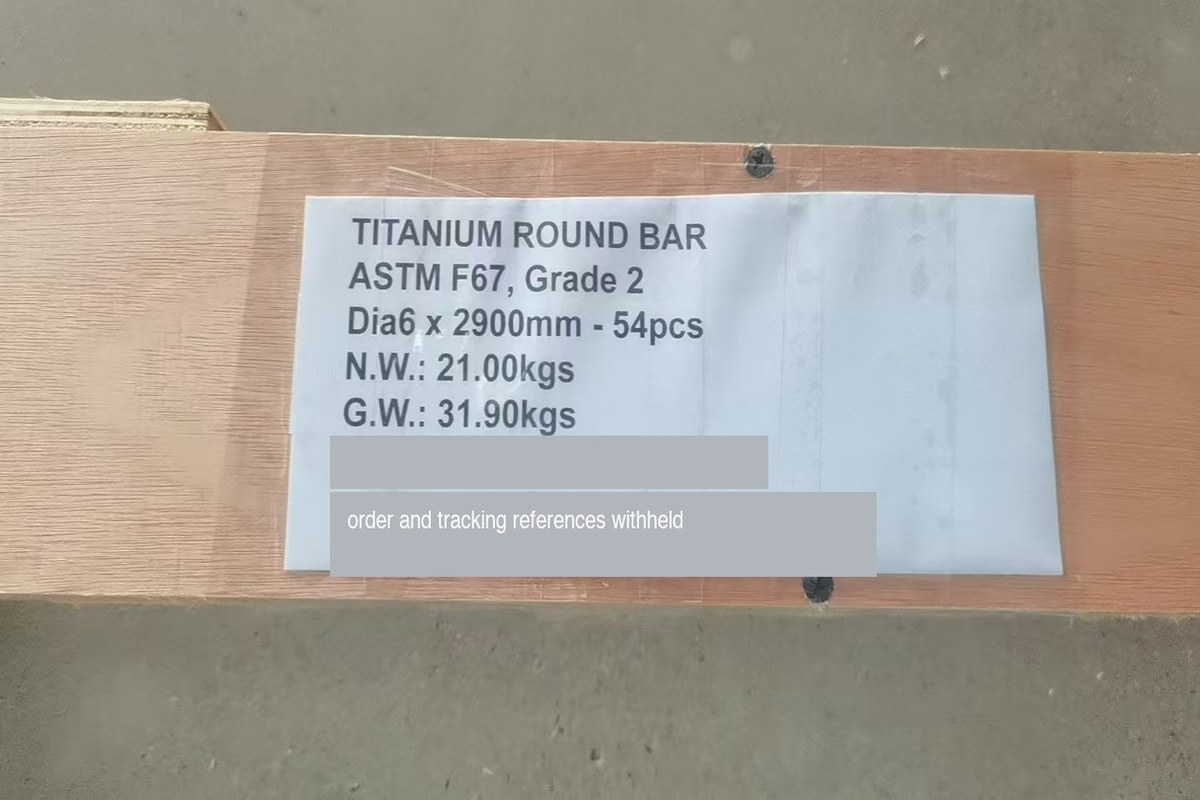
Warum eine Anfrage für medizinische Stäbe anders ist
Drei Dinge unterscheiden eine Bestellung der Implantatlieferkette von einer industriellen. Erstens ändert sich die Materialspezifikation: Die Zeichnung nennt ASTM F67, F136 oder F1472 anstelle von B348 für industrielle Anwendungen, und ein industrielles Zeugnis erfüllt keine Implantatposition, selbst wenn die Chemie übereinstimmt. Zweitens steigt der Nachweisumfang: Das Zeugnis muss die vollständige Analyse der Zwischengitterelemente enthalten und jeden Stab seiner Schmelze zuordnen, weil diese Aufzeichnungen in den Prüfpfad des Medizinprodukteherstellers einfließen. Drittens ist der Dokumentationsumfang selbst eine Beschaffungsanforderung: Umfang des Qualitätsmanagementsystems, Zeugnisformat und zusätzliche Prüfungen müssen in der Anfragephase benannt werden, nicht erst bei der Wareneingangsprüfung festgestellt werden.
Die Checkliste auf einen Blick
| # | Anfrageposition | Was anzugeben ist |
|---|---|---|
| 1 | Spezifikation und Güte | ASTM F67 (Grade 1 to 4), F136 oder F1472, mit der UNS-Nummer |
| 2 | Form und Abmessung | Durchmesser, Länge, Schnitttoleranz |
| 3 | Zustand und Oberfläche | Geglüht; geschält, geschliffen oder poliert; Ra, wenn relevant |
| 4 | Chemieberichterstattung | Vollständige Analyse der Zwischengitterelemente je Charge: O, N, H, C, plus Fe |
| 5 | Mechanische Prüfung | Zugfestigkeit, Streckgrenze, Bruchdehnung; Korngröße, sofern die Zeichnung sie nennt |
| 6 | Gefüge | Abnahme gemäß der genannten Spezifikation |
| 7 | Rückverfolgbarkeit | Chargennummer, Loslogik, EN 10204 3.1 |
| 8 | zerstörungsfreie Prüfung und Prüfung | UT, Maße, PMI oder Abnahme durch Dritte nach Bedarf |
| 9 | Qualitätssystem und Dokumente | Erklärung zum Geltungsbereich von ISO 13485, Zeugnisformat, Sprache |
| 10 | Verpackung und Versand | Kontaminationskontrolle, Kennzeichnung, Zieldokumente |
Die folgenden Abschnitte behandeln die Punkte einzeln.
1. Spezifikation und Grade: Den Implantatstandard nennen, nicht den industriellen
Schreiben Sie die Spezifikation und die UNS-Nummer in dieselbe Zeile. Ein Auditor liest die Zeugnisüberschrift vor der Chemietabelle.
| Implantatnorm | Was sie abdeckt | UNS auf dem Zeugnis |
|---|---|---|
| ASTM F67 | Unlegiertes Titan, Grade 1 bis 4 | Nach Grade |
| ASTM F136 | Ti-6Al-4V ELI | R56401 |
| ASTM F1472 | Standard-interstitielles Ti-6Al-4V | R56400 |
| ASTM B348 Grade 23 | Industrieller Stab, keine Implantatspezifikation | R56407 |
Nach industriellem B348 zertifizierter Grade 23 Stab ist chemisch dasselbe Metall wie F136-Vormaterial, aber kein ohne Weiteres austauschbarer Ersatz für ein Körperkontaktteil. Siehe die F136 vs F67 Schnellreferenz und den Leitfaden zu F1472 und F620.
2. Form und Größe: Durchmesser, Länge und was der Zerspaner benötigt
| Anfrageposition | Was anzugeben ist | Warum es relevant ist |
|---|---|---|
| Durchmesser | Nennmaß plus Toleranz | Bestimmt die Einrichtung des Schweizer Drehautomaten für Schrauben und Stifte |
| Länge | Nennmaß plus Zuschnitttoleranz | Entscheidet über den Schneidvorgang und das Reststück |
| Menge | Nach Gewicht oder Stückzahl | Stab wird nach Gewicht bepreist, zerspante Teile werden nach Stück gezählt |
| Geradheit | Holen Sie den Wert beim Verfahrensingenieur ein | Die Wahl der lockersten Klasse der Norm kann zum Scheitern an der Maschine führen, nicht an der Norm |
| Endverwendung | Zerspanungsrohling oder Schmiedeeinsatz | Schmiederohmaterial folgt einer anderen Durchmesserlogik, und das Schmiedeteil wird nach ASTM F620 gefertigt |
Der Schmiedeweg wird im Leitfaden für Implantat-Schmiedeteile.
3. Zustand und Oberflächenbeschaffenheit
| Anfrageposition | Was anzugeben ist | Warum es relevant ist |
|---|---|---|
| Zustand | Geglüht ist der übliche Lieferzustand für Implantatstab | Legt die mechanischen Eigenschaften fest, die das Zeugnis ausweist |
| Oberfläche | Geschält, geschliffen oder poliert, in eigener Zeile | Medizinische Einkäufer spezifizieren für Stab mit enger Toleranz tendenziell geschliffen oder besser |
| Rauheit | Ein Ra-Wert, nicht das Wort poliert | Poliert ist ein Werkstattbegriff; Ra ist ein Abnahmewert |
Oberflächenfehler, die bis zum fertigen Implantat bestehen bleiben, sind ein Risiko einer Zurückweisung, das der Medizinproduktehersteller trägt, nicht das Walzwerk.
4. Chemieberichterstattung: Die Zwischengitterelemente sind entscheidend
Bei einer hochwertigen Implantat-Grade ist die Tabelle der chemischen Zusammensetzung auf dem Zeugnis wichtiger als die nominelle Grade-Bezeichnung. Fordern Sie die vollständige Analyse je Charge an.
| Gefordertes Element | Warum es auf der Liste steht | Hinweis |
|---|---|---|
| Sauerstoff | Die am stärksten beachtete Kennzahl: Sie unterscheidet F136 ELI von Standard-Ti-6Al-4V | ELI liegt bei etwa 0,13 Prozent gegenüber etwa 0,20 Prozent für die Standardgüte |
| Stickstoff | Zwischengitterelement, zusammen mit Sauerstoff kontrolliert | Je Schmelze angeben |
| Wasserstoff | Zwischengitterelement, erhöht das Versprödungsrisiko | Je Schmelze angeben |
| Kohlenstoff | Interstitiell | Je Schmelze angeben |
| Eisen | Restgehalt und keine Zugabe | Je Schmelze angeben |
Der Sauerstoffunterschied sorgt für die höhere Bruchzähigkeit und Duktilität, für die die ELI-Güte gewählt wird. Ein Zeugnis, das nur die Legierungselemente angibt und die Zwischengitterelemente auslässt, reicht für eine Implantat-Lieferkettendatei nicht aus. Die Metallurgie hinter diesen Grenzwerten wird behandelt in der Leitfaden zu Korngröße und Wasserstoffkontrolle.
5. Umfang der mechanischen Prüfung
| Geforderte Prüfung | Wann | Warum sie in die Anfrage gehört |
|---|---|---|
| Zugfestigkeit, Streckgrenze, Bruchdehnung | Immer | Ausgangswert für die gelieferte Schmelze |
| Korngröße | Wenn die Zeichnung eine Anforderung nennt | Damit das Werk sie prüft und angibt, statt dass sie zu einem nachgelagerten Problem wird |
| Brucheinschnürung | Für Schmiedevormaterial anforderungswürdig | Sie erscheint in den Stabnormen |
| Prüfzustand | Immer, normalerweise geglüht | Damit die angegebenen Werte dem Lieferzustand entsprechen |
6. Mikrostruktur: Die Position, die die meisten Anfragen vergessen
Die Implantatspezifikationen enthalten Gefüge-Abnahmeanforderungen, nicht nur chemische Zusammensetzung und Zugwerte. Dies ist die Grenze zwischen einer von einem Einkäufer verfassten Anfrage und einer Anfrage, die mit dem Metallurgen im Raum verfasst wurde.
| Was anzugeben ist | Was es bewirkt |
|---|---|
| Gefügeabnahme gemäß der genannten Spezifikation gilt | Beruft sich vor der Bestellung statt danach auf die Anforderung |
| Das Werk bestätigt sie im Dokumentationspaket | Stellt die Nachweise in die Datei, die der Auditor lesen wird |
Bei Ti-6Al-4V ELI-Stab ist eine feine, gut verteilte Alpha-Beta-Struktur ohne die groben oder kontinuierlichen Alpha-Merkmale relevant, die die Ermüdungsleistung beeinträchtigen. Sie müssen die Metallurgie nicht in die Anfrage schreiben. Entscheidend ist, dass die Anforderung vor der Bestellung geltend gemacht wird, weil sich ein Gefüge nicht nachträglich in einen Stab hineinprüfen lässt.
7. Rückverfolgbarkeit: Eine Charge, eine Dokumentationskette, wenn die Akte dies erfordert
| Rückverfolgbarkeitsanforderung | Wie sie anzugeben ist | Was ohne sie nicht funktioniert |
|---|---|---|
| Schmelzenregel | Eine Schmelze je Los, oder ausdrücklich angeben, dass eine Lieferung aus gemischten Schmelzen zulässig ist | Sie wird nicht vorausgesetzt, und der Lieferant kann den günstigeren Weg anbieten |
| Materialkennzeichnung | Chargennummer auf dem Material selbst gekennzeichnet | Stäbe können ohne Öffnen und Gegenprüfung nicht identifiziert werden |
| Dokumentensatz | Chargennummer auf Zeugnis, Packliste und Versandkennzeichnungen wiederholt | Die Dokumentenkette bricht bei der ersten Übergabe |
| Zeugnistyp | EN 10204 3.1 | Validiert durch den autorisierten Prüfbeauftragten des Herstellers, unabhängig von der Fertigungsabteilung |
Definieren Sie diese Ergebnisse, die Werkstoffkennzeichnung, die Los- oder Chargenrückverfolgbarkeit, die Verweise in den Verpackungsdokumenten und jede Regel einer Schmelze pro Los als eine einzige Bestellanforderung statt als getrennte Wünsche.
8. NDT und zusätzliche Prüfung
| Prüfung | Was anzugeben ist, nicht nur die Abkürzung | Kostenauswirkung |
|---|---|---|
| Ultraschallprüfung | Die Abnahmenorm und der Prüfumfang, nicht die bloßen Buchstaben UT | Der übliche Aufpreis für Implantatstab |
| Bericht zur Maßprüfung | Welche Abmessungen und mit welcher Toleranz | Erhöht die Kosten |
| PMI | Wo im Prozess sie durchgeführt wird | Erhöht die Kosten |
| Abnahme durch Dritte als Zeugenprüfung | Welche Arbeitsgänge beobachtet werden | Erhöht die Kosten und manchmal die Lieferzeit |
Eine sinnvolle Disziplin: Notieren Sie für jede Prüfposition, wer den daraus resultierenden Bericht lesen wird. Wenn niemand ihn lesen wird, ist die Position Kosten ohne Kunden.
9. Qualitätsmanagementsystem und das Dokumentenpaket
| Anfrageposition | Was anzugeben ist | Wann |
|---|---|---|
| Geltungsbereich des Qualitätssystems | Ob die Bestellung unter einem ISO 13485-Geltungsbereich geliefert werden muss | In der Anfragephase, nicht beim Audit |
| Zeugnisart und Zeugnisformat | Welches Zeugnis und in welchem Format | Mit der Anfrage |
| Sprache | Die Sprache, in der die Dokumente ausgestellt werden müssen | Mit der Anfrage |
| Zeugnislayout | Ob chemische Zusammensetzung und mechanische Kennwerte auf einem Zeugnis erscheinen müssen | Mit der Anfrage |
| Kundenspezifische Formulare | Ihre eigenen Lieferantenfragebögen | Mit der Anfrage gesendet, nicht nach dem Angebot |
Das frühzeitige Senden der Fragebögen ist die beste einzelne Möglichkeit, den angebotenen Preis und die Lieferzeit verlässlich zu halten.
10. Verpackung, Kennzeichnung und Kontaminationskontrolle
Die Korrosionsbeständigkeit von Titan beseitigt nicht die Verpackungsfrage. Einkäufer in der Implantatlieferkette achten auf Kontaminationskontrolle, Trennung von anderen Legierungen und Feuchtigkeit.
| Verpackungsanforderung | Was anzugeben ist |
|---|---|
| Trennung | Getrennte Verpackung nach Charge und Trennung von anderen Legierungen |
| Kennzeichnung | Kennzeichnung, die den Transport übersteht |
| Sauberkeit | Jegliche Sauberkeits- oder Verpackungsanforderung, die der Wareneingang vorgibt |
| Feuchtigkeit | Anforderung an Umhüllung oder Trockenmittel, falls der Wareneingang eine solche hat |
Stäbe sollten ihrer Schmelze zuordenbar eintreffen, ohne jedes Bündel zu öffnen.
Häufige Fehler, die ein erneutes Angebot verursachen
- B348 anzugeben, wenn die Dokumentation F136 oder F67 benötigt. Der Industriestandard ist kein Implantatstandard; die Zeugnisüberschrift entscheidet.
- Grade 23 und F136 als dieselbe Angabe zu behandeln. Grade 23 bezeichnet die ELI-Legierung im industriellen System; F136 ist die Implantatspezifikation dafür. Das Metall kann identisch sein und die Dokumentation dennoch falsch.
- Die falsche UNS-Nummer für die Kette zu verwenden. Die medizinische Kette verwendet die UNS-Nummer der Materialspezifikation, daher bleiben F136-Stab und das zugehörige F620-Schmiedeteil R56401; die industrielle Schmiedekette unter ASTM B381 weist eigene Nummern zu, wobei das Schmiedeteil in Grade F-23 R56407 ist. Ordnen Sie die Nummer der Kette zu, die die Zeichnung verwendet.
- Die Oberfläche als „poliert“ ohne Ra anzugeben, und dann Stab zurückzuweisen, der die Spezifikation erfüllt, jedoch nicht die unausgesprochene Erwartung.
- Ohne die Zeile zur Berichterstattung über Zwischengitterelemente zu bestellen, und beim Audit festzustellen, dass das Zeugnis die ELI-Grenzwerte nicht nachweisen kann.
- Jede Prüfoption standardmäßig hinzuzufügen. Ungelesene Berichte erhöhen Kosten und benötigen Tage, ohne zusätzliche Sicherheit zu schaffen.
Praktische Hinweise aus der Exportabteilung
Zwei Gewohnheiten verkürzen den Weg zwischen Anfrage und sauberer Lieferung. Erstens, senden Sie den Zeichnungshinweis wortgetreu: die genaue Spezifikationsrevision und jede Überlagerung durch Kundenspezifikationen statt einer Paraphrase, da bei Angeboten auf Grundlage einer Paraphrase Revisionsabweichungen in eine Bestellung übernommen werden. Zweitens, bitten Sie das Werk, jede Anfragezeile im Angebot ausdrücklich zu bestätigen, damit die Bestelldokumente den vollständigen Anforderungssatz übernehmen. Beiyu prüft jede Zeile der Medizinkette vor der Angebotserstellung gegen die Werksfähigkeit, und wenn eine Kundenspezifikation engere Anforderungen ergänzt, wird die Bestellung gemäß dieser Spezifikation gefertigt und zertifiziert. Das umfassendere Bild dazu, wie Titan in Implantatgüte spezifiziert und beschafft wird, finden Sie im Leitfaden zu Titan für medizinische Implantate.
FAQ
Welche Dokumente sollten Titanstab für medizinische Anwendungen beigefügt werden?
Ein EN 10204 3.1-Abnahmeprüfzeugnis, das die Chemie der gelieferten Schmelze mit vollständiger Analyse der Zwischengitterelemente sowie deren mechanische Ergebnisse ausweist und mit einer auf dem Material gekennzeichneten sowie auf den Verpackungsdokumenten wiederholten Chargennummer verknüpft ist. Geben Sie in der Anfragephase an, ob die Bestellung unter einem Qualitätssystem-Geltungsbereich von ISO 13485 erfolgen muss, und nennen Sie alle zusätzlichen Prüfberichte, die die Projektdokumentation benötigt.
Ist ASTM B348 Grade 23-Stab für ein Implantatteil akzeptabel?
Nicht als Ersatz für eine F136-Position. B348 ist eine Industrienorm; F136 ist die Spezifikation für chirurgische Implantate für dieselbe ELI-Legierung mit Anforderungen im Implantatbereich, die ein industrielles Zeugnis nicht abdeckt. Das Zeugnis muss die von der Zeichnung geforderte Norm nennen.
Warum verlangen medizinische Einkäufer Rückverfolgbarkeit einer einzelnen Schmelze?
Weil der Auditpfad des Medizinprodukteherstellers vom fertigen Implantat bis zur Schmelze zurückführt. Wenn die Dokumentation eine Schmelze pro Los verlangt, muss diese Anforderung in die Anfrage geschrieben und dann auf dem Zeugnis, den Verpackungsdokumenten und der Materialkennzeichnung wiederholt werden; andernfalls kann der Lieferant ein standardkonformes Los aus mehreren Schmelzen anbieten, das jedoch nicht der Projektdokumentation entspricht.
Was ist der Unterschied zwischen F136 und F1472 für Stab?
Beide sind Spezifikationen für chirurgische Implantate aus verformtem Ti-6Al-4V. F136 deckt die ELI-Version, UNS R56401, mit engeren Grenzwerten für Zwischengitteratome und höherer Bruchzähigkeit ab; F1472 deckt die Version mit Standard-Zwischengitteranteilen, UNS R56400, ab. Welche anzuwenden ist, entscheidet der Medizinproduktehersteller; das Walzwerk bescheinigt die auf der Bestellung angegebene Spezifikation.
Quellen
- ASTM F67, Standard Specification for Unalloyed Titanium for Surgical Implant Applications: astm.org/f0067
- ASTM F136, Standard Specification for Wrought Ti-6Al-4V ELI Alloy for Surgical Implant Applications: astm.org/f0136
- ASTM F1472, Standard Specification for Wrought Ti-6Al-4V Alloy for Surgical Implant Applications: astm.org/f1472
- EN 10204, Metallische Erzeugnisse, Arten von Prüfbescheinigungen
- ISO 13485, Medical devices, quality management systems: iso.org/standard/59752
Spezifikationsdetails mit Quellenangabe
ASTM F136 legt sowohl den Legierungsbereich als auch die interstitiellen Elemente fest: Aluminium muss zwischen 5,5 und 6,5% und Vanadium zwischen 3,5 und 4,5% liegen, ein engerer Aluminiumbereich als die Obergrenze von 6,75%, die die industriellen Ti-6Al-4V-Standards zulassen. ASTM F67 ordnet jedem Grade eine UNS-Nummer zu, R50250, R50400, R50550 und R50700 für Grade 1 bis 4, sodass eine Zeile für kommerziell reine Implantate sowohl den Grade als auch seine UNS in derselben Zeile enthalten kann.
Der spitzenlos geschliffene medizinische Stab von Beiyu hält beim Durchmesser ±0,0127 mm (±0,0005 in) mit einer Oberflächenrauheit von Ra 0,8 µm oder besser ein, wird geglüht geliefert, Werte, die Beiyu bereits für seine Arbeit in der Implantatlieferkette veröffentlicht hat. In der Spezifikationszeile nennt Beiyu medizinische Stäbe und Stäbe für die Implantatlieferkette nach den vier medizinischen Referenzen auf seinem Werksblatt, ASTM F67, ASTM F136, ISO 5832-2 und ISO 5832-3, wobei die chemische Zusammensetzung jeder Schmelze vor der Freigabe in einem von 2 benannten Laboratorien geprüft wird.
Angebot für Titanstab der medizinischen Lieferkette anfordern
Senden Sie die Spezifikation und Grade mit der UNS-Nummer, Durchmesser und Länge mit Toleranzen, Zustand und Oberfläche mit Ra, wo dies relevant ist, den Umfang der chemischen und mechanischen Berichterstattung, Anforderungen an Rückverfolgbarkeit und Zeugnisse, zusätzliche Prüfungen, den Umfang des Qualitätsmanagementsystems und den Bestimmungsort. Für Stab für kommerziell reine Implantate prüfen Sie ASTM F67 Titanstab; für Ti-6Al-4V ELI prüfen Sie Grade 23 ASTM F136 Stab. Beiyu prüft jede Anfrageposition anhand der Walzwerksfähigkeit und bestätigt den verfügbaren Dokumentationsumfang vor der Angebotserstellung. Kontaktieren Sie Beiyu Titanium für eine Anfrage.