
Grade 2 bar is the usual starting point when corrosion service, forming or welding drives the choice. Grade 5 bar is the higher-strength route for loaded machined parts. The drawing, service environment, supplied condition and governing standard decide between them, so I stop an RFQ that names only ASTM B348 and ask for the missing line.
Grade 2 or Grade 5 bar?
Start with Grade 2
Use the commercially pure grade where the approved design is led by corrosion duty, forming or welding. State the medium, temperature and fabrication route.
Start with Grade 5
Use Ti-6Al-4V where the drawing requires the higher-strength alloy for a loaded machined part. State the bar condition and the standard named on the drawing.
Titanium bar notes
What changes on the order line
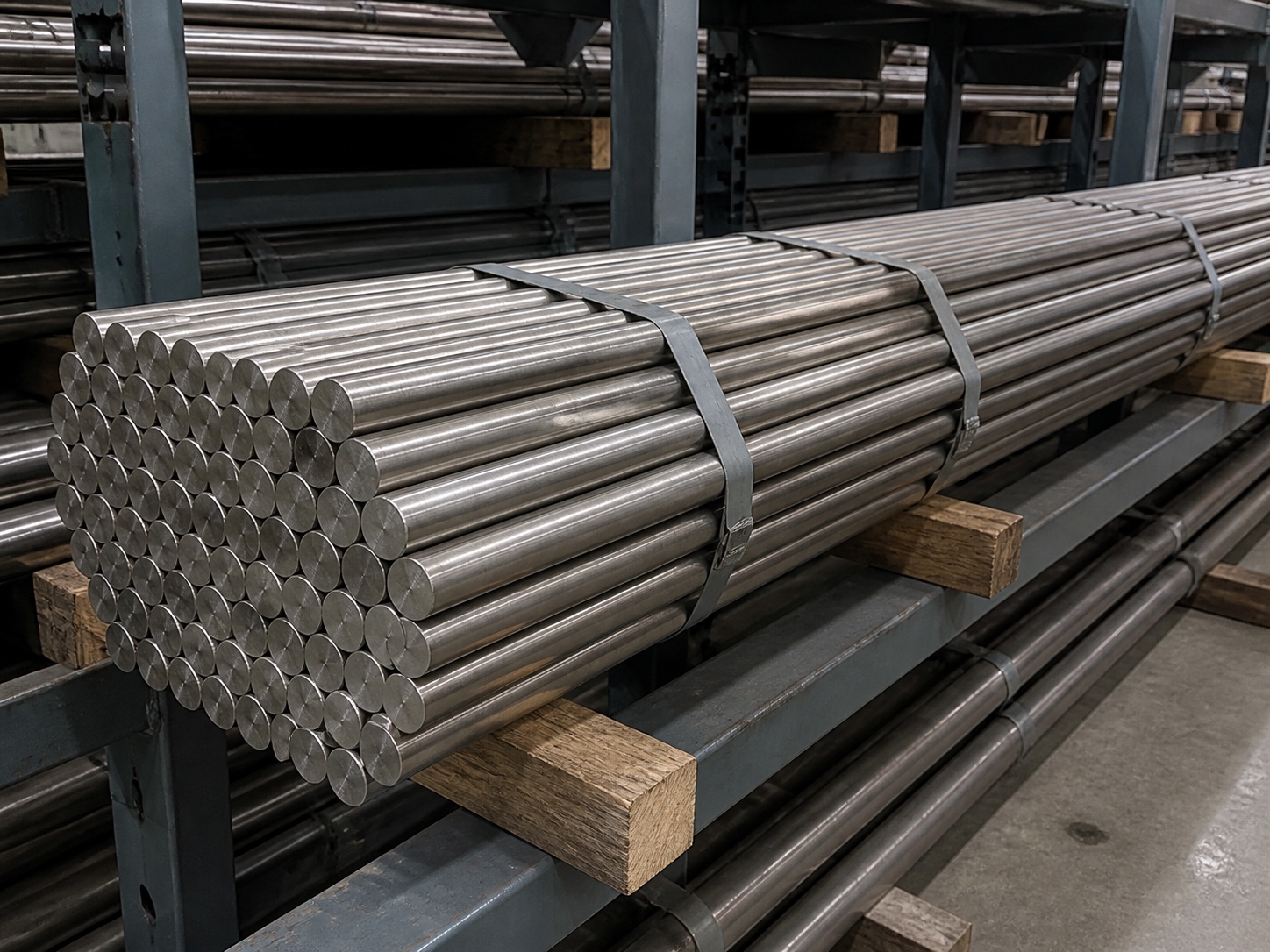
Grade 2 is commercially pure titanium. Grade 5 is Ti-6Al-4V with a different mechanical acceptance basis. ASTM B348 covers bar and billet, but it does not choose the alloy. Put grade, size and condition on the purchase description. If an approved drawing cites AMS 4928 for Grade 5 bar, use it. Otherwise I leave AMS 4928 off the quotation. See the ASTM B348 bar and billet guide for the specification and the material-level Grade 2 vs Grade 5 comparison for other product forms.
| Decision point | Grade 2 bar | Grade 5 bar |
|---|---|---|
| Material | Commercially pure titanium | Ti-6Al-4V alloy |
| Specification line on the order | ASTM B348, plus the approved drawing | ASTM B348, or AMS 4928 when the drawing calls for it |
| What usually decides it | Corrosion duty, with forming or welding ahead | A load path sized for Ti-6Al-4V |
| Strength acceptance | Use the Grade 2 minimums for the ordered condition and applicable standard | Use the annealed Grade 5 minimums unless the drawing controls another route |
| Corrosion selection | Review medium, concentration, temperature and crevices | Higher strength does not approve the corrosion duty |
| Forming and welding | Often reviewed for formed or welded fabrication | Confirm forming and welding against the drawing |
| What the machine shop plans for | Smearing and built-up edge on the cutting tool | Heat staying close to the cut and tool wear rising |
| Where the bar usually ends up | Fabricated equipment, welded assemblies, corrosion-service parts | Shafts, fastener blanks and other loaded machined parts |
| Commercial and availability check | Confirm section, size, condition, quantity and documents | Normally quotes higher; confirm the same order fields |
| RFQ fields that change | State corrosion duty, fabrication, dimensions and inspection | State drawing basis, dimensions, condition and specification |
Take acceptance values from the ASTM B348 revision named on the order and the approved drawing. Our ASTM B348 bar and billet guide summarizes the standard’s structure; it is not an acceptance document, and values must not be copied between sizes, conditions or product forms.
Strength, hardness and bar condition
Grade 5 carries the higher strength level, so it appears on load-bearing machined parts rather than as a general Grade 2 upgrade. Diameter, supplied condition and the applicable standard table control acceptance. The drawing remains responsible for the load.
| Grade | What the guide states |
|---|---|
| Grade 2 | Use the commercially pure grade where the approved design is led by corrosion duty, forming or welding |
| Grade 5 | Carries the higher strength level, so it appears on load-bearing machined parts rather than as a general Grade 2 upgrade |
| Grade 23 | The extra-low-interstitial Ti-6Al-4V variant. A distinct grade with its own interstitial limits and acceptance requirements under the bar standard named on the order |
The ASTM B348 Grade 5 route discussed here uses an annealed acceptance basis. AMS 4928 also covers annealed Ti-6Al-4V bar, wire, forgings and rings. An STA requirement needs its own heat-treatment specification or approved drawing callout; do not append it to an annealed specification line. If hardness is an acceptance item, state the test method and range. The shop also needs the supplied condition and machining allowance.
Grade 2 tends to smear at the cutting edge and can build material onto the tool. Grade 5 keeps more heat close to the cut and usually raises tool-wear risk. The machining titanium bar stock guide carries the cutting discussion; this page does not prescribe speeds, feeds or tool life.
The service conditions behind a Grade 2 bar enquiry
“Chemical service” still leaves the specification blank. I ask for the medium, concentration and temperature, then whether exposure is continuous or cyclic. Wet-dry duty differs from a flooded line. Crevices, deposits and dissimilar-metal contact change the review again. Load stays on the drawing. Grade 2 often comes up for corrosion-service parts that will be formed or welded, subject to the approved design. Welding needs clean titanium practice and adequate inert gas shielding. Put post-weld requirements in the drawing or qualified procedure.
| What the review asks for | What the guide states |
|---|---|
| Medium, concentration and temperature | “Chemical service” still leaves the specification blank |
| Whether exposure is continuous or cyclic | Wet-dry duty differs from a flooded line |
Grade 5 bar and the drawing behind it
A completed drawing calling for Ti-6Al-4V closes the alloy question. The review moves to standard revision, condition, surface, dimensions and inspection. On an unfinished drawing, Grade 5 used as a general margin adds machining and forming difficulty while the corrosion question stays open. The designer has to accept that trade before cutting starts. A request to replace Grade 5 with Grade 2 also goes back to engineering because the part was designed around a different strength level.
Cost and availability belong to the exact order line
Grade 5 bar normally quotes above Grade 2 when size, condition and quantity are equal. The gap is not a fixed ratio; section and document scope move it. Check stock for the same combination. A lower price does not authorize substitution. If engineering accepts another grade, revise the drawing or purchase description before ordering.
| Point | What the guide states |
|---|---|
| Relative price | Grade 5 bar normally quotes above Grade 2 when size, condition and quantity are equal |
| How much above | The gap is not a fixed ratio; section and document scope move it |
Neither grade drops into the other’s place, and the mill certificate cannot close the gap. The certificate confirms what was supplied against the order that was placed. It carries no authority over a change that never went back to the drawing.
If neither Grade 2 nor Grade 5 fits
Two corrosion-alloy routes sit outside this comparison. When a corrosion review rejects commercially pure bar for the medium in question, the next review may move to Grade 7 for reducing-acid service or Grade 12 for hot brine and crevice conditions. The titanium grades chart carries the full comparison across grades.
Where Grade 23 leaves the Grade 5 route
Grade 23 is the extra-low-interstitial Ti-6Al-4V variant. It is a distinct grade with its own interstitial limits and acceptance requirements under the bar standard named on the order, or under the medical specification when the approved drawing calls for one. The supplier should not treat “ELI” as a casual synonym for Grade 5 or quote it against an ordinary Grade 5 line. Implant, medical or other ELI requirements should be checked against the approved drawing and the Grade 23 titanium data sheet.
The lines I send back on an incomplete bar RFQ
Two grades can only be priced against each other when both lines rest on the same assumptions, so an incomplete enquiry usually returns to the buyer before it reaches the mill. What I ask for:
- Grade and governing standard, with the revision if the drawing names one
- Bar shape and section: diameter, across flats, or width and thickness
- Cut length, and whether it already includes saw and facing stock
- Supplied condition and surface route
- Quantity broken down by size rather than one total weight
- Application and service environment
- Machining allowance where the part is cut from the bar
- Inspection and NDT scope
- Certificate type and heat or lot traceability
- Marking requirements
- Destination, delivery terms and packing
The words “standard tolerance” do not settle diameter, cut length, straightness, surface route or finish-machining allowance. Those lines belong in the order, and the bar forms, sizes and tolerances guide gives them a separate place without copying figures from an unrelated quotation.
A drawing answers more of this than a paragraph can. The machining titanium bar stock guide covers cutting and allowance when the shop is still choosing stock. Use the titanium bar RFQ checklist before the email goes out. Send the drawing and service conditions to [email protected] and I will come back on the lines that are still open.
What the selected grade still leaves open on the order
Choosing the grade settles the metallurgy. It does not settle the four fields that decide whether the bar can be machined as delivered, and a selection guide that stops at the grade leaves the buyer to discover them at receiving.
| Field the grade does not decide | What it controls | Where it belongs |
|---|---|---|
| Diameter tolerance | Whether the bar can go straight into a collet | Stated with the diameter, as a class or a value |
| Straightness | Feeding, chatter and bar loader behaviour | A value with the gauge length it applies over |
| Surface condition | Machining allowance and alpha case removal | Stated apart from the delivery condition |
| Examination scope | What is inspected and to which acceptance class | Named on the purchase order, not assumed |
What Beiyu publishes on the precision ground bar route
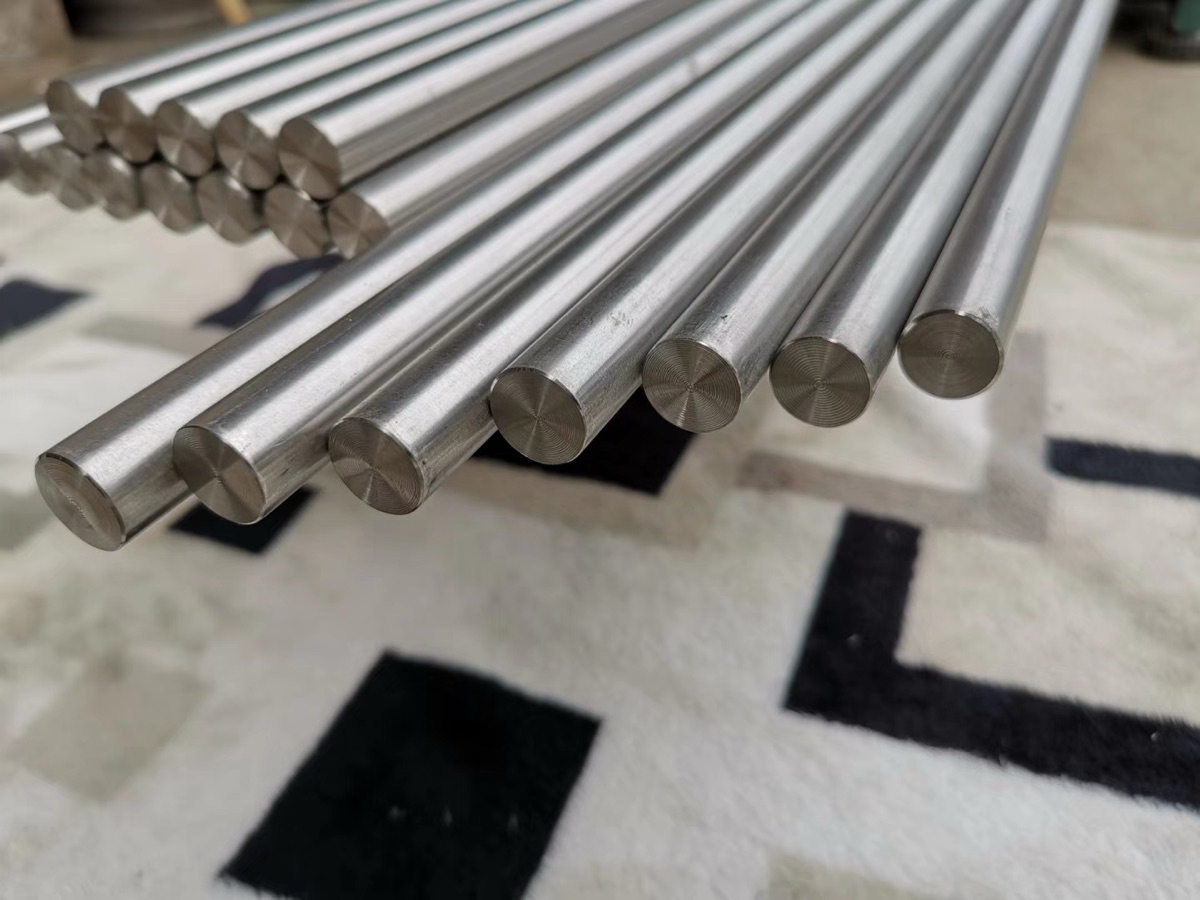
These values apply to the documented centerless ground route covering 3.175 mm to 25.4 mm diameter. They are a production capability reviewed against, not a stock statement, and the ordered combination is confirmed at quotation.
| Field | Published value | Tightened to |
|---|---|---|
| Diameter tolerance | ±0.0127 mm (±0.0005 in) | ±0.0076 mm on request |
| Straightness | 0.5 mm per metre | 0.3 mm per metre on diameters up to 25 mm, a threshold separate from the 25.4 mm route boundary |
| Examination | Ultrasonic, eddy current, optical surface, laser diameter and straightness, each at 100 percent of the lot | Acceptance class named on the order |
| Certificate | EN 10204 3.1 mill test certificate with heat number traceability | Reporting scope set by the order |
These controls belong to the quoted precision program and are not carried across to the full 1 mm to 500 mm round bar envelope. A grade chosen well and a route left unstated still produces a quotation the drawing cannot use.
Specification detail with sources
ASM Handbook property data and the ASTM B348 acceptance tables make the Grade 2 versus Grade 5 titanium bar decision concrete. On strength, B348 sets annealed Grade 5 bar at 828 MPa minimum yield against 275 MPa for Grade 2, 3 times the acceptance floor; on mass, the handbook densities sit within 2 percent of each other at 4.51 g/cm³ for Grade 2 and 4.43 g/cm³ for Ti-6Al-4V, so nearly the whole 3-to-1 strength advantage survives on a per-kilogram basis. On heat, ASM Handbook thermal-conductivity values place Ti-6Al-4V near 6.7 W/m·K against roughly 16 to 22 W/m·K for the commercially pure grades, which is the measured property behind this page’s note that Grade 5 keeps cutting heat concentrated at the tool edge.
Beiyu Titanium quotes both grades from one bar envelope, round bar from 1 to 500 mm diameter in lengths to 6,000 mm with tolerance classes h6 to h9 and H6 to H9 on request, so a Grade 2 line and a Grade 5 line can be priced side by side at the same section, length and condition. In Beiyu’s supply practice the two grades travel as 2 separate order lines, each stating grade, condition and section, because a certificate issued against one line cannot be read across to the other.