
Beiyu supplies titanium clad materials for pressure vessels, tube sheets, heat exchangers, chemical reactors, electrolytic equipment and corrosion-resistant industrial structures. Titanium cladding is often selected when the process side requires corrosion resistance while the backing material provides structural strength or cost control.
Clad Titanium products
Showing 1-3 of 3 products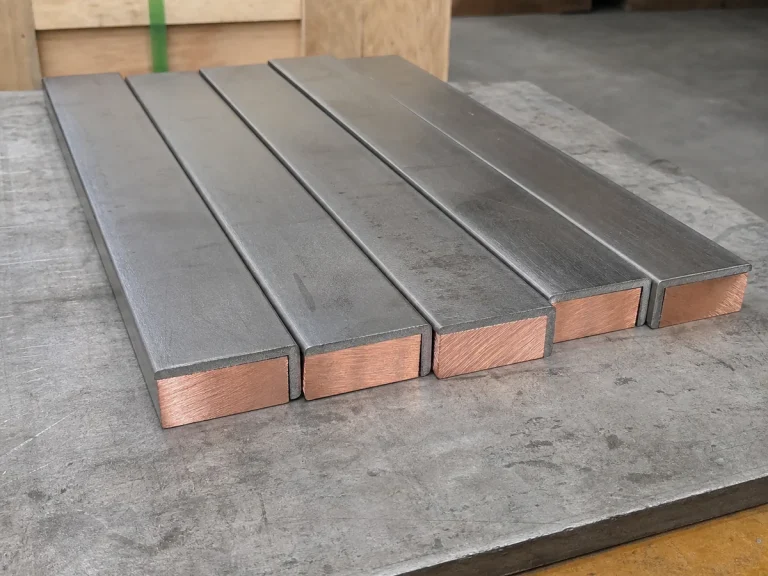 Titanium Clad Copper BarTitanium clad copper bar for conductive components that need a titanium corrosion barrier with a copper coreView & RFQ >CLAD
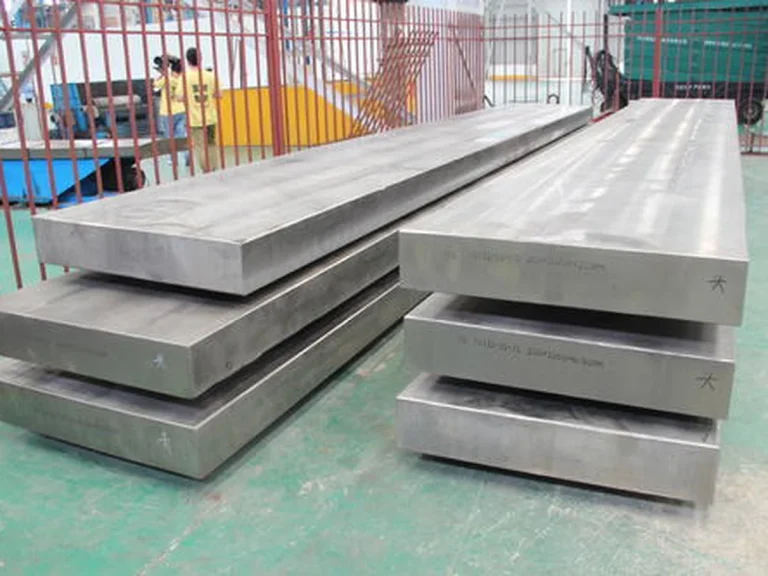 Titanium Clad PlatesTitanium clad plates for chemical equipment, pressure-vessel parts and corrosion-resistant fabricationView & RFQ >CLADTitanium Clad Steel PlatesTitanium clad steel plate for vessels, tube sheets, transition parts and corrosion-service equipment where titanium corrosion resistance is combined with steel structural supportView & RFQ >
 Technical guides
Clad titanium product selection
Clad titanium products combine a titanium corrosion barrier with a conductive or structural base metal. The RFQ must state the titanium layer and base metal separately, then define the bonding, dimensions, machining and inspection needed for the finished application.
| Product route | Common selection context | RFQ inputs to define |
|---|---|---|
| Titanium clad copper bar | Conductive components requiring a titanium corrosion barrier | Titanium grade and layer, copper grade, section, length, conductivity and machining details |
| Titanium clad plate | Chemical equipment and corrosion-resistant fabrication | Metal combination, total and clad thickness, plate size, flatness, edge condition and bonding requirement |
| Titanium clad steel plate | Vessels, tube sheets and transition parts | Titanium grade, steel grade, each layer thickness, drawing, heat treatment and test scope |
Send both metal grades, layer and total thicknesses, dimensions, drawing, quantity, bonding requirement and inspection scope.
Request a clad titanium quoteHow ordering works for clad titanium
Clad material is quoted from the complete metal combination and drawing. State the titanium grade and layer thickness, base-metal grade and thickness, total dimensions, bonding requirement, machining allowance and final application. For clad copper bar, include conductivity and terminal details when they are part of the purchase specification.
Price and production schedule depend on metal grades, layer ratio, plate or bar size, bonding route, heat treatment, edge preparation, machining and inspection scope. UT, shear, bend or other bond tests are included only when required by the ordered specification and purchase order. MOQ, stock and lead time are confirmed in the quotation.
Clad Titanium RFQ questions
Which Clad Titanium grade should be specified?
Select the grade by service medium, strength requirement, forming or machining route and any buyer drawing. Common options in this category include Titanium clad copper, Titanium clad steel, Titanium clad plate, Drawing-based clad ratio.
Which standards apply to Clad Titanium RFQs?
The purchase order should state the applicable material or project standard. Typical references for this category include Bonding specification, Clad thickness, Base metal grade, Dimensional inspection.
What information should be sent for quotation?
Send grade, standard, dimensions, tolerance, quantity, surface condition, application, destination and required documents such as MTC or EN 10204 3.1.
More about Clad Titanium
The titanium in pressure-vessel cladding guide separates cladding, backing and overall thickness before the vessel drawing is quoted.
Common titanium cladding materials include Grade 1, Grade 2, Grade 7 and Grade 12, depending on the corrosive medium and design conditions. Backing materials and cladding thickness should be confirmed according to drawing requirements, vessel design code, corrosion allowance, welding plan and inspection standard.
RFQs for titanium clad plate, titanium clad tube sheet or titanium clad transition parts should include base material, titanium grade, total thickness, cladding thickness, width, length, tolerance, drawing, application, required standard and inspection scope. For pressure equipment, buyers should clarify requirements for mill test certificate, EN10204 3.1, ultrasonic testing, bond quality inspection, PMI testing and export documentation.
For clad titanium quotations, send the drawing, material combination, dimensions, quantity, operating environment and certificate requirements. Process medium, temperature and pressure information help confirm whether Grade 2, Grade 7 or another titanium grade should be considered for the cladding layer.
Specification detail with sources
ASTM B898 is the specification that governs titanium clad plate, and it sets the acceptance value that matters most in cladding, a minimum bond shear strength of 140 MPa at the titanium to steel interface. The titanium layer itself is ordered to ASTM B265 chemistry, where Grade 1, the most formable cladding choice, runs a minimum tensile strength of 240 MPa and Grade 2 raises that floor to 345 MPa for designs that credit the cladding in the strength calculation.
Beiyu supplies the titanium side of clad packages as ASTM B265 plate from its own documented envelope, 0.5 to 3 mm thick in widths to 1,500 mm and 3 to 70 mm thick in widths to 2,500 mm, in lengths to 6,000 mm. Chemical composition on Beiyu plate is checked through one of two laboratory routes before release and dimensional inspection is recorded against the ordered tolerance, with third party inspection arranged when the clad fabricator or end user names one in the order. Beiyu asks clad buyers for the same six RFQ fields it reviews on every order, grade, standard, dimensions, tolerance, surface condition and inspection scope, plus the backing steel and total thickness from the drawing, so the titanium layer is quoted against the correct bonding and forming route.
What a clad order has to state
A clad product is two materials and one bond, and each of the three is accepted on its own terms. The cladding, the backing and the bond test scope are separate order lines, and none of them is implied by an overall thickness.
| Form | Range |
|---|---|
| Clad plate | Two layer thicknesses of 1 mm to 30 mm and 7 mm to 300 mm, width under 5000 mm, length under 15000 mm |
| Clad bar | Layer thickness 1 mm to 3 mm; rectangular 20 mm to 150 mm wide by 6 mm to 30 mm thick; square 10 mm to 30 mm; rod Ø8 mm to 50 mm; wire Ø2.0 mm to 8.0 mm; length under 6000 mm |
The order has to say which of those two thickness figures is the cladding and which is the backing, because the same overall build can be reached from several combinations with different prices and different acceptance histories. The combinations produced include titanium clad steel, stainless clad steel, nickel and nickel alloy clad steel, copper clad steel, zirconium, tantalum and niobium clads, and titanium copper, stainless copper and nickel copper clad bar. The work is quoted against ASTM B898 with its ASME adoption SB-898, ASME SA-265, ASME SA-263 and SA-264, and GB/T 12769, with the delivery condition stated as R or M.
Bond test scope is the line most often left open: whether ultrasonic, shear or bend testing is included, and to what coverage. The ranges above are the Beiyu Titanium supply envelope, and combinations outside them are quoted against the drawing.
Request a quote for Clad Titanium
Send grade, standard, size, tolerance, quantity, application and certificate requirements for review.