
Titanium billet, slab and ingot are the semi-finished stock that titanium forgings, ring-rolled rings and large machined parts are made from. Beiyu supplies this stock in commercially pure grades (Grade 1, Grade 2) and alloy grades (Grade 5 / Ti-6Al-4V, Grade 7, Grade 12, and Grade 23 ELI), typically produced from vacuum-melted ingot.
Bar billet is supplied to ASTM B348, and forging stock to the exact ASTM B381 grade and UNS named on the purchase order, with chemistry reported per heat. Common forms are titanium slabs and billet for forging and rolling, commercial titanium ingot as CP and alloy remelt stock, and solid titanium block as machining and blank stock. Stock can be supplied as-forged, rolled, peeled or ground, and cut to length.
RFQs should state grade, billet diameter or section, length, condition, ultrasonic inspection class and certificate scope. On traceable orders, each lot is supplied with a mill test certificate to EN 10204 3.1 and heat-number traceability.
Titanium Billet products
Showing 1-3 of 3 products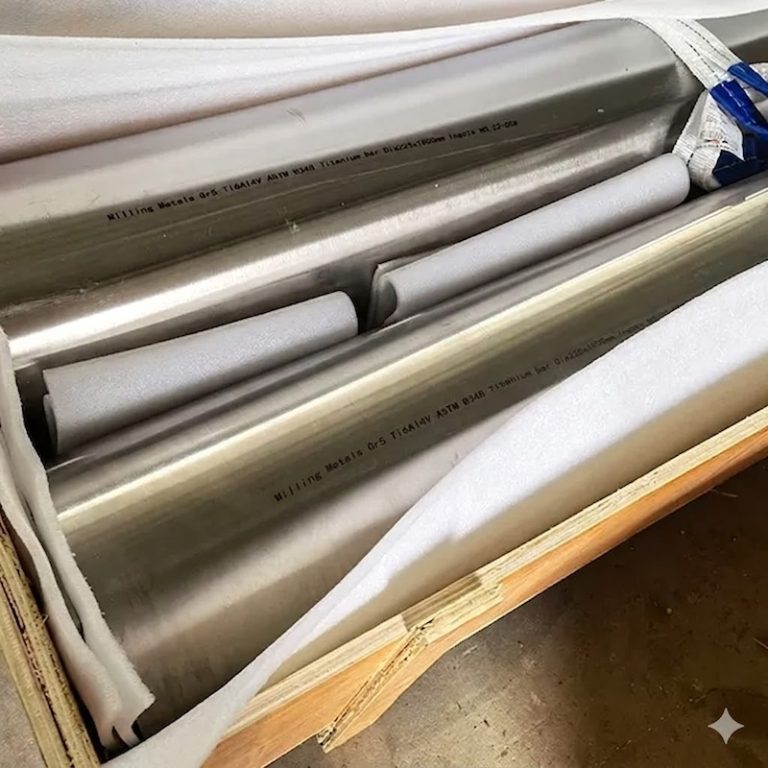 Commercial Titanium Ingot | CP and Alloy Remelt StockCommercial titanium ingot for remelt, forging, rolling and downstream titanium productionView & RFQ >BILLET
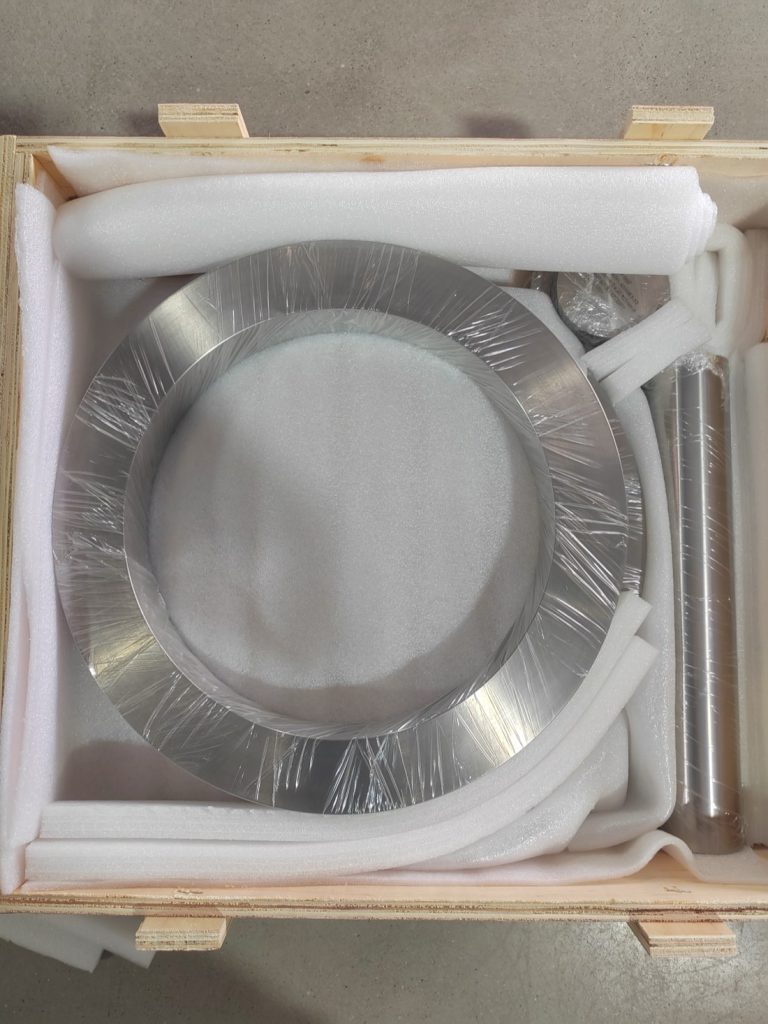 Titanium Slabs and Billet | Forging and Rolling StockTitanium slabs and billet for forging, rolling, machining and drawing-based titanium material projectsView & RFQ >BLOCK
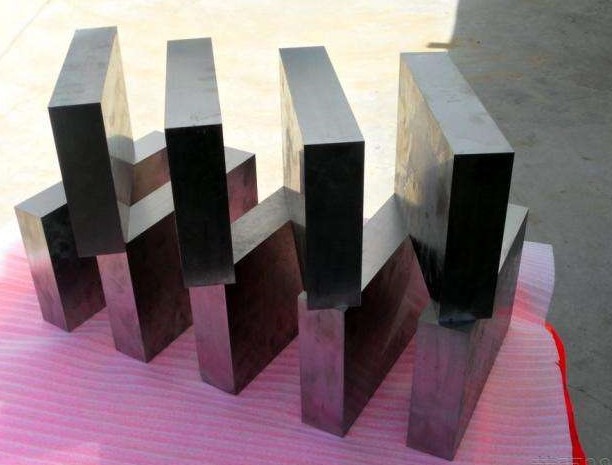 Solid Titanium Block | Machining and Blank StockSolid titanium block for machining stock, cut blanks and drawing-based componentsView & RFQ >
 Technical guides
Titanium billet, ingot and block selection
This category groups conversion stock and machining blanks rather than one interchangeable product. A titanium billet RFQ should identify the downstream route first, then define grade, dimensions or weight, condition, surface, machining allowance and inspection scope.
| Product form | Downstream route | RFQ inputs to define |
|---|---|---|
| Commercial titanium ingot | Remelt, forging or rolling conversion | Target chemistry, grade, melt route, section size, weight and surface condition |
| Titanium slab or billet | Forging, rolling, extrusion or machining | Grade, standard, section, length, condition, cutting allowance and UT requirement |
| Solid titanium block | CNC machining and drawing-based blanks | Block dimensions, tolerance, machining allowance, condition and surface |
Send the downstream process, product form, grade, dimensions or weight, condition, quantity and inspection scope for review.
Request a billet quoteHow ordering works for titanium billet and conversion stock
Billet, slab, ingot and solid block are quoted by the required downstream route. Beiyu first reviews whether the material will be remelted, forged, rolled, extruded or machined, then confirms the appropriate form, ordered standard, dimensions or weight, condition, surface and machining allowance.
Price and production schedule depend on grade and chemistry, melt or conversion route, input weight, section size, conditioning, inspection and document scope. Ultrasonic inspection, PMI, heat-number traceability and EN 10204 3.1 documentation are included only when required by the ordered specification and purchase order. MOQ, stock and lead time are confirmed in the quotation.
Titanium Billet RFQ questions
Which Titanium Billet grade should be specified?
Select the grade by service medium, strength requirement, forming or machining route and any buyer drawing. Common options in this category include CP Ti, Gr 2, Gr 5, Project alloys.
Which standards apply to Titanium Billet RFQs?
The purchase order should state the applicable material or project standard. Typical references for this category include ASTM B348, Forging stock, UT when required, MTC / 3.1.
What information should be sent for quotation?
Send grade, standard, dimensions, tolerance, quantity, surface condition, application, destination and required documents such as MTC or EN 10204 3.1.
More about Titanium Billet
A supplier comparison for this family, built from one search on one day and read from each company’s own site, is at Titanium Billet Suppliers: Five Company Pages Compared.
Specification detail with sources
ASTM B348 covers titanium billet alongside bar, and its chemistry table is what a billet heat analysis is certified against: Grade 5 Ti-6Al-4V must hold aluminium between 5.5 and 6.75 percent and vanadium between 3.5 and 4.5 percent, with oxygen capped at 0.20 percent. Grade 23 ELI tightens the oxygen cap to 0.13 percent, the single figure that separates ELI billet from standard Grade 5 stock on a certificate. Forging stock ordered under ASTM B381 uses the F-grade designations, and annealed F-5 acceptance after forging is 895 MPa minimum tensile strength with 828 MPa minimum yield.
Beiyu Titanium supplies the forged stock behind this category in two envelopes: forged rounds from 50 to 500 mm diameter in lengths to 3,000 mm and forged blocks from 50 to 600 mm section, with square sections above 30 x 30 mm supplied as forged block rather than rolled bar. In Beiyu’s routing, billet chemistry is analysed per heat at an external mill laboratory or the mill’s own in-house laboratory before release, followed by dimensional checks and mechanical testing, so an RFQ that states grade, section, length and inspection scope maps onto the checkpoints Beiyu runs before the stock is released.
Supply envelope for billet and conversion stock
Conversion stock is bought by what it will become, so the governing dimension differs by form. The table gives the ranges each route is worked to.
| Form | Governing dimension | Ordered against |
|---|---|---|
| Round bar and billet input | 1 mm to 500 mm diameter, length to 6,000 mm | ASTM B348 |
| Forged round bar | 50 mm to 500 mm diameter, length to 3,000 mm | ASTM B381 |
| Ring forging | Outside diameter 50 mm to 2,000 mm, bore 10 mm to 900 mm, height 20 mm to 400 mm | ASTM B381 |
| Disc forging | Outside diameter 50 mm to 2,000 mm, thickness 20 mm to 500 mm | ASTM B381 |
| Block forging | 50 mm to 600 mm across the governing dimension | ASTM B381 |
| Ingot | 440 mm to 720 mm diameter | Chemistry, melt route and single weight confirmed at review |
The ranges above are the Beiyu Titanium production envelope rather than a statement that every grade and condition is available at every size, and the ordered combination is confirmed at quotation. ASTM B348 separates bar from billet by cross-sectional area rather than by name, placing the boundary at 16 square inches, 10,323 square millimetres (ASTM B348, bar and billet definitions). Which side of that boundary a section falls on decides whether the section is certified as bar or as billet under that specification.
The certificate side of that order carries a second set of choices. The way heats and batches are accepted is covered in heat and batch acceptance, the document scope in the layers of a certificate package, and how identity survives the trip in marking, separation and packing.
Request a quote for Titanium Billet
Send grade, standard, size, tolerance, quantity, application and certificate requirements for review.