
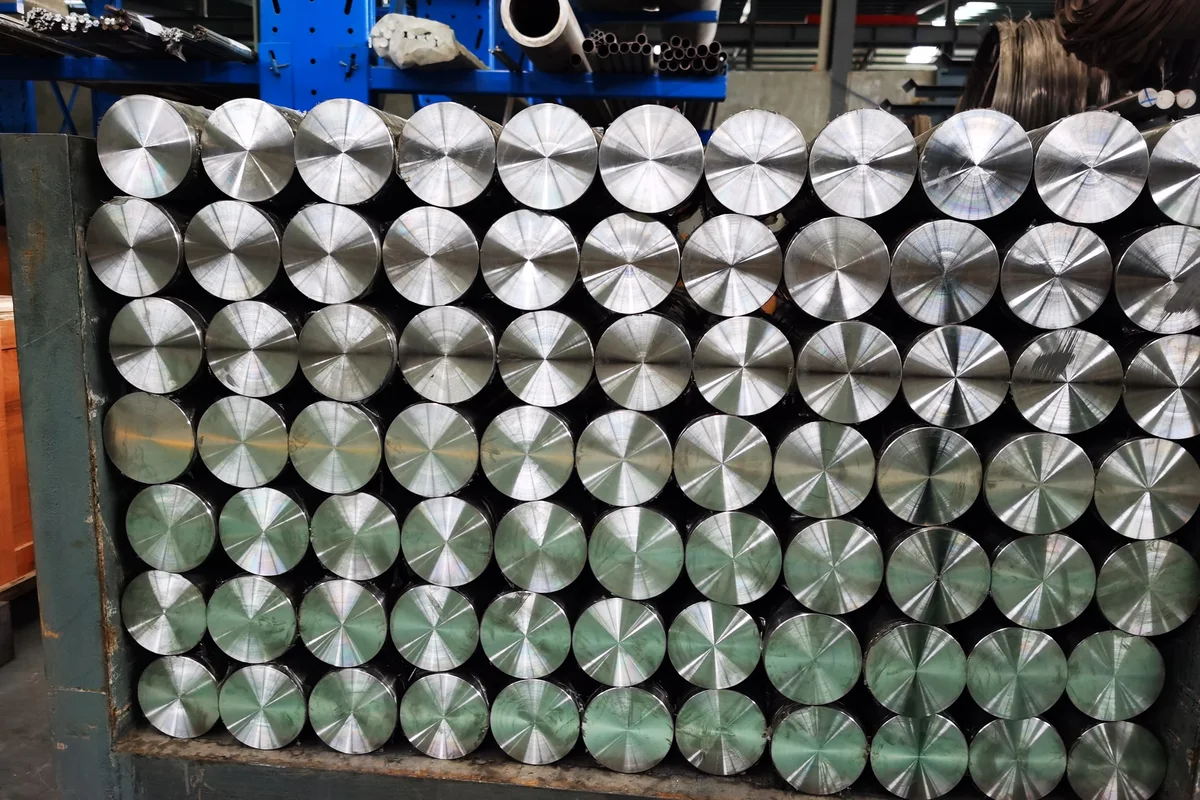
Cut length is where material quietly disappears
Bar is bought by weight and consumed by part. Between those two sits the cut length tolerance and the end condition, and neither is implied by the diameter or the standard. An order that leaves them blank returns bar that is legal against the specification and still wasteful on the machine.
| What the cut fields decide |
|---|
| How many parts come out of each bar |
| Whether the first and last part of each bar are usable |
| How the bar loads into a feeder or a chuck |
Random length and cut-to-length are different purchases
| How it is ordered | What arrives |
|---|---|
| Mill or random lengths | Lengths within a stated range, mixed within the lot |
| Cut to length | A stated length with a stated tolerance on every piece |
| Cut to length, no tolerance stated | The mill applies its own cutting tolerance, which may not suit the feeder |
End condition is a separate field from length
How the bar ends are left affects loading, safety and the first cut. It is not covered by the length tolerance.
| End condition | What it is usually ordered for |
|---|---|
| As sawn | Further processing will remove the end anyway |
| Deburred | Handling safety and clean loading |
| Chamfered | Entry into collets, bushings and feed tubes |
| Faced square | The end becomes a machining datum |
The secondary operations Beiyu can run on bar
These are performed against the order rather than as a default finish, and they are confirmed for the ordered diameter and length before pricing.
| Secondary operation |
|---|
| Chamfering |
| Straightness control |
| Cut to length |
| Deburring |
| Custom packing and lining |
Where the cut interacts with the rest of the order
| Field | Interaction |
|---|---|
| Straightness | Bow over a long bar affects how it feeds regardless of cut accuracy |
| Surface condition | Decides whether the end can be faced without a roughing pass |
| Packing | Cut lengths change how the material is bundled and protected |
| Marking | Short cut pieces raise the question of how each piece stays identified |
What to state on the order
Length: ______ (state random or cut to length)
Length tolerance: ______ (state plus and minus separately if they differ)
End condition: ______ (as sawn, deburred, chamfered or faced)
Chamfer detail: ______ (state angle and width if a chamfer is required)
Straightness: ______ mm per metre
Marking: ______ (state what must appear on each piece)
Say how the bar will be loaded and machined. Beiyu confirms the cut and end requirements against the ordered diameter and length before quoting.
Specification detail with sources
Cut length and end condition are order fields, not properties of the grade. ASTM B348 routes all dimensional tolerances to its own tables (ASTM B348, dimensions, weight and permissible variations) and lists finish among the items an order shall include, together with grade number, product classification, chemistry, mechanical properties, marking, packaging, required reports and disposition of rejected material (ASTM B348, ordering information). Nothing in the grade decides how the ends arrive.
| Field | Where it is fixed |
|---|---|
| Chemistry and mechanical minimums | The grade, in ASTM B348 |
| Length tolerance | The tolerance tables of the ordered standard |
| End condition | Stated by the buyer on the order |
| Disposition of rejected material | Named on the order under ASTM B348 |
Weight and quantity language sits in the same clause: ASTM B348 treats quantity extras as applicable to individual items of a grade, thickness, width and length ordered at one time for shipment to one destination (ASTM B348, weight). The same clause adds that different lengths of the same size and grade may be combined for quantity extra, so splitting one line into several cut lengths is an order decision to make deliberately rather than an automatic penalty. Naming a length tolerance settles the dimension. It does not by itself decide the end condition, which is a separate field with its own consequences at the bar loader and the first cut. In Beiyu’s supply practice cutting, chamfering, deburring and end facing are performed against the order rather than as a default finish, and are confirmed for the ordered diameter and length before pricing.
Send a technical RFQ
For titanium bar RFQs, include grade, standard, diameter, the cut length with its tolerance, the end condition required, how the bar will be loaded and machined, quantity and the required mill test certificate.