
Beiyu Titanium supplies hexagonal titanium bar up to 17 mm across flats, in lengths up to 6000 mm, to ASTM B348, with an EN 10204 type 3.1 certificate by order scope. Hex bar exists for one reason: parts with a wrench flat or a nut form machine faster from hex stock than from round.
What sizes does titanium hex bar come in?
| Item | Beiyu supply range |
|---|---|
| Across flats | Up to 17 mm |
| Length | Up to 6000 mm, cut to length on order |
| Common grades | Grade 2 (UNS R50400), Grade 5 (UNS R56400) per ASTM B348 |
| Certificate | EN 10204 type 3.1 with heat and pour numbers, by order scope |
Above 17 mm across flats the economics flip: the hex form is machined from round bar, and the RFQ reply states that route when it applies.
What across-flats tolerance does hex bar hold?
The numbers a screw-machine shop actually needs, from ASTM B348 itself, in millimetres:
| Across flats (mm) | Hot-worked, B348 Table 5 | Cold-finished, B348 Table 8 | Max difference over 3 measurements, Table 5 |
|---|---|---|---|
| 6.35 to 12.70 | +/-0.18 | 12.70 to 25.40: +0 / -0.10 | 0.28 |
| 12.70 to 17 | +/-0.25 (band 12.70 to 25.40) | 0.38 |
The last column is the corner-integrity number: Table 5 caps the spread across three measurements at the same cross section, which is what tells you the hex will index consistently in a collet. Tighter figures for cold-finished feed stock go on the drawing.
How much does hex bar weigh per metre?
Density basis: 4.51 g/cm3 for Grade 2, 4.43 g/cm3 for Grade 5, per the Beiyu titanium weight calculator.
| Across flats (mm) | Grade 2 weight (kg/m) |
|---|---|
| 6 | 0.14 |
| 8 | 0.25 |
| 10 | 0.39 |
| 12 | 0.56 |
| 14 | 0.77 |
| 17 | 1.13 |
What is hex bar actually used for?
| Part | Why hex stock | Typical grade |
|---|---|---|
| Fasteners and nuts | The hex form is already there, only the thread and face are cut | Grade 2 for corrosion duty, Grade 5 for strength |
| Valve and instrument fittings | Wrench flats without milling | Grade 2 |
| Standoffs and bosses | One turning operation instead of turn plus mill | Grade 5 |
The saving compounds at quantity: a thousand small fittings machined from hex stock skip a milling operation each. In titanium the skipped operation also means less tool wear, which machinists price in. The behaviour of the alloy in the cut is covered in why Ti-6Al-4V galls and work hardens in machining.
How is hex bar measured and certified?
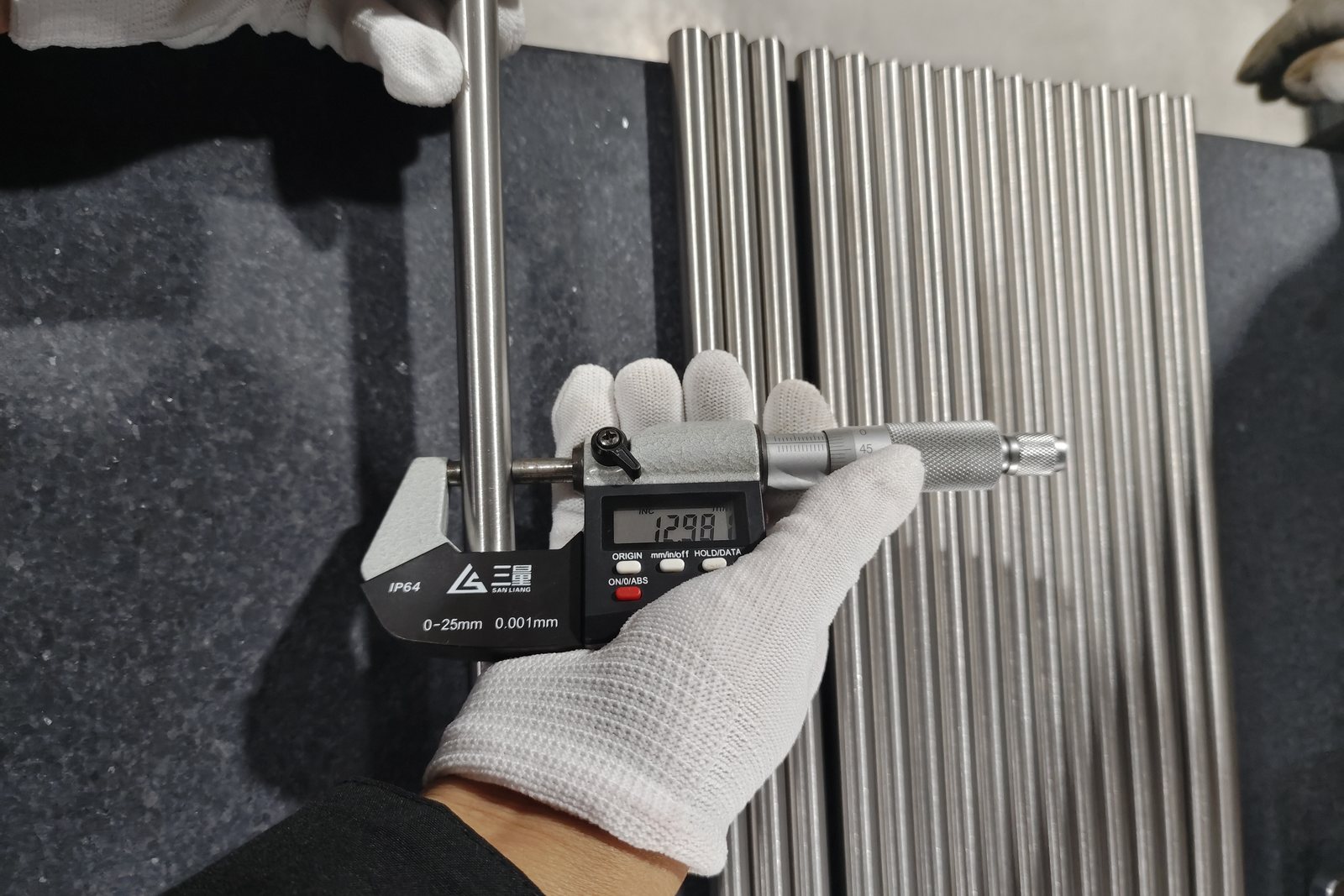
The across-flats dimension is measured flat to flat, the same way a wrench engages it. On marking, ASTM B348 clause 16.1 requires bars of 25.4 mm and over to be stamped with the heat number within 50.8 mm of one end; hex at 17 mm and under sits below that threshold, so traceability rides on the bundle tag, which must carry a heat number listed on the EN 10204 type 3.1 certificate.
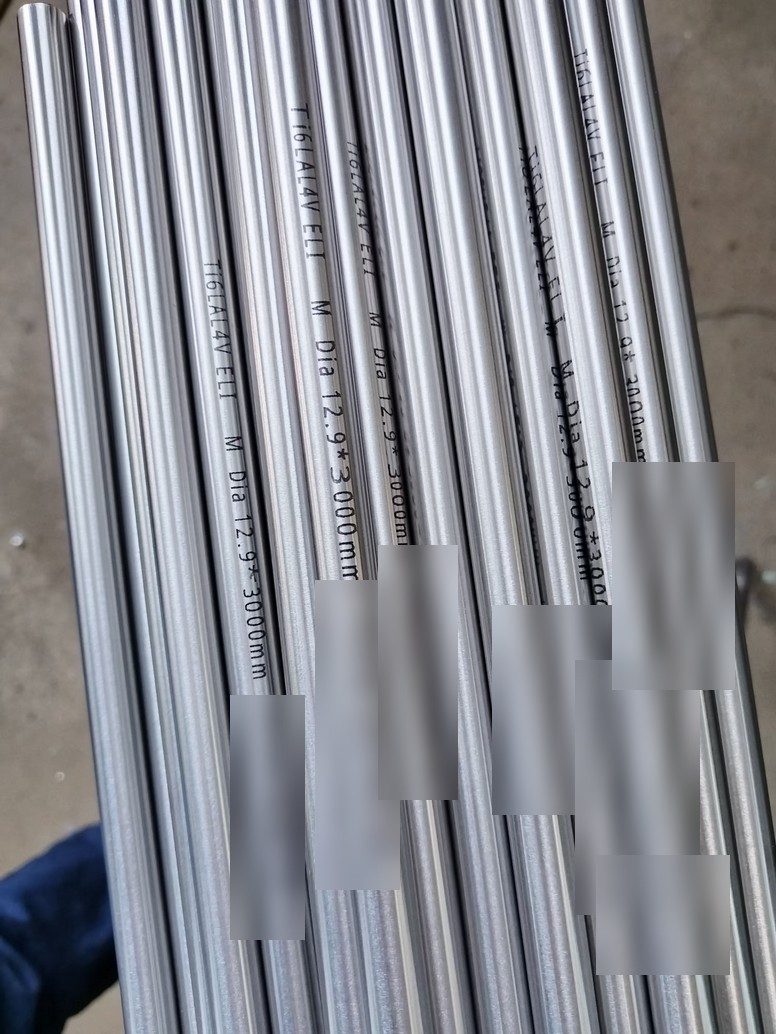
Grade 2 or Grade 5 in the chemistry, what actually differs?
| Limit, weight percent | Grade 2 | Grade 5 |
|---|---|---|
| Oxygen max | 0.25 | 0.20 |
| Iron max | 0.30 | 0.40 |
| Nitrogen max | 0.03 | 0.05 |
| Aluminium | None | 5.5 to 6.75 |
| Vanadium | None | 3.5 to 4.5 |
Both columns are Table 1 of ASTM B348. The aluminium and vanadium rows are the whole story: they are what makes Grade 5 roughly twice as strong and noticeably harder on tooling. The tensile numbers on the certificate come from testing per ASTM E8, and B348 clause 6.2 even fixes the strain rate, 0.003 to 0.007 inches per inch per minute up to yield, so two labs testing the same heat are held to the same procedure.
What goes on the RFQ?
| Field | Example wording |
|---|---|
| Section | Hex, across flats in mm |
| Grade and standard | Grade 2 or Grade 5, ASTM B348 |
| Length and quantity | Cut length in mm, pieces or kg |
| Certificate | EN 10204 3.1, heat traceable |
Specification detail with sources
The across-flats limit of 17 mm and the 6000 mm length limit are Beiyu’s published supply envelope for hexagonal bar. Weight figures are calculated at 4.51 g/cm3, the density used by the Beiyu weight calculator. Grade identities are per ASTM B348: Grade 2 under UNS R50400 with oxygen at 0.25 percent maximum and tensile strength at 345 MPa minimum in the annealed condition, Grade 5 under UNS R56400. Grade 5 tensile minimums under the same standard: 895 MPa tensile, 828 MPa yield. Certificate values trace to the methods ASTM B348 cites, including E8 for tension testing; the citation settles how the numbers are produced and adds no inspections beyond the order scope.
Frequently asked questions
Why is hex bar capped at 17 mm across flats? Above 17 mm Beiyu machines the hex form from round bar instead; the EN 10204 3.1 certificate then covers the parent round bar heat, and the hex geometry is checked as a machined dimension rather than a mill tolerance.
Can hex bar carry the same certificate as round bar? Yes, the EN 10204 3.1 format is the same, listing heat and pour numbers for the shipped material.
What does a metre of 17 mm hex weigh? About 1.13 kg in Grade 2 at 4.51 g/cm3, so a full 6000 mm length is under 7 kg, light enough to ship as parcels at small quantities.
Which section should I start from for a machined part? The decision logic across round, square, flat and hex is in choosing a titanium bar section.
Request a hex bar quotation
Send across-flats size, grade, standard, length, quantity and certificate requirement to the Beiyu RFQ page. Reviewed by Penn Ma, 15 years in titanium mill product export. Last reviewed: 2026-08-27.