
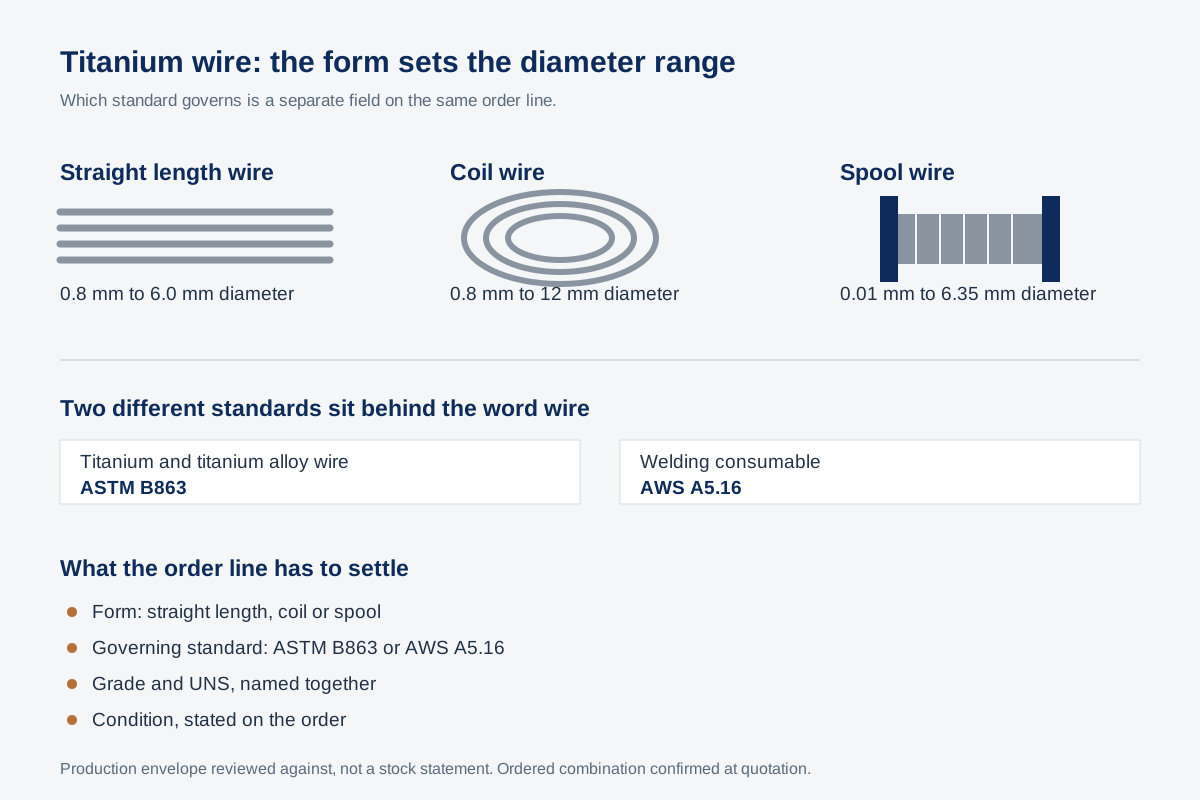
Wire is ordered by product form, not by diameter alone
Two enquiries can name the same diameter and still be different order lines. Titanium wire is supplied straight, in coil or on a spool, and the form sets the size range available and how the material is packed and fed. Which standard governs is a separate field on the same line, not something the form settles.
| What the order line has to settle |
|---|
| The form, which sets the diameter range that is reachable at all |
| How the wire is packed and fed at the buyer’s end |
| Which of the two wire standards the material is accepted against |
The three forms and the sizes Beiyu reviews against
| Form | Diameter range |
|---|---|
| Straight length wire | 0.8 mm to 6.0 mm |
| Coil wire | 0.8 mm to 12 mm |
| Spool wire | 0.01 mm to 6.35 mm |
The envelope is a production capability, not a stock statement, and not every combination of grade, diameter and condition exists across the whole range. The ordered combination is confirmed at quotation.
Two different standards sit behind the word wire
Naming a diameter and a grade does not say which specification the material has to satisfy. Mill wire and welding consumable wire are covered by separate standards, and the certificate names one of them.
| Ordered as | Standard |
|---|---|
| Titanium and titanium alloy wire | ASTM B863 |
| Welding consumable | AWS A5.16 |
| Neither stated | The mill has to ask before it can quote, or it guesses |
What changes when the wire is a welding consumable
A consumable is bought to be melted into a joint, so the fields that matter are not the same ones that matter for wire that will be formed or machined.
| Field | Why it is on the order |
|---|---|
| Classification under the welding standard | Decides which requirements the wire is tested against |
| Surface cleanliness | The wire surface enters the weld pool |
| Packing form | Decides whether it can be fed by the buyer’s equipment |
| Certificate scope | Decides what is reported against the heat |
Grade and UNS still have to be named together
| Grade | UNS |
|---|---|
| Grade 1 commercially pure titanium | R50250 |
| Grade 2 commercially pure titanium | R50400 |
| Grade 5 Ti-6Al-4V | R56400 |
| Grade 7 palladium-bearing unalloyed titanium | R52400 |
| Grade 9 Ti-3Al-2.5V | R56320 |
| Grade 12 Ti-0.3Mo-0.8Ni | R53400 |
| Grade 23 ELI, ordered to ASTM B863 | R56407 |
Grade 23 carries a different UNS number depending on which specification the order runs under. Under ASTM B863 it is R56407. Take the number from the standard named on the order rather than from a general grade table.
What to state on the purchase order
Form: ______ (straight length, coil or spool)
Governing standard: ______ (ASTM B863 or AWS A5.16)
Grade and UNS: ______
Diameter: ______
Length or coil and spool details: ______
Condition: ______ (R / M / Y, stated on the order)
Surface: ______ (state a requirement where it is an acceptance criterion)
Certificate: EN 10204 3.1 mill test certificate with heat number traceability, reporting scope by order
Name the form and the standard on the same line. Beiyu confirms the grade, diameter and standard combination against the ordered envelope before quoting.
Specification detail with sources
Wire runs under its own product standard, ASTM B863, while welding consumables run under AWS A5.16, and the certificate names one of them. The grade chemistry behind either is the same family of limits: ASTM B348 sets Grade 2 at 0.25 percent oxygen maximum and 0.30 percent iron maximum, Grade 5 at 0.20 percent oxygen maximum with 5.5 to 6.75 percent aluminium and 3.5 to 4.5 percent vanadium, and Grade 7 as unalloyed titanium with 0.12 to 0.25 percent palladium (ASTM B348, chemical requirements).
| Form | Diameter range Beiyu reviews against |
|---|---|
| Straight length wire | 0.8 mm to 6.0 mm |
| Coil wire | 0.8 mm to 12 mm |
| Spool wire | 0.01 mm to 6.35 mm |
Those ranges are Beiyu’s production envelope, not a stock statement. Where the wire is bought as a welding consumable, the surface enters the weld pool, so cleanliness belongs on the order as an acceptance field rather than an assumption. The analysis methods behind the certificate are the referenced ones: ASTM E1409 for oxygen and nitrogen by inert gas fusion, ASTM E1447 for hydrogen and ASTM E1941 for carbon by combustion (ASTM B348, referenced documents). Naming a method settles how a reported value was produced. It does not classify the consumable, which is done under the welding standard, and it does not set the packing form.
Send a technical RFQ
For titanium wire RFQs, include the form, the governing standard, grade and UNS, diameter, length or coil and spool details, condition, any surface requirement that is an acceptance criterion, quantity and the required mill test certificate.