
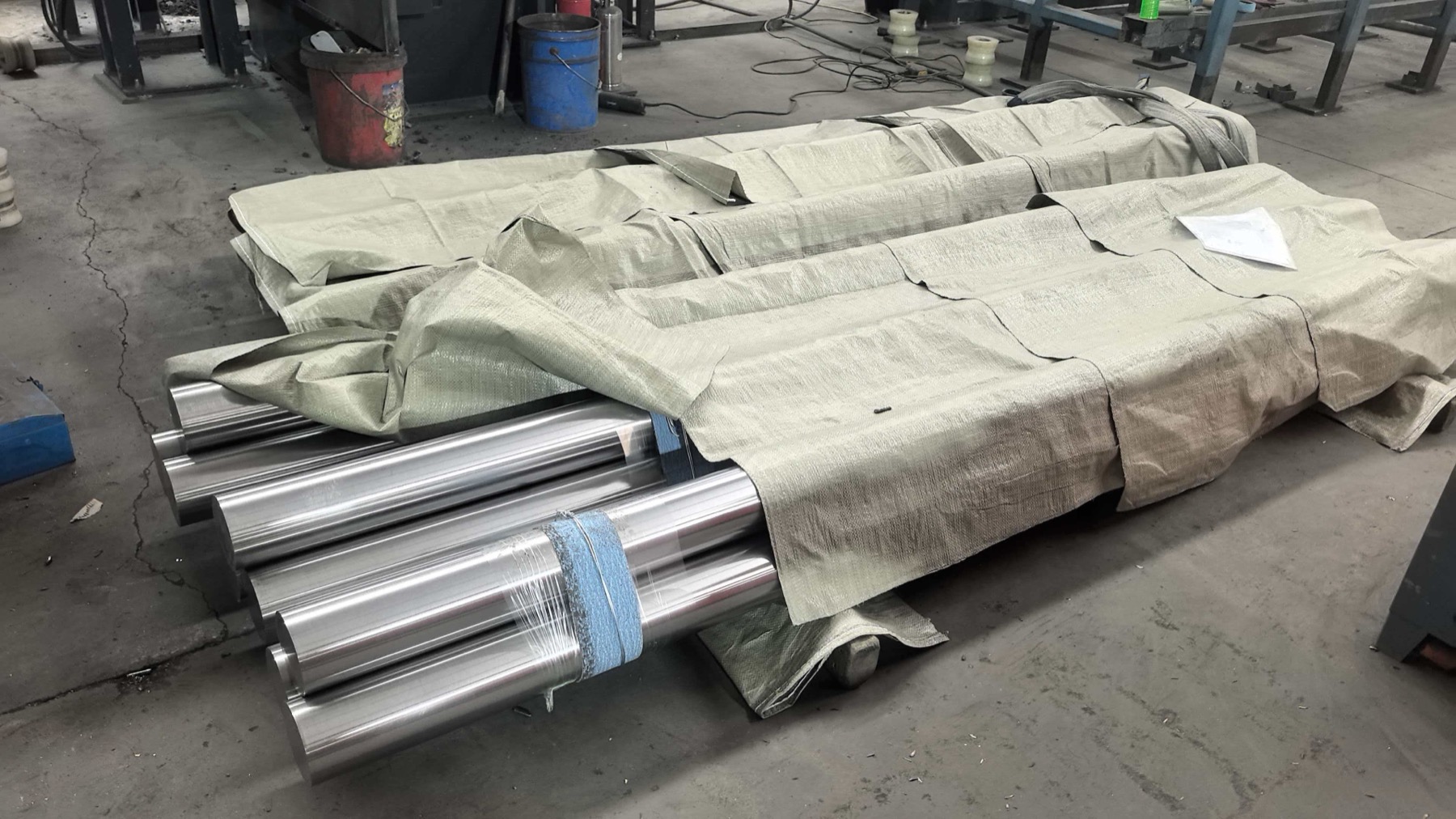
Titanium prices are driven mainly by the titanium sponge feedstock cost, the grade and alloying additions, the product form and processing, order quantity, and logistics including freight and duties. Alloy and palladium-bearing grades (such as Grade 5, 7 and 23) cost more than commercially pure Grade 1 and 2, and small or highly processed orders carry higher unit prices.
The main titanium price drivers
| Driver | Effect on price |
|---|---|
| Titanium sponge feedstock | The base raw material cost; moves with energy and supply |
| Grade and alloying | Alloy and palladium-bearing grades (5, 7, 23) cost more than CP Grade 1/2 |
| Product form and processing | Seamless tube, thin foil, forgings and tight tolerances add processing cost |
| Quantity | Small or non-standard orders carry higher unit prices than mill quantities |
| Inspection and documentation | Extra testing (PMI, UT) and third-party inspection add cost |
| Logistics | Freight, currency exchange and import duties |
Where titanium prices stand in 2026
The drivers above are visible in current market data, but each series has its own product and delivery basis. Procurement Resource listed China FOB titanium sponge at USD 6,318.35 per metric ton for April 2026. A separate Expert Market Research titanium series put its global mill-product average at USD 9.42 per kilogram in Q1 2026, up from USD 7.92 in Q1 2025.
| Indicator | Tracker reading and basis |
|---|---|
| Titanium sponge | USD 6,318.35 per metric ton, China FOB, April 2026 (Procurement Resource) |
| Global average, mill products | USD 9.42 per kg in Q1 2026, up from USD 7.92 in Q1 2025 (Expert Market Research) |
| Europe, mill products | USD 14.48 per kg in Q1 2026 (Expert Market Research) |
| North America, mill products | USD 6.49 per kg in Q1 2026 (Expert Market Research) |
The regional spread matters as much as the headline. In that tracker series, the European Q1 reading was about 2.2 times the North American reading. Expert Market Research attributed Europe’s higher level to tight mill-product supply and firm aerospace demand, while describing North America as better supplied. For buyers comparing regions, the useful test is the same RFQ: identical grade, standard, dimensions, tolerance, quantity and certificate scope.
Feedstock and regional indices do not replace a material quote. Locking the specification early keeps a price comparison from turning into a comparison of different products; the full field list is in our titanium bar RFQ checklist. Specification level adds cost of its own on top of the market: aerospace-specification material such as AMS 4928 titanium bar carries tighter chemistry and process requirements than standard ASTM B348 Grade 5.
Sources: Procurement Resource titanium sponge price tracker, April 2026; Expert Market Research titanium price tracker, Q1 2026; retrieved July 2026. The series use different product and delivery bases and must not be averaged together. Market figures are for orientation only; titanium is priced per RFQ.
Why grade matters for cost
Commercially pure Grade 1 and Grade 2 are the most economical. Grade 5 (Ti-6Al-4V) costs more because of alloying, and Grade 7 usually has a higher cost because of its palladium content. Choosing a higher grade than the application needs adds cost without benefit, which is why grade selection is the first step in controlling price. See our titanium grades comparison guide.
| Grade | What the guide states |
|---|---|
| Grade 1 and Grade 2 | The most economical commercially pure grades |
| Grade 5 (Ti-6Al-4V) | Costs more because of alloying |
| Grade 7 | Usually has a higher cost again |
How to get an accurate titanium quote
Because titanium is quote-based, the most accurate price comes from a complete RFQ. Provide the grade, standard, product form, dimensions, tolerance, quantity, surface condition and any inspection or certificate requirement. This lets the supplier match the exact material and processing rather than quoting a generic figure.
| Field to state for an accurate quote | Detail |
|---|---|
| Grade and standard | Both |
| Product form | The form |
| Dimensions and tolerance | Both |
| Quantity | The order quantity |
| Destination and lead time | Both |
| Certificate package | The required package |
Beiyu quotes titanium bar, sheet and plate, tube and pipe and other forms on an RFQ basis with mill test certificates and EN 10204 3.1 documentation.
FAQ
Why is Grade 5 titanium more expensive than Grade 2?
Grade 5 (Ti-6Al-4V) contains aluminium and vanadium alloying and requires more processing than commercially pure Grade 2, which raises its cost.
Why is titanium quote-based instead of a fixed price?
Titanium price depends on grade, form, dimensions, quantity, inspection and logistics, so an accurate figure requires the specific RFQ details rather than a single list price.
How can I reduce titanium cost?
Specify the lowest grade that meets the application, use standard sizes and tolerances where possible, and consolidate quantities; avoid over-specifying inspection that the application does not require.
Are titanium prices going up in 2026?
One tracker placed the global average mill-product price at USD 9.42 per kilogram in Q1 2026, against USD 7.92 in Q1 2025. Procurement Resource separately listed China FOB titanium sponge at USD 6,318.35 per metric ton in April 2026. These are different series and delivery bases; how much reaches a specific order depends on grade, form, quantity and region, so a current RFQ is the only reliable price check.
Why is titanium more expensive in Europe than in North America?
In Q1 2026, the Expert Market Research series put Europe at USD 14.48 per kilogram against USD 6.49 in North America, a ratio of about 2.2. The tracker attributed Europe’s higher reading to tight mill-product supply and firm aerospace demand, while describing North America as better supplied. The figures are regional index points rather than quotations for a specific grade or form.
Why Two Titanium Quotes Can Look Different
Two quotes for the same grade can differ because they may not include the same tolerance, cutting loss, certificate level, packing method, inspection scope or freight term. A low unit price may exclude PMI, third-party inspection, special packing or small-lot cutting charges.
| Why two quotes for the same grade can differ | What the guide states |
|---|---|
| Scope differences | They may not include the same tolerance, cutting loss, certificate level, packing method or inspection scope |
To compare quotations fairly, put the required grade, standard, dimensions, quantity, surface finish, certificate, inspection and Incoterms in the same RFQ. That gives procurement a technical basis for comparing offers instead of comparing only the headline price.
The order fields that change what a quotation has to cover
Discussions of what moves titanium quotations usually stay at the level of raw material and energy. From the buyer’s side the controllable part is narrower and more immediate: the fields on the order decide how much work a quotation has to price, and how many clarification rounds it takes to get there.
| Field left open | What the quotation has to assume | What stating it removes |
|---|---|---|
| Governing standard | A default acceptance basis | A quotation against a standard the drawing does not accept |
| Delivery condition and surface, as one line | That the two are the same field | Material that meets the standard and still fails the first operation |
| Examination scope | Either nothing or the most conservative reading | A price built on work nobody asked for, or missing work somebody needed |
| Reporting scope | The minimum the specification mandates | A document that answers less than incoming inspection expects |
What Beiyu reviews before quoting
| Reviewed against | Note |
|---|---|
| Grade and governing standard | Named together, with the UNS number consistent with the chain |
| Section and tolerance | Read together; a class without a diameter band is incomplete |
| Delivery condition | Stated separately from surface finish |
| Examination and certificate scope | EN 10204 3.1 mill test certificate with heat number traceability, reporting scope set by the order |
An enquiry carrying these lines is priced on the first pass. One carrying a grade and a quantity is priced after a round of questions, whichever supplier receives it.
Specification detail with sources
Titanium’s cost structure starts at the furnace, and the handbook numbers explain the floor better than any index. ASM Handbook data put the melting point of unalloyed titanium at 1668 °C, and at that temperature the metal reacts with air and with conventional crucible refractories, so production melting runs under vacuum against a water-cooled copper crucible, typically for 2 or 3 remelt cycles on alloy grades. Each remelt cycle is furnace time and energy bought before any rolling starts, which is one reason mill-product series and sponge series in the tables above move on different rhythms.
Beiyu Titanium sees the same drivers from the quoting side, and 2 of them move an offer more than buyers expect. Form extremes first: the same Grade 2 chemistry quotes very differently at 0.02 mm cold-rolled foil than at 70 mm hot-rolled plate, because the two sit at opposite ends of the rolling route. Tolerance class second: Beiyu quotes bar to ISO classes h6 through h9, and an enquiry written at h6 sets a different processing route than one written at h9, before any market movement is counted. Beiyu answers price questions as RFQ variables, grade, form, dimensions, tolerance, quantity and inspection scope, rather than as a list price.
Send a technical RFQ
For titanium price comparison, send grade, standard, product form, dimensions, quantity, destination, lead time and required certificate package.