
Alpha case is a hard, brittle, oxygen-enriched surface layer that forms when titanium is heated in air much above roughly 600 °C during forging, annealing, hot forming or flame straightening. Bulk chemistry analysis does not detect it. On a fatigue-loaded part it behaves like a pre-installed crack and has to be machined or pickled off.
A titanium part can pass its chemistry certificate, look perfect, and still fail in service because of a problem the bulk analysis never sees: a thin, hard, brittle skin on the surface called alpha case. It forms whenever titanium is heated in air, and on a fatigue-loaded part it behaves like a pre-installed crack.
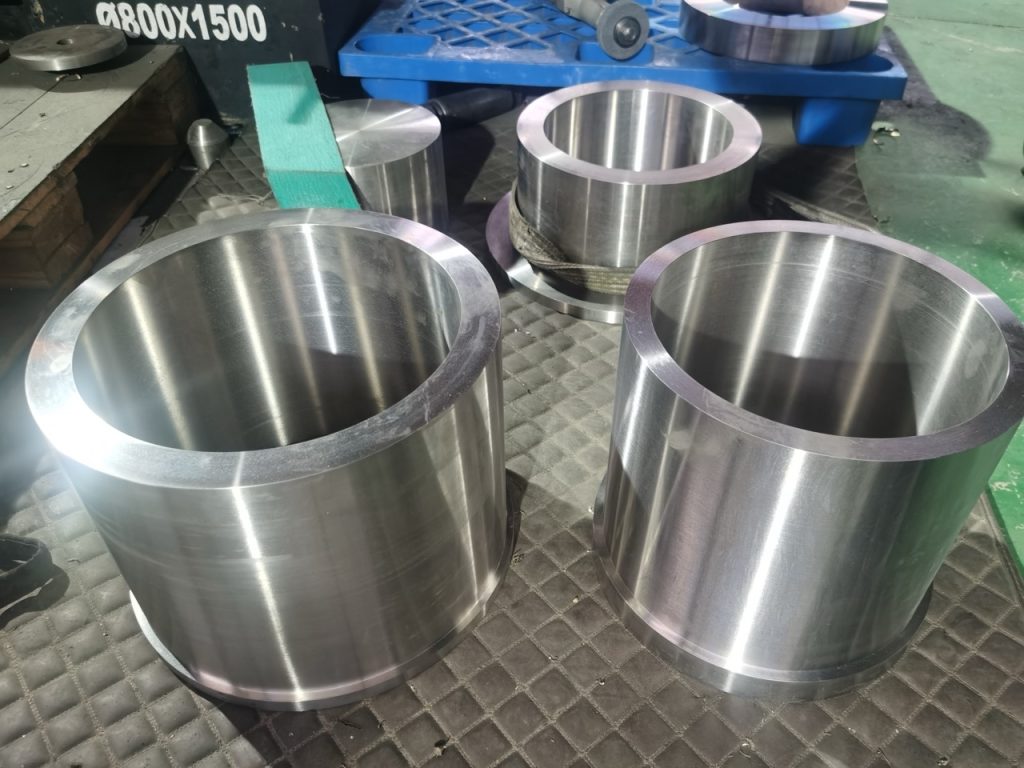
What alpha case actually is
Titanium is chemically greedy for oxygen and nitrogen at high temperature. Heat it in air much above roughly 600 °C; during forging, annealing, hot forming, flame straightening, even an aggressive grind that burns the surface, and oxygen and nitrogen diffuse into the surface. Because both are powerful alpha stabilisers (the same interstitials that strengthen titanium throughout, covered in interstitial elements in titanium), they create a surface zone of hard, oxygen-enriched alpha phase. That zone is the alpha case.
It is typically tens of microns to a few tenths of a millimetre deep, depending on temperature and time. It is much harder than the base metal, and, critically, far less ductile.
| Parameter | What the guide states |
|---|---|
| Onset in air | Much above roughly 600 C |
| Processes that produce it | Forging, annealing, hot forming, flame straightening, and grinding aggressive enough to burn the surface |
| Typical depth | Tens of microns to a few tenths of a millimetre, depending on temperature and time |
| Beta transus of Ti-6Al-4V | Near 995 C per ASM Handbook data, with hot work and heat treatment running below it, in the range where surface oxygen pickup in air is fastest |
Why it’s dangerous, not just cosmetic
- It cracks instead of bending. The base Ti-6Al-4V stretches; the brittle case can’t follow it, so it cracks at low strain.
- Those cracks become fatigue starters. A surface crack in the case runs straight into the load-bearing metal underneath. On a fatigue-critical part this can drop fatigue life dramatically, which is why aerospace and medical specifications treat alpha case as a reject condition.
- The chemistry cert won’t catch it. A bulk analysis averages the whole sample; a 0.1 mm enriched skin barely moves the number. Alpha case is found by surface methods, not by the mill chemistry.
| Behaviour | What the guide states |
|---|---|
| It cracks instead of bending | The base Ti-6Al-4V stretches; the brittle case cannot follow it, so it cracks at low strain |
| Those cracks become fatigue starters | A surface crack in the case runs straight into the load-bearing metal underneath. On a fatigue-critical part this can drop fatigue life dramatically, which is why aerospace and medical specifications treat alpha case as a reject condition |
| The chemistry certificate will not catch it | A bulk analysis averages the whole sample; a 0.1 mm enriched skin barely moves the number. Alpha case is found by surface methods, not by the mill chemistry |
How it’s detected
| Method | What it shows |
|---|---|
| Metallographic cross-section (etched) | The case appears as a distinct light, featureless surface layer; you can measure its depth. |
| Microhardness traverse | Hardness spikes at the surface and falls to base level below the case, the classic signature. |
| Blue Etch Anodize (BEA) | A surface-inspection anodize that makes contamination and case visible as colour differences. |
| Bend / ductility test | Cracking on the tension surface at low strain flags a brittle case. |
How it’s removed, because it has to be
Alpha case is not repaired; it is removed down to clean, ductile metal before the part goes into service:
- Chemical milling / pickling in an HF-HNO₃ bath dissolves the surface evenly, taking the case with it. This is the standard route for forgings, bar and sheet, and is why mill products are often supplied pickled.
- Machining or grinding removes the case mechanically, provided enough stock allowance was left for it, and provided the grinding itself doesn’t burn a new case.
| Removal route | How it works | Where it applies |
|---|---|---|
| Chemical milling or pickling | An HF-HNO3 bath dissolves the surface evenly, taking the case with it | The standard route for forgings, bar and sheet, and the reason mill products are often supplied pickled |
| Machining or grinding | Removes the case mechanically | Requires enough stock allowance to have been left for it, and the grinding itself must not burn a new case |
The practical consequence for designers: leave a machining/chem-mill allowance on any titanium that was hot-worked or heat-treated in air, and call out a clean, case-free surface on the drawing.
How to prevent it
- Heat-treat in vacuum or inert gas. No air, no oxygen pickup. Vacuum annealing is standard for exactly this reason.
- Control forging and hot-forming atmosphere/time, then remove the as-worked surface.
- Specify the supplied condition. Order bar, plate and forgings pickled or with the alpha case removed, and state it on the PO so the surface you receive is ready to use or machine.
- Protect during fabrication. Avoid flame straightening and grinding burns on finished surfaces; both can re-introduce a case.
| Prevention measure | What to do |
|---|---|
| Heat treat in vacuum or inert gas | No air, no oxygen pickup. Vacuum annealing is standard for exactly this reason |
| Control forging and hot-forming atmosphere and time | Then remove the as-worked surface |
| Specify the supplied condition | Order bar, plate and forgings pickled or with the alpha case removed, and state it on the purchase order |
| Protect during fabrication | Avoid flame straightening and grinding burns on finished surfaces; both can re-introduce a case |
We supply Ti-6Al-4V forging stock and bar with the surface condition specified, pickled or with a machining allowance for case removal, so the alpha case is handled before the metal reaches your shop. Note the condition you need on your Send an enquiry, and remember the machining trade-offs in machining Ti-6Al-4V.
FAQ
Does every hot-worked titanium part have alpha case?
Any titanium heated in air above roughly 600 °C will form some. The questions are how deep, and whether it was removed before service. Vacuum/inert processing avoids it.
Will alpha case show up on the mill certificate?
No. Bulk chemistry averages it away. It is found by metallography, microhardness, blue etch anodize or bend testing: surface methods, not the heat analysis.
Can I just leave it on if the part isn't highly stressed?
For a low-stress, static part it’s sometimes tolerated, but for anything fatigue-loaded or fracture-critical it must come off. When in doubt, remove it: it’s cheaper than a field failure.
Is alpha case the same as the blue/straw colour on a titanium weld?
Related but not identical. Weld tint is a thin oxide film from the heat-affected zone; alpha case is a deeper diffusion-enriched layer. Both come from oxygen/air at temperature, and both are signals to check shielding and surface condition.
Why the oxygen figure on the certificate is not the whole answer
Alpha case is an oxygen enriched surface layer, and the certificate reports oxygen as a bulk chemistry figure taken at the melt. The two are not the same measurement, which is why a compliant oxygen result and a brittle surface can coexist on the same bar.
| What is reported | Method ASTM B348 references | What it does and does not cover |
|---|---|---|
| Oxygen and nitrogen | ASTM E1409 | Bulk interstitial content, not the condition of the outer surface |
| Hydrogen | ASTM E1447 | Bulk content, determined by a named method |
| Rounding of reported values | ASTM E29 | Whether a borderline figure passes, decided by a stated rule |
Naming a method settles how a value was produced. It does not add a surface examination the order did not ask for, and bulk chemistry alone cannot confirm that a contaminated layer has been removed.
What the order can require, so the surface is not left to assumption
| Line on the order | What it controls |
|---|---|
| Surface condition, stated apart from the delivery condition | Whether the item arrives ground, peeled or as worked |
| Machining allowance | Whether enough material remains to remove a contaminated layer |
| Examination scope with its acceptance class | What is checked on the delivered surface, and against what |
| Delivery condition | The metallurgical state, which the finish does not imply |
An enquiry that names the surface condition and the allowance turns alpha case from a discovery at the first cut into a field that was priced.
Specification detail with sources
Oxygen’s effect on titanium is quantified in the ASTM grade tables, and the same chemistry that strengthens the bulk metal is what makes an alpha case layer brittle. Across ASTM B348 the commercially pure grades are ranked by oxygen, 0.18 percent maximum for Grade 1 rising through 0.25 and 0.35 to 0.40 percent for Grade 4, and the minimum tensile strength more than doubles along that ladder, from 240 MPa to 550 MPa. ASM Handbook data place the beta transus of Ti-6Al-4V near 995 °C, and hot work and heat treatment run below it, in exactly the range where surface oxygen pickup in air is fastest.
Beiyu Titanium deals with alpha case at the supply stage through the surface route each form receives: hot rolled plate from 3 to 70 mm thick is available with a hot rolled pickled surface, and forged rings and discs are supplied turned, two routes that remove the as-worked skin rather than cover it, with bar orderable polished or sandblasted by agreement. Where a buyer prefers to machine the case off in-house, Beiyu reviews the stock-allowance line on the order against plate widths up to 2500 mm and lengths to 6000 mm, so the removal allowance is on the drawing before rolling starts, not discovered at the machine.
Send a technical RFQ
For titanium material affected by alpha case, include product form, grade, hot-work route, required machining allowance, surface removal requirement and inspection documents.