
Two decisions make or break a titanium weld: choosing the right ERTi filler wire for the base grade, and keeping oxygen out of the weld until it has cooled. Titanium is welded with filler wire classified under AWS A5.16, where each ERTi number maps to a base titanium grade. Pick the filler to match the base, or one grade below it for a more ductile weld, then shield the molten pool and the cooling weld with inert gas. Get either part wrong and the joint embrittles, whatever the filler chemistry says on the spool.
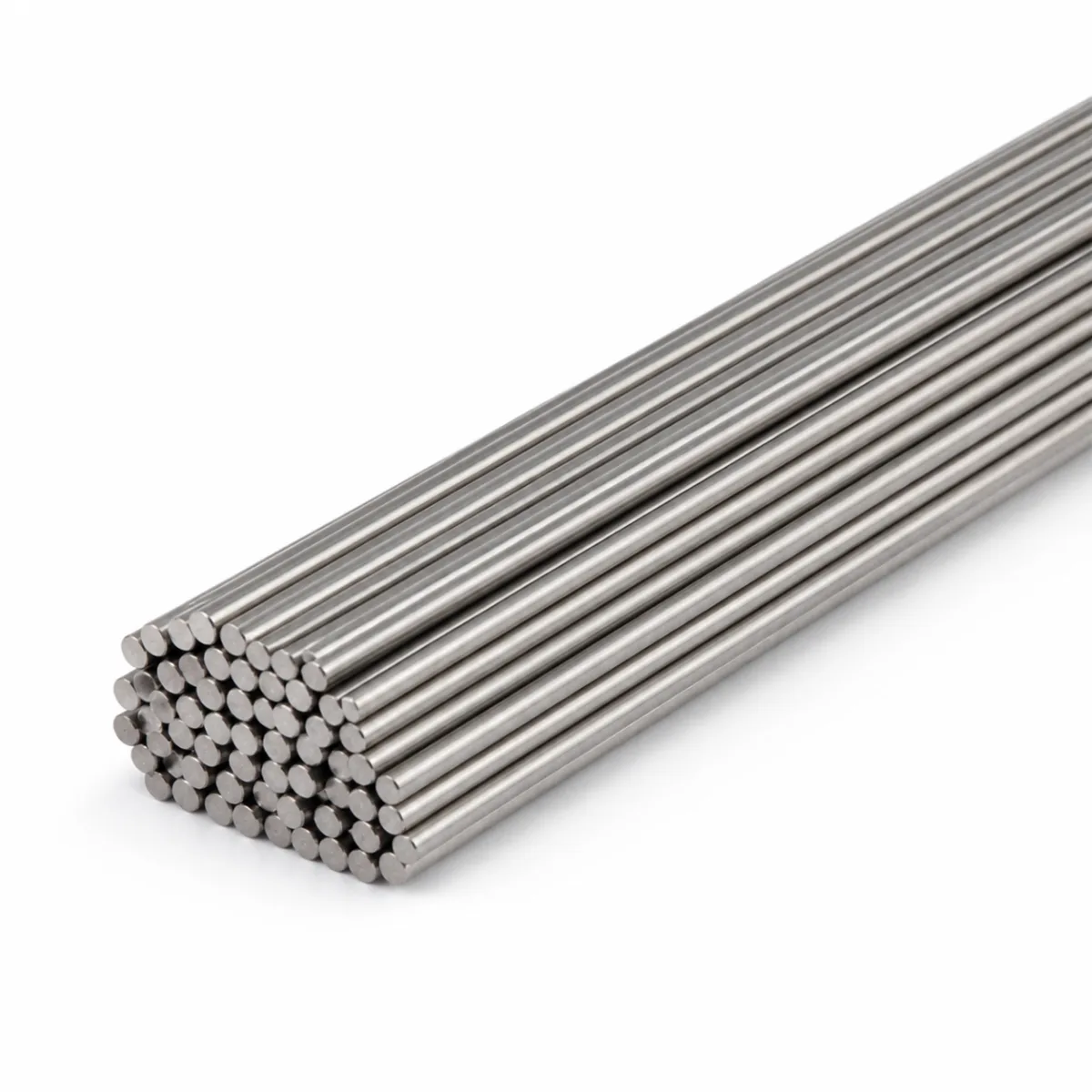
Match the filler to the base grade
AWS A5.16 covers titanium and titanium-alloy welding rods and electrodes. The ERTi designation tracks the base grade, so the starting rule is simple: match the filler to the metal you are joining, or step one grade down in strength for ductility.
| Base titanium grade | Typical AWS A5.16 filler | Notes |
|---|---|---|
| Grade 1 / Grade 2 (CP) | ERTi-1, ERTi-2 | Commercially pure, most ductile, easiest to weld; for corrosion service |
| Grade 3 (CP) | ERTi-2 or ERTi-3 | A lower-grade filler raises weld ductility versus matching |
| Grade 7 (Ti-Pd) | ERTi-7 | Palladium-bearing, for reducing acids and chlorides; match to keep corrosion behaviour |
| Grade 9 (Ti-3Al-2.5V) | ERTi-9 | For Grade 9 tube and pipe |
| Grade 12 (Ti-0.3Mo-0.8Ni) | ERTi-12 | Improved crevice corrosion resistance |
| Grade 5 (Ti-6Al-4V) | ERTi-5, or ERTi-23 (ELI) | ERTi-5 matches; ERTi-23 ELI is chosen where weld toughness matters |
The reason to under-match, choosing a filler one grade below the base, is that a weld and its heat-affected zone are usually less forgiving than the parent metal, so a slightly softer, more ductile filler resists cracking. For corrosion grades such as Grade 7, match the filler so the weld keeps the same corrosion behaviour as the base. For Ti-6Al-4V, ERTi-5 is the matching filler, while ERTi-23 (the extra-low-interstitial grade) gives a tougher weld where fatigue or fracture toughness drives the design. The filler only delivers its rated properties if the weld stays clean, which is the second half of the job.
Why titanium welds need total shielding
Titanium is unreactive at room temperature because of its oxide film, but a weld pool is not at room temperature. Above roughly 500 C titanium absorbs oxygen, nitrogen and hydrogen from the air, and those interstitials embrittle the weld. Argon shielding of the visible arc is not enough on its own; the pool, the root side and the weld as it cools all have to be protected.
| Selection point | What the guide states |
|---|---|
| Torch shield | welding-grade argon, or an argon-helium mix for more heat, covering the arc and pool (AWS A5.32 class SG-A or SG-He). |
| Back purge | inert gas on the root side, essential for tube, pipe and any full-penetration joint, so the underside does not oxidise. |
| Trailing shield | a gas lens or trailing cup that keeps argon over the weld and heat-affected zone until the metal has cooled below the temperature where it picks up oxygen. |
The metallurgy of the embrittlement is the same alpha-case mechanism that forms on hot bar and forging surfaces; the background is in alpha case on titanium.
Cleanliness and filler handling
Most titanium weld defects start as contamination, not as a filler chemistry problem. Hydrocarbons, moisture and shop dirt break down in the arc and feed hydrogen and carbon into the weld.
| Cleaning and handling requirement |
|---|
| Degrease the joint and the filler wire with a clean solvent, and handle both with clean lint-free gloves, not bare hands. |
| Prepare titanium with dedicated tools, not ones used on steel, to avoid iron pickup. |
| Keep the hot end of the filler rod inside the gas shield. If the tip loses its bright finish, it has oxidised; cut it off before continuing. |
| Store filler wire clean and dry, in its grade-marked packaging, so the alloy and heat stay traceable. |
Read the weld colour as a quality check
The colour left on a cooled titanium weld is a direct read on how well it was shielded. Bright silver or light straw means the shielding held; dark blue, grey or a white powder means oxygen reached the hot metal and the joint is likely embrittled and should be rejected. The full colour scale and what each tint means is in titanium weld colour and heat tint.
Beiyu supplies titanium filler wire across the common grades: ERTi-7 welding wire, titanium TIG wire, titanium MIG wire, general titanium welding wire and 6Al-4V ELI wire, with the grade, AWS classification and heat traceable on the mill test certificate. For grade selection see the titanium grades comparison guide, and for the welding background see working with Ti-6Al-4V. Send the base grade, diameter and quantity with the RFQ.
FAQ
What filler wire do I use for Grade 2 titanium?
ERTi-2 matches Grade 2 commercially pure titanium. ERTi-1 can be used where a softer, more ductile weld is wanted. Both keep the corrosion behaviour of CP titanium.
Can I weld Grade 5 (Ti-6Al-4V) with ERTi-23?
Yes. ERTi-5 is the matching filler for Ti-6Al-4V; ERTi-23 is the extra-low-interstitial version and gives a tougher, more ductile weld, which is why it is chosen for fatigue-critical and demanding joints.
Why did my titanium weld turn blue or grey?
The hot weld picked up oxygen because the shielding was incomplete. Blue, grey or white indicate contamination and embrittlement; aim for bright silver or light straw, and add back purging and a trailing shield.
Do I always need to back purge?
For tube, pipe and any full-penetration weld, yes. The root side reaches the same reactive temperature as the face, so without an inert back purge the underside oxidises even if the top looks clean.
Argon or helium for titanium?
Welding-grade argon is the standard shield. An argon-helium mix adds heat for thicker sections or higher travel speeds. Both must be welding grade; the priority is complete coverage of the pool and the cooling weld.
What the filler choice leaves for the order to settle
Matching the filler to the parent grade answers the metallurgical question. The order still has to state the diameter with its tolerance, how the wire is supplied and what the certificate reports, and none of those follow from the grade match.
| Field | What it controls | Where it belongs |
|---|---|---|
| Diameter with tolerance | Feed behaviour through the torch or feeder | Stated together, not diameter alone |
| Supply form | Straight cut lengths, coil or spool | Its own line on the order |
| Surface condition | Cleanliness at the arc, which drives weld quality | Stated apart from the delivery condition |
| Reporting scope | What appears on the certificate beyond the mandated results | Named on the order |
How the composition figures behind a filler choice are obtained
| What is reported | Method the specification references |
|---|---|
| Oxygen and nitrogen | ASTM E1409 |
| Hydrogen | ASTM E1447 |
| Carbon | ASTM E1941 |
| Alloy composition | ASTM E539 and ASTM E2371 |
Naming a method settles how a value was produced. It does not add an examination the order did not request. Beiyu supplies titanium welding wire with an EN 10204 3.1 mill test certificate and heat number traceability.
Specification detail with sources
Filler selection for titanium runs on interstitial numbers as much as on grade names. The logic of choosing ERTi-23 over ERTi-5 mirrors the base-metal split, where standard Grade 5 carries a 0.20 percent oxygen ceiling under ASTM B348 and the ELI variant is specified to a tighter interstitial window, lower oxygen buying weld ductility and toughness at a modest strength cost. On the gas side, AWS A5.32 classifies the shielding gases this page’s procedure notes call up, and its welding-argon class is a 99.997 percent minimum purity, a line worth writing on the weld procedure next to the filler classification, because shielding failures are usually purity or coverage problems rather than filler chemistry problems.
Beiyu Titanium draws its welding wire cold and finishes it bright or acid-pickled, supplying coiled wire from 0.8 to 12 mm diameter and spooled wire from 0.01 to 6.35 mm, the fine end of that range feeding mechanised and orbital TIG work. The factory wire sheet pairs each drawn grade with its ERTi classification the way the table above does, including the detail that Grade 3 wire is listed against ERTi-2, and a Beiyu quotation names base grade and ERTi class together so the filler leaves the mill documented against the metal it will join.