
Grade 5 and Grade 23 are the same Ti-6Al-4V alloy, but Grade 23 is the extra-low-interstitial (ELI) version, with tighter oxygen and iron limits. Grade 5 is slightly stronger (895 MPa minimum tensile against 828 MPa for Grade 23) and cheaper. Grade 23 trades that small amount of strength for substantially higher fracture toughness, better fatigue life and better low-temperature ductility. Use Grade 5 for general high-strength structural and machined parts. Use Grade 23 (ELI) when the part is fracture-critical, fatigue-loaded, used at low temperature, or is a surgical implant to ASTM F136.
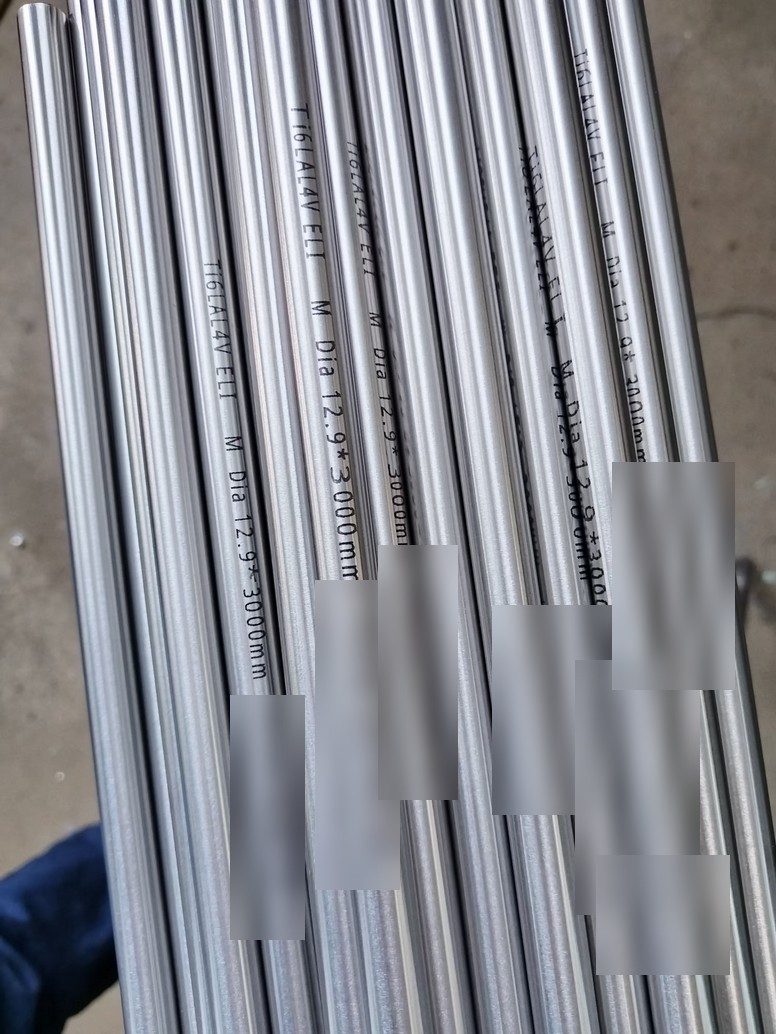
Beiyu Titanium supplies Grade 5 (UNS R56400) to ASTM B348 and AMS 4928, and Grade 23 to ASTM B348 as UNS R56407 or to ASTM F136 as UNS R56401 for surgical implant material. State the required inspection document, reported results and heat-traceability fields in the RFQ and purchase order; Beiyu confirms the agreed document scope in the quotation.
Specifying the wrong one of these two costs money either way. Over-specify Grade 23 ELI on a part that only needed Grade 5, and you pay the higher ELI cost for fracture toughness the design never uses. Under-specify Grade 5 on a fatigue-critical or fracture-critical part, and you save a little on material and risk a crack-driven failure. The point of this comparison is to put you on the version the part actually needs.
They are the same alloy: the difference is the interstitials
Both grades are Ti-6Al-4V: titanium with about 6 percent aluminium and 4 percent vanadium. The difference is not the alloying elements, it is the limit on interstitial elements, mainly oxygen, plus iron:
- Grade 5 (standard Ti-6Al-4V) allows oxygen up to about 0.20 percent and iron up to about 0.40 percent.
- Grade 23 (Ti-6Al-4V ELI) tightens oxygen to about 0.13 percent and iron to about 0.25 percent.
ELI stands for Extra Low Interstitial. Oxygen and iron are not contaminants here, they are deliberate strengtheners: more of them raises strength but lowers fracture toughness and ductility. By holding them down, Grade 23 gives up a little strength and gains a lot of toughness. That single trade is the whole story behind every selection decision below.
What the trade actually buys you
| Property | Grade 5 | Grade 23 (ELI) |
|---|---|---|
| UNS | R56400 | R56407 (B348); R56401 (F136) |
| Minimum tensile | 895 MPa | 828 MPa |
| Minimum yield | 828 MPa | 759 MPa |
| Oxygen limit (approx) | 0.20 percent | 0.13 percent |
| Iron limit (approx) | 0.40 percent | 0.25 percent |
| Fracture toughness | Good | Substantially higher |
| Fatigue and damage tolerance | Good | Better |
| Low-temperature ductility | Good | Better |
| Relative cost | Lower | Higher |
The mechanical values shown are minimum comparison values from the cited ASTM contexts. The controlling standard, revision, product form and condition govern the order; an ordered inspection document reports the applicable specific-inspection results.
The headline numbers make Grade 5 look stronger, and it is, by roughly 8 percent on minimum tensile. But strength is rarely the property that fails a Ti-6Al-4V part in demanding service. Cracks do. Grade 23 resists crack initiation and growth better, tolerates flaws better, and keeps its ductility better in the cold. Where a part is loaded statically and strength governs, Grade 5 wins on cost. Where a part is cycled, impacted, run cold or must not fail catastrophically, Grade 23 earns its higher cost.
When to use Grade 5
Grade 5 is the default Ti-6Al-4V wherever strength and cost lead, and fracture toughness is not the limiting design factor.
| Where Grade 5 is the right call | What decides it | Usual standard |
|---|---|---|
| Machined structural parts and brackets | Static load, no fracture-critical duty | ASTM B348 |
| Shafts, fasteners, high-strength fittings | Strength governs, not crack growth | ASTM B348 |
| General aerospace machining | Drawing calls for standard Grade 5 | ASTM B348 or AMS 4928 |
| Industrial and marine hardware | Carries load without high-cycle fatigue | ASTM B348 or B381 |
If the drawing says Grade 5 and the part is not fatigue or fracture critical, do not upgrade to ELI. The extra cost buys toughness the part will not use.
When to use Grade 23 (ELI)
Grade 23 is specified where damage tolerance, fatigue life or low-temperature behaviour outrank the last few percent of strength.
| Where Grade 23 ELI is required | What decides it | Usual standard |
|---|---|---|
| Surgical implants and medical devices | Fracture toughness and fatigue life are mandatory; ELI chemistry is written into the standard | ASTM F136 |
| Fracture-critical aerospace and structural parts | A crack must not reach failure between inspections | ASTM B348 Grade 23 |
| Fatigue-loaded components | Rotating or cyclically loaded duty | ASTM B348 Grade 23 |
| Cryogenic and low-temperature service | ELI keeps ductility that standard Grade 5 loses | ASTM B348 Grade 23 |
For implant material, Grade 23 to ASTM F136 is not interchangeable with Grade 5. The standard, the chemistry and the documentation are part of the requirement, not an option.
The correct UNS number
For Ti-6Al-4V ELI the UNS number is not a property of the grade, it is a property of the standard the purchase order cites. Two different numbers are both correct, depending on which specification is on the order.
| Standard on the order | Form | Grade | UNS on the certificate |
|---|---|---|---|
| ASTM B348 | Bar and billet | Grade 23 ELI | R56407 |
| ASTM B265 | Plate, sheet, strip | Grade 23 ELI | R56407 |
| ASTM B381 | Forgings | Grade 23 ELI (F-23) | R56407 |
| ASTM B863 | Wire | Grade 23 ELI | R56407 |
| ASTM F136 | Surgical implant bar and wire | Ti-6Al-4V ELI | R56401 |
| Any of the above | All forms | Grade 5 standard | R56400 |
This matters on the purchase order and on the certificate, because a buyer, an auditor or a customs check verifies the grade against the UNS, and a mismatch raises a flag during supplier qualification. Cite the standard and the UNS number together so the certificate reports the number the drawing expects.
How to specify either grade
| RFQ field | What to state | Why it changes the quote |
|---|---|---|
| Grade, UNS and standard | Grade 5 or Grade 23, the UNS number, and ASTM B348, AMS 4928 or ASTM F136 | Decides which chemistry limits and which certificate apply |
| Form and dimensions | Diameter and length for bar, thickness for plate, dimensions for forgings | Decides the mill route and the offcut |
| Condition | State the condition and any heat-treatment requirement from the drawing, controlling standard or purchase order | Changes mechanical properties and processing time |
| Inspection scope | For fracture-critical or implant parts, state ultrasonic testing and acceptance class | Adds a real operation and cost, so it cannot be assumed |
| Certificate package | State the required inspection-document type and reported results, including EN 10204 3.1 where ordered | Decides what documentation ships with the material |
Stating the duty and the fatigue or fracture requirement up front lets the right version be confirmed before quotation, instead of discovering after machining that the wrong grade was supplied.
How Beiyu Titanium supplies Grade 5 and Grade 23
| Form | Standard | Grades supplied |
|---|---|---|
| Bar and billet | ASTM B348, AMS 4928 | Grade 5 (R56400), Grade 23 (R56407) |
| Plate and sheet | ASTM B265 | Grade 5, Grade 23 |
| Forgings | ASTM B381 | Grade 5, Grade 23 |
| Implant bar and wire | ASTM F136 | Ti-6Al-4V ELI (R56401) |
Send the part duty, grade, UNS number, controlling standard, product form and required inspection-document scope. Beiyu confirms the available route, traceability fields and reported test results in the quotation before order release.
Related guides and tools
- Medical-grade titanium (ASTM F136, Grade 23 ELI)
- Titanium grade for seawater and marine service
- Titanium grade selector tool
Specification detail with sources
The chemistry gap is wider than the oxygen and iron lines usually quoted. ASTM B348 Table 1 also lowers the nitrogen ceiling from 0.05 percent for Grade 5 to 0.03 percent for Grade 23 and the hydrogen ceiling from 0.015 to 0.0125 percent, so all four interstitial controls tighten together in the ELI version. Elongation does not separate them, since B348 sets 10 percent minimum in 4D for both grades, which is why a receiving inspector distinguishes the two from the reported heat analysis rather than from the ductility line on the certificate.
One acceptance line runs the other way: ASTM B348 requires 25 percent minimum reduction of area for annealed Grade 5 bar but 15 percent for annealed Grade 23, so a drawing that demands 25 percent on ELI bar exceeds the standard and belongs in the order as a supplementary requirement. The aerospace equivalents are SAE AMS 4928 for annealed standard-grade bar and forgings and AMS 4930 for annealed ELI, while ASTM F136 lists 860 MPa tensile and 795 MPa yield minimums for implant bar in sections from 4.75 to under 44.45 mm.