
European titanium offers are usually not comparable as written, because one is quoted to EN and DIN with a Werkstoff number and another to ASTM with a UNS number. Grade 2 is Werkstoff 3.7035 and UNS R50400; Grade 5 is 3.7165 and R56400. Fix the standard first, then compare price.
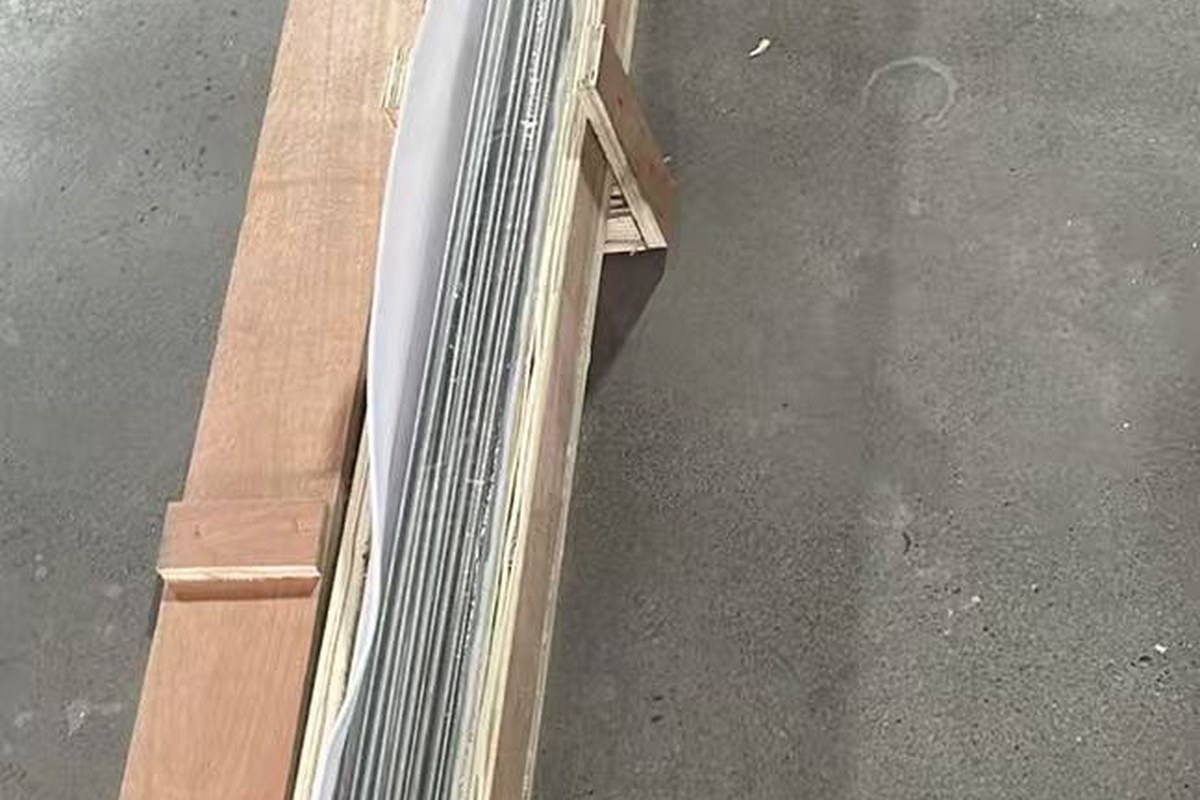
A European buyer sourcing titanium for chemical, marine or oil and gas service is rarely comparing like with like. One offer is written to EN and DIN with a Werkstoff number, another to ASTM with a UNS number, and the certificate line can read 2.2, 3.1 or 3.2 depending on who inspected the metal. This guide sets out how the designation systems line up, what the certificate grades actually mean, and how to compare a non-EU mill quote against European supply on the terms that matter to a process plant, not an airframe. It is written for industrial and process service; aerospace and defence sourcing sit under separate qualification regimes and are out of scope here.
The same grade has three names: EN/DIN, Werkstoff, and ASTM
The first source of confusion is that the identical metal carries different labels in different markets. A German drawing calls commercially pure Grade 2 by its Werkstoff number 3.7035; an ASTM purchase order calls it UNS R50400 to ASTM B348; both are the same CP titanium. Knowing the cross-references stops a buyer from rejecting or double-sourcing material that is actually equivalent.
| Grade | Werkstoff-Nr. (EN/DIN) | UNS (ASTM) | Alloy |
|---|---|---|---|
| Grade 1 CP | 3.7025 | R50250 | Unalloyed Ti |
| Grade 2 CP | 3.7035 | R50400 | Unalloyed Ti |
| Grade 5 | 3.7165 | R56400 | Ti-6Al-4V |
| Grade 7 | 3.7235 | R52400 | Ti + 0.12 to 0.25% Pd |
| Grade 9 | 3.7195 | R56320 | Ti-3Al-2.5V |
| Grade 12 | 3.7105 | R53400 | Ti-0.3Mo-0.8Ni |
Product-form standards line up the same way: bar is ASTM B348 or DIN 17862, sheet and plate is ASTM B265 or DIN 17860, and tube for condensers and exchangers is ASTM B338 or DIN 17861 (seamless) / DIN 17866 (welded). For most CP and Ti-Pd grades the chemistry and mechanical limits across these systems are close enough that a mill can certify to both; the practical step is to name on the RFQ which standard the certificate must cite, so incoming inspection has one reference to check against.
What the EN 10204 certificate number actually means
The certificate line is where a lot of European procurement risk hides, because 2.2, 3.1 and 3.2 are not quality grades of the metal, they describe who verified it.
| EN 10204 type | Who certifies | What it means for you |
|---|---|---|
| 2.2 | The manufacturer, on non-specific inspection | A statement of compliance, not test results tied to your batch. Rarely enough for process titanium. |
| 3.1 | The manufacturer's authorised inspection representative, independent of the production department | Specific-inspection results for the supplied products, validated by the manufacturer’s authorised inspection representative independent of the manufacturing department. State the required document type and reporting scope in the order. |
| 3.2 | An independent third party or the buyer's agent, in addition to the mill | Validated by the manufacturer’s authorised inspection representative together with either the purchaser’s authorised inspection representative or the inspector designated by the applicable official regulations. Specified when a project or code requires that additional validation. Define witness points, reporting and schedule before order release. |
EN 10204 3.1 is commonly requested for industrial titanium when the buyer needs specific-inspection results. It is not automatic and it does not define the product’s technical delivery conditions. State the product standard, required document type, traceability and test scope in the RFQ and purchase order. If 3.2 is required, define the additional validation party, witness points, reports and schedule before order release.
Comparing a non-EU mill offer against European supply
European mill supply for industrial titanium has been tight, and regional price indices in early 2026 put delivered mill-product prices in Europe well above other regions, which is what makes non-EU sourcing worth evaluating in the first place. The way to compare offers fairly is to hold everything except origin constant and look past the headline number:
| Sourcing point | What the guide states |
|---|---|
| Standard and designation | Confirm both offers cite an equivalent standard for the form, whether written as a Werkstoff number or a UNS number, so you are comparing the same material. The background on what moves titanium prices explains why two quotes for the nominally same grade can still differ. |
| Certificate chain | A 3.1 offer and a 3.2 offer are not the same commercial package; match the certificate type before comparing price. |
| Lead time, landed | Include production time, sea freight and customs, not just the ex-works date. A tight European lead time can close a headline price gap, and a longer non-EU lead time can still land cheaper on a planned order. |
| Total landed cost | Freight, duty, currency and any inspection or documentation charges belong in the comparison. A low unit price that excludes third-party inspection or special documentation is not actually lower. |
The most reliable comparison comes from putting the same specification to both sources: grade and standard, dimensions and tolerance in metric with the ISO tolerance class, quantity, surface condition, and the certificate type. The full field list is in our titanium bar RFQ checklist.
Which grade for which European industrial duty
Grade selection does not change with the sourcing region, only the label does. For general chemical and seawater service the workhorse is Grade 2 (3.7035); for reducing acids it is Grade 7 (3.7235); for hot brines and crevice-prone chloride service, Grade 12 (3.7105). Where titanium itself is not enough, the conversation moves to nickel alloys. Beiyu keeps both material families in scope for chemical equipment, and the Grade 2 chemical and heat-exchanger guide covers the most common industrial case in detail.
| Service | Grade and Werkstoff the guide names |
|---|---|
| General chemical and seawater service | Grade 2 (3.7035) |
FAQ
Is a Chinese EN 10204 3.1 certificate valid in Europe?
EN 10204 is a European standard for the type of inspection document, and a 3.1 certificate is defined by who issues it, the manufacturer's authorised inspection representative independent of production, not by the country of the mill. A non-EU mill can and does issue EN 10204 3.1 certificates; what matters is that the certificate reports the delivered heat's actual results tied to the heat number. Specify 3.2 when a project requires independent third-party inspection.
What is the German Werkstoff number for Grade 2 and Grade 5 titanium?
Grade 2 commercially pure titanium is Werkstoff 3.7035 (UNS R50400); Grade 5 Ti-6Al-4V is Werkstoff 3.7165 (UNS R56400). They are the same metals as the ASTM designations, labelled for the EN and DIN system.
Are DIN and ASTM titanium standards equivalent?
For most commercially pure and Ti-Pd grades the chemistry and mechanical limits are close, and a mill can certify to both DIN and ASTM. They are equivalent in material terms; the practical difference is which standard the certificate cites, so state the one you want on the purchase order.
What is the difference between EN 10204 3.1 and 3.2?
Types 3.1 and 3.2 are both specific-inspection documents. A 3.1 certificate carries the manufacturer’s declaration of compliance with the order; in a 3.2 certificate that declaration is made jointly with the purchaser’s authorised inspection representative or the inspector designated by the applicable official regulations. Both types report specific-inspection results for the supplied material, so the practical difference is who validates the document, not whether real test results are given. Inspection timing depends on the agreed scope and must be confirmed before production.
The document set a European buyer is actually reviewing
Sourcing across a distance moves the decision away from the metal and onto the paperwork. A supplier can be entirely capable and still fail a first order because the certificate did not carry the fields the receiving process expected to find.
| Field | Beiyu position | Why a cross border order turns on it |
|---|---|---|
| Certificate type | EN 10204 3.1 mill test certificate | The document type is itself a European convention, so naming it removes a whole class of query |
| Traceability | Heat number, carried through to the delivered pieces | Links what arrived to what was reported |
| Reporting scope | Set by the order | Decides what appears beyond the results the specification already mandates |
| Grade with its UNS number | Given together and consistent with the standard the order names | Designation systems differ, the UNS number does not |
| Delivery condition | Stated separately from surface finish | Two fields that are routinely collapsed into one on an enquiry |
These are stated so an enquiry can be written against them rather than around them. The ordered combination is confirmed at quotation.
What to settle before the first order, not after it
| Question | Where the answer belongs |
|---|---|
| Which standard governs acceptance | Named on the purchase order alongside the grade |
| What is examined and to which acceptance class | The examination scope line |
| Which results must appear on the certificate | The reporting scope line |
| How the material is marked and packed | Stated on the order, since defaults exist and may not suit |
Four lines settled at enquiry remove the correspondence that otherwise happens after the material has already shipped.
Specification detail with sources
European titanium procurement for pressure duties adds a directive layer on top of the designation cross-walk above. Pressure equipment in the EU falls under Directive 2014/68/EU, the PED, which sorts equipment into conformity categories I to IV and, in Annex I, accepts materials by one of 3 routes: a harmonised European standard, a European Approval for Materials, or a Particular Material Appraisal. Titanium mill products are normally bought to ASTM or DIN documents rather than harmonised EN pressure standards, so titanium in PED-scope equipment typically enters through the appraisal route, with the German AD 2000 code stating its general material requirements in Merkblatt W0.
Beiyu Titanium quotes either designation system on the same line item, Werkstoff or UNS, and produces to ISO 9001:2015 quality-system requirements. Where a European order sits in PED scope or invokes AD 2000-W0, Beiyu reviews the appraisal and documentation route at RFQ stage and supplies the per-heat chemistry and mechanical results that appraisal relies on, in the certificate scope agreed before order release. What Beiyu asks a PED buyer to add is 2 lines beyond the normal RFQ fields: the conformity category the equipment falls in, and which of the three material routes the design house intends, because those answers set the test and documentation scope of the order.
Request a quote for industrial titanium
To quote industrial titanium for European chemical, marine or oil and gas service, Beiyu needs the grade (by Werkstoff or ASTM designation), the form and standard, dimensions and tolerance in metric, quantity, service or medium, and the certificate type (EN 10204 3.1 or 3.2). Send the drawing or spec and we review each line against mill capability before quoting, with EN 10204 3.1 documentation and heat-number traceability by order scope. Contact Beiyu Titanium for an RFQ.