
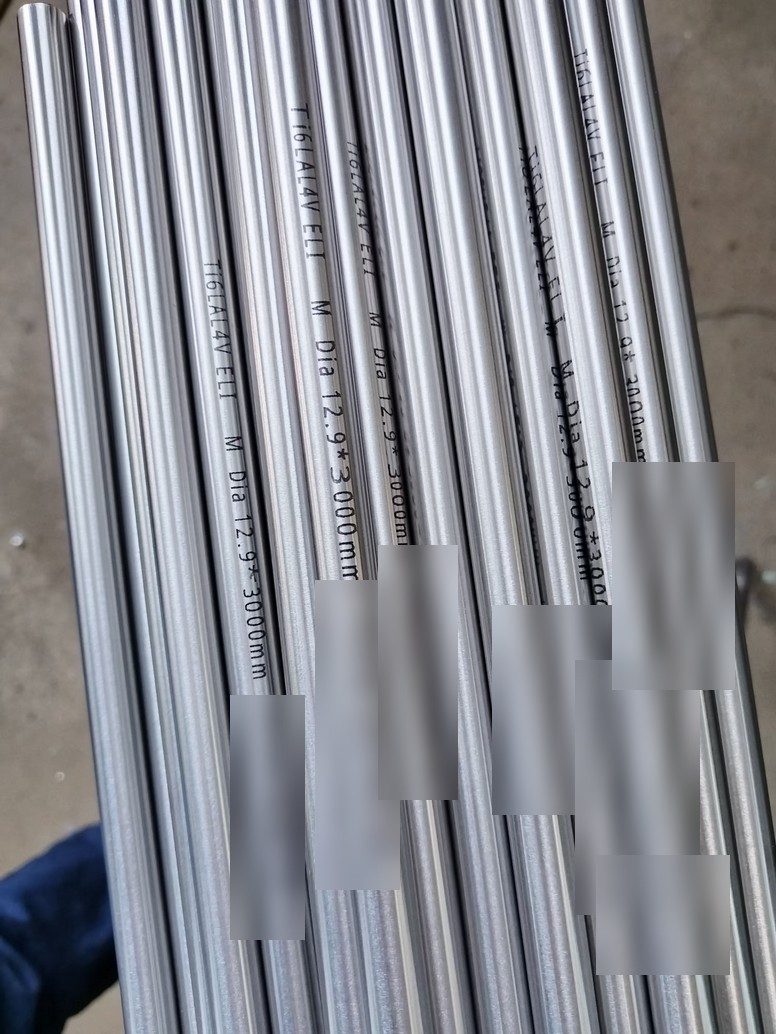
Marking and packing are traceability, not logistics
Once bar leaves the rack, the only thing keeping the certificate attached to the metal is what is written on the piece and how the lot was separated. Buyers who run incoming inspection to an implant or pressure specification treat these as acceptance fields, not shipping preferences.
| What marking and packing actually protect |
|---|
| The link between a physical bar and its certificate |
| The separation of heats and batches that must not be mixed |
| The surface condition the material was accepted on |
What the marking has to carry
State the content, not just the requirement to mark. A bar marked only with a grade cannot be reconciled with a certificate set.
| Marking field | Why it is on the piece |
|---|---|
| Heat identification | Ties the piece to its certificate set |
| Batch identification | Distinguishes lots that came from one heat |
| Grade and standard | Prevents substitution between visually identical grades |
| Size | Allows sorting without re-measuring |
Where the marking goes matters as much as what it says
Marking that is removed by the first machining operation, or that sits on a surface the buyer will not see until the bundle is opened, does not survive to the point where it is needed.
| Decision | What it affects |
|---|---|
| On the piece or on the bundle tag | Whether identity survives the bundle being broken |
| Position along the bar | Whether the mark is lost at the first cut |
| Marking method | Whether it survives handling and any cleaning step |
Separation is a packing requirement, not an assumption
| Order states | What arrives |
|---|---|
| Separate by heat | Each heat bundled and tagged on its own |
| Separate by batch | Each processed lot kept apart within the heat |
| Nothing stated | Material may be consolidated, and the buyer sorts on arrival |
Contamination control on titanium specifically
Titanium picks up marks and embedded particles from contact with harder materials during handling and transport. Where the surface itself is an acceptance criterion, the packing has to keep the bar off those surfaces.
| Packing decision | What it is protecting against |
|---|---|
| Lining between bar and the outer packing | Contact marking of a finished surface |
| Separation from carbon steel handling surfaces | Embedded particles from harder metal contact |
| End protection | Damage to a faced or chamfered end |
What Beiyu can run against the order
| Secondary operation |
|---|
| Chamfering |
| Straightness control |
| Cut to length |
| Deburring |
| Custom packing and lining |
Lines to paste into your purchase order
Marking content: ______ (state which of heat, batch, grade, standard and size must appear)
Marking location: ______ (state on the piece, on the tag, or both)
Marking method: ______ (state if a specific method is required)
Separation: ______ (state separate by heat, by batch, or consolidated)
Packing and lining: ______ (state if the finished surface must not contact the outer packing)
End protection: ______ (state if faced or chamfered ends must be protected)
State these on the order rather than after production. Beiyu reviews marking, separation and packing against the ordered surface condition before pricing, because separation and custom lining change how the lot is processed and bundled.
Specification detail with sources
The product standard already sets a default for both marking and packing, and the packing default is the reason this page exists. ASTM B348 states that unless otherwise specified, individual pieces or bundles shall carry a metal tag stamped with the purchase order number, the specification number, the nominal size and the manufacturer’s heat number, or shall be boxed with the box marked the same way, and that bars 1 inch, 25.4 mm, and over in diameter or distance between parallel sides shall be stamped with the heat number within 2 inches, 50.8 mm, of one end (ASTM B348, marking).
| Field | ASTM B348 default if the order says nothing |
|---|---|
| Tag content | Purchase order number, specification number, nominal size, manufacturer’s heat number |
| Stamping on the piece | Heat number within 2 in (50.8 mm) of one end, on bars 1 in (25.4 mm) and over |
| Packing | Boxing, crating, single boarding, burlapping, or no protection, at the manufacturer’s standard practice |
| Separation by heat or batch | Not a default; stated by the buyer |
Read the packing line again: ASTM B348 permits material to be shipped with no protection in accordance with the manufacturer’s standard practice unless the order says otherwise (ASTM B348, packaging). For a bar whose surface is itself an acceptance criterion, that default is not acceptable, which is why lining and separation belong on the order. Naming the standard settles the tag content and where the heat number is stamped. It does not require heats to be bundled separately, and it does not protect a finished surface, so both have to be written in. In Beiyu’s supply practice chamfering, straightness control, cut to length, deburring and custom packing with lining are performed against the order and reviewed against the ordered surface condition before pricing.
Send a technical RFQ
For titanium bar RFQs, state the marking content and location, the separation rule by heat or by batch, the packing and lining requirement, plus grade, standard, diameter, condition and the required certificate package.