
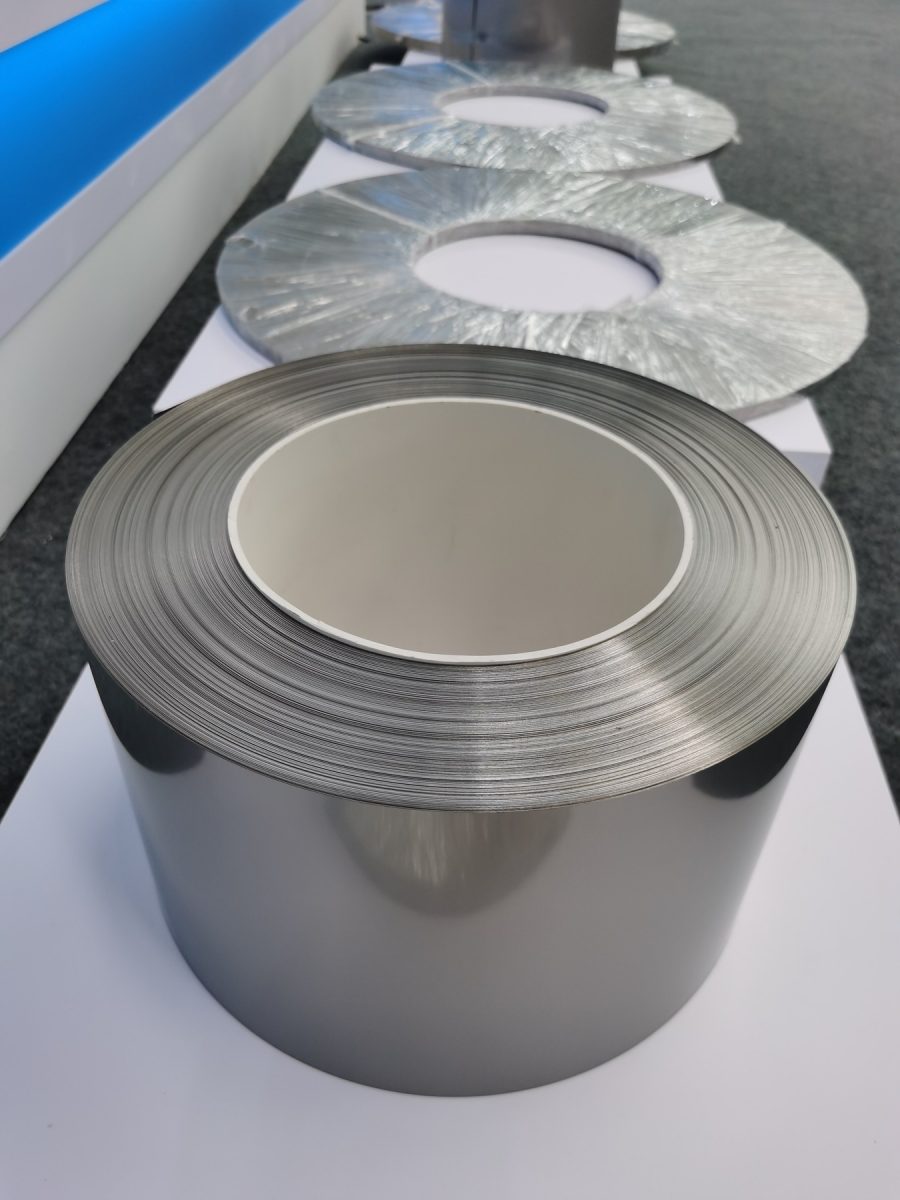
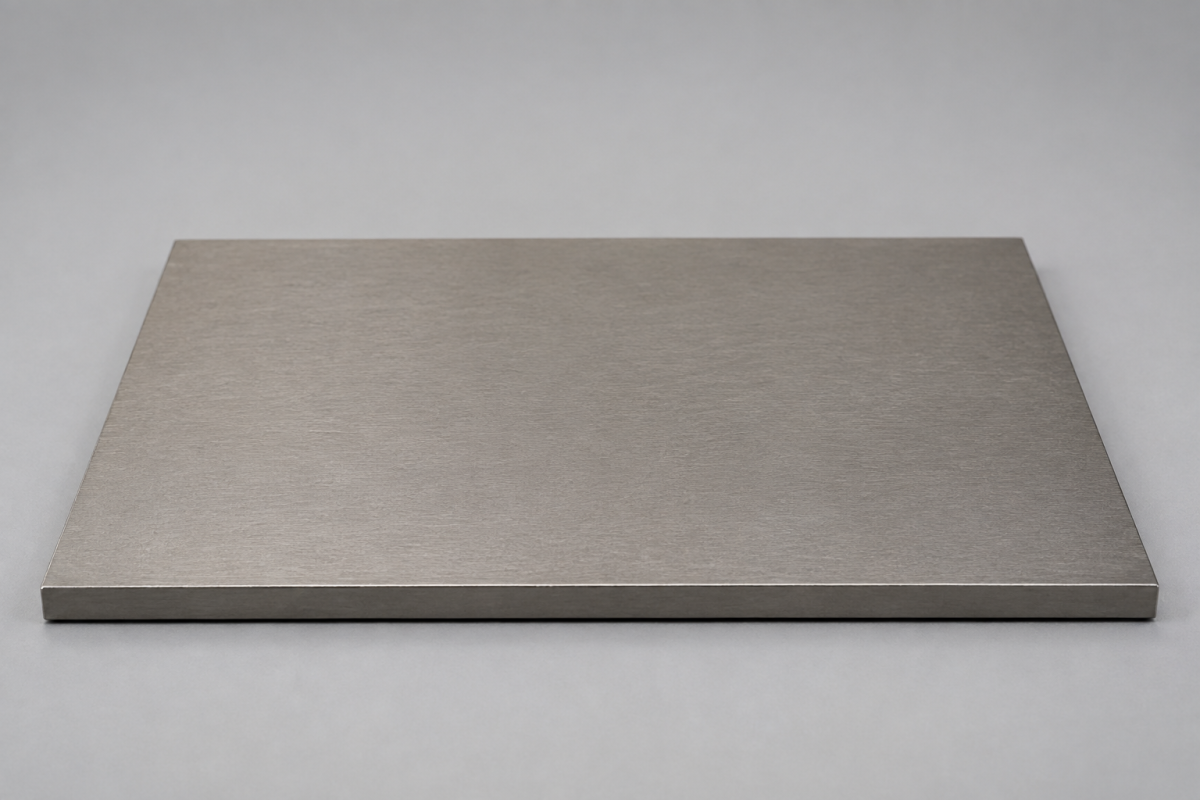
From 0.03 mmFoil thickness
RFQ dimensionsWidth and length you specify
Nb1 / Nb1ZrExact grade to be specified
By drawingStandard and inspection scope
Specify the foil as a finished purchasing requirement. Thickness, width, length and handling format belong on the enquiry; review their quoted acceptance basis before release.
Beiyu Titanium supplies niobium foil from 0.03 mm thickness, with width and length stated on the RFQ. Specify pure Nb1 or the required alloy, thickness tolerance and delivery format for quotation review.
Review the niobium material category
How should pure niobium foil be specified?
For pure niobium foil, name Nb1 with its UNS; keep an alloy request distinct. Carry Nb1Zr or any other niobium alloy named on the drawing into the enquiry; foil describes the shape and does not select the chemistry. Provide the grade, thickness and governing document together.
| Material request | Grade reference | Order instruction |
|---|---|---|
| Pure niobium foil | Nb1 (UNS R04200) | Write grade and thickness separately |
| Niobium-zirconium foil | Nb1Zr (UNS R04261) | Retain the alloy designation |
| Other alloys, including C-103 | Customer material document | Supplied to customer specification; quoted per drawing |
See niobium bar and sheet for the underlying grade descriptions.
What mass should I allow for the foil area?
Use areal mass to estimate material weight without assuming a roll width. Formula: kg/m² = ρ × t, with ρ = 8.57 g/cm³, Beiyu's reference density, used in our quotation weights, and thickness t in mm. The thickness inputs below are calculation examples, not a list of standard foil thicknesses.
| Example thickness (mm) | Calculated areal mass (kg/m²) |
|---|---|
| 0.03 | 0.26 |
| 0.05 | 0.43 |
| 0.10 | 0.86 |
| 0.20 | 1.71 |
| 0.50 | 4.29 |
Supply thickness, width, length and quantity to establish the ordered area. Verify the agreed thickness tolerance and quantity basis on the quotation before using the estimate for receiving or freight planning; packing mass is outside this calculation.
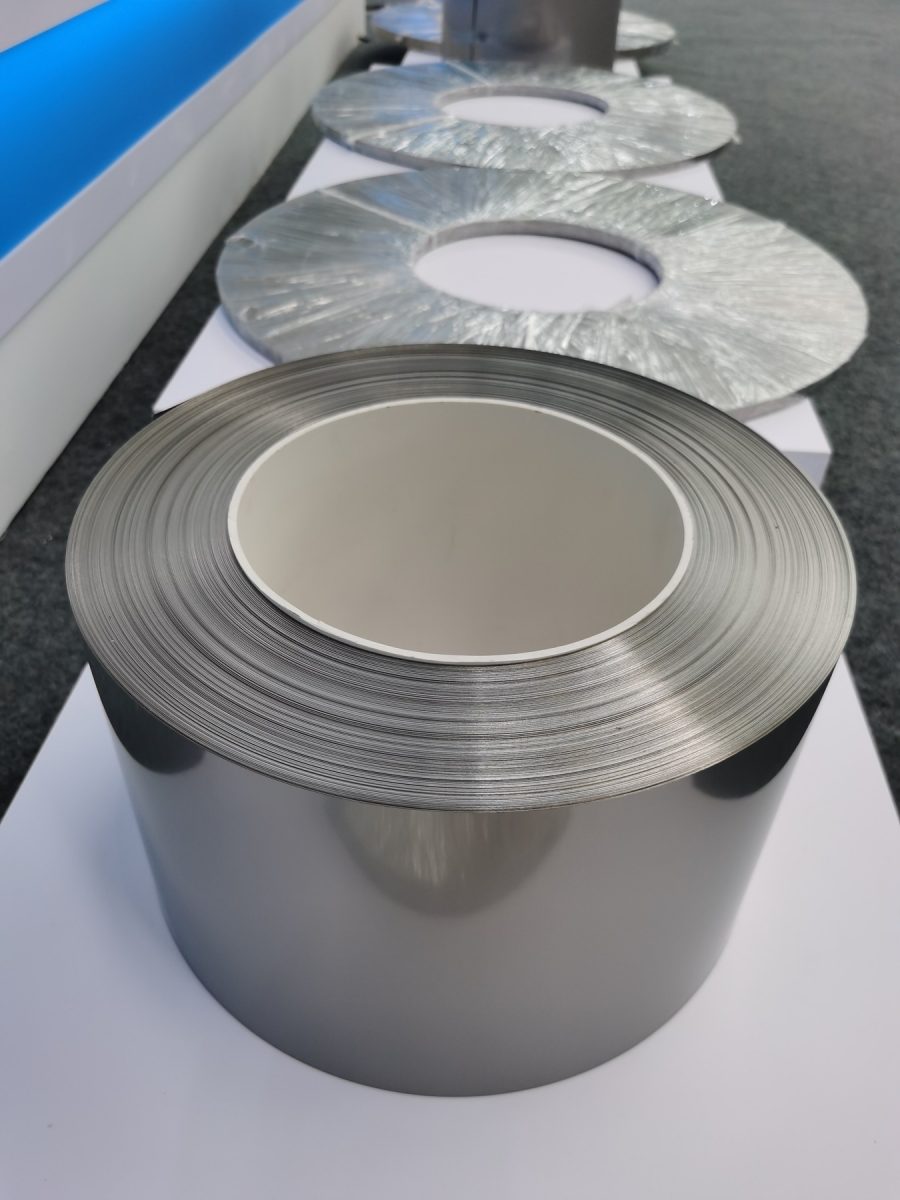
How should thickness and handling be agreed together?
Choose thickness from the component drawing, then describe how the foil will be received and handled. Request flat blanks explicitly when the next operation needs them; a roll requires a different receiving arrangement. Give the handling and surface acceptance criteria alongside the condition required by the drawing.
| Drawing or handling decision | Input to the RFQ | How to verify |
|---|---|---|
| Thickness | From 0.03 mm; give the nominal thickness and agreed tolerance | Agree the measurement and acceptance basis |
| Width and length | Stated on the RFQ | Check the quoted width and length against the drawing |
| Roll or flat pieces | Describe the form required by the receiving operation | Confirm the delivery format before ordering |
| Surface and edges | State the surface, edge and handling criteria needed by the drawing | Agree their inspection scope |
| Condition | State annealed or as-rolled, as the drawing requires | Confirm the condition named on the quotation |
| Protection | Describe separation and packing requirements | Confirm protection with the quotation |
What qualifies the foil for a lining or electronics part?
Niobium is used for chemical-process parts and linings and for capacitors and electronics. Whether foil in a given thickness suits the actual part is an engineering decision for your own team. For foil that contacts process media, give the media and operating conditions; a general application list does not establish compatibility. Supply the drawing and acceptance requirements; Beiyu confirms the supply scope at quotation.
| Review input | Evidence to agree |
|---|---|
| Service and component drawing | Material specification for the intended part |
| Thickness and surface acceptance | Dimensional and surface inspection scope |
| Documents and traceability | MTC or COC and identification when required by the order |
For a round feed rather than a flat part, see niobium wire. A different corrosion-service material can be reviewed through tantalum plate and sheet; send its own specification before asking for an alternative quotation.
FAQ
Does the foil name settle the standard?
No. Foil names the form. Where the drawing calls for ASTM B393, order the foil to it, and write the thickness and its tolerance on the order as well.
What width and length can niobium foil be supplied in?
Width and length are quoted to the RFQ. State the roll width and length, or the finished blank size, that your operation needs; Beiyu confirms the dimensions and the delivery format in the quotation.
Specification detail with sources
Beiyu Titanium's published supply range for niobium sheet and plate starts at 0.03 mm thick, and this page uses that figure as the starting thickness for foil; foil width and length are stated on the RFQ. Beiyu's niobium grades include Nb1 (UNS R04200) and Nb1Zr (UNS R04261). Beiyu's reference density, used in our quotation weights, is 8.57 g/cm³ for niobium.
ASTM B393 covers niobium and niobium alloy strip, sheet and plate, as described by the ASTM store listing and GlobalSpec scope summary; order foil to B393 where the drawing calls for it, with the thickness agreed on the order. Attach the drawing and acceptance requirements when the enquiry invokes this document; the scope summary supplies no thickness classification or tolerance values.
For standard grades and sizes the typical lead time is 15 to 30 days from order confirmation or deposit to ex-works dispatch, sea transit time not included; special chemistry or mechanical requirements call for an adjusted melt recipe, so their lead time depends on the requirements and is confirmed with the quotation.
Attach the foil thickness, width and length with the roll or blank format your handling operation needs, then agree surface protection and dimensional acceptance in the quotation.