
Grade 4 titanium is an unalloyed commercially pure grade identified as UNS R50700 in ASTM’s public scope clauses. Carpenter Technology describes it as the strongest of the commercially pure grades and a candidate for many chemical and marine applications. For purchasing, the product form decides the specification: the chemistry and mechanical acceptance figures below come from ASME SB-348 (ASTM B348-11) bar tables. A sheet enquiry needs the sheet specification and its own acceptance requirements, while a tube enquiry needs particular care because the cited ASTM tube and pipe scopes omit this grade.
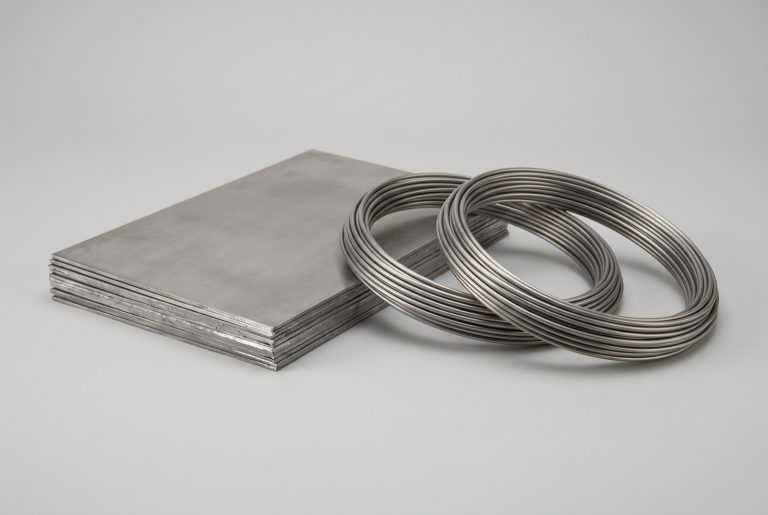
Grade 4 titanium summary
| Buyer checkpoint | Grade description or value | Authority and purchasing meaning |
|---|---|---|
| Identity | Grade 4, UNS R50700; unalloyed titanium | ASTM B265-25 scope; scope clauses print the UNS designation |
| Other drawing marks | European Werkstoffnummer 3.7065; a French drawing may mark Grade 4 as T60 | Cross-reference marks only; the drawing’s material specification governs |
| Bar tensile minimum | 80 ksi / 550 MPa | SB-348, Table 2; section restrictions apply |
| Yield references | 70 ksi / 483 MPa minimum; Carpenter gives 480 MPa (70 ksi) minimum | SB-348 versus Carpenter Technology, respectively |
| Material behavior | Corrosion resistance, corrosion fatigue performance and high strength | Carpenter Technology’s description; assess suitability for the intended service |
| Tube specification issue | Grade omitted from B338, B861 and B862 | ASTM public scopes; settle the manufacturing and test basis at quotation |
Which composition limits define Grade 4?
Use the ordered specification’s chemistry limits for acceptance. The bar limits below follow SB-348; Carpenter’s type analysis agrees on the listed impurity limits, while AZoM also publishes a titanium minimum. Keep the basis attached to each result when checking a certificate.
| Constituent, weight % | SB-348 Table 1 | Carpenter Technology type analysis | AZoM Grade 4 reference |
|---|---|---|---|
| Carbon | 0.08 maximum | 0.08 maximum | ≤ 0.080 |
| Oxygen | 0.40 maximum | 0.40 maximum | ≤ 0.40 |
| Nitrogen | 0.05 maximum | 0.05 maximum | ≤ 0.050 |
| Hydrogen | 0.015 maximum | 0.015 maximum | ≤ 0.015 |
| Iron | 0.50 maximum | 0.50 maximum | ≤ 0.50 |
| Other elements, each | 0.1 maximum | Not stated | Not stated |
| Other elements, total | 0.4 maximum | 0.40 maximum | Not stated |
| Titanium | By difference | Nominal balance | ≥ 98.6 |
SB-348 Table 1 footnotes require reporting the top and bottom ingot analyses. The final product hydrogen result is reported; ingot hydrogen need not be reported, and a lower hydrogen limit can be negotiated. Single figures in that table are maximums, with titanium calculated by difference. These reporting distinctions belong in the certificate review, particularly when the order restricts hydrogen more tightly.
Under SB-348 Table 1 footnotes, other elements need not be reported unless they exceed 0.1 % individually or 0.4 % in total, and other elements may not be added intentionally. The purchaser may request analysis of unlisted elements. Specify any such request before quotation so that the required analysis appears in the agreed inspection scope.
What mechanical properties can the bar order specify?
The bar acceptance basis is the SB-348 table, subject to its specimen and section limits. Carpenter’s yield statement is shown separately because its metric figure differs.
| Requirement or statement | Published figure | Source and qualification |
|---|---|---|
| Tensile strength | 80 ksi / 550 MPa minimum | SB-348 Table 2 marks the Grade 3 and Grade 4 tensile values as corrected editorially |
| Yield strength | 70 ksi / 483 MPa minimum | SB-348 Table 2 |
| Yield strength, producer description | 480 MPa (70 ksi) minimum | Carpenter Technology; shown alongside the bar standard’s figure |
| Elongation | 15 % minimum in 4D | SB-348 Table 2 |
| Reduction of area | 25 % minimum | SB-348 Table 2 |
SB-348 Table 2 footnote A covers longitudinal sections up to 3 in. (76 mm) in thickness with a maximum of 10 in.² (64.5 cm²). Mechanical properties of larger sections are negotiated between the manufacturer and purchaser.
The tensile and chemistry figures on this page are B348 bar figures. Sheet and plate are certified against B265’s own tables, which this page does not reproduce. For bar-specific purchasing context, buyers can consult the ASTM B348 bar and billet guide.
Which physical properties are reference values?
Use the following data with the source and qualifier intact. Conductivity differs between the references; hardness uses different scales.
| Property | RMI Titanium Company, Titanium Alloy Guide (January 2000) | AZoM Grade 4 article |
|---|---|---|
| Density | – | 4.51 g/cm³; AZoM also gives 0.163 lb/in³ |
| Melting point | Approximate 1660 °C (3020 °F) | 1660 °C (3020 °F) |
| Thermal conductivity | 17.3 W/m·°C | 16.95 W/mK |
| Electrical resistivity, room temperature | 60 microhm-cm | – |
| Hardness | Nominal 100 HRB | 250 HV |
| Beta transus | Nominal 949 °C (1740 °F) | – |
| Elastic modulus | – | 105-120 GPa |
| Poisson’s ratio | – | 0.34-0.40 |
| Thermal expansion coefficient | – | 8.60 µm/m·°C over 0-100 °C |
The RMI and AZoM conductivity entries remain separate reference statements. Likewise, HRB and HV are distinct hardness scales; no conversion is made between them. Hardness, resistivity, conductivity, melting point and beta transus are reference properties: SB-348 sets no requirement for any of them, and neither B265 nor B348 sets a hardness requirement. Write any drawing limit and its verification requirement on the order instead of assuming the base certificate will include it.
Carpenter Technology describes the alpha-to-beta transformation of pure titanium at 882.5 °C (1620.5 °F); RMI gives Grade 4 a nominal beta transus of 949 °C (1740 °F). Carpenter also describes CP titanium at service temperatures as 100 % hcp alpha phase and states that chemistry, including iron and interstitials, and grain size control its properties.
How should fabrication and heat treatment be planned?
AZoM provides advisory fabrication guidance, rather than an acceptance schedule for an ordered product. Define the delivered condition first, then agree any fabrication treatment and the properties to be checked afterward. Carpenter states that strain hardening (cold work) can dramatically increase strength.
| Operation | Attributed guidance for Grade 4 |
|---|---|
| Annealing | AZoM: heat to 704 °C, hold 2 h, then air cool |
| Intermediate stress relief | AZoM: 482-538 °C for 45 min when intermediate stress relieving is required |
| Forging temperatures | AZoM: rough forging at 935 °C (1715 °F), completed at 843 °C (1550 °F) |
| Forming route | AZoM: hot or cold forming by power brake, hydropress, stretch or drop hammer methods |
| Machining approach | AZoM: difficult machining can be accomplished with slow speeds, high coolant flow and high feed rates; tooling should use carbide C1-C4 or cobalt high-speed tools |
| Welding assessment | AZoM rates weldability as good |
AZoM states that its cold-working behavior is the same as that of a moderately tempered austenitic stainless steel and recommends post-work annealing to regain favorable performance properties. It also states that hot working enhances overall ductility.
How does Grade 4 compare with Grades 1, 2 and 3?
Within the commercially pure group, Carpenter calls Grade 4 the strongest. The standard’s ladder shows distinct chemistry limits and mechanical minimums; it does not establish a universal choice for every part. All figures in the comparison follow SB-348, with mechanical entries subject to its longitudinal-section footnote.
| Grade | Oxygen / iron maximum, weight % (SB-348 Table 1) | Tensile minimum, ksi / MPa (SB-348 Table 2) | Yield minimum, ksi / MPa (SB-348 Table 2) | Elongation in 4D / reduction of area, minimum % (SB-348 Table 2) |
|---|---|---|---|---|
| Grade 1 | 0.18 / 0.20 | 35 / 240 | 20 / 138 | 24 / 30 |
| Grade 2 | 0.25 / 0.30 | 50 / 345 | 40 / 275 | 20 / 30 |
| Grade 3 | 0.35 / 0.30 | 65 / 450 | 55 / 380 | 18 / 30 |
| Grade 4 | 0.40 / 0.50 | 80 / 550 | 70 / 483 | 15 / 25 |
For a selection discussion covering the commercially pure family, consult how to choose between commercially pure Grades 1 to 4. For the neighboring lower-strength option, buyers can use the Grade 3 titanium data sheet. Another comparison point is provided by the Grade 2 titanium data sheet.
Which specifications list the product form?
Order by the form covered and the grade actually listed. ASTM’s public pages show scope clauses only; they do not supply the chemistry or tensile tables reproduced above. The scope clauses of B265-25, B381-26 and B863-26 print UNS R50700 next to Grade 4, while the SB-348 text prints no UNS numbers.
| Requested form | Document and Grade 4 scope status | Source |
|---|---|---|
| Annealed strip, sheet and plate | B265-25 lists Grade 4, UNS R50700 | ASTM public scope |
| Bar and billet | B348 includes Grade 4 in §1.1.4 | SB-348 scope |
| Annealed forgings | B381-26 lists F-4, UNS R50700 | ASTM public scope |
| Wire | B863-26 lists Grade 4, UNS R50700 | ASTM public scope |
| Condenser and heat-exchanger tube | B338-17(2026) does not list Grade 4 | ASTM public scope |
| Seamless pipe; welded pipe | B861-24 and B862-23 both omit Grade 4 | ASTM public scopes |
| Surgical implant material | F67-24 title includes UNS R50700 | ASTM title and scope |
| Additional producer listings | Carpenter lists AMS 4901 (sheet, strip, plate) and AMS 4921 (bar, wire, forgings, billet) | Carpenter Technology |
A Grade 4 tube or pipe enquiry has to name the specification and test requirements it is to be made against, confirmed at quotation. A generic reference to an ASTM titanium tube standard does not resolve the grade omission. Carpenter additionally lists ASTM F1341 for wire and ISO 5832-2; any requested listing should be named in the enquiry and checked against the quotation’s certificate scope.
Where is Grade 4 titanium used?
Carpenter identifies chemical and marine applications as candidates, citing the combination of corrosion resistance, corrosion fatigue performance and strength. Its application categories also include aerospace, transportation, consumer, industrial and medical uses.
AZoM describes good ductility, medium formability, a good strength-to-weight ratio at moderate temperatures and good impact properties at low temperatures.
Buyer questions
Is Grade 4 the strongest commercially pure grade?
Carpenter Technology calls Grade 4 the strongest of the commercially pure Grades 1 to 4. In SB-348 Table 2, its tensile minimum of 80 ksi / 550 MPa is the highest among those grades, subject to the table’s section limits.
Can Grade 4 be ordered as ASTM B338 tube?
The B338 scope does not list Grade 4, so a Grade 4 tube cannot be certified to B338. Beiyu Titanium quotes Grade 4 tube against the specification and test requirements the buyer names, confirmed in the quotation.
Does T60 or 3.7065 settle the material order?
No. Werkstoffnummer 3.7065 and the French mark T60 are cross-references to Grade 4; the material specification named on the drawing governs the order.
What hardness should the buyer expect?
RMI’s Titanium Alloy Guide (January 2000) gives nominal 100 HRB, alongside AZoM’s 250 HV. The scales differ. If hardness controls acceptance, specify the scale, limit and test requirement before the order is agreed.
Can the bar figures certify plate?
Plate requires B265’s applicable tables. The B348 bar figures reproduced here do not substitute for the flat-product document, even when the grade name matches.
Specification detail with sources
Grade 4 bar has a minimum tensile strength of 80 ksi (550 MPa), a minimum yield strength of 70 ksi (483 MPa), minimum elongation of 15 % in 4D and minimum reduction of area of 25 % under SB-348 Table 2. SB-348 Table 2 footnote A limits these properties to longitudinal sections up to 3 in. (76 mm) in thickness with a maximum of 10 in.² (64.5 cm²); mechanical properties of larger sections are negotiated between the manufacturer and purchaser. Carpenter Technology states a minimum yield strength of 480 MPa (70 ksi), compared with the 483 MPa (70 ksi) minimum in SB-348 Table 2.
SB-348 Table 1 sets Grade 4 oxygen at 0.40 % maximum and iron at 0.50 % maximum by weight. RMI Titanium Company’s Titanium Alloy Guide (January 2000) gives nominal hardness of 100 HRB and a nominal beta transus of 949 °C (1740 °F). Sheet and plate certification follows B265’s own tables, which this page does not reproduce.
The scope clauses of ASTM B338-17(2026), B861-24 and B862-23 list Grade 3 (UNS R50550) and do not list Grade 4 (UNS R50700). These documents describe material and do not identify the mill producing material for any Beiyu order.
Ordering Grade 4 titanium
Beiyu Titanium supplies Grade 4 titanium bar to ASTM B348, sheet and plate to ASTM B265, forgings to ASTM B381 F-4 and wire to ASTM B863. Grade 4 tube is quoted to a specification and test basis named by the buyer, because B338, B861 and B862 do not list this grade. ASTM B265 sheet in this grade is also listed as a product: Grade 4 titanium sheet. Beiyu’s commercially pure titanium range includes Grades 1, 2, 3 and 4.
Send the drawing, requested dimensions, tolerances, condition and surface requirements together with the specification and revision. Identify any extra chemistry restrictions or mechanical requirements and ask for an EN 10204 3.1 mill test certificate by order scope. Agree the required results at quotation so that the certificate can be checked against the purchase order.
| Supply form | Beiyu Titanium supply range |
|---|---|
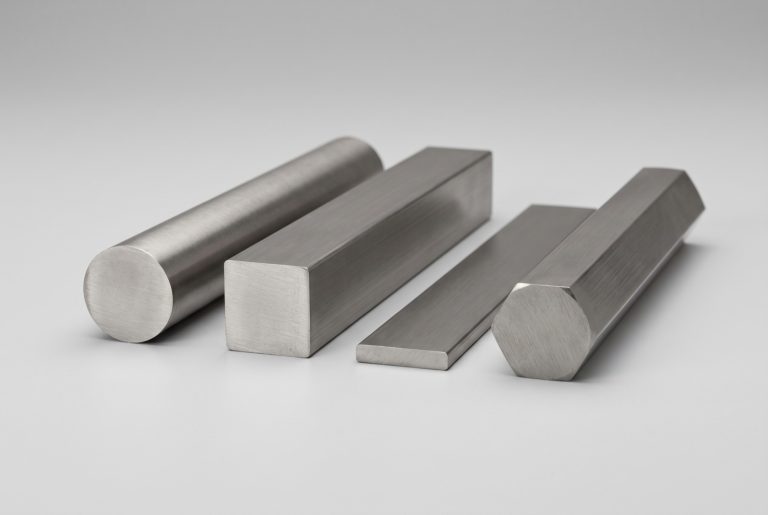
| Round bar | Ø1-500 mm |
| Square bar | 3×3 mm to 500×500 mm |
| Flat bar | 3×12.7 mm to 30×500 mm |
| Hexagonal bar | to 17 mm across flats |
| Bar lengths | to 6000 mm |
| Centerless-ground bar route | Ø3.175-25.4 mm |
| Sheet and thin plate | 0.5 mm to 3 mm thick, widths to 1500 mm |
| Plate | 3 mm to 70 mm thick, widths to 2500 mm, lengths to 6000 mm |
| Seamless tube | OD 5-325 mm, wall 0.5-12 mm, lengths to 12,000 mm; B338 / B861 / B862 do not list Grade 4; specification and tests require quotation confirmation |
| Welded tube | OD 6.35-1,219 mm, wall 0.5-25.4 mm, lengths to 22,000 mm; B338 / B861 / B862 do not list Grade 4; specification and tests require quotation confirmation |
| Forgings | ASTM B381 F-4 to the buyer’s drawing, sizes confirmed at quotation |
| Wire | ASTM B863, diameter confirmed at quotation |
These are Beiyu Titanium’s supply ranges for titanium as a family; the size, condition and certificate scope for a Grade 4 order are confirmed at quotation.
For standard grades and sizes the typical lead time is 15 to 30 days from order confirmation or deposit to ex-works dispatch, sea transit time not included; special chemistry or mechanical requirements call for an adjusted melt recipe, so their lead time depends on the requirements and is confirmed with the quotation.