
Grade 3 titanium, UNS R50550 in ASTM’s scope listings, is a commercially pure unalloyed material. Carpenter Technology describes higher tolerable oxygen and higher minimum strength requirements than Grade 2. AZoM identifies chemical processing equipment and power plant cooling system components among its uses. A buyer should specify both grade and product document: the numerical chemistry and tensile requirements on this page follow the bar tables in ASME SB-348 (ASTM B348-11), while other product forms require acceptance against their own specifications.
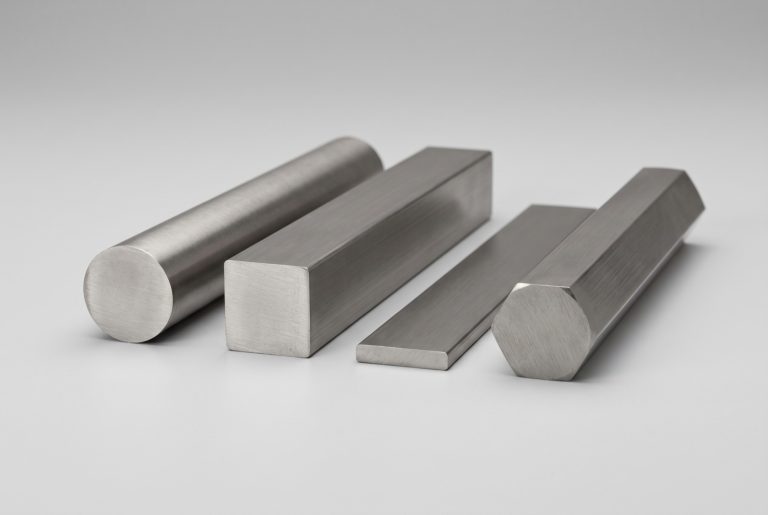
Grade 3 titanium summary
| Selection item | Published information | Source or order basis |
|---|---|---|
| Material identification | Unalloyed titanium, Grade 3, UNS R50550 | ASTM B265-25 public scope |
| European and French drawing marks | European Werkstoffnummer 3.7055; a French drawing may mark Grade 3 as T50 | Cross-reference marks only; the drawing’s material specification governs |
| Bar strength floors | Tensile 65 ksi / 450 MPa; yield 55 ksi / 380 MPa | SB-348 Table 2, within its section limits |
| General description | Corrosion resistance, biocompatibility and formability characterize the CP group | Carpenter Technology; application suitability needs the buyer’s requirements |
| Tube and pipe listing | Grade 3 appears in B338, B861 and B862 | ASTM public scope clauses; choose the standard matching the form |
What chemistry should a Grade 3 certificate satisfy?
Judge chemistry against the specification named on the order. Carpenter’s type analysis differs from the bar standard in iron, oxygen and hydrogen, so it cannot be silently substituted for the SB-348 limits. AZoM’s listed impurity limits match the bar chemistry shown here.
| Element, weight % | SB-348, Table 1 | Type analysis from Carpenter Technology | AZoM Grade 3 composition |
|---|---|---|---|
| Iron | 0.30 maximum | 0.5 nominal | ≤ 0.30 |
| Oxygen | 0.35 maximum | 0.4 maximum | ≤ 0.35 |
| Hydrogen | 0.015 maximum | 0.012 maximum | ≤ 0.015 |
| Carbon | Maximum 0.08 | Maximum 0.08 | ≤ 0.080 |
| Nitrogen | Maximum 0.05 | Maximum 0.05 | ≤ 0.050 |
| Other, individual | 0.1 maximum | No entry stated | No entry stated |
| Other, combined | 0.4 maximum | No total stated | No total stated |
| Titanium content | By difference | Balance, nominal | ≥ 98.8 |
The SB-348 Table 1 notes call for top/bottom ingot analysis reporting and a final-product hydrogen result. Reporting hydrogen on the ingot is unnecessary; a tighter hydrogen requirement may be negotiated. The table’s single values represent maximum limits, and titanium is obtained by difference.
SB-348 Table 1 allows other-element reporting to be omitted unless an element exceeds 0.1 % or the total exceeds 0.4 %; the same note says other elements may not be added intentionally. Buyers may request analysis for elements absent from the table. Put any extra analysis or restricted chemistry into the enquiry, then check the certificate’s reported scope against that agreement.
Carpenter’s nominal iron figure is a producer reference, not a specification maximum.
Which mechanical minimums apply to Grade 3 bar?
SB-348 supplies the bar minimums below. Their applicability depends on the table’s longitudinal-section restrictions, so dimensions and the requested test basis should accompany the grade designation.
| Bar test item | Minimum result | Document basis |
|---|---|---|
| Tensile | 65 ksi / 450 MPa | SB-348 Table 2 marks the Grade 3 and Grade 4 tensile values as corrected editorially |
| Yield | 55 ksi / 380 MPa | SB-348 Table 2 |
| Elongation measured in 4D | 18 % | SB-348 Table 2 |
| Area reduction | 30 % | SB-348 Table 2 |
For longitudinal sections, SB-348 Table 2 footnote A specifies a thickness limit of 3 in. (76 mm) with a maximum of 10 in.² (64.5 cm²). Larger sections require mechanical properties to be negotiated between the manufacturer and purchaser.
These chemistry and tensile tables address B348 bar. For sheet or plate, certification uses B265’s own tables; their numerical requirements are not reproduced here. The bar-specific purchasing discussion can be continued through the ASTM B348 bar and billet guide.
What do the physical-property references show?
The sources disagree on melting point and thermal conductivity. State the chosen reference basis in engineering calculations.
| Reference characteristic | AZoM Grade 3 article | RMI Titanium Company’s January 2000 Titanium Alloy Guide |
|---|---|---|
| Melting temperature | 1680 °C (3056 °F) | Approximately 1660 °C (3020 °F) |
| Thermal conductivity | 21.97 W/mK | 19.7 W/m·°C |
| Hardness scale and value | 180-220 HV | 90 HRB, nominal |
| Density reference | 0.163 lb/in³; metric density 4.51 g/cm³ | – |
| Elastic modulus range | 105-120 GPa (15200-17400 ksi) | – |
| Poisson ratio | 0.34-0.40 | – |
| Expansion coefficient | 8.60 µm/m·°C at 0-100 °C | – |
| Room-temperature electrical resistivity | – | 56 microhm-cm |
| Nominal beta transus | – | 920 °C (1690 °F) |
HV and HRB use separate hardness scales; the references above are presented without converting either. SB-348 sets no requirement for hardness, electrical resistivity, thermal conductivity, melting point or beta transus, and neither B265 nor B348 sets a hardness requirement. If a drawing imposes a limit on any of them, write that limit on the order and agree the verification method and reporting requirement.
How can Grade 3 be worked and heat treated?
AZoM rates weldability as excellent and describes hot and cold forming methods. Its processing temperatures and machining guidance are advisory; agree the final delivery condition and any additional verification needed after fabrication.
| Process decision | AZoM’s Grade 3 guidance |
|---|---|
| Anneal cycle | 704 °C (1299 °F), hold for 2 h, followed by air cooling |
| Intermediate stress relieving | 482-538 °C (900-1000 °F) for 45 min, if required |
| Rough and finish forging | Rough forging at 907 °C; completion at 843 °C (1550 °F) |
| Forming methods | Hot or cold work using a power brake, hydropress, stretch forming or drop hammer |
| Cutting practice | AZoM: hard to machine, but it can be done using slow speeds, high coolant flow and high feed rates |
| Tool recommendation | AZoM says tooling should be cobalt high-speed tools or C1-C4 carbide |
| Joining assessment | Weldability rated excellent by AZoM |
AZoM compares its cold-working characteristics with those of moderately tempered austenitic stainless steel. Post-work annealing is recommended by AZoM to recover favorable performance properties.
How does Grade 3 sit between Grades 2 and 4?
The B348 bar ladder places this grade between its neighbors on tensile and yield minimums. Carpenter describes it as allowing more oxygen and requiring greater minimum strength than Grade 2. The following comparison uses SB-348 throughout; it is a grade-selection reference within that bar table’s section scope.
| Bar grade | Tensile / yield minimum, MPa (SB-348 Table 2) | Oxygen maximum, weight % (SB-348 Table 1) | Iron maximum, weight % (SB-348 Table 1) | Minimum elongation in 4D, % (SB-348 Table 2) |
|---|---|---|---|---|
| Grade 2 | 345 / 275 | 0.25 | 0.30 | 20 |
| Grade 3 | 450 / 380 | 0.35 | 0.30 | 18 |
| Grade 4 | 550 / 483 | 0.40 | 0.50 | 15 |
A broader selection discussion is available in how to choose between commercially pure Grades 1 to 4. To examine the lower-strength neighbor, consult the Grade 2 titanium data sheet. For the higher-strength CP alternative, refer to the Grade 4 titanium data sheet.
Which product specifications include Grade 3?
The grade appears in the relevant bar, flat-product, forging, wire, tube and pipe scope listings below. State the document and revision for the requested form. A scope listing identifies coverage; its public page supplies no chemistry or mechanical acceptance table.
| Product category | Scope listing or producer statement | Attribution |
|---|---|---|
| Strip, sheet, plate in annealed condition | B265-25, §1.1.3: Grade 3, UNS R50550 | ASTM public scope |
| Bar or billet | B348, §1.1.3: unalloyed Grade 3 | SB-348 |
| Forgings, annealed | B381-26: F-3, UNS R50550 | ASTM public scope |
| Wire product | B863-26: Grade 3, UNS R50550 | ASTM public scope |
| Seamless or welded condenser and heat-exchanger tubes | B338-17(2026): Grade 3, UNS R50550 | ASTM public scope |
| Pipe (seamless) | B861-24 includes Grade 3, UNS R50550 | ASTM public scope |
| Pipe (welded) | B862-23 includes Grade 3, UNS R50550 | ASTM public scope |
| Material for surgical implants | F67-24 title lists UNS R50550 | ASTM title; Carpenter lists ASTM F67 and ISO 5832-2 |
ASTM’s scope clauses print the UNS designation beside the grade. The SB-348 text carries no UNS numbers, so it should not be described as assigning that designation. For flat products, apply the chemistry and tensile requirements in B265 itself; the bar tables on this page cannot complete a sheet certificate review.
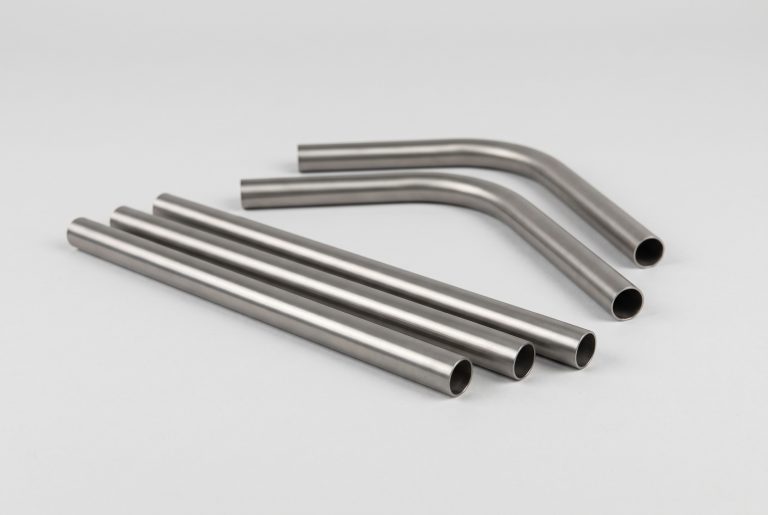
Where do the sources place Grade 3 in service?
AZoM names chemical processing equipment and power plant cooling system components. It describes excellent corrosion resistance in highly oxidizing to mildly reducing environments and good low-temperature impact properties. These are qualitative descriptions, without a numerical service envelope on this page.
Carpenter’s application categories are consumer, industrial and medical.
Buyer questions
Is Grade 3 included in ASTM B338?
Yes. The B338 scope (B338-17(2026)) names Grade 3, UNS R50550. Specify whether the enquiry concerns seamless or welded condenser or heat-exchanger tube and identify the required certificate scope.
Does Carpenter publish the same chemistry as the bar table?
No. Its type analysis differs in iron, oxygen and hydrogen, as the composition columns show. Acceptance follows the product specification on the purchase order.
Are T50 and 3.7055 sufficient designations?
Not by themselves. A drawing marked 3.7055 or T50 points to Grade 3, but acceptance follows the material specification the drawing names.
Which published hardness belongs on the drawing?
RMI Titanium Company’s Titanium Alloy Guide (January 2000) states nominal 90 HRB; AZoM gives 180-220 HV. Choose the required test scale and limit explicitly if hardness is an acceptance item.
Can the melting point be given as a single agreed figure?
The references disagree: AZoM prints 1680 °C (3056 °F), whereas RMI Titanium Company’s Titanium Alloy Guide (January 2000) gives approximately 1660 °C (3020 °F). Preserve the chosen attribution in engineering documentation.
Specification detail with sources
For Grade 3 bar, SB-348 Table 2 requires at least 65 ksi (450 MPa) tensile strength and 55 ksi (380 MPa) yield strength, with minimum elongation in 4D of 18 % and minimum reduction of area of 30 %. Under footnote A to SB-348 Table 2, these minimums cover longitudinal sections measuring no more than 3 in. (76 mm) thick with a maximum of 10 in.² (64.5 cm²); the manufacturer and purchaser negotiate mechanical requirements for larger sections.
The Grade 3 limits in SB-348 Table 1 are 0.35 % maximum oxygen and 0.30 % maximum iron, by weight. In its Titanium Alloy Guide (January 2000), RMI Titanium Company lists 90 HRB as nominal hardness and 920 °C (1690 °F) as nominal beta transus. B265 governs sheet and plate acceptance through its own tables rather than these bar requirements.
These documents describe the material without identifying which mill will produce a Beiyu order.
Ordering Grade 3 titanium
Beiyu Titanium supplies Grades 1, 2, 3 and 4. For Grade 3 the product specifications include ASTM B348 for bar, ASTM B265 for sheet and plate, ASTM B338 for tube, ASTM B861 and B862 for seamless and welded pipe, ASTM B381 F-3 for forgings and ASTM B863 for wire.
Build the enquiry around the product specification, drawing dimensions, tolerance, delivery condition and requested surface. Add supplementary testing and any restricted composition requirements before quotation. Ask for an EN 10204 3.1 mill test certificate by order scope.
| Supply form | Beiyu Titanium supply range |
|---|---|
| Round bar | Ø1-500 mm |
| Square bar | 3×3 mm to 500×500 mm |
| Flat bar | 3×12.7 mm to 30×500 mm |
| Hexagonal bar | to 17 mm across flats |
| Bar lengths | to 6000 mm |
| Centerless-ground bar route | Ø3.175-25.4 mm |
| Sheet and thin plate | 0.5 mm to 3 mm thick, widths to 1500 mm |
| Plate | 3 mm to 70 mm thick, widths to 2500 mm, lengths to 6000 mm |
| Seamless tube | OD 5-325 mm, wall 0.5-12 mm, lengths to 12,000 mm |
| Welded tube | OD 6.35-1,219 mm, wall 0.5-25.4 mm, lengths to 22,000 mm |
| Forgings | ASTM B381 F-3 to the buyer’s drawing, sizes confirmed at quotation |
| Wire | ASTM B863, diameter confirmed at quotation |
These Beiyu Titanium supply ranges cover titanium as a family. The quotation confirms the Grade 3 dimensions together with condition and certificate scope.
For standard grades and sizes the typical lead time is 15 to 30 days from order confirmation or deposit to ex-works dispatch, sea transit time not included; special chemistry or mechanical requirements call for an adjusted melt recipe, so their lead time depends on the requirements and is confirmed with the quotation.