
Hastelloy C-22 is Haynes International’s corrosion-resistant alloy identified as UNS N06022. Special Metals identifies its corresponding INCONEL alloy 22 as W.Nr. 2.4602, NiCr21Mo14W; VDM calls its version VDM Alloy 22, using VDM’s name Nicrofer 5621 hMoW. Haynes describes a nickel-chromium-molybdenum material for oxidizing and non-oxidizing chemicals, while VDM explicitly includes tungsten in its description. Chemical-processing equipment, chloride-bearing media and pollution-control systems feature in the producer application lists. Its corrosion resistance is broad, but the medium, temperature and fabrication condition still matter: the published tests do not establish universal superiority over other nickel alloys. For purchasing, identify the required form, governing specification and solution-annealed condition, then distinguish specification minimums from the producers’ typical results.
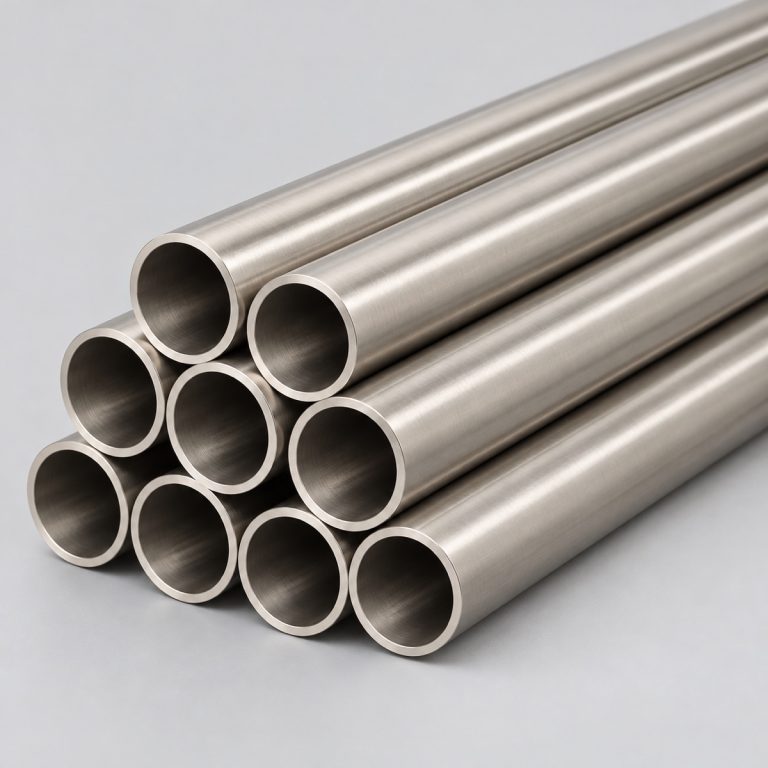
Hastelloy C-22 in brief
| Subject | Identification or guidance | Source |
|---|---|---|
| Material identity | UNS N06022; W.Nr. 2.4602; NiCr21Mo14W | Special Metals; VDM also gives ISO NiCr21Mo14W3 |
| Producer names | HASTELLOY C-22; INCONEL alloy 22; VDM Alloy 22; ATI 22 | Haynes, Special Metals, VDM and ATI respectively |
| Structure and family | Fully austenitic; face-centred cubic; Ni-Cr-Mo-W | Special Metals describes austenite and Ni-Cr-Mo-W; VDM describes the crystal structure |
| Wrought delivery | Mill annealed, except where specified differently | Haynes |
| Corrosion emphasis | Oxidizing and reducing chemicals, with resistance to localized attack and stress-corrosion cracking | Haynes and Special Metals |
| Fabrication concern | Rapid work hardening; intermediate annealing may be needed | Haynes, Special Metals and VDM |
| Thermal caution | Phase precipitation and ordering depend on exposure and prior processing | LLNL aging report; the producers publish code temperature limits, not a single service ceiling |
The family labels describe the same material from different directions. ASTM’s B574 and B575 scopes call it low-carbon nickel-chromium-molybdenum, whereas ASTM’s B564 scope uses low-carbon Ni-Mo-Cr. Special Metals uses Ni-Cr-Mo-W and VDM expressly mentions tungsten; Haynes, ATI and the LLNL passive-corrosion paper use Ni-Cr-Mo. These descriptions should not replace the UNS identity on an enquiry.
Composition: producer limits and historical ASTM evidence
The following weight-percent columns preserve separate producer tables. Special Metals attaches its limits to ASTM B574 and B575; ATI labels its column the UNS N06022 range without assigning it to a particular ASTM table. VDM labels its composition as following ASTM B575. Public ASTM pages disclose scopes, not the current chemistry tables.
| Element, wt % | Special Metals limits | ATI technical data sheet range | VDM composition table |
|---|---|---|---|
| Nickel | Balance | Balance | Balance |
| Chromium | 20.0-22.5 | 20.0-22.5 | 20.0-22.5 |
| Molybdenum | 12.5-14.5 | 12.5-14.5 | 12.5-14.5 |
| Iron | 2.0-6.0 | 2.00-6.00 | 2.0-6.0 |
| Tungsten | 2.5-3.5 | 2.50-3.50 | 2.5-3.5 |
| Manganese | 0.50 max | 0.50 max | 0.50 max |
| Cobalt | 2.5 max | 2.5 max | 2.5 max |
| Vanadium | 0.35 max | 0.35 max | 0.35 max |
| Carbon | 0.015 max | 0.015 max | 0.015 max |
| Phosphorus | 0.02 max | 0.02 max | 0.025 max: differs from the other columns |
| Silicon | 0.08 max | 0.08 max | 0.08 max |
| Sulfur | 0.02 max | 0.02 max | 0.02 max |
VDM’s phosphorus limit of 0.025 % contrasts with 0.02 % from Special Metals, ATI’s technical sheet and its flat-product cards, and the LLNL aging report. That LLNL report reproduces ASTM B575-99a, the 1999 edition, rather than ASTM’s active B575-17(2023). Its main composition table gives carbon at 0.015 % maximum; its appendix instead prints 0.01 without a maximum label. Haynes’ nominal block also prints carbon at 0.01 % maximum. These are distinct presentations, and the historic reproduction cannot settle the active edition’s phosphorus requirement.
ATI’s bar and billet cards depart from its technical sheet: cobalt is 1.2 % maximum versus 2.5 %, manganese 0.2 % maximum versus 0.50 %, and sulfur is omitted versus 0.02 % maximum. Those cards are not used as the chemistry reference here. The LLNL main table also has a misplaced manganese entry; its appendix identifies manganese as 0.5, cobalt as 2.5 and silicon as 0.08, without maximum labels. The producer columns above avoid that placement error.
Haynes’ nominal analysis gives nickel 56 as balance, chromium 22, molybdenum 13, iron 3 and tungsten 3, all in wt %. Its nominal block alone includes copper at 0.5 % maximum; the limit tables do not specify copper. Special Metals describes iron as normally below 3 %, alongside its formal 2.0-6.0 % range; ATI’s typical iron is 2.50 %. Practice and nominal chemistry must therefore stay separate from acceptance limits. Special Metals also explains that nickel balance means predominance, rather than an exclusively nickel remainder, and VDM warns that additional elements may occur for technical reasons.
Physical properties for engineering estimates
Haynes disclaims guaranteed extrema, VDM labels its physical table typical, and ATI describes annealed material of typical composition. Special Metals supplies its own constants. The differences below retain original units and temperatures; no unit conversion or average has been substituted.
| Property | Haynes | Special Metals | VDM | ATI technical data sheet |
|---|---|---|---|---|
| Density | 8.69 g/cm³, room temperature | 8.61 g/cm³ | Numerical entry 8.7 at 20 °C; erroneous unit symbols omitted | 8.69 g/cm³ at 22 °C |
| Melting interval | 1357-1399 °C | 1351-1387 °C | 1,360-1,400 °C | 1354-1388 °C |
| Specific heat | 414 J/kg·°C at 50 °C | 381 J/kg·°C; temperature unspecified | 406 J/kg·K at 20 °C | 422 J/kg·K at 22 °C |
| Conductivity | 10.1 W/m·°C at 50 °C; 11.1 at 100 °C | 0.07995 W/cm K at 23 °C; 0.08911 at 50 °C; 0.10148 at 100 °C | 9.4 W/m·K at 20 °C; 11.1 at 100 °C | 9.4 W/m·K at 53 °C |
| Resistivity | 1.14 µΩ·m, room temperature | 1.215 µΩ·m; temperature unspecified | 121 µΩ·cm at 20 °C | Not given |
| Thermal expansion | Mean 12.4 µm/m·°C, 24-100 °C | 12.42 µm/m·°C; 70-200 °F interval with an inconsistent Celsius label omitted | 12.4 ×10⁻⁶/K, 20-100 °C | 12.44 µm/m/°C, 20-217 °C |
| Elastic modulus | Dynamic 206 GPa, room temperature | Dynamic 209 GPa; temperature unspecified | 206 GPa at 20 °C | 207 GPa at 22 °C |
ATI’s product page further separates density by form: 8.68 g/cm³ on bar and billet cards, against 8.69 g/cm³ on plate, sheet and strip cards. VDM’s density units and Special Metals’ expansion temperature labels contain errors, so the erroneous labels are not repeated. These references support preliminary calculations only with an explicitly chosen data source and temperature interval.
Solution annealing, hot working and welding
Haynes specifies mill annealing for its wrought products unless another condition is requested. The sources provide solution-annealing practices and warnings about aging, rather than a recommended age-hardening cycle. Producer practices differ as follows.
| Operation | Haynes recommendation | VDM recommendation |
|---|---|---|
| Solution annealing | 1121 °C; hold 10-30 minutes according to thickness, with thicker sections needing 30 minutes; water quench advised | 1,105-1,135 °C; accelerated water cooling for optimum corrosion properties |
| Air cooling alternative | Rapid air cooling feasible for structures thinner than 10 mm | Fast air cooling possible below approximately 1.5 mm thickness |
| Hot forming | Recommended forging start at 1232 °C, finish at 954 °C; re-anneal after every hot-forming operation | 1,100-900 °C, followed by rapid water or air cooling; subsequent heat treatment recommended |
| Cold deformation | Re-anneal for optimum corrosion performance at outer-fibre elongation of at least 7 % | Intermediate annealing is necessary for major cold forming; a new solution anneal must be carried out when cold forming exceeds 15 % |
The cold-forming thresholds are expressed differently and should not be treated as interchangeable rules. Haynes says cold work can alter stress-corrosion-cracking resistance even when general corrosion and chloride-localized corrosion are usually unaffected. VDM recommends machining solution-annealed material and warns that sulfur, phosphorus, lead and other low-melting metals can damage the material during heat treatment. VDM also notes that weld heat tint and oxides adhere more strongly than on stainless steels.
For welding consumables, Haynes lists AWS A5.14 ERNiCrMo-10 bare material and AWS A5.11 ENiCrMo-10 covered electrodes. VDM names its FM 622 filler as ISO 18274 S Ni 6022 and advises that the interpass temperature should not exceed 120 °C. These producer references identify consumables; they do not establish a qualified welding procedure for a particular component.
Weld-phase statements require qualification. ATI says the alloy resists intergranular carbide precipitation and mu-phase formation during welding; VDM describes no tendency toward grain-boundary dispersions during welding or hot forming. Conversely, the LLNL aging report describes segregation of molybdenum (and, to some extent, tungsten) causing TCP precipitation in the fusion zone, principally mu and P phases, sometimes sigma. Haynes likewise reports that the inhomogeneous weld microstructure leads to higher corrosion rates than in homogeneous wrought products. A claim that welds are free of such phases would overlook the LLNL evidence.
Mechanical minimums and typical test results
Special Metals combines ASTM B574 bar and ASTM B575 plate, sheet and strip in its limiting-property row. ATI marks the plate values as minimums in its technical sheet, although every page of that sheet carries a header saying its data are typical and should not be construed as maximum or minimum values for specification or final design. Neither attribution establishes pipe, tube, forging or fitting minimums.
| Source and applicability | Yield strength (0.2 % offset where the source states it) | Tensile strength | Elongation |
|---|---|---|---|
| Special Metals, ASTM B574/B575 limiting row: bar and flat products | 310 MPa | 690 MPa | 45 % |
| ATI technical sheet, ASTM B575 plate minimums | 310 MPa minimum | 690 MPa minimum | 45 % minimum in 2 in. (51 mm) |
| ATI product page, ASTM B574 bar minimums | 310 MPa minimum | 690 MPa minimum | 45 % minimum |
| VDM, VdTÜV 479, solution annealed: plate ≤3 mm, coil ≤3 mm, plate 3-50 mm, bar 10-90 mm; room-temperature minimums | ≥310 MPa | ≥690 MPa | ≥45 % |
VDM applies its solution-annealed minimums to longitudinal and transverse specimens within the stated dimensions; larger dimensions require separate agreement. The LLNL aging report reproduces ASME SB-575 requirements as 45.0 ksi yield, 100.0 ksi tensile and 45 % elongation, without MPa equivalents. ATI’s flat-product web cards incorrectly label the strengths as maxima, contrary to the minimum labels in its technical sheet; those card labels are not used here. The producer documents cited here give no minimum tensile values for pipe, tube, forgings or fittings; take those from the governing product specification and edition.
| Typical or average room-temperature result | Yield, 0.2 % | Tensile | Elongation |
|---|---|---|---|
| Haynes sheet, 0.7-3.2 mm; averages across numerous tests | 407 MPa | 800 MPa | 57 % |
| Haynes plate, 6.4-19.1 mm; averages across numerous tests | 372 MPa | 786 MPa | 62 % |
| Haynes bar, 12.7-50.8 mm; averages across numerous tests | 359 MPa | 765 MPa | 70 % |
| Special Metals typical bar, 12.7-139.7 mm | 379 MPa | 793 MPa | 60 % |
| ATI typical annealed plate, 0.1875-2.00 in. | 345 MPa | 724 MPa | 67 % |
Hardness figures also differ in kind: ATI’s bar and billet cards alone print 85 HRB maximum, Special Metals gives typical bar hardness of 89 Rb, and Haynes reports 84 HRBW for solution-annealed bar. Those ATI cards alone are insufficient to establish an ASTM bar hardness requirement. Haynes’ typical Charpy V-notch energies for mill-annealed plate are 568 J at room temperature and 469 J at −196 °C; VDM’s ISO V-notch KV2 minimums are 120 J at 20 °C and 96 J at −196 °C. VDM bases these on the average of 3 samples, allowing only one below the minimum average by no more than 30 %, and extends them to welded heat-affected zones. Typical Charpy results and ISO minimums are not equivalent acceptance criteria.
Corrosion performance and boundaries
Special Metals attributes resistance in oxidizing solutions to chromium and in reducing acids to molybdenum and tungsten. Haynes particularly emphasizes oxidizing-media resistance compared with C-276. Test results qualify that comparison.
| Exposure or method | Reported result | Source |
|---|---|---|
| 72 h exposure to acidified ferric chloride, 6 wt %, following ASTM G48 | C-22 critical pitting temperature >150 °C and critical crevice temperature 80 °C; C-276 respectively >150 °C and 55 °C | Haynes |
| ASTM G48 C/D; 6 wt % FeCl3 plus 1 wt % HCl; 72 h; maximum test temperature 85 °C | INCONEL alloy 22: crevice 75 °C, pitting >85 °C; competitive N06022: crevice 58 °C; N10276: crevice 50 °C; all pitting >85 °C | Special Metals |
| Boiling 45 % MgCl2; ASTM G36 stressed U-bends | No cracking through 1,008 h, when testing stopped | Haynes |
| Seawater crevices; quiescent and flowing; 180 days at 29 ± 3 °C | No attacked sites for C-22 in either condition | Haynes, reporting the US Navy study at LaQue Laboratories |
| Boiling 65 % nitric acid | Alloy 22: 76 mpy; C-276: 888 mpy | Special Metals |
| Boiling 2 % hydrochloric acid | Alloy 22: 52 mpy; C-276: 43 mpy | Special Metals |
| 80 % sulfuric acid, 93 °C | Alloy 22: 68 mpy; C-276: 24 mpy | Special Metals |
| ASTM G28 intergranular-corrosion tests | Method A: 35 mpy; Method B: 6 mpy | Special Metals |
| ASTM G28 Practice A: boiling ferric sulfate/50 % H2SO4, 24 h; Practice B: boiling 23 % H2SO4 + 1.2 % HCl + 1 % FeCl3 + 1 % CuCl2, 24 h | Plain material: A 30.0 mpy (0.76 mm/a), B 4.5 mpy (0.11 mm/a); GTAW welded: A 64.3 mpy (1.63 mm/a), B 14.2 mpy (0.36 mm/a) | ATI |
The ferric-chloride methods and test ceilings differ, so their critical temperatures cannot be merged. Special Metals and ATI also report different G28 rates; each figure belongs with its own source and test description. In Special Metals’ acid data C-276 has lower attack in some reducing conditions, while C-22 performs better in the stated nitric-acid exposure. Haynes cautions that its results come from reagent-grade acids under laboratory conditions and encourages field tests before industrial use; it also warns that hydrofluoric acid may cause internal attack beyond measured external loss.
Thermal history adds another boundary. LLNL’s aging report describes TCP formation above approximately 600 °C through at least 760 °C and ordered Ni2(Cr,Mo) formation below approximately 600 °C. It links the TCP phases to localized corrosion and the ordered phase to increased susceptibility to stress corrosion cracking and hydrogen embrittlement, and says cold work accelerates precipitation. For one very highly alloyed composition, LLNL reports a conclusion that the standard commercial anneal of 1121 °C for 30 minutes appeared insufficient; that laboratory finding is distinct from Haynes’ commercial annealing guidance. The LLNL and OSTI-hosted Sandia-numbered reports describe mill anneals at 2050 °F (1120 °C) and solution treatment at 2075 °F (1135 °C) for 1 h, also experimental practices rather than specification requirements. No single temperature limit can replace the exposure, code and fabrication assessment.
Product forms and their specifications
ASTM’s public scopes explicitly include N06022 for every document below except the welding-fitting specification, where alloy coverage is supported by producer lists.
| Form | Document and evidence |
|---|---|
| Rod or bar | ASTM B574-23 scope: solution-annealed, pickled or mechanically descaled material 7.94-19.05 mm, exclusive; solution-annealed, ground or turned material 19.05-88.9 mm inclusive; solution-annealed, cold-worked, ground or turned material 6.35-88.9 mm inclusive |
| Flat products | ASTM B575-17(2023) scope: rolled plate, sheet and strip, solution annealed; descaling required except where sheet or strip receives a bright annealing atmosphere |
| Seamless tubular products | ASTM B622-26 scope covers pipe and tube |
| Welded pipe | ASTM B619/B619M-19(2023) scope: Schedules 5S, 10S, 40S and 80S through 8 in. nominal size and larger per ANSI B36.19; Class I is as welded or welded and sized, then solution annealed; Class II is welded, cold worked, then solution annealed; descaled unless atmosphere control makes it unnecessary |
| Welded tube | ASTM B626-26 scope: OD 3.2-88.9 mm and wall 0.41-3.7 mm inclusive |
| Forged components | ASTM B564-25 scope |
| Pipe flanges, forged fittings, valves and parts | ASTM B462-26 scope, for corrosive high-temperature service |
| Reforging billets and bars | ASTM B472-26 scope |
| Wrought welding fittings | ASTM B366/B366M-25 public scope names no UNS numbers; Haynes and Special Metals list coverage, without a WP or CR grade designation for C-22 |
Product labels sometimes diverge: ATI calls B619 welded tube, but ASTM assigns welded pipe to B619 and welded tube to B626. Special Metals places rod, bar and forging stock under B462; ASTM’s scope instead identifies flanges, forged fittings, valves and parts. Special Metals also includes wire under B574, whereas ASTM’s scope names rod and bar only. VDM lists DIN EN ISO 18274 for wire, and Haynes identifies AWS A5.14 ERNiCrMo-10 for welding wire. Specify the intended wire document explicitly.
Haynes’ brochure includes B472, B626 and B462 entries that its web table omits, together with DIN welding designations, ISO 15156 and ASME code-case references absent there. Haynes’ PDF gives TÜV Kennblatt 4635, 4636 and 4534, versus web entries 4535.00, 4536.00 and 4534.01; the brochure is the reference used here. The producer lists name no SAE AMS specification for N06022. Haynes’ code table gives ASME Section VIII Divisions 1 and 2 at 677 °C for its listed material forms, with bolting at 427 °C, while B31.3 is listed at 427 °C for the forms in its footnote. These are code entries, not universal service ratings.
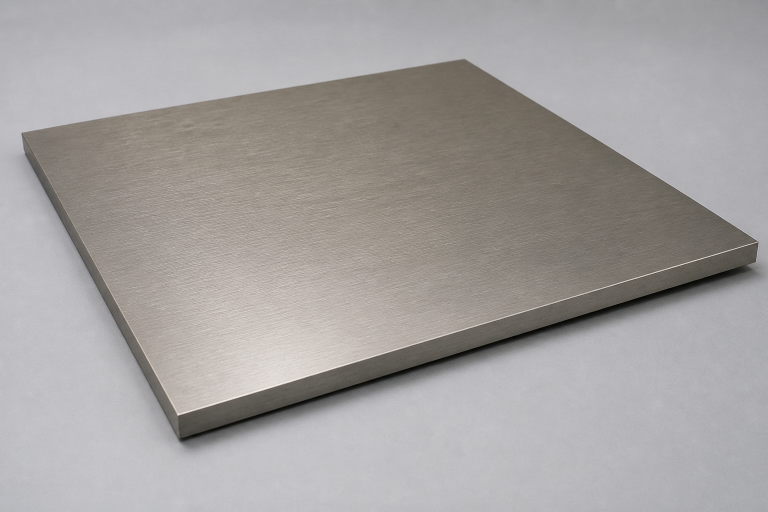
Where Hastelloy C-22 is used
| Service area | Examples supported by producers |
|---|---|
| Chemical processing | Haynes names reactors, columns and heat exchangers; VDM adds chloride-containing organic processes and catalytic systems |
| Emissions and waste | ATI names flue-gas desulfurization and waste incineration; Special Metals describes boiler-tube and waterwall protection, and separately notes weld overlay of alloy-steel components |
| Paper and cellulose | ATI lists bleaching; VDM discusses chlorine gas, hypochlorite and chlorine-dioxide solutions |
| Specialty chemicals | VDM identifies pharmaceuticals, fine chemicals and acetic-acid production |
| Sour gas | ATI includes sour-gas service in its application list; Haynes and VDM list NACE MR0175 / ISO 15156 among the documents for the alloy, and VDM also lists MR0103 / ISO 17945 |
LLNL’s aging report also describes Alloy 22 as the corrosion-resistant outer container in the Yucca Mountain waste-package design. This is a historical design statement, not evidence that the repository was constructed.
Common questions from buyers
Does a trade name identify the producing mill? Special Metals calls its alloy equivalent to Haynes’ and VDM’s versions. Matching alloy designations does not identify the manufacturer of a specific heat; request that information in the order documentation.
Is welded material suitable for chemical equipment? VDM supports welded use in many oxidizing and reducing chemical processes. ATI’s favorable welding statement must be read alongside LLNL’s segregation findings and Haynes’ warning about higher weld-metal corrosion. Assess the fabricated condition for the actual medium.
Can flat-product tensile limits be assigned to a tube or forging? The producer documents cited here give those limits for bar, billet and flat products only. Obtain the acceptance requirements from the applicable product specification and edition, rather than applying the flat-product row to another form.
Which phosphorus limit belongs on the enquiry? Establish the governing document first. VDM’s producer table differs from the other limit sets, and the LLNL reproduction is historical. Resolve any additional chemistry restriction explicitly before acceptance testing.
Specification detail with sources
Haynes International’s producer data sheet, HASTELLOY C-22 alloy brochure H-2019J (2023), supplies its nominal chemistry, physical constants, fabrication advice, average mechanical results, corrosion tests and specification/code lists. Special Metals’ producer data sheet, INCONEL alloy 22, SMC-049 (2006), supplies limiting chemistry, separate physical and mechanical tables, comparative acid and localized-corrosion tests, and product-document listings. VDM’s producer data sheet No. 4121, Revision 01 (November 2020), supplies its composition, typical physical properties, dimension-qualified VdTÜV minimums, fabrication recommendations and applications. ATI’s producer technical data sheet (2018) and product page supply the separately identified range, typical properties, minimums and card discrepancies.
LLNL’s Aging and Phase Stability Studies of Alloy 22, LLNL-TR-403968 (2008), hosted by OSTI, supplies the historical ASTM reproduction, ASME requirement row and phase-stability evidence. The LLNL conference paper Passive Corrosion Behavior of Alloy 22, UCRL-CONF-218309 (2006), supplies the Ni-Cr-Mo family description, and the OSTI-hosted conference paper SAND2008-1358C (2008), written by industry authors, supplies the second description of the laboratory mill-anneal and solution-treatment practice. ASTM’s public scope pages establish the product coverage distinguished above, without exposing their current acceptance tables. These documents do not identify the mill producing material for any Beiyu order. Special Metals credits HASTELLOY and C-22 as Haynes International trademarks and Nicrofer as a Thyssen Krupp VDM trademark; INCONEL alloy 22 is Special Metals’ name for its version.
Ordering Hastelloy C-22
Prepare the enquiry around a drawing or dimensional schedule, product form, UNS identity, specification edition, delivery condition and required tests. Separate welded pipe from welded tube and state the class when applicable. If corrosion testing is required, identify the method and acceptance criterion. The following table reproduces Beiyu’s published nickel-family size envelope.
| Form | Published range |
|---|---|
| Round bar | Ø5.0 to 300 mm, lengths up to 6000 mm |
| Sheet | 0.8 to 3.0 mm thick, up to 1200 mm wide |
| Plate | 3.0 to 70 mm thick, up to 2500 mm wide |
| Seamless tube | 5 to 325 mm OD, wall 0.5 to 12 mm |
| Welded tube | Up to 1219 mm OD |
| Forged bar | Ø50 to 500 mm, up to 3000 mm long |
| Forged ring | 50 to 1000 mm OD, 10 to 500 mm ID, 20 to 300 mm high |
| Forged disc and block | Discs 50 to 1000 mm outside diameter and 20 to 500 mm thick; blocks 50 to 500 mm |
These ranges describe the nickel-family envelope; not every listed size exists in C-22, and the requested dimensions and form are confirmed at quotation. Consult nickel alloy pipe and tube for tubular enquiries, the nickel alloy forgings guide for forged shapes, and nickel and nickel-based alloys for the broader product grouping. Specify the inspection records needed to review the material: mill identity, heat traceability, chemical analysis, mechanical test results and dimensional findings, with any additional inspection agreed in the enquiry.
For standard grades and sizes the typical lead time is 15 to 30 days from order confirmation or deposit to ex-works dispatch, sea transit time not included; special chemistry or mechanical requirements call for an adjusted melt recipe, so their lead time depends on the requirements and is confirmed with the quotation.