
Nickel alloy forgings are ordered in the same four shapes as titanium forgings, but the envelope is not the same and the specification set is much shorter. A buyer moving a part from titanium to Alloy 625 or C276 will find the ring and disc diameters cut roughly in half, and that is the first thing to check rather than the last.
The nickel forged envelope
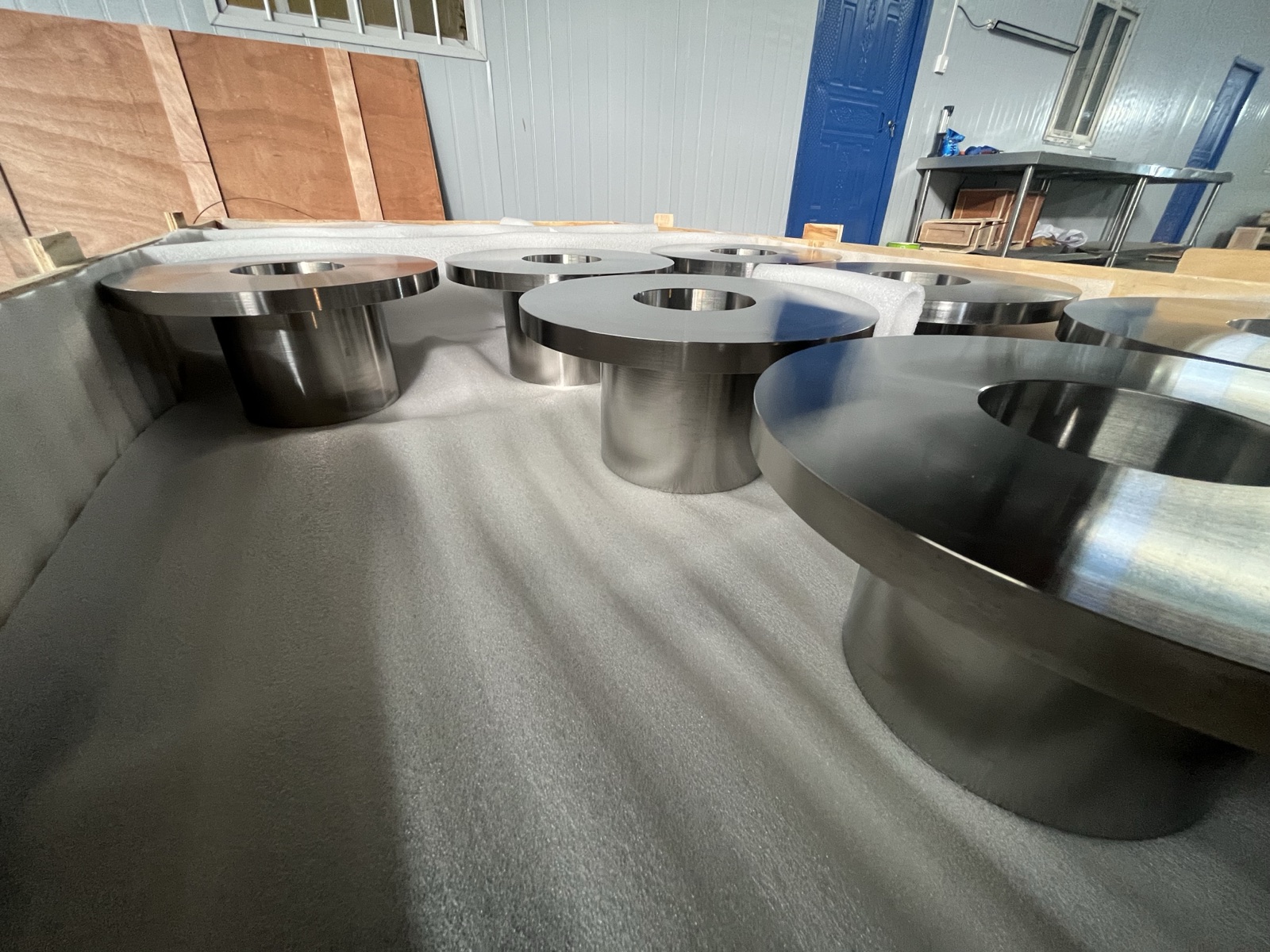
Beiyu Titanium supplies nickel and nickel alloy forgings in round bar, ring, disc and block:
| Shape | Supply range |
|---|---|
| Round bar | Ø50 to 500 mm, length to 3000 mm |
| Ring | Outside diameter 50 to 1000 mm, inside diameter 10 to 500 mm, height 20 to 300 mm |
| Disc | Outside diameter 50 to 1000 mm, thickness 20 to 500 mm |
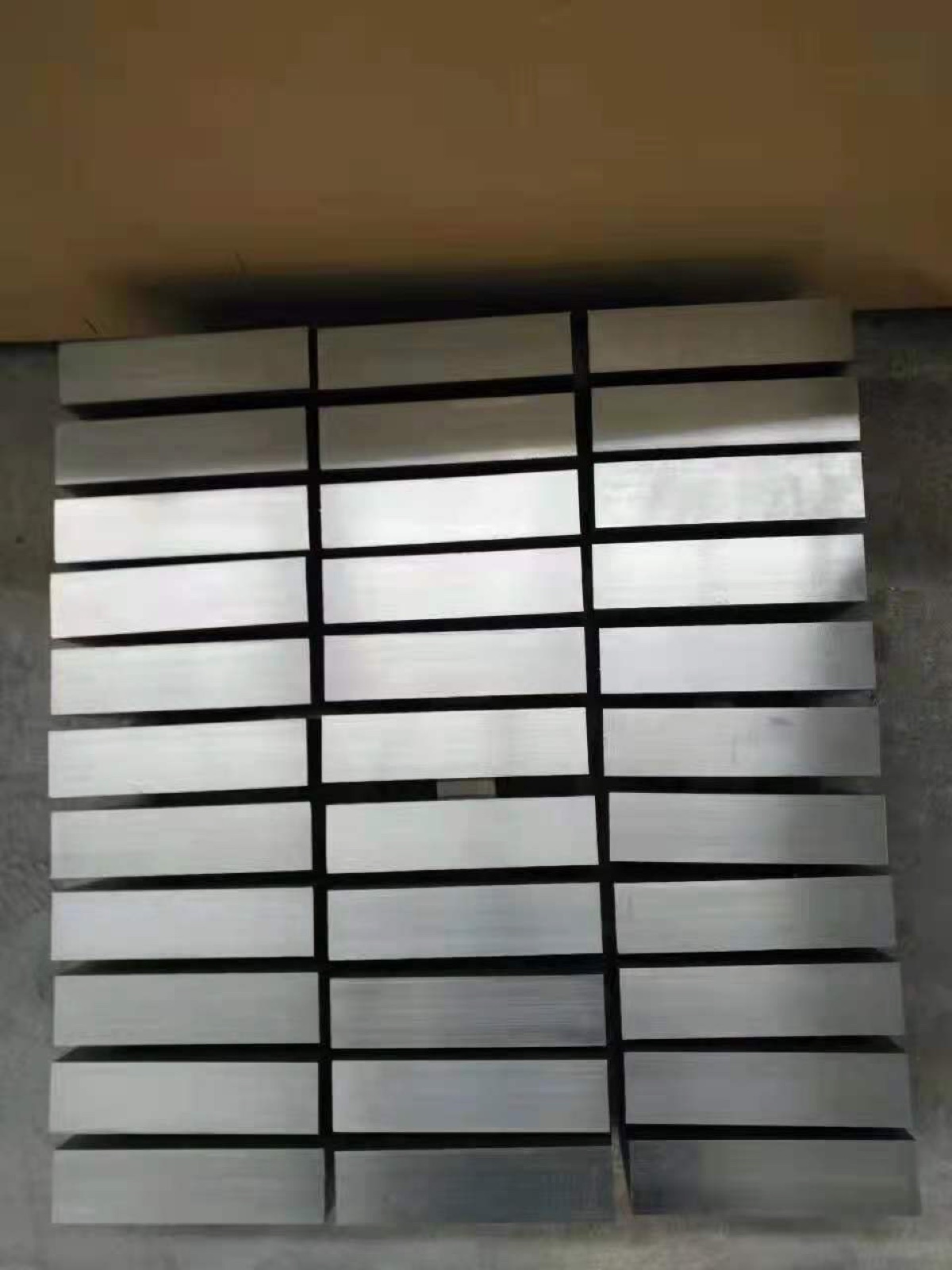
| Block | 50 to 500 mm |
Where it differs from the titanium forged envelope
The two envelopes are close on bar and far apart on the flat shapes, which is exactly the comparison a material substitution study needs:
| Shape | Nickel alloys | Titanium |
|---|---|---|
| Round bar | Ø50 to 500 mm, to 3000 mm long | Ø50 to 500 mm, to 3000 mm long |
| Ring outside diameter | 50 to 1000 mm | 50 to 2000 mm |
| Ring inside diameter | 10 to 500 mm | 10 to 900 mm |
| Ring height | 20 to 300 mm | 20 to 400 mm |
| Disc outside diameter | 50 to 1000 mm | 50 to 2000 mm |
| Block | 50 to 500 mm | 50 to 600 mm |
Bar is interchangeable in size terms; rings and discs are not. A ring drawn at 1400 mm outside diameter sits inside the titanium range and outside the nickel one, so a substitution study that changes only the material line will produce a part that cannot be forged as drawn.
Block is the row that quietly changes a machining plan. Nickel block runs to 500 mm and titanium block to 600 mm, so a part machined from solid at the top of the titanium range has no direct nickel equivalent and has to be re-nested, split, or moved onto the forged bar route instead.
The specifications, and why there are only two
Nickel forgings are named against ASTM B564 and ASTM B637 in the supply range. That is a much shorter list than the titanium forging route carries, and the two are listed once for forged product as a group rather than one specification per shape, so this page states them at that level and leaves the pairing to the order.
The alloy families supplied across those shapes are Nickel 200 and 201, the Inconel family covering 625, 600, 601, 718 and X-750, Monel 400 and K-500, the Hastelloy family covering C-22, C276, C-4, B1, B2, B3 and X, and Incoloy 800, 825 and 926.
The short specification list has a practical consequence too. Where a titanium forging drawing can name an AMS number that fixes melting route, condition and testing in one reference, a nickel forging order has to carry those requirements explicitly, because ASTM B564 and B637 are the only two documents the supply range names for the shape. Anything the drawing needs beyond them travels as purchase order text rather than as an implied part of the specification.
What changes on the enquiry compared with a titanium forging
Four of these fields are the same as on a titanium forging order. What changes is that the specification list is short and shared, so the alloy line carries more of the weight.
| Field | What to state, and why |
|---|---|
| Alloy and family | One merged standards entry covers all the alloy families, so the alloy line is what the certificate reports against |
| Shape and three dimensions | Ring needs outside diameter, inside diameter and height; disc needs diameter and thickness |
| Whether dimensions are as forged or finished | Machining allowance is a separate line from the drawing figure |
| Governing specification | ASTM B564 or B637 as the drawing names |
| Delivery condition | Named on the order; it is not implied by the shape |
| Inspection scope | Which examinations run, and on what proportion of the lot |
One more line is worth adding when the part is a substitution. Saying what it is replacing, and in what service, lets the enquiry be checked against the envelope before it is priced rather than after.
Specification detail with sources
The nickel forged figures on this page come from the Beiyu Titanium supply ranges: round bar at Ø50 to 500 mm in lengths to 3000 mm, rings at outside diameter 50 to 1000 mm with inside diameter 10 to 500 mm and height 20 to 300 mm, discs at outside diameter 50 to 1000 mm with thickness 20 to 500 mm, and blocks at 50 to 500 mm. The specifications named alongside them are ASTM B564 and ASTM B637, given once for forged product rather than once per shape.
The titanium column in the comparison table is drawn from the titanium forged range in the same document, which lists rings at outside diameter 50 to 2000 mm with inside diameter 10 to 900 mm and height 20 to 400 mm, discs at outside diameter 50 to 2000 mm with thickness 20 to 500 mm, and blocks at 50 to 600 mm. Both sets describe the family rather than any one alloy, so a specific alloy at a specific size is checked at quotation. Certification is EN 10204 3.1 carrying the heat number.