
Hastelloy C-276 is the alloy designated UNS N10276 and Werkstoff Nr. 2.4819 (EN NiMo16Cr15W). Haynes International sells it as HASTELLOY C-276 alloy, Special Metals as INCONEL alloy C-276, VDM as VDM Alloy C-276 (Nicrofer 5716 hMoW) and ATI as ATI 276. ASTM B574 and B575 group it with the low-carbon nickel-chromium-molybdenum alloys, and VDM adds that it carries tungsten. Haynes describes it as the first wrought nickel-chromium-molybdenum material to ease concerns over welding, because its carbon and silicon contents are extremely low, and Special Metals states that it can be used as-welded for most applications. Producers name chemical process reactors, heat exchangers and columns, flue gas desulfurization, pulp and paper and sour gas recovery among its uses. An order names the form and its ASTM document: B574 for rod and bar, B575 for plate, sheet and strip, B622 for seamless pipe and tube, B564 for forgings.
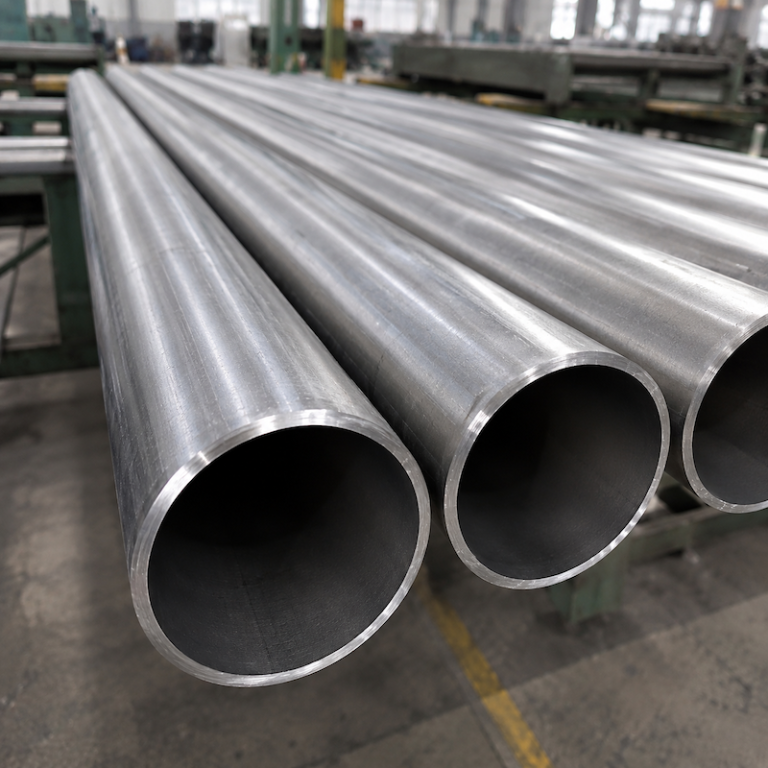
Hastelloy C-276 at a glance
| Item | Detail | Note |
|---|---|---|
| Designations | UNS N10276, W.Nr. 2.4819 (EN NiMo16Cr15W), Alloy C-276 | VDM also lists ISO NiMo16Cr15Fe6W4 and AFNOR NC17D; HASTELLOY is a Haynes International trademark |
| Alloy type | Low-carbon nickel-chromium-molybdenum alloy with tungsten, face-centred cubic | ASTM B574 / B575 family wording; tungsten and face-centred cubic structure per VDM; ATI states that cold deformation may raise its strength |
| Delivery condition | Mill annealed unless otherwise specified | Haynes, for wrought products |
| Density | 8.89 g/cm³ (0.321 lb/in³) | Haynes (at room temperature) and Special Metals |
| Melting range | 1323 to 1371 °C (Haynes); 1325 to 1370 °C (Special Metals, VDM) | Producer values, not specified limits |
| Main corrosion strength | Oxidizing and non-oxidizing acids; pitting and crevice attack in chlorides; chloride stress-corrosion cracking | Haynes wording |
| Main limits | Hot, concentrated nitric acid; intermetallic phases that can form between 600 and 1,100 °C with long exposure or slow cooling | ATI and VDM respectively |
| Product specifications | ASTM B574, B575, B622, B619, B626, B564, B462, B366 | Listed form by form further down |
Composition limits, wt %
Two producers print the same limits: Special Metals in its Table 1 and ATI on the plate, sheet and strip cards that name ASTM B575 and ASME SB-575. VDM prints a tighter set and does not say which document it follows, so it is shown separately rather than merged.
| Element | Special Metals Table 1 (same on ATI’s B575 cards) | VDM data sheet Table 2 |
|---|---|---|
| Nickel | Balance | 51 to 63 |
| Molybdenum | 15.0 to 17.0 | 15 to 17 |
| Chromium | 14.5 to 16.5 | 15 to 16.5 |
| Iron | 4.0 to 7.0 | 4 to 7 |
| Tungsten | 3.0 to 4.5 | 3 to 4.5 |
| Cobalt | 2.5 max | 2.5 max |
| Manganese | 1.0 max | 1 max |
| Vanadium | 0.35 max | 0.3 max |
| Carbon | 0.01 max (ATI prints 0.010) | 0.01 max |
| Silicon | 0.08 max | 0.08 max |
| Phosphorus | 0.04 max | 0.02 max |
| Sulfur | 0.03 max | 0.01 max |
Haynes publishes a nominal analysis instead of limits (nickel 57 as balance, chromium 16, molybdenum 16, iron 5, tungsten 4) and adds copper at 0.5 max, which none of the limit tables carries. The low carbon and silicon matter in fabrication. Special Metals explains that the low carbon keeps carbide precipitation down during welding, so the heat-affected zones of welded joints keep their resistance to intergranular attack. ATI warns that raising the carbon and silicon during fabrication may harm important properties, and that oxyacetylene welding and submerged-arc fluxes containing carbon or silicon should not be used for that reason. The current ASTM editions carry their own tables, and the edition named on the order governs acceptance.
Physical properties
Every figure below is a producer value. Haynes says its data should not be taken as guaranteed maximums or minimums, and ATI labels its data typical. Where producers differ, each figure is shown with its source.
| Property | Value and source |
|---|---|
| Density | 8.89 g/cm³ (0.321 lb/in³), Haynes at room temperature and Special Metals; ATI 8.90 on its data sheet and 8.88 on its product page; VDM 8.9 g/cm³ at 20 °C |
| Melting range | 1323 to 1371 °C (2415 to 2500 °F), Haynes; 1325 to 1370 °C, Special Metals and VDM |
| Specific heat | 427 J/kg·°C, Haynes at room temperature and Special Metals; 426 J/kg·K at 20 °C, VDM; 425 J/kg·K, ATI |
| Thermal conductivity | 10.2 W/m·K at 20 °C (VDM) and at 21 °C (ATI); 9.8 W/m·°C at 20 °C, Special Metals; 11.2 W/m·°C at 100 °C, Haynes and Special Metals |
| Electrical resistivity | 1.23 µΩ·m at room temperature, Haynes; 122.9 µΩ·cm at 25 °C, Special Metals; 125 µΩ·cm at 20 °C, VDM; 130 µΩ·cm at 21 °C, ATI |
| Thermal expansion | Mean 11.2 µm/m·°C from 24 to 100 °C (Haynes) and from 21 to 93 °C (ATI); Special Metals gives a mean of 12.2 over 25 to 100 °C and VDM 12.4 ×10⁻⁶/K at 100 °C without a stated reference temperature |
| Modulus of elasticity | 205 GPa, Haynes (dynamic, room temperature), Special Metals and ATI (21 °C); 208 GPa at 20 °C, VDM |
| Poisson’s ratio | 0.31 at room temperature, Haynes; 0.307, Special Metals |
| Magnetic permeability | 1.0002 at 200 oersted (15.9 kA/m), Haynes and Special Metals; 1.001 maximum at 20 °C, VDM; 1.02, ATI |
The expansion figures fall into two groups, 11.2 and about 12.2 to 12.4, and VDM does not state the span its figure covers, so a thermal-stress calculation should state which figure it uses. The nickel melting point page sets out the published ranges of pure nickel and other nickel alloys for comparison.
Heat treatment, forming and welding
Producers solution anneal C-276 and cool it fast, but the temperatures differ from producer to producer, and none of these figures is a specification. “Not given” marks a figure not taken from that producer’s sheet.
| Producer | Solution annealing | Hot working | When cold work needs a re-anneal |
|---|---|---|---|
| Haynes | 1121 °C (2050 °F), water quench advised; rapid air cooling feasible below 10 mm | Recommended forging start 1232 °C and finish 954 °C; a narrow range | At an outer fibre elongation of 7 % or more |
| Special Metals | Normally 1150 to 1175 °C, rapid cooling such as water quenching | 870 to 1230 °C, heavy forming above 1090 °C | Not given |
| VDM | 1,100 to 1,160 °C | 950 to 1,200 °C, then rapid cooling | Final solution anneal when cold forming exceeds 15 % |
| ATI | 1040 to 1150 °C, cooled to black in two minutes or less | Not given | Not given |
Haynes notes that the alloy work hardens more readily than most austenitic stainless steels and may need several stages of cold work with intermediate anneals. Cold work does not usually change its resistance to general corrosion or to chloride pitting and crevice attack, but it can affect stress-corrosion cracking, which is why Haynes advises re-annealing parts cold worked to an outer fibre elongation of 7 % or more. Separately, Haynes states that the material should be re-annealed after all hot forming operations to restore optimum properties. ATI adds that stress relief heat treatments are not effective and that a full anneal should be conducted where stress relief of another material would be considered. For welding, Special Metals and Haynes list filler metal to AWS A5.14 ERNiCrMo-4 and covered electrodes to AWS A5.11 ENiCrMo-4, and VDM sets the interpass temperature at no more than 120 °C. ATI states that the alloy may be used in the welded condition for most corrosive service, but that for the most severe service it should be solution heat treated.
Mechanical properties
The only minimums tied to an ASTM specification that we found in public sources are ATI’s room-temperature B575 figures for plate, sheet and strip. VDM publishes room-temperature minimums to the German VdTÜV Materials Sheet 400 for the solution-annealed condition.
| Document and form | 0.2 % yield, min | Tensile, min | Elongation, min |
|---|---|---|---|
| ASTM B575 plate, sheet and strip (ATI) | 41 ksi (283 MPa) | 100 ksi (690 MPa) | 40 % in 2 in.; hardness Rb 100 max for information only |
| VdTÜV 400, sheet up to 5 mm and strip 0.1 to 3 mm (VDM) | 310 MPa | 730 MPa | 30 %; 240 HB max |
| VdTÜV 400, sheet 5 to 25 mm (VDM) | 280 MPa | 700 MPa | 25 %; 240 HB max |
| VdTÜV 400, rod and bar up to 100 mm (VDM) | 280 MPa | 730 MPa | 30 %; 240 HB max |
None of the public sources we found gives the minimums of ASTM B574 for bar, B622, B619 or B626 for pipe and tube, or B564 for forgings, so those come from the edition of the standard named on the order. Typical values sit above the B575 minimums. Special Metals’ typical room-temperature values list annealed tubing at 727 MPa tensile, 313 MPa yield and 70 % elongation, annealed plate at 741 MPa, 347 MPa and 67 %, annealed bar at 758 MPa, 363 MPa and 62 %, and annealed sheet at 796 MPa, 376 MPa and 60 %. Haynes reports room-temperature values of 792 MPa tensile and 356 MPa yield for 2 mm sheet, and 785 MPa and 365 MPa for 25.4 mm plate. Cold work raises strength quickly: ATI’s typical room-temperature sheet and strip data go from 415 MPa yield and 790 MPa tensile at 0 % reduction to 1,070 MPa and 1,160 MPa at 30 % reduction, with elongation in 2 in. falling from 50 % to 15 %. Both producers publish Charpy V-notch results at minus 196 °C, from different specimens: Haynes gives 479 J at room temperature and 519 J at minus 196 °C for mill-annealed plate, while ATI gives 325 J at 21 °C and 245 J at minus 196 °C for full-thickness 10 mm samples taken from annealed plate.
Corrosion resistance and its limits
Haynes attributes the alloy’s range to its high chromium and molybdenum. It withstands both oxidizing and non-oxidizing acids, resists pitting and crevice attack in the presence of chlorides and other halides, and is very resistant to sulfide stress cracking and stress-corrosion cracking in sour oilfield environments, as well as to chloride stress-corrosion cracking, which austenitic stainless steels are prone to. Special Metals names exceptional resistance to sulfuric and hydrochloric acids and lists formic and acetic acids, acetic anhydride, wet chlorine gas, hypochlorites and chlorine solutions among the media it resists. In phosphoric acid below 65 wt % and below the boiling point, it reports corrosion rates of less than 0.13 mm a year (5 mpy). VDM counts it among the few materials resistant to chlorine gas, hypochlorite and chlorine dioxide solutions, and reports excellent resistance to concentrated solutions of oxidizing salts such as iron(III) chloride and copper chloride. In seawater, Special Metals reports excellent resistance under crevice conditions that attack 316 stainless steel, MONEL alloy 400 and INCONEL alloy 625.
| Test and conditions | Result for C-276 | Source |
|---|---|---|
| ASTM G48, acidified 6 wt % ferric chloride, 72 h | Critical pitting temperature above 150 °C; critical crevice temperature 55 °C | Haynes |
| ASTM G48 Methods C and D, acidified 6 % ferric chloride | Critical crevice temperature 50 °C; critical pitting temperature above 85 °C | Special Metals |
| Green Death solution, Haynes formulation, 24 h | Pitting first seen at the boiling point | Haynes |
| Yellow Death solution, Haynes, 24 h | No pitting up to the maximum test temperature of 150 °C; critical crevice temperature 60 °C | Haynes |
| Green Death, 7 % H2SO4 + 3 % HCl + 1 % CuCl2 + 1 % FeCl3·6H2O, 24 h per 5 °C step | Critical pitting temperature 115 to 120 °C; critical crevice temperature 105 °C | VDM |
| Boiling 45 % magnesium chloride (ASTM G36), U-bends | No cracking in 1,008 h | Haynes |
| Seawater crevice test, 180 days at 29 ± 3 °C | Quiescent: one site attacked in each of the two results the brochure labels A and B, maximum depths 0.10 and 0.13 mm; flowing: no attack in either | Haynes |
| Sour C-ring at room temperature, 5 % NaCl plus 0.5 % acetic acid saturated with H2S, coupled to carbon steel; cold worked and aged 315 °C for 1000 h | No sulfide stress cracking in 43 days at hardness HRC 32 to 43, tested at 100 % of yield | Special Metals |
The pitting and crevice figures come from different methods and solutions, so they cannot be ranked against each other; Haynes also notes that its acid data are laboratory results in reagent-grade acids and encourages field tests before industrial use. The limits are as clear as the strengths. ATI states that the alloy does not have enough chromium to be useful in the most strongly oxidizing environments, such as hot, concentrated nitric acid. VDM warns that intermetallic phases can form between 600 and 1,100 °C during long exposure or slow cooling, and that carbides can also appear on the grain boundaries, reducing resistance to intergranular corrosion; ATI adds that the alloy will eventually form embrittling precipitates at high temperature.
Specifications by product form
| Product form | ASTM document |
|---|---|
| Rod and bar | B574; sizes in its scope run from 7.94 to 88.9 mm, or from 6.35 mm for solution-annealed, cold-worked, ground or turned bar |
| Plate, sheet and strip | B575, hot or cold rolled, solution annealed and descaled, with a bright-annealed finish allowed for sheet and strip (Special Metals also lists B906) |
| Seamless pipe and tube | B622 (Special Metals pairs it with B829) |
| Welded pipe | B619, Schedules 5S, 10S, 40S and 80S per ANSI B36.19, Class I or Class II (Special Metals also lists B775) |
| Welded tube | B626, outside diameter 3.2 to 88.9 mm and wall 0.41 to 3.7 mm (Special Metals also lists B751) |
| Forgings | B564 |
| Flanges, forged fittings, valves and parts | B462 |
| Wrought welding fittings | B366, grades CR HC276 and WPHC276 in ATI’s list (the ASTM scope page names no alloys) |
| Billets and bars for reforging | B472 |
| High-strength cold-worked seamless pipe and tube | B983 |
Special Metals lists ASTM B574 for wire as well, but the public B574 scope covers rod and bar only; the other wire documents producers name are ISO 9724, DIN 17753 and, for welding wire, AWS A5.14 ERNiCrMo-4. A wire order should therefore state its specification explicitly. For the product forms its footnotes list, Haynes’ current code table gives ASME Section VIII Division 1 and Division 2 up to 677 °C (1250 °F), Section III Class 2 and 3 up to 427 °C and ASME B31.3 up to 677 °C; Special Metals’ 2004 bulletin still gave Division 2 at 800 °F, so the code edition used by the project decides. Haynes lists the alloy under NACE MR0175 / ISO 15156 and Special Metals under NACE MR0175 for oil and gas service, and none of the producer lists names an SAE AMS specification for C-276.
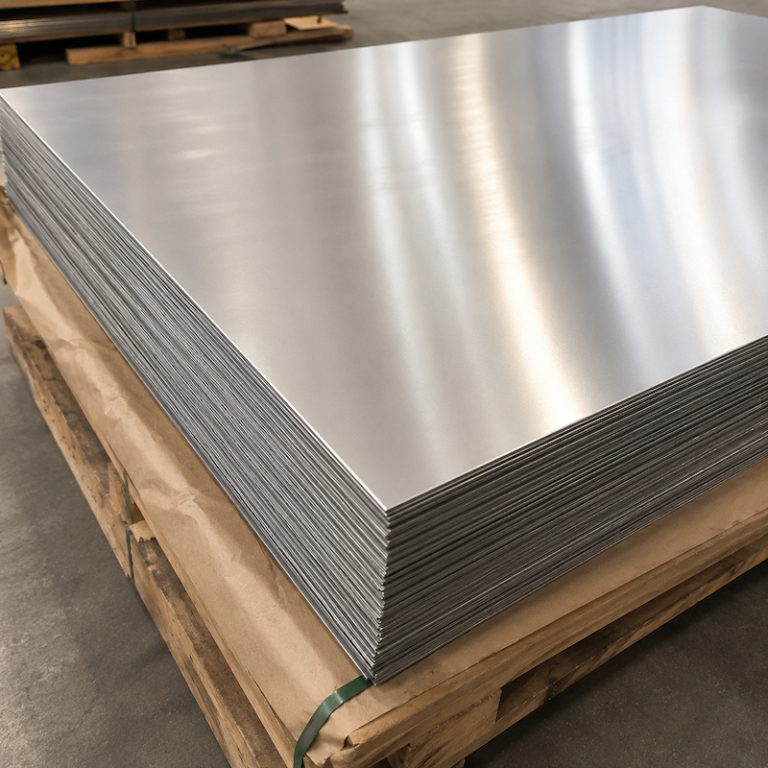
Where C-276 is used
| Industry | Use named by a producer |
|---|---|
| Chemical processing | Reactors, heat exchangers and columns (Haynes); reaction vessels, heat exchangers, evaporators and transfer piping (Special Metals); acetic acid reactors, sulfuric acid coolers and contaminated phosphoric acid (VDM) |
| Air pollution control | Flue gas desulfurization scrubbers, ducting and stack liners, dampers, fans and stack-gas re-heaters (Special Metals) |
| Pulp and paper | Digestion and bleaching tanks (VDM) |
| Oil and gas | Recovery and handling of sour natural gas, tubing and other downhole and surface components (Special Metals) |
| Chlorine service | Wet chlorine, where ATI calls it one of the few materials that resists it |
| Waste treatment | Industrial and municipal waste treatment (Special Metals) |
Buyer questions
Can C-276 be used as welded? For most applications, yes, according to Special Metals, and ATI states that it may be used in the welded condition for most corrosive service. ATI recommends solution heat treatment for the most severe service.
Can a C-276 part be stress relieved? ATI states that stress relief heat treatments are not effective on it and that a full anneal should be used instead. Haynes advises re-annealing parts cold worked to an outer fibre elongation of 7 % or more.
What does an ASTM G28 test show? Special Metals gives representative rates of 4.45 mm a year (175 mpy) in Method A and 0.76 mm a year (30 mpy) in Method B, and states that the test verifies mill production and is not meant for comparing alloys. ATI quotes a criterion of 480 mpy maximum for Practice A and calls rates over 60 mpy undesirable in Practice B.
Is C-276 suitable for nitric acid? Not for the most strongly oxidizing conditions. ATI states that it lacks the chromium to be useful in hot, concentrated nitric acid.
How does it compare with Alloy 625 or Alloy 22? In seawater crevices, Special Metals reports that C-276 resists attack that affects INCONEL alloy 625. In its ASTM G48 Methods C and D table, Special Metals gives what it calls INCONEL alloy 22 a critical crevice temperature of 75 °C against 50 °C for C-276, with both above 85 °C for pitting. The right choice depends on the medium; the Inconel 625 page sets out that alloy’s data for comparison.
Specification detail with sources
Haynes International’s HASTELLOY C-276 alloy brochure (document H-2002H, 2023) is the source for the UNS number, the welding history, the nominal composition with its copper line, the density of 8.89 g/cm³, the melting range of 1323 to 1371 °C, the specific heat, conductivity at 50 and 100 °C, resistivity of 1.23 µΩ·m, expansion of 11.2 µm/m·°C, dynamic modulus of 205 GPa, Poisson’s ratio and permeability, the typical sheet and plate tensile values, the Charpy results, the mill-annealed delivery, the 1121 °C anneal, the forging temperatures, the cold-work and re-anneal advice, the ferric chloride, Green Death, Yellow Death, magnesium chloride and seawater crevice results, the laboratory-data caution, the specification list, the NACE listing and the ASME code limits. Special Metals’ INCONEL alloy C-276 bulletin (Publication SMC-019, 2004) gives the W.Nr. 2.4819, the composition limits, its physical constants, the typical annealed tensile values, the 1150 to 1175 °C anneal, the hot-forming range, the as-welded statement, the welding consumables, the acid, phosphoric acid and seawater statements, the ASTM G48 and G28 values, the sour C-ring results, the specification lists including B906, B829, B751 and B775, its 2004 ASME limits and the uses. VDM Metals’ data sheet No. 4115 for VDM Alloy C-276 (Revision 02, 2022) gives the EN, ISO and AFNOR designations, its composition table, its physical properties, the VdTÜV 400 minimums, the 1,100 to 1,160 °C anneal, the hot-working range, the 15 % cold-forming rule, the interpass limit, the chlorine and oxidizing-salt statements, its Green Death values, the 600 to 1,100 °C phase-formation warning and the application examples. ATI’s 276 product page gives the composition and minimums on the cards that name B575 and a density of 8.88 g/cm³; its technical data sheet (2014) gives the B575 minimum table, a density of 8.90 g/cm³ with the specific heat, conductivity, resistivity, expansion and modulus, the cold-reduction table, the Charpy results, the 1040 to 1150 °C anneal and cooling rule, the stress-relief, welding-process and carbon-pickup cautions, the nitric acid and high-temperature precipitate limits, the G28 criteria, the B366 grade names and the wet chlorine use. The forms covered by ASTM B574, B575, B622, B619, B626, B564, B462, B472 and B983, with the B574, B619 and B626 size and schedule limits and the B366 scope, come from the scope pages ASTM publishes. All of these are public references for the alloy, and none of them names the mill that makes material for a Beiyu order. HASTELLOY is a trademark of Haynes International; INCONEL and MONEL are trademarks of the Special Metals Corporation group.
Ordering Hastelloy C-276
A C-276 RFQ works best when it names the product form and the specification (for pipe and tube, whether it is seamless or welded, and for welded pipe the schedule and class), the size, the condition and any corrosion test the order requires, such as ASTM G28 or G48. Beiyu Titanium quotes C-276 against the nickel family’s published size ranges: round bars of Ø5.0 to 300 mm in lengths to 6000 mm, sheets 0.8 to 3.0 mm thick and up to 1200 mm wide, plates 3.0 to 70 mm thick and up to 2500 mm wide, seamless tubes from 5 to 325 mm OD, wall 0.5 to 12 mm, and welded tubes to 1219 mm OD. Forged products follow the nickel forging envelope: bars of Ø50 to 500 mm up to 3000 mm long, rings of 50 to 1000 mm outside diameter, 10 to 500 mm inside diameter and 20 to 300 mm height, discs of 50 to 1000 mm diameter and 20 to 500 mm thickness, and blocks of 50 to 500 mm. These ranges do not mean every size is available in C-276; the size and form combination for each order is confirmed at quotation. The nickel alloy pipe and tube page covers C276 tube, the nickel alloy forgings guide sets out the ring, disc and block envelope, and the nickel and nickel-based alloys category lists the other forms. Ask in the RFQ for the mill test certificate, chemistry and mechanical results, dimensional inspection, PMI or third-party inspection the order needs; the forgings guide states that forged products are certified to EN 10204 3.1 with the heat number.
For standard grades and sizes the typical lead time is 15 to 30 days from order confirmation or deposit to ex-works dispatch, sea transit time not included; special chemistry or mechanical requirements call for an adjusted melt recipe, so their lead time depends on the requirements and is confirmed with the quotation.