
Inconel 600, sold generically as Alloy 600 and designated UNS N06600 and Werkstoff Nr. 2.4816 (EN NiCr15Fe), is a nickel-chromium-iron alloy with at least 72 % nickel (counted with cobalt by Special Metals). Special Metals describes it as a stable austenitic solid solution that is not precipitation hardenable and gains strength only from cold work. Special Metals cites applications from cryogenic temperatures to above 2000 °F (1095 °C), ATI describes it as designed for use up to the range of 2000 °F (1093 °C), and its uses run from chemical plant and furnace hardware to aircraft engine parts and nuclear reactor components. Unlike Inconel 625 and Inconel 718, it has no molybdenum or niobium in its composition limits. Orders are placed against a specification and product form, for example ASTM B168 for plate, sheet and strip.
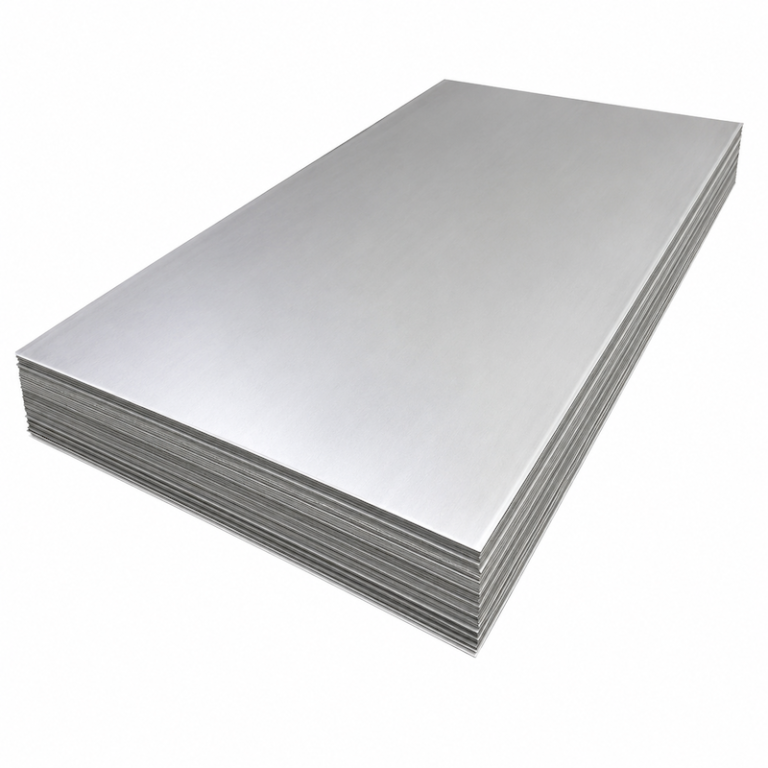
Inconel 600 in brief
| Item | Value | Comment |
|---|---|---|
| Designations | UNS N06600, W.Nr. 2.4816 (EN NiCr15Fe), Alloy 600 | Also ISO NiCr15Fe8 and AFNOR NC15Fe; INCONEL is a Special Metals trademark |
| Alloy class | Ni-Cr-Fe, austenitic, face-centred cubic | Not precipitation hardenable; strengthened only by cold work |
| Density | 8.47 g/cm³ (0.306 lb/in³) | Special Metals; ATI gives 8.42 and VDM 8.5 g/cm³ |
| Melting range | 1354 to 1413 °C (2470 to 2575 °F) | Special Metals; VDM gives 1370 to 1425 °C |
| Conditions | Annealed, hot-finished or cold-worked | AMS 5540, 5580 and 5687 are titled for annealed material; VDM also offers a solution-annealed variant, 600 H, for creep service above 700 °C |
| Main specifications | ASTM B168, B166, B167, B163, B516, B517, B564; AMS 5540, 5665, 5580, 5687 | Form by form in the specification table |
Composition limits
Special Metals publishes the limits below for the alloy (UNS N06600) without naming a specification, and ATI prints the same figures on its plate, sheet and strip card beside ASTM B168, ASME SB-168 and AMS 5540. The two producers agree on every element; Special Metals counts cobalt with nickel. The ASTM and AMS tables themselves were not found in public sources; the ordered specification and revision govern in any case.
| Element | Weight % |
|---|---|
| Nickel (Special Metals: plus cobalt) | 72.0 min |
| Chromium | 14.0 to 17.0 |
| Iron | 6.00 to 10.00 |
| Carbon | 0.15 max |
| Manganese | 1.00 max |
| Silicon | 0.50 max |
| Copper | 0.50 max |
| Sulfur | 0.015 max |
Two other documents read differently. VDM’s data sheet gives the European DIN EN 10095 limits: nickel as the balance, carbon 0.05 to 0.15 % (0.025 to 0.05 % for strip), and maximums of 0.3 % titanium, 0.02 % phosphorus and 0.3 % aluminium, which the Special Metals and ATI tables do not list; VDM adds that the German VdTÜV data sheet 305 limits phosphorus to 0.015 %. One distributor data sheet gives carbon 0.10 % max instead of 0.15 %. Because these sets differ, the certificate should report chemistry against the document the order names.
Physical properties
All three producers label these figures as typical. Special Metals adds that they are not suitable for specification use.
| Property | Typical value, by source |
|---|---|
| Density | 8.47 g/cm³ (Special Metals); 8.42 g/cm³ (ATI); 8.5 g/cm³ at 20 °C (VDM) |
| Melting range | 1354 to 1413 °C (Special Metals); 1370 to 1425 °C (VDM) |
| Specific heat | 444 J/kg·°C (Special Metals); 455 J/kg·K at 20 °C (VDM); 460 J/kg·K as a 0 to 100 °C mean (ATI) |
| Thermal conductivity near 20 °C | 14.8 to 14.9 W/m·K, three producers |
| Mean thermal expansion | 13.3 µm/m·°C from 21 to 100 °C (Special Metals); 12.4 × 10⁻⁶/°C from 21 to 93 °C (ATI) |
| Electrical resistivity at room temperature | 103 µΩ·cm (Special Metals and VDM) |
| Young’s modulus at room temperature | 214 GPa (Special Metals and VDM); 207 GPa (ATI) |
| Magnetic permeability | 1.010 at 200 oersted (Special Metals); 1.005 max at 20 °C (VDM) |
| Curie temperature | −124 °C (−192 °F) |
Conditions in the specifications and in service
The specifications and producer data describe the alloy as annealed, hot-finished or cold-worked; VDM adds a solution-annealed variant, and Special Metals specifies a stress relief before caustic service.
| Condition | What the sources say |
|---|---|
| Annealed | Yield strength of 172 to 345 MPa and elongation of 55 to 35 %, which Special Metals says lets the alloy be fabricated with little difficulty; the condition behind most of its typical property rows for plate, sheet, strip, bar and tube |
| Hot-finished | One of the conditions ASTM B167 covers for seamless pipe and tube; Special Metals gives typical hot-finished tube and pipe at 520 to 690 MPa tensile and 170 to 345 MPa yield |
| Cold worked | The only route to higher strength; Special Metals gives tensile strengths up to 1517 MPa (220 ksi) for heavily cold-worked material |
| Solution annealed (VDM Alloy 600 H) | Better creep resistance; VDM prefers it above 700 °C (1292 °F) |
| Stress relieved before caustic service (a treatment Special Metals specifies before use) | Special Metals says material for high-temperature, high-strength caustic alkalies should be fully stress relieved at 900 °C for 1 hour or 790 °C for 4 hours before use |
Special Metals also notes that the alloy precipitates carbides between 540 and 760 °C and should be cooled rapidly through that range when it is to be pickled or used where freedom from sensitisation is required.
Mechanical properties
Only a few specification minimums are restated in public sources. Each row names who restates it; the ATI figures are read off a producer card that lists three documents side by side, not off the specifications themselves.
| Specification, form, condition | Tensile | Yield | Elongation | Who restates it |
|---|---|---|---|---|
| Plate, sheet and strip (ATI card listing ASTM B168, ASME SB-168 and AMS 5540 together) | 80 ksi (550 MPa) min | 35 ksi (240 MPa) min | 30 % min | ATI, on its plate, sheet and strip card; a distributor lists the same figures as minimums for annealed sheet, plate, strip and bar without naming a specification |
| VdTÜV 305, Alloy 600 annealed, at 20 °C | 550 MPa min | 200 MPa min (0.2 % proof) | 30 % min | VDM |
| VdTÜV 305, Alloy 600 H solution annealed, at 20 °C | 500 to 700 MPa (a range) | 180 MPa min (0.2 % proof) | 35 % min | VDM |
Typical ranges help with what arrives. Special Metals gives annealed hot-rolled plate as 550 to 725 MPa tensile and 205 to 345 MPa yield with 65 to 85 HRB, and annealed cold-rolled sheet as 550 to 690 MPa and 205 to 310 MPa with 88 HRB maximum; it calls these composites for various sizes, not specification values. ATI’s typical annealed figures are 640 MPa tensile, 255 MPa yield and 45 % elongation. For impact, ATI gives a typical Charpy V-notch energy of 244 J for annealed plate at 21 °C, and VDM gives ISO-V values of 160 J longitudinal and 120 J transverse.
Corrosion behaviour and limits
| Environment | Behaviour reported |
|---|---|
| Chloride-ion stress-corrosion cracking | Special Metals calls it virtually immune to chloride-ion stress-corrosion cracking and links that to the 72 % minimum nickel |
| Hot, strong caustic alkalies | Used for caustic production, VDM adding “especially with the presence of sulfur bonds”, and for caustic vessels and piping (VDM), but subject to stress-corrosion cracking in high-temperature, high-strength caustic alkalies; Special Metals asks for full stress relief before use and minimum operating stress |
| Mercury at elevated temperature | Stress-corrosion cracking may occur (Special Metals) |
| Sulfur-containing environments at high temperature | Subject to sulfidation (Special Metals, ATI); Special Metals advises against molybdenum disulfide lubricant on parts later exposed above 427 °C |
| Alternating oxidising and reducing atmospheres | Can suffer selective oxidation, called green rot (VDM) |
| Hot concentrated nitric acid | Poor resistance (ATI) |
| PWR primary water, generally above 550 °F | US NRC Bulletin 2001-01 records primary water stress-corrosion cracking in Alloy 600 reactor vessel head nozzles since the late 1980s |
The nuclear record is worth reading in full before choosing the alloy for that service. Special Metals (2008) calls Alloy 600 a standard material of construction for nuclear reactors, with excellent resistance to high-purity water and no chloride stress-corrosion cracking detected in reactor water systems, while the NRC bulletin documents cracking of nozzles and pressurizer heater sleeves exposed, generally, to primary water above 550 °F. The Special Metals statement concerns general corrosion and chloride cracking; the NRC record concerns primary water stress-corrosion cracking, so the two should be read together for nuclear service.
Specifications by form
| Form | ASTM | SAE AMS |
|---|---|---|
| Rod, bar and wire (rounds, squares, hexagons, rectangles; cold-worked wire) | B166 | 5665 (bars, forgings, flash-welded rings and their stock); 5687 (annealed wire from 0.05 mm) |
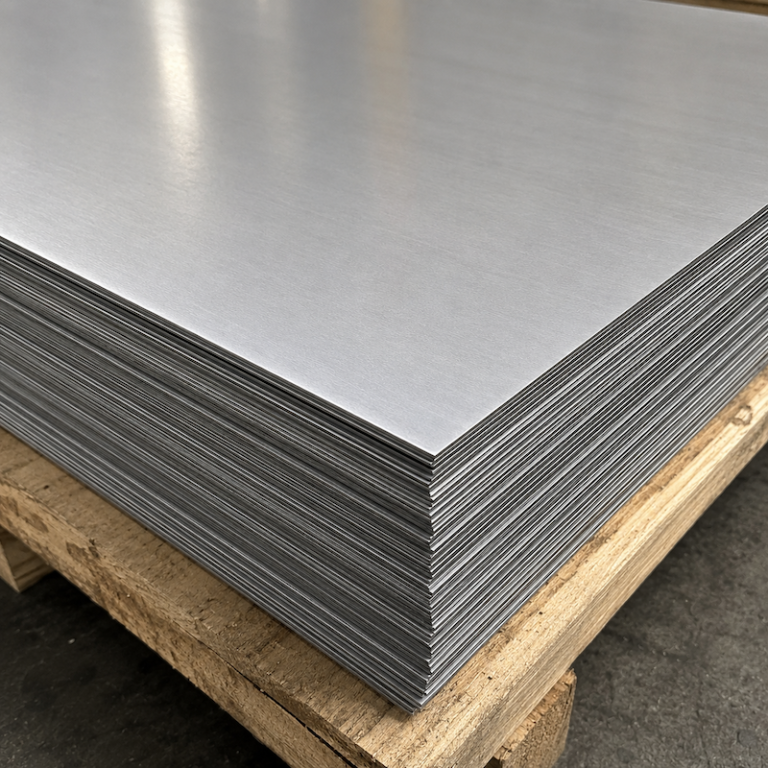
| Plate, sheet and strip | B168 | 5540 (annealed, up to 50.80 mm thick) |
| Forgings | B564 | 5665 |
| Seamless pipe and tube | B167 (cold-worked annealed, hot-worked annealed or hot-finished) | 5580 (annealed seamless tubing up to 234.95 mm OD) |
| Seamless condenser and heat-exchanger tube | B163 (76.2 mm OD and under, minimum wall 3.76 mm and under; Special Metals and ATI list it for 600) | None listed |
| Welded boiler, heat-exchanger and condenser tube | B516 (OD 3.18 to 127 mm, wall 0.38 to 12.70 mm) | None listed |
| Welded pipe | B517 (welded, cold-worked and annealed; ANSI B36.19 sizes) | None listed |
| Fittings | B366 (listed for 600 by Special Metals; ASTM’s public scope names no alloy) | None listed |
The SAE titles name the alloy by nominal chemistry (74Ni – 15.5Cr – 8.0Fe), not by number; Special Metals and ATI both list these AMS numbers for Alloy 600. Special Metals states that the alloy is approved under ASME Section I (through Code Case 1827), Section III and Section VIII, and VDM lists NACE MR0175 / ISO 15156 and MR0103; the edition the project works to decides what applies.
Applications
| Field | Parts and duties named by the sources |
|---|---|
| Chemical processing | Heaters, stills, bubble towers and condensers for fatty acids; evaporator tubes, tube sheets and flaking trays for sodium sulfide; reaction vessels and heat-exchanger pipes for vinyl chloride; TiCl4 evaporator pipes in titanium dioxide production |
| Heat treatment and furnaces | Retorts, muffles, roller hearths, transport rollers, heat-treating baskets and trays; Special Metals calls it the standard material for nitriding containers because it resists nitrogen at high temperature |
| Aircraft engines and airframes | Lockwire, exhaust liners and turbine seals |
| Nuclear | Control-rod cladding tubes, steam dryers and separators in boiling water reactors (VDM); vessel-head penetration nozzles (the NRC bulletin records one plant’s nozzles procured to SB-167, 1965 edition) |
Two fabrication cautions come from Special Metals: the alloy has low ductility between 650 and 870 °C and should not be worked in that range, and it must be clean and heated in a sulfur-free atmosphere.
Questions buyers ask
Is Inconel 600 magnetic? Not at room temperature. Its Curie temperature is −124 °C; VDM gives a maximum relative permeability of 1.005 at 20 °C, and Special Metals 1.010 at 200 oersted.
Can it be hardened by heat treatment? No. It is not precipitation hardenable; Special Metals states that it is hardened and strengthened only by cold work.
What are Inconel 600T and Alloy 600 H? Special Metals designates material made to exacting nuclear specifications as INCONEL alloy 600T. Alloy 600 H is VDM’s solution-annealed variant, preferred for creep service above 700 °C.
How does it compare with Inconel 625 and 718? Inconel 600 is the plain nickel-chromium-iron alloy. Inconel 625 adds molybdenum and niobium in solid solution, and Inconel 718 is aged to much higher strength.
Anything to watch in welded joints? Special Metals notes that welds made with INCONEL Welding Electrode 182 may lose ductility after extended exposure between 540 and 760 °C.
Specification detail with sources
From the Special Metals bulletin INCONEL alloy 600 (Publication SMC-027, 2008): UNS N06600 and W.Nr. 2.4816, the 600T nuclear designation, the composition limits in the table with nickel counted with cobalt, the statements that the alloy is a stable austenitic solid solution, not precipitation hardenable and strengthened only by cold work, the density of 8.47 Mg/m³ (0.306 lb/in³), the melting range of 2470 to 2575 °F (1354 to 1413 °C), the specific heat of 444 J/kg·°C, the conductivity of 14.9 W/m·°C, the mean expansion of 13.3 µm/m·°C, the resistivity of 1.03 µΩ·m, the modulus of 214 GPa, the permeability of 1.010 and the Curie temperature of −124 °C, the annealed yield and elongation ranges and the 1517 MPa cold-worked tensile strength, the typical plate, sheet and hot-finished tube ranges, the caustic stress relief, the carbide-precipitation and sensitisation range, the chloride, caustic, mercury and sulfidation statements and the molybdenum disulfide caution, the hot-working ductility trough, the clean-heating rule, the Electrode 182 caution, the ASME approvals, the AMS listings, the service range to above 2000 °F (1095 °C) and the chemical, furnace, nitriding, aircraft and nuclear uses. VDM Metals’ Alloy 600/600 H data sheet (July 2021) supplies the EN, ISO and AFNOR designations, the DIN EN 10095 composition with its strip carbon range and the VdTÜV 305 phosphorus note, the density of 8.5 g/cm³, the melting range of 1370 to 1425 °C, the specific heat of 455 J/kg·K, the conductivity of 14.8 W/m·K, the resistivity of 103 µΩ·cm, the modulus of 214 GPa, the relative permeability of 1.005, the 600 H variant and the 700 °C creep preference, the VdTÜV 305 minimums, the ISO-V impact values, green rot, the NACE listings and the caustic, vinyl chloride, TiCl4, furnace-roller and boiling-water-reactor uses. ATI’s 600 product page and technical data sheet (2012) give the composition card and the plate, sheet and strip minimums beside ASTM B168, ASME SB-168 and AMS 5540, the densities of 8.42 g/cm³, a 460 J/kg·K specific heat, the conductivity of 14.8 W/m·K, the expansion of 12.4 × 10⁻⁶/°C, the modulus of 207 GPa, the typical annealed tensile values, the Charpy value, the sulfur and nitric acid cautions, the 2000 °F (1093 °C) service statement and its AMS listings. The distributor carbon limit and minimums come from High Temp Metals’ Inconel 600 technical data. The product forms and sizes of ASTM B166, B167, B168, B163, B516, B517, B564 and B366 come from ASTM’s published scopes (the B163 and B366 scopes do not name the alloy; Special Metals and ATI list B163 for it, and Special Metals lists B366), and those of AMS 5540, 5665, 5580 and 5687 from SAE’s published titles and scopes. The reactor-nozzle cracking, the 550 °F primary-water exposure and the SB-167 nozzle material come from US NRC Bulletin 2001-01 (August 2001). None of these documents identifies the mill that produces material for a Beiyu order; they are cited only as public information on the alloy. The INCONEL name belongs to the Special Metals Corporation group as a trademark.
Ordering Inconel 600
A request should name the specification and revision, whether the material is plate or sheet (a 3 mm thickness can be either), the condition, and any service conditions that change the order, such as caustic duty that needs a stress relief or a pickled finish that needs rapid cooling through the sensitising range. Beiyu Titanium quotes Inconel 600 plate within its nickel alloy supply ranges, plate 3.0 to 70 mm in thickness, up to 2500 mm wide and up to 6000 mm long, and sheet 0.8 to 3.0 mm in thickness, up to 1200 mm wide, to ASTM B168 / ASME SB-168 or the project drawing, annealed or in the condition the specification calls for, including plate cut to drawing size. Chemistry and mechanical properties are reported by heat number, and a mill test certificate, documentation to EN 10204 3.1, PMI, ultrasonic testing or third-party inspection are provided when the order requires them. Send the drawing or cutting list with the specification, condition and documents needed for a quotation.