
Inconel 601 is a nickel-chromium-iron alloy that Special Metals identifies as UNS N06601 and W.Nr. 2.4851. Its aluminum addition supports oxidation resistance, while ATI describes an austenitic material intended for heat and corrosion duties. Furnace components, heat-treatment fixtures and combustion equipment are prominent producer examples. Special Metals describes a face-centred cubic solid solution whose strength is adjusted through cold work and annealing rather than thermal hardening. For a buyer, the practical distinctions are the product form, specified condition and service environment: oxidation performance, mechanical acceptance and pressure-code suitability answer different questions. The producer tables below retain their separate limits and test conditions so an enquiry can identify which requirements the material must meet.
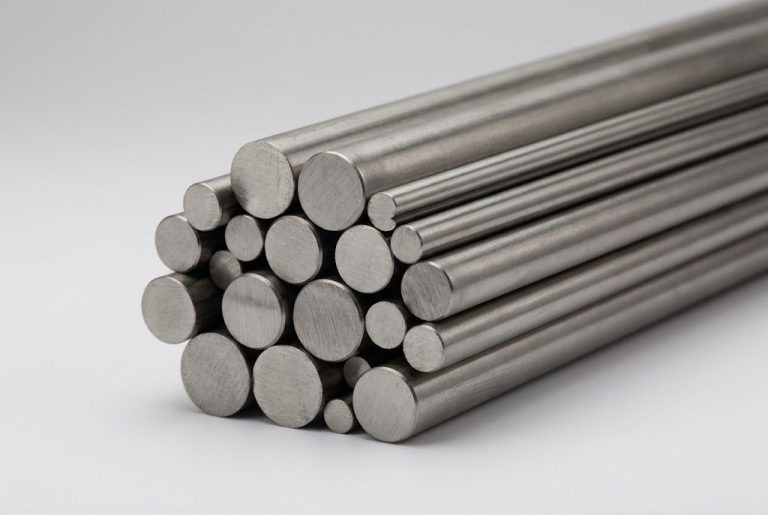
Inconel 601 in brief
| Topic | Alloy identification or purchasing point | Attribution |
|---|---|---|
| Identifiers | UNS N06601; Werkstoff number 2.4851 | Special Metals and VDM |
| European designations | EN NiCr23Fe; ISO NiCr23Fe15Al; AFNOR NC23FeA | VDM; Special Metals separately lists ISO NW6601 |
| Alloy description | Nickel-chromium-iron with aluminum; VDM also expressly includes titanium | Special Metals, ATI and VDM producer descriptions |
| Condition choice | Generally solution-treated for rupture-limited duty at about 540 °C and above; normally annealed for tensile-limited duty below about 540 °C | Special Metals guidance, rather than a universal condition requirement |
| Thermal emphasis | Oxidation resistance, including resistance to scale spalling during temperature cycling | Special Metals and VDM |
| Purchase documents | ASTM B166, B167, B168 and B516 include the UNS identity publicly; SAE AMS5715H and AMS5870G name Alloy 601 | ASTM abstract or scope and SAE titles; form-specific qualifications appear below |
VDM’s data sheet uses the trade name Nicrofer 6023 H; its product-range page instead prints Nicrofer 6023. Both names belong to VDM’s Alloy 601 entry; quote the name printed in the document the order cites. ATI describes plate, sheet and strip in annealed or solution-treated condition. Keep the requested condition explicit rather than inferring it from the grade name.
Composition limits and nominal analyses
The weight-percent limits differ by producer. Special Metals names no specification for its limiting table. ATI’s product-page composition appears beside ASTM B168 and AMS 5870, without assigning the limits to either document. The public ASTM and SAE pages do not show current chemistry tables, including any titanium, boron, phosphorus or cobalt requirements; the governing edition therefore needs to be checked before those elements become acceptance criteria.
| Element, wt % | Special Metals limits | VDM composition entries | ATI plate, sheet and strip page |
|---|---|---|---|
| Nickel | 58.0-63.0 | 58-63 | 58.0-63.0 |
| Chromium | 21.0-25.0 | 21-25 | 21.0-25.0 |
| Iron | Remainder | 18 max | Balance |
| Aluminum | 1.0-1.7 | 1-1.7 | 1.00-1.70 |
| Carbon | 0.10 max | 0.03-0.1; document qualifications below | 0.10 max |
| Manganese | 1.0 max | 1 max | 1.00 max |
| Silicon | 0.50 max | Maximum 0.5 | 0.50 max |
| Sulfur | 0.015 max | Maximum 0.015 | 0.015 max |
| Copper | 1.0 max | 0.5 max | 1.00 max |
| Titanium | No limit given | 0.5 max | 0.10-0.60 |
| Boron | No limit given | 0.006 max | 0.006 max |
| Phosphorus | No limit given | 0.02 max | No limit given |
| Cobalt | No limit given | No table value; footnote permits 1.5 max classified as nickel | No limit given |
VDM ties carbon of 0.03-0.10 wt % to DIN EN 10095, but gives carbon ≤0.10 wt % for DIN 17742 and UNS N06601. Its cobalt footnote says ASTM does not specify cobalt; that remains VDM’s statement, without a public ASTM chemistry table here to establish the requirement. Iron remainder and iron maximum are different controls, just as ATI’s titanium minimum is distinct from VDM’s maximum-only entry.
Typical and nominal analyses serve another purpose. ATI’s typical analysis lists nickel 60.5 %, chromium 23.0 %, iron 14.1 % and aluminum 1.35 %; VDM’s product-range page gives typical nickel 60, chromium 23, iron 14 and aluminum 1.4 wt %. SAE’s AMS5715H title prints 60.5Ni – 23Cr – 14Fe – 1.4Al, whereas AMS5870G adds 0.35Ti to that title chemistry. Those title figures do not establish limiting chemistry. NASA’s government report TM-78876 (1978) identifies its analysis as belonging to a single heat; its test evidence should not be read as a grade-wide chemical requirement.
Physical properties with source conditions
Special Metals determined its physical and thermal data on annealed material; its specific heat is calculated from composition and its conductivity from electrical resistivity. VDM labels its temperature-dependent physical table typical. ATI’s technical sheet likewise treats its data as typical information unsuitable for setting specification extrema or final design values. Original units and temperature intervals remain separate below.
| Property | Special Metals, annealed data | VDM | ATI technical data sheet |
|---|---|---|---|
| Density | 8.11 Mg/m³ (0.293 lb/in³) | 8.05 g/cm³ (0.29 lb/in³) | 8.05 g/cm³ (0.291 lb/in³) |
| Melting interval | 1360-1411 °C (2480-2571 °F) | 1,330-1,370 °C (2,426-2,498 °F) | No range supplied here |
| Specific heat | 448 J/kg·°C at 21 °C, calculated | 472 J/kg·K at 20 °C | 460 J/kg·K over 0-100 °C |
| Thermal conductivity | 11.2 W/m·°C at 20 °C, calculated from resistivity | 11.3 W/m·K at 20 °C | No value supplied here |
| Electrical resistivity | 1.180 µΩ·m at 20 °C | 122 µΩ·cm at 20 °C | No value supplied here |
| Thermal expansion | Mean 13.75 µm/m·°C, 27-100 °C | 14.46 ×10⁻⁶/K at 100 °C; starting temperature unstated | Mean 13.7 ×10⁻⁶ cm/cm/°C, 27-93 °C |
| Tensile elastic modulus | Dynamic 206.5 GPa at 20 °C | 207 GPa at 20 °C | 205 GPa at 21 °C |
| Torsional modulus | Dynamic 81.2 GPa at 20 °C | No value supplied here | 81 GPa at 21 °C |
| Magnetic permeability | 1.003 at 24 °C and 200 oersted | 1.01 maximum at 20 °C | 1.02, without stated conditions |
Rolled Alloys, a distributor, gives another melting range of 2375-2495 °F and density of 0.293 lb/in³. These entries do not reconcile the producer differences. Special Metals calculates Poisson’s ratio as 0.272 at 20 °C from its elastic moduli. Its Curie temperature is below −196 °C, while VDM prints −196 °C maximum. Use the chosen source consistently in a calculation, without silently substituting a differently conditioned value.
Heat treatment, hot deformation and welding
Special Metals and ATI state that thermal treatment does not harden this alloy; cold work provides strengthening. Special Metals generally selects solution treatment for rupture-controlled service and annealing for tensile-controlled service. VDM specifically recommends its alloy for service above 550 °C because of higher creep-rupture properties resulting from controlled carbon content and coarse grain size. The following practices retain their producer and purpose.
| Operation or concern | Producer guidance and differing practices |
|---|---|
| Annealing and solution treatment | Special Metals uses anneals of 1800-2000 °F (980-1090 °C), solution treatment at 2150 °F (1180 °C) for its tensile table, and 2100 °F (1150 °C)/1 h with air cooling for creep tests. ATI’s comparison uses 1800 °F (982 °C) annealing and 2100 °F (1149 °C) solution treatment. |
| VDM solution-annealing advice | VDM recommends 1,100-1,200 °C; for optimum creep strength it describes a relatively coarse structure, ≤5 according to ASTM E 112 or >65 µm, using 1,140-1,160 °C. |
| Hot-forming temperatures | Special Metals gives 870-1230 °C, advises 1040-1230 °C for large deformations and says working should be avoided at 650-870 °C because of low ductility. VDM says hot working may take place at 1,200-900 °C, followed by rapid cooling using water or air. |
| Heating atmosphere | Special Metals requires clean material, low-sulfur heating and low-sulfur fuel for open heating, and advises a slightly reducing furnace atmosphere. VDM instead advises avoiding reducing or changing atmospheres and direct flame contact; its heating-oil guidance uses a slightly oxidizing atmosphere. |
| Cold deformation | VDM advises solution annealing after more than 10 % deformation to avoid fine-grained recrystallization with low creep resistance during service. Special Metals calls work hardening somewhat faster than alloy 600 and alloy 800; VDM describes it as faster than austenitic stainless steels, while ATI calls it slower than Types 301 or 304. |
ATI reports softening beginning at 871 °C, annealing possible to about 1149 °C and rapid grain growth at about 1010 °C. ATI associates the larger grains from solution treatment with better high-temperature creep resistance, but says that, after a solution treatment to a relatively large grain size, extensive forming produces an orange-peel surface that is usually not considered detrimental to the properties. Special Metals and VDM advise machining in the solution-treated or solution-annealed condition.
For surfaces, Special Metals says the refractory oxide prevents bright annealing in an ordinary industrial furnace and calls for specialized pickling to obtain bright heated parts. Before nitric/hydrofluoric pickling, VDM requires disruption of the oxide through abrasive treatment or fused-salt pretreatment. Special Metals advises rapid cooling through 540-760 °C before pickling or aggressive exposure to avoid sensitization; ATI uses quenching for aqueous-corrosion applications.
Welding consumables depend on exposure. Above 1150 °C, or for hydrogen sulfide or sulfur dioxide exposure at any temperature, Special Metals’ welding table recommends only gas tungsten arc welding with INCONEL Filler Metal 601. VDM recommends its FM 602 CA or FM 617; ATI lists INCO-WELD A or 182 for shielded metal arc, and INCONEL 82 or matching filler for gas-shielded processes, with selection based on service. VDM advises an interpass temperature no higher than 120 °C and states that preweld and postweld heat treatments are not required. For submerged arc, VDM requires two TIG cover passes because of aluminum combustion. ATI considers inert-gas shielding desirable.
Mechanical acceptance and typical properties
The public ASTM and SAE pages do not show current tensile, yield or elongation acceptance tables for this grade. The specification-linked figures below come only from VDM’s reproduction of DIN EN 10095 and ATI’s product page. ATI prints its minimums next to ASTM B168 and AMS 5870 without saying which document or condition supplies them.
| Source, form and applicability | Yield or proof strength | Tensile strength | Elongation and hardness |
|---|---|---|---|
| VDM reproduction of DIN EN 10095, room temperature: strip ≤25 mm, sheet/plate ≤75 mm, rod/bar ≤160 mm | Rp0.2 ≥205 MPa | 550 MPa, without an operator printed | A ≥30 %; ≤220 HB |
| VDM reproduction of DIN EN 10095: rolled wire ≤25 mm, room temperature | No entry | 550 MPa, without an operator printed | No entries |
| ATI plate, sheet and strip page; specifications printed together as described above | 30 ksi / 205 MPa minimum | 80 ksi / 550 MPa minimum | 35 % minimum; no hardness entry |
Typical results illustrate differences between conditions; they cannot supply missing acceptance requirements for another form. In particular, VDM’s short-time table caption says solution annealed, while its introductory sentence says annealed. Both labels are disclosed rather than choosing one silently.
| Typical room-temperature data set and condition | Yield or Rp0.2, MPa | Tensile, MPa | Elongation, % |
|---|---|---|---|
| Special Metals, hot-finished plate 7.9 mm, annealed at 1090 °C; annealing duration varied with section size | 281 | 687 | 46 |
| Special Metals, hot-finished plate 6.4 mm, solution-treated at 2150 °F (1180 °C) | 272 | 591 | 52 |
| VDM, short-time table at 20 °C; condition-label discrepancy described above | 270 | 620 | 30 |
| ATI, 1800 °F (982 °C) anneal | 440 | 790 | 45 in 2 in. |
| ATI, 2100 °F (1149 °C) solution treatment | 250 | 670 | 55 in 2 in. |
VDM’s typical short-time solution-annealed row at 800 °C gives Rp0.2 of 110 MPa, tensile strength 270 MPa and elongation 55 %. For solution-annealed material at that temperature, VDM separately prints a 1.0 % creep limit over 104 h of 22 MPa and, according to DIN EN 10095, a middle creep-rupture strength over 104 h of 31 MPa. Short-time tensile and long-duration creep figures address different loading histories.
Special Metals says the alloy is not embrittled by extended exposure to high temperatures and identifies chromium carbides and titanium nitrides, with no embrittling intermetallic phases such as sigma. VDM attributes mechanical properties to carbide precipitation below 1,150 °C and says additional gamma-prime precipitation may occur below 800 °C. The absence-of-sigma statement should not be expanded into absence of all precipitation.
Oxidation, carburization and high-temperature limits
Special Metals describes oxidation resistance up to 2200 °F (1200 °C), although its oxidation-test caption pairs 2200 °F with 1205 °C. VDM cites DIN EN 10095 for a maximum operating temperature in air of 1,200 °C (2,192 °F), with average scaling loss no greater than 1 g/m²·h. Distributor Rolled Alloys describes oxidation resistance through 2200 °F. These statements do not establish one temperature rating for every atmosphere, load and component.
| Exposure and source | Reported observation or test result |
|---|---|
| ATI static oxidation, 2000 °F | Oxide network depth reached 0.002 in. during the first 100 h; protective-layer thickness and structure stayed unchanged for the remainder of the 1,000 h test. |
| Special Metals gas carburization: 2 % methane, 98 % hydrogen | Weight gain 2.72 mg/cm² at 925 °C and 4.32 mg/cm² at 980 °C, each after 100 h; 3.67 mg/cm² at 1095 °C after 25 h. |
| Special Metals carbonitriding: 5 % ammonia, 2 % methane, 93 % hydrogen; 1095 °C | Weight gain 16.66 mg/cm² after 100 h, average of two tests. |
| Sulfur-bearing atmospheres | VDM reports good resistance in oxidizing sulfuric atmospheres; ATI reports good resistance in environments containing carbon and sulfur. Distributor Rolled Alloys advises against strongly reducing sulfur-bearing service. No numeric sulfidation ceiling is stated here. |
VDM qualifies good (carbo)nitriding resistance with sufficiently high oxygen partial pressure. Special Metals attributes the protective surface film to nickel, chromium and aluminum, whereas NASA’s government report TM-78876 (1978) describes IN-601 as a chromia former. Neither description removes the need to specify the actual atmosphere.
VDM warns that stress-relaxation cracks may occur during continuous operation longer than 100 h at 600-650 °C; it says treatment at 980 °C for approximately 3 h can significantly reduce that risk. VDM also advises stabilizing annealing before material previously used in that interval returns to the same critical duty after repair welding.
Specifications by product form
| Product or specification question | Public standards evidence and producer listings |
|---|---|
| Rod, bar and wire | ASTM B166-25 names N06601 in its abstract; scope 1.1 names alloy families without UNS numbers. Forms include hot-finished and cold-worked rounds, squares, hexagons and rectangles, plus cold-worked wire. |
| Seamless pipe and tube | ASTM B167-23 scope explicitly includes N06601, in cold-worked annealed, hot-worked annealed and hot-finished conditions. |
| Rolled flat products | ASTM B168-26 scope includes N06601 plate, sheet and strip. SAE AMS5870G names Alloy 601, solution heat treated, at nominal thicknesses 0.010-2.000 in. (0.25-50.80 mm), inclusive. |
| Welded boiler, heat-exchanger and condenser tube | ASTM B516-24 scope 1.1 includes N06601, although its abstract omits it. Dimensions in ASTM’s scope are 3.18-127 mm OD and 0.38-12.70 mm wall, inclusive. |
| Bars, forgings and flash-welded rings | SAE AMS5715H names Alloy 601, annealed: diameter or least nominal cross-sectional dimension 4.00 in. (101.6 mm) and under; forging or flash-welded-ring stock may be any size. |
| Seamless condenser/heat-exchanger tube, fittings and finned tube | ATI lists ASTM B163, B366 and B924 respectively; their public pages show no UNS numbers, so coverage of N06601 is not shown publicly. |
| Electric-fusion-welded pipe | ATI lists ASTM B474. The active ASTM B474/B474M-19(2023) page shows no UNS numbers; N06601 coverage is not shown publicly. Its presence in historical ASTM B474-03(2009) Table 1 establishes historical coverage only. |
| Documents that exclude this UNS identity from their lists | ASTM B517-25 for welded pipe, B564-25 for forgings, B472-26 for reforging billets/bars and B462-26 for flanges/forged fittings/valves do not list N06601. |
Special Metals labels ASTM B751 and B775 as covering seamless and welded tube and pipe respectively. ASTM’s own titles instead identify welded tube and welded pipe general requirements; B751’s B516 listing omits N06601, and B775’s B517 listing does not establish coverage for it. A general-requirements reference cannot resolve the product-specification discrepancy.
Special Metals lists no AMS number; ATI lists both AMS 5715 and AMS 5870, VDM lists AMS 5870 for flat products, and SAE’s current titles expressly identify the alloy. Special Metals separately lists DIN 17754 and ISO 9725 for forgings. Its ASME statement cites Code Case 1500 for Section I construction through 900 °F and Section VIII Division 1 through 1650 °F; those are Special Metals’ code references, subject to the project’s applicable code edition.
Historical ASTM B474-03(2009) Table 1 recommends a post-weld heat treatment of 1600-1650 °F (874-900 °C) with rapid air/water cooling for N06601 electric-fusion-welded pipe, a different purpose from the producer solution-treatment practices above. ASTM’s historical notes allow purchaser or manufacturer selection of different temperatures, give set-temperature tolerance of ±25 °F (±14 °C), and advise consulting the material manufacturer because treatment depends strongly on intended service temperature. This is historical guidance, not a current acceptance requirement.
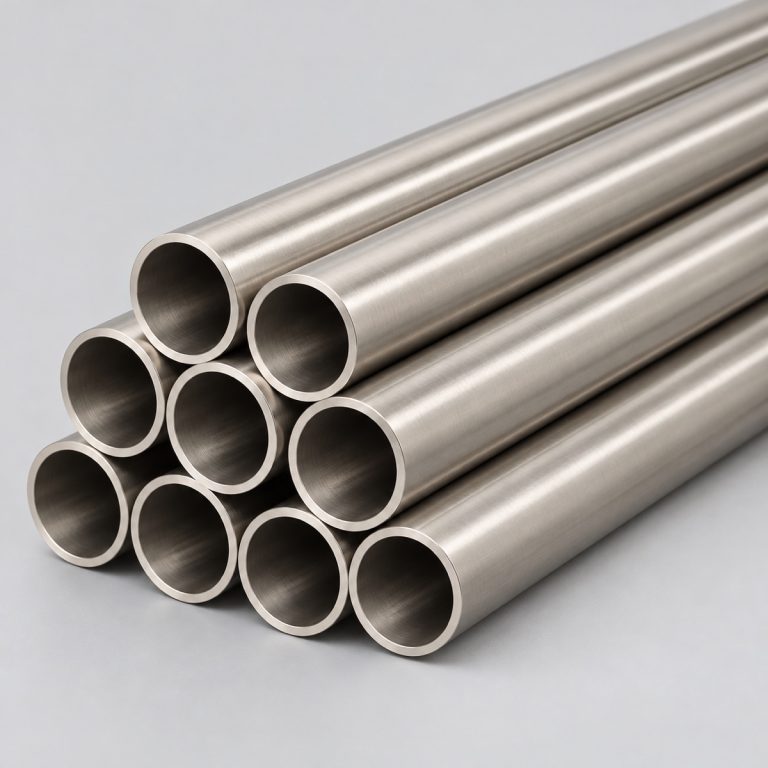
Where Inconel 601 is used
| Duty | Producer examples |
|---|---|
| Heat treatment and furnace construction | Special Metals names fixtures, baskets, radiant tubes, retorts, muffles and conveyor belts; VDM adds refractory anchors and high-velocity gas burners. |
| Chemical and petrochemical equipment | Special Metals lists sour-water-stripper condenser tubes, process heaters, ammonia-reformer insulating cans, catalyst regenerators and nitric-acid catalyst supports; VDM includes ammonia-cracker inserts. |
| Combustion and power | Special Metals describes gas-turbine combustion liners, diffuser assemblies, containment rings and superheater supports; VDM lists oxygen preheaters, ash-handling parts and incinerator combustion chambers. |
| Automotive high-temperature parts | VDM names manifolds, glow-plug tubes and sensor caps; Special Metals includes gasoline-engine exhaust thermal reactors. |
NASA’s government report TN D-7699 (1974), Evaluation of Alloys and Coatings for Use in Automobile Thermal Reactors, identifies Inconel 601 among four alloys warranting consideration for reactor use. Cyclic tests exposed reactors to peak metal temperature of 1040 °C (1900 °F) for at least 50 % of test time. NASA says the reactor core remained intact after 1000 h despite extensive oxidation and distortion; it reports 9 % weight loss and 32 % diametrical distortion. That historical candidate assessment includes damage, not an undamaged-service claim.
NASA’s government report TM-78876 (1978), The Role of Thermal Shock in Cyclic Oxidation, used one hundred cycles of one hour at maximum temperatures of 1100 or 1200 °C. IN-601 had smaller weight loss with fast cooling than with slow cooling, which, the report says, would imply that thermal shock did not increase spalling. It also reports extensive plastic deformation of the wrought alloys. A separate IN-601 coupon heated at 1100 °C for about one minute and plunged into water showed thermal growth after a few cycles. The single-heat study therefore supports neither universal dimensional stability nor a general water-quench service recommendation.
Common questions from buyers
What distinguishes this alloy from alloy 600? ATI credits increased chromium together with aluminum for improved oxidation resistance relative to its alloy 600. That comparison concerns oxidation; it does not establish superiority in every corrosion environment.
Can aging provide a higher-strength condition? ATI says strengthening is through cold working only, and Special Metals describes adjustment by cold work and annealing. VDM’s possible gamma-prime precipitation is not a published age-hardening schedule.
Which chemistry should the purchase order name? Start with the applicable specification edition. If a project needs tighter copper or defined titanium control, write that requirement explicitly after checking the specification, because the producer tables differ. A typical analysis cannot replace those limits.
Does an oxidation temperature settle the design limit? No. The source statements distinguish air scaling, sulfur-bearing environments, stress relaxation and pressure-code construction. State temperature cycling, atmosphere, loading and intended exposure when requesting material for an engineered component.
Specification detail with sources
Special Metals’ producer data sheet INCONEL alloy 601, SMC-028, copyright dated February 2005, supplies its limiting chemistry, annealed physical constants, condition-dependent tensile results, fabrication advice, oxidation and carburization data, application list and code references. VDM’s producer data sheet No. 4103, Revision 02, November 2020, titled VDM Alloy 601 Nicrofer 6023 H, supplies its separate limits, typical properties, DIN EN 10095 reproduction, creep figures and processing cautions. VDM’s product-range page supplies the alternative name and typical chemistry. ATI’s producer technical sheet, Version 1 dated January 8, 2014, and its product page supply the separately attributed typical results, minimums and specification listings.
ASTM’s public abstracts and scopes and SAE’s AMS5715H and AMS5870G titles establish the coverage qualifications above; they do not display current chemistry or tensile acceptance tables. Rolled Alloys’ distributor bulletin 1076USe, July 2012, supplies the differing melting interval and reducing-sulfur caution. NASA government reports TN D-7699 (1974) and TM-78876 (1978) supply historical automobile-reactor and thermal-shock evidence, respectively. These documents do not identify which mill produces the material for any Beiyu order. Special Metals states that INCONEL is a trademark of Special Metals Corporation and identifies INCO-WELD as its trademark; VDM’s data-sheet trade name is Nicrofer 6023 H.
Ordering Inconel 601
Give the enquiry a dimensional drawing or cutting schedule, product form, alloy identity, specification revision, condition and test requirements. For tubular products, identify seamless or welded construction and whether the item is pipe or tube. For forgings, agree a document that actually covers the alloy and shape. The table presents Beiyu’s nickel-family dimensions as a starting envelope for quotation.
| Form | Published range |
|---|---|
| Round bar | Ø5.0 to 300 mm, lengths up to 6000 mm |
| Sheet | 0.8 to 3.0 mm thick, up to 1200 mm wide |
| Plate | 3.0 to 70 mm thick, up to 2500 mm wide |
| Seamless tube | 5 to 325 mm OD, wall 0.5 to 12 mm |
| Welded tube | Up to 1219 mm OD |
| Forged bar | Ø50 to 500 mm, up to 3000 mm long |
| Forged ring | 50 to 1000 mm OD, 10 to 500 mm ID, 20 to 300 mm high |
| Forged disc and block | Discs 50 to 1000 mm outside diameter and 20 to 500 mm thick; blocks 50 to 500 mm |
This is the nickel-family envelope, and not every size exists in 601; the form and dimensions requested are confirmed at quotation. Use the nickel alloy pipe and tube page to frame a tubular request, the nickel alloy forgings guide for shaped forgings, and the nickel and nickel-based alloys category for related forms. Request producing-mill identification and heat-linked chemistry and mechanical results, together with the dimensional and additional inspection records the project needs.
For standard grades and sizes the typical lead time is 15 to 30 days from order confirmation or deposit to ex-works dispatch, sea transit time not included; special chemistry or mechanical requirements call for an adjusted melt recipe, so their lead time depends on the requirements and is confirmed with the quotation.