
Inconel X-750 is Special Metals’ precipitation-hardenable nickel-chromium alloy, designated UNS N07750 and W.Nr. 2.4669 in its producer data sheet. Special Metals describes aluminum and titanium forming gamma-prime strengthening precipitates during heat treatment. Producer applications include gas-turbine components, rocket-engine thrust chambers, springs and tooling. Specify the form, delivery condition and final aging route: producer strength and temperature descriptions differ. ASTM’s public scopes do not name N07750; producers supply the ASTM B637 association. SAE publishes form-and-condition titles, but its current acceptance tables are not public.
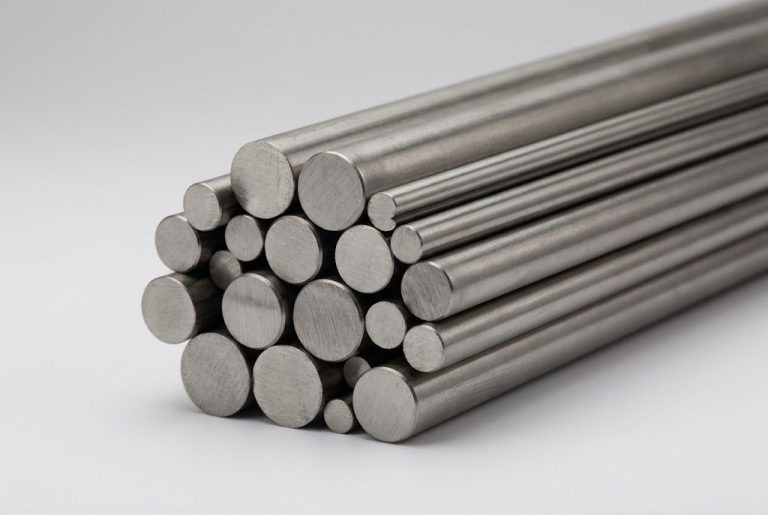
Inconel X-750 in brief
| Purchase consideration | Documented description | Attribution |
|---|---|---|
| Identity | UNS N07750; W.Nr. 2.4669 | Special Metals |
| Structure | Austenitic matrix strengthened by gamma prime and some carbides | VDM 1988; Carpenter describes austenite in every condition |
| Producer designations | INCONEL alloy X-750; Nicrofer 7016 TiNb; ATI X-750; CarTech X-750 / Pyromet Alloy X-750; HAYNES X-750 | Special Metals, VDM, ATI, Carpenter and Haynes respectively |
| Delivery condition | Solution treated or precipitation hardened; typically annealed; annealed flat products | VDM 1988, ATI technical sheet and Special Metals respectively |
| Specification selection | Form, section size and thermal condition determine the relevant document | SAE titles and scopes; producer specification lists |
Temperature descriptions need their original purpose. Special Metals describes high strength through 1300 °F, useful heat-treated strength through 1800 °F, and declining precipitation-hardening benefit above 1300 °F. ATI describes strength to approximately 1300 °F (704 °C), creep and stress-rupture performance to approximately 1500 °F (816 °C), and oxidation resistance to approximately 1800 °F (982 °C). VDM 1988 distinguishes tensile strength through 600 °C (1100 °F), creep/rupture through 820 °C (1500 °F), and oxidation through 980 °C (1800 °F). Carpenter describes suitably heat-treated creep and stress-rupture performance through 1500 °F (816 °C); Haynes describes very good strength to about 1600 °F (870 °C) and good resistance to oxidizing combustion-gas environments to the same temperature. These statements do not establish design allowables.
Composition and document-specific limits
NASA/TM-20240002945 (2024) restates AMS 5542 Revision N, reaffirmed in 2012. That historical limit set appears below; SAE identifies the current revision as AMS5542R (2024), whose chemistry table is not public. Producer columns are independent descriptions, not a reconstruction of that current table. Entries are weight percent.
| Element | NASA, AMS 5542 Revision N | Special Metals limiting composition | Carpenter type analysis |
|---|---|---|---|
| Nickel plus cobalt | 70.0 minimum | 70.00 minimum | 70.00 minimum |
| Chromium | 14.00-17.00 | 14.0-17.0 | 14.00-17.00 |
| Iron | 5.00-9.00 | 5.0-9.0 | 5.00-9.00 |
| Titanium | 2.25-2.75 | 2.25-2.75 | 2.25-2.70 |
| Aluminum | 0.40-1.00 | 0.40-1.00 | 0.40-1.00 |
| Niobium / columbium | 0.70-1.20, niobium | 0.70-1.20, including tantalum | 0.70-1.20, columbium plus tantalum |
| Tantalum separately | 0.05 maximum | Included above | Included above |
| Manganese | 1.00 maximum | 1.00 maximum | 0.30 maximum |
| Silicon | 0.50 maximum | 0.50 maximum | 0.50 maximum |
| Carbon | 0.08 maximum | 0.08 maximum | 0.08 maximum |
| Sulfur | 0.01 maximum | 0.01 maximum | 0.010 maximum |
| Copper | 0.50 maximum | 0.50 maximum | 0.50 maximum |
| Cobalt | 1.00 maximum | 1.00 maximum; routine acceptance need not determine it | 1.00 maximum, if determined |
ATI’s technical sheet and VDM 1988 give manganese 1.00 % maximum, silicon 0.50 % maximum, titanium 2.25-2.75 % and niobium 0.70-1.20 %, without mentioning tantalum. VDM prints cobalt maximum as (1.0) and nickel alone as 70.0 % minimum; ATI uses nickel plus cobalt. ATI’s plate/strip cards instead give manganese and silicon 0.35 % maximum, whereas its sheet card gives manganese 1.0 % and silicon 0.5 % maximum. ATI’s flat-product cards separate tantalum at 0.05 % maximum. Haynes’ nominal block also limits manganese and silicon to 0.35 % maximum; its nominal major-element figures are not chemistry limits.
Carpenter’s data sheet gives the nickel-plus-cobalt minimum above; its web page mislabels nickel as a maximum. ATI’s bar/billet cards place nominal chemistry in a maximum column. Neither presentation supplies a replacement limit set. SAE title chemistry also differs: AMS5542R uses 0.95Cb(Nb), AMS5598G uses 0.95 (Cb [Nb] + Ta), and AMS5668L uses 1.0Cb (Nb). Confirm the ordered document’s treatment of tantalum rather than combining these expressions.
Physical properties with conditions retained
These typical producer values retain their original units, intervals and conditions.
| Property | Special Metals | VDM 1988 | Other producer evidence |
|---|---|---|---|
| Density | 8.28 g/cm³ (0.299 lb/in³) | 8.3 g/cm³ (0.30 lb/in³) | Haynes: 8.26 g/cm³ (0.298 lb/in³), room temperature; Carpenter: 0.3000 lb/in³; ATI technical sheet: 0.299 lb/in³ (8249 kg/m³) |
| Melting interval | 1393-1427 °C (2540-2600 °F) | 1395-1430 °C (2540-2600 °F) | Haynes: 1395-1425 °C (2540-2600 °F); Carpenter: 2540-2600 °F only |
| Thermal conductivity, British units | 98 at 400 °F; 131 at 1000 °F; 164 at 1600 °F, Btu·in./hr/ft²/°F | British column agrees with Special Metals | Haynes: 82 at 400 °F and 120 at 1000 °F; Carpenter: 184.0 at 1000 °F and 245.0 at 1600 °F, in the same British units |
| Thermal conductivity, metric | No metric column | 12.0 W/m·K at 20 °C; 17.9 at 400 °C | Haynes: 16.9 W/m·°C at 400 °C |
| Specific heat | 0.103 Btu/lb/°F at 70 °F | 430 J/kg·K at 20 °C | Carpenter mean: 0.1000 Btu/lb/°F over 77-212 °F |
| Mean thermal expansion | 7.0 ×10⁻⁶ in./in./°F, 70-200 °F | 12.9 ×10⁻⁶/K, room temperature to 100 °C | Carpenter: 6.70 ×10⁻⁶ in./in./°F, 80-200 °F |
| Elastic modulus | Static and dynamic tension: 31.0 ×10³ ksi at 80 °F; Poisson’s ratio 0.29 | 214 kN/mm² at 20 °C | ATI tension: 31 ×10⁶ psi (214 GPa); Haynes dynamic: 214 GPa at 20 °C |
ATI’s cards distinguish density of 8.30 g/cm³ for bar/billet from 8.28 g/cm³ for flat products, pairing both with 0.299 lb/in³. Special Metals’ thermal table uses material treated at 2100 °F/3 hr, air cooled, then 1550 °F/24 hr, air cooled, then 1300 °F/20 hr, air cooled. Its resistivity there is 731 ohm/circ mil/ft at 70 °F; VDM gives 121 µΩ·cm (731 Ω circ mil/ft) at 20 °C. Haynes’ resistivity row contains erroneous unit/temperature labels and is omitted.
Special Metals’ separate table of room-temperature resistivity of hot-rolled bar gives, in ohm/circ mil/ft, 759 as hot-rolled, 763 after 2000 °F/1 hr and air cooling, 724 after 2100 °F/1 hr plus 1500 °F/24 hr plus 1300 °F/20 hr, each air cooled, and 739 after 1800 °F/1 hr, air cooled, plus 1350 °F/8 hr, furnace cooled to 1150 °F and held at 1150 °F for a total precipitation-treatment time of 18 hr, air cooled. Carpenter instead reports 764.0 hot rolled, 716.0 solution treated and 746.0 solution treated plus aged, at 73 °F, in ohm-cir-mil/ft. Those condition descriptions cannot be discarded when choosing a resistivity figure.
Heat treatment and age-hardening routes
Special Metals describes solution treatment plus stabilization plus precipitation treatment as giving optimum properties for service above 1100 °F, particularly where loads are sustained for long times. Below 1100 °F it describes several strengthening routes. The schedules below preserve each producer’s own instructions. AC means air cool; FC means furnace cool.
| Producer and application | Separate treatment sequence |
|---|---|
| Special Metals, AMS 5667 rods/bars/forgings | 1625 °F/24 hr, AC; 1300 °F/20 hr, AC |
| Special Metals, AMS 5668 triple-treated bar | 2100 °F/2-4 hr, AC; 1550 °F/24 hr, AC; 1300 °F/20 hr, AC |
| Special Metals, AMS 5670/5671/5747 rods/bars/forgings | 1800 °F anneal; 1350 °F/8 hr, FC to 1150 °F; hold there until total precipitation treatment reaches 18 hr, AC |
| Special Metals, AMS 5542 flat products and AMS 5582 tubing | 1300 °F/20 hr, AC after the supplied annealed condition |
| Special Metals, AMS 5598 internal discrepancy | Its treatment table and property headings start at 1350 °F/8 hr; its prose starts at 1300 °F/8 hr. Both specify FC to 1150 °F and holding for 18 hr total precipitation treatment, then AC |
| VDM 1988, combination for AMS 5668 | 1150 °C/2-4 h, AC; 845 °C/24 h, AC; 700 °C/20 h, AC |
| VDM 1988, combination for AMS 5598/5669 | 980 °C/about 1 h, AC; 730 °C/8 h, FC over 2 h to 620 °C, hold 8 h, AC |
| VDM 1988, combination for AMS 5670/5671/5747 | 980 °C/1 h, AC; 730 °C/8 h, FC over 10 h to 620 °C, AC |
| ATI, common precipitation treatment for high strength at room and elevated temperatures | 1350 °F (732 °C)/8 hours; FC to 1150 °F (621 °C), hold an additional 8 hours, AC |
| Carpenter, maximum creep/relaxation/rupture above 1100 °F (593 °C) | 2100 °F (1149 °C)/2-4 hr, AC; 1550 °F (843 °C)/24 hr, AC; 1300 °F (704 °C)/20 hr, AC |
| Carpenter, highest room-temperature yield and tensile ductility | 1625 °F (885 °C)/24 hr, AC; 1300 °F (704 °C)/20 hr, AC |
| Haynes, sheet/strip | 1900 °F (1040 °C) bright anneal; 1350 °F (730 °C)/8 h; FC to 1150 °F (620 °C)/8 h; AC |
Holding an additional period and holding until a total duration is reached are different instructions. Special Metals advises against cold work after solution treatment because it impairs rupture properties. It also says triple treatment is usually impractical for sheet, citing distortion during heating or loss of the benefits through subsequent forming. Its caution for about 900-1600 °F has three parts: the alloy hardens rather than softens when heated in that range; annealed or solution-treated material placed in service there (although this is not usually done) hardens and contracts slightly; and ductility is lowered if the alloy is exposed in that range under stress.
Hot working, welding and machining
For hot working, Special Metals recommends 1800-2200 °F, with heavy work above 1900 °F and light finishing reductions at 1800-1900 °F. Special Metals advises approximately 20 % final reduction below 2000 °F to meet the requirements of AMS 5667, 5670, 5671 and 5747. VDM 1988 allows 980-1200 °C (1800-2200 °F), but requires the final minimum 20 % reduction not to exceed 1100 °C (2000 °F). Their cooling advice differs: Special Metals recommends air cooling, discourages liquid quenching, especially for complex or large sections, and allows that very large sections may need furnace cooling; VDM recommends water quenching or the fastest possible cooling. Both discourage localized reheating.
Special Metals and VDM advise welding annealed or solution-treated material; ATI advises the annealed condition and requires post-weld heat treatment. VDM likewise requires post-weld treatment before aging. Carpenter instead recommends stress-equalized material at 1625 °F (885 °C), then solution treatment and aging after welding. Haynes warns of strain-age cracking with heavy restraint. Special Metals advises solution treatment before precipitation treating weldments and requires rapid, uniform heating through the hardening range.
Filler choices remain source-specific. Special Metals names INCONEL Filler Metal 718 for GTAW, although a separate weld-test table used Filler Metal 69. ATI recommends matching filler wire and, where matching wire is not available, allows a more highly alloyed wire such as 718 alloy as a substitute. Haynes lists AMS 5778 / ERNiCrFe-8; SAE’s AMS5778L title identifies welding wire as Inconel FM69, not X-750 base material. VDM 1988 calls Nicrofer S 7020, AWS A 5.14 ERNiCrFe-7, mandatory for TIG/MIG within its guidance. These differences require a defined welding procedure.
Special Metals generally places rough machining before aging and finish machining afterward, requiring allowance for possible warpage. It cautions that post-aging spring pickling may attack grain boundaries or cause pitting, while mechanical oxide removal lowers relaxation resistance. VDM warns that heating contamination from sulfur, phosphorus, lead or other low-melting metals may embrittle its alloy.
Mechanical properties: minimums and typical results
These AMS minimums are producer restatements from Special Metals (2004), VDM (1988) and ATI (2016), not the current SAE requirement tables. The comparison retains their disagreements. Tensile, yield, elongation and reduction-of-area minimums below are room-temperature properties (rupture rows state their own test temperature). Tensile and yield values use ksi; yield is at 0.2 % offset where identified by Special Metals. EL means elongation; RA means reduction of area.
| Route and form | Special Metals 2004 restatement | VDM 1988 or ATI 2016 comparison |
|---|---|---|
| AMS 5667, equalized/aged rods, bars, forgings | Under 4.0 in.: tensile 165.0, yield 105.0, EL 20 % in 4D, RA 25 %; 4.0 in. and above: 160.0, 100.0, 15 %, 17 %; hardness 302-363 BHN | ≤4.0 in.: 165, 105, 20 %, 25 %; >4.0 in.: 160, 100, 15 %, 17 %; aged hardness 300-360 HB |
| AMS 5670/5671/5747, solution plus furnace-cool aging | Under 2.50 in.: 170.0 tensile, 115.0 yield, EL 18 % in 2 in., RA 18 %; 2.5-4.00 in., exclusive: 170.0, 115.0, 15 %, 15 %; 4.0 in. and above by agreement; hardness 32-42 Rc | VDM 1988 AMS 5671 longitudinal: ≤2.50 in., 170 tensile, 115 yield, EL 18 %, RA 18 %; 2.50-4.0 in., 170, 115, 15 %, 15 %; transverse respectively 165, 110, 15 %, 15 % and 160, 105, 12 %, 12 %; >4.0 in. by agreement. AMS 5670/5671: 300-400 HB; AMS 5747 aged: 300-380 HB |
| AMS 5668, triple-treated rupture | At 1350 °F and 45 ksi: minimum 100 hr | AMS 5668 row: 730 °C (1350 °F), 360 N/mm² (52.5 ksi), 23 h, A5 ≥5 %. Its 310 N/mm² (45 ksi), 100 h, ≥5 % row at that temperature is grouped under ASTM B637 for bar/forgings, treatment 1 |
| AMS 5542 versus AMS 5598 aged plate | 0.187-4.000 in., exclusive: respectively tensile 155/160, yield 100/105, EL 20/18 % in 2 in., minimum hardness 30/30 Rc | ATI 2016 restates the same strength/elongation/hardness minimums, with a warning that gauge changes requirements |
| AMS 5582, annealed cold-drawn seamless tubing, aged 1300 °F/20 hr, AC | 155 tensile, 100 yield; EL in 2 in.: 15 % strip specimen or 20 % full tube; rupture minimum 23 hr at 1350 °F/45 ksi | Rupture: 730 °C (1350 °F), 310 N/mm² (45 ksi), ≥23 h |
Special Metals’ annealed AMS 5542 sheet row over 0.024-0.125 in., inclusive, gives 130 ksi maximum tensile, 60 ksi maximum yield and 40 % minimum elongation in 2 in.; over 0.125-0.250 in., inclusive, yield maximum becomes 65 ksi. ATI’s simplified table gives the latter yield value without that distinction, has inconsistent annealed/aged headings and an erroneous elongation-maximum label. ATI’s bar/billet mechanical cards state no treatment condition and are excluded. VDM’s elevated-temperature table has ambiguous flat-product/tubing temperature placement; its matching numbers are not presented here as elevated-temperature properties.
| Typical test, source and condition | Tensile | Yield | Elongation |
|---|---|---|---|
| Special Metals: 0.050-in. cold-rolled annealed sheet, 1300 °F/20 hr, AC; room temperature | 177.0 ksi | 122.5 ksi | 27.0 % |
| Special Metals: same sheet/treatment, tested at 1300 °F | 110.0 ksi | 100.0 ksi | 3.5 % |
| Haynes: sheet, AMS 5598, room temperature | 192.2 ksi (1325 MPa) | 141.1 ksi (975 MPa) | 23.6 % |
Corrosion, hydrogen and stress-corrosion boundaries
ATI uses immunity language for stress-corrosion cracking in its technical sheet. The environment-specific evidence below supports narrower conclusions. VDM describes high SCC resistance; Carpenter specifically emphasizes chloride-ion SCC resistance. Neither description supplies a universal environmental qualification.
| Document and environment | Result with its boundary |
|---|---|
| Special Metals, standard U-bend specimens of precipitation-hardened material, 33 Rc; boiling 42 % magnesium chloride | No cracking during 30 days |
| NASA/TM-20240002945 (2024), round tensile specimens from 0.25-in.-thick material | 365 days without failures in baseline pretreat, baseline brine, alternate pretreat, alternate brine and 3.5 % NaCl alternate immersion, at stresses up to 90 % of yield. The report states all solutions had pH about 2. Its conclusion applies at the tested 132.7 ksi ultimate strength; heat-treatment condition is unspecified |
| NASA MSFC-STD-3029 Rev. A (2005), Table I-D | N07750, all conditions, listed as highly SCC-resistant: the criterion uses alternate immersion in 3.5 % NaCl or salt spray at 5 %; this row has no including-weldments note. Applicable exposures comprise salt fog and seacoast, alternating saltwater immersion, and slow-strain-rate salt-solution testing |
| Published study, OSTI 203521 (1996), HTH condition, tensile testing at 25 °C | Elongation to failure: 21 % without charging, 7.3 % with 5.7 ppm hydrogen, 3.5 % with 65 ppm hydrogen |
| Published study, OSTI 484837 (1997), solutionized and aged specimens | Noncharged fracture toughness 147 MPa√m; hydrogen charging reduced KIc to 52 MPa√m at rapid loading and 42 MPa√m at slow loading |
The OSTI evidence comprises published abstracts, not standards or complete test reports. Hydrogen charging, boiling magnesium chloride and NASA’s specified solutions represent separate environments. Special Metals describes oxidation resistance through 1800 °F in all conditions; Haynes’ oxidizing-combustion-gas statement reaches about 1600 °F (870 °C). Oxidation resistance alone does not resolve strength or hydrogen performance.
Specifications matched to product form
No ASTM public scope cited here names N07750. Producers associate ASTM B637/ASME SB637 with X-750 long products, but ASTM’s alloy table and acceptance details are not public. ASTM B670 names N07718 only; B166, B168, B564, B805 and B983 likewise do not list N07750. Do not assign those documents to an X-750 enquiry merely because they cover related nickel products.
| Form | SAE title/scope or producer evidence |
|---|---|
| Annealed sheet, strip, plate | SAE AMS5542R names (X750); sheet/strip up to 0.1874 in. (4.76 mm) in thickness, inclusive; plate up to 4.000 in. (101.6 mm) in thickness, inclusive |
| Solution-treated, precipitation-hardenable flat products | SAE AMS5598G names (X750), consumable-electrode remelted or vacuum-induction melted; sheet/strip up to 0.187 in. (4.75 mm) thick, inclusive; plate up to 4.000 in. (101.6 mm) thick, inclusive |
| Equalized bars, forgings, flash-welded rings | SAE AMS5667P gives composition only; producers establish the X-750 association. SAE’s header dates it August 2020, while its citation says April 2026 |
| Solution/precipitation-treated bars, forgings, flash-welded rings | SAE AMS5668L names (X750), 2100 °F (1149 °C) solution treatment; bars, forgings and flash-welded rings ≤10.0 in. (254 mm) in nominal diameter or distance between parallel sides; stock of any size for forging, flash-welded rings or heading |
| Lower-temperature solution-treated long products | SAE AMS5670H and AMS5671J name (X750), 1800 °F (982 °C), and cover bars, forgings and flash-welded rings; AMS5671J also specifies consumable-electrode or vacuum-induction melting. AMS5670H: under 4.00 in. (101.6 mm) in nominal thickness or diameter, plus stock of any size for forging, flash-welded rings or heading; AMS5671J: up to 4.00 in. (101.6 mm), exclusive, in least distance between parallel sides (thickness) or diameter, plus stock of any size for forging or flash-welded rings. SAE AMS5747E gives composition only; its scope runs up to 4.00 in. (101.6 mm), inclusive, in nominal diameter or least distance between parallel sides, and stock of any size for forging or flash-welded rings |
| Seamless tubing | SAE AMS5582H names (X750), solution treated and precipitation hardenable; nominal OD ≥0.125 in. (3.18 mm) and nominal wall thickness ≥0.015 in. (0.38 mm). SAE AMS5583G names (X750), vacuum melted, solution heat treated and precipitation hardenable to 170 ksi (1172 MPa) tensile strength; producer lists omit this route |
| Wire | SAE AMS5698H and AMS5699H give composition only, linked by Special Metals/VDM. AMS5698H: round, square and flat wire ≤0.500 in. (12.70 mm) in nominal diameter or thickness, capability tested in a No. 1 temper condition; AMS5699H: the same shapes ≤0.625 in. (15.88 mm) in nominal diameter or thickness, capability tested in a Spring Temper condition |
Special Metals’ older minimum tables allow agreement for larger sections where current SAE AMS5670H/5671J scopes stop below their stated boundary. Special Metals’ spring-wire table ends at 0.500 in.; VDM 1988 and current SAE AMS5699H extend to 0.625 in. SAE AMS5669B is Stabilized, with noncurrent status dating to 1995; Special Metals and Carpenter list it, whereas ATI and Haynes omit it. Additional legacy VDM bar/forging entries are excluded: SAE identifies one as steel, and another provides no public content.
Special Metals lists EN 10269, ISO 9723-9725, ISO 6208 and BS HR 505 and states that the alloy is listed in NACE MR-01-75; Haynes lists MMPDS 6.3.6 and NACE MR0175 / ISO 15156. Their underlying requirements are not supplied by these producer lists. Haynes leaves seamless/welded pipe and tube and fittings blank, while Special Metals separately supports seamless tubing through AMS 5582. Agree a governing route for any other tubular or fitting enquiry.
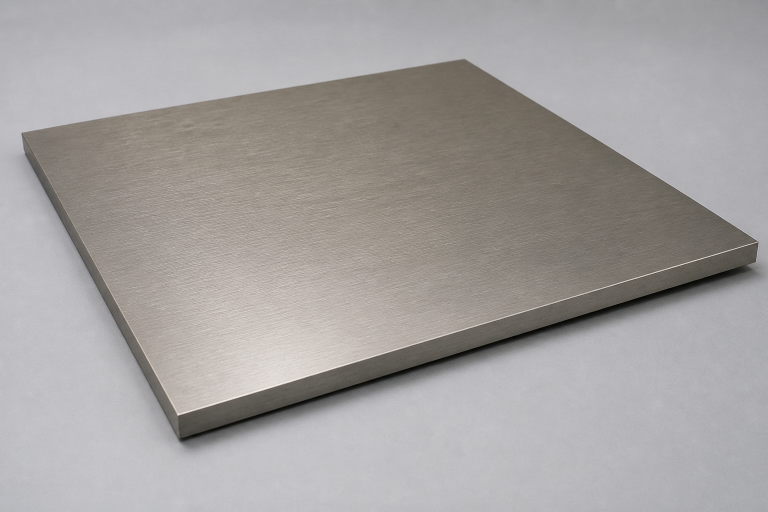
Where Inconel X-750 is used
| Application | Producer examples |
|---|---|
| Gas turbines | Special Metals and ATI: rotor blades, wheels, bolts and structural parts |
| Rocket engines and airframes | Special Metals: thrust chambers, thrust reversers and hot-air ducting |
| Pressure equipment and tooling | Special Metals: large pressure vessels, heat-treatment fixtures, forming tools, extrusion dies and test-machine grips |
| Elastic components and fasteners | VDM: springs, bellows and bolts; Special Metals discusses spring temper and treatment selection |
For maximum spring strength from cryogenic temperatures to about 700 °F, Special Metals recommends the Spring-Temper condition, precipitation-treated at 1200 °F/4 hr. For greatest relaxation resistance through about 900 °F it prefers No. 1 Temper, directly precipitation-treated at 1350 °F/16 hr. For about 900-1200 °F service it advises Spring Temper plus 2100 °F/2 hr, AC, 1550 °F/24 hr, AC, and 1300 °F/20 hr, AC. Those recommendations depend on the required spring behavior.
Common questions from buyers
Does annealed material meet aged strength requirements? Special Metals and ATI distinguish the incoming annealed state from properties after precipitation treatment. Define which condition the order accepts and who performs subsequent treatment.
Can a standard number alone define a spring? SAE distinguishes No. 1 and Spring Temper wire. Special Metals additionally ties treatment to strength or relaxation objectives, so include temper and intended thermal route.
Does NASA’s salt-environment listing qualify hydrogen service? The NASA documents concern their named salt/pretreatment environments. The OSTI abstracts report separate hydrogen-charged tests with reduced ductility or toughness; neither evidence set substitutes for assessment of the proposed exposure.
Specification detail with sources
Special Metals’ producer data sheet SMC-067 (2004) supports its chemistry, thermal schedules, typical properties, AMS restatements and fabrication cautions. VDM Metals GmbH’s producer data sheet No. 4023 (December 1988), titled VDM Alloy X-750 Nicrofer 7016 TiNb, supplies the historical comparisons. ATI’s producer technical sheet (2016) and form cards provide the separately attributed descriptions. Carpenter Technology’s CarTech X-750 Alloy sheet, edition September 2003, and Haynes International’s HAYNES X-750 brochure H-3131E (2017) provide their independent data.
NASA/TM-20240002945 (2024) supplies historical AMS composition and its exposure test; NASA MSFC-STD-3029 Rev. A (2005) supplies the salt-environment classification. OSTI records 203521 (1996) and 484837 (1997) provide the published hydrogen-study abstracts. ASTM public scopes and SAE titles/scopes establish the document distinctions above. The cited documents identify no producing mill for material ordered from Beiyu. INCONEL is a Special Metals Corporation group trademark; VDM prints its trade name as Nicrofer 7016 TiNb.
Ordering Inconel X-750
Send a dimensional schedule or drawing together with the UNS designation, specification revision, form and required condition. Identify additional chemistry restrictions, aging responsibility, specimen orientation and acceptance tests. Beiyu’s published nickel-family dimensional envelope follows.
| Form | Published range |
|---|---|
| Round bar | Ø5.0 to 300 mm, lengths up to 6000 mm |
| Sheet | 0.8 to 3.0 mm thick, up to 1200 mm wide |
| Plate | 3.0 to 70 mm thick, up to 2500 mm wide |
| Seamless tube | 5 to 325 mm OD, wall 0.5 to 12 mm |
| Welded tube | Up to 1219 mm OD |
| Forged bar | Ø50 to 500 mm, up to 3000 mm long |
| Forged ring | 50 to 1000 mm OD, 10 to 500 mm ID, 20 to 300 mm high |
| Forged disc and block | Discs 50 to 1000 mm outside diameter and 20 to 500 mm thick; blocks 50 to 500 mm |
The ranges represent the nickel-family envelope, and X-750 does not exist in every listed size; confirmation of the requested dimensions takes place at quotation. For form-specific information, see nickel alloy pipe and tube. Shape selection is discussed in the nickel alloy forgings guide, with the family grouped under nickel and nickel-based alloys. State the required inspection documentation, including producing mill, heat identification, chemistry, mechanical results and dimensional inspection.
For standard grades and sizes the typical lead time is 15 to 30 days from order confirmation or deposit to ex-works dispatch, sea transit time not included; special chemistry or mechanical requirements call for an adjusted melt recipe, so their lead time depends on the requirements and is confirmed with the quotation.