
Monel K-500 is an age-hardenable nickel-copper alloy identified as UNS N05500 and W.Nr. 2.4375 by Special Metals. Aluminum and titanium additions enable precipitation strengthening: Special Metals describes gamma-prime particles forming during controlled aging, while VDM describes a face-centered cubic matrix with the strengthening phase in the aged condition. Producer applications include marine shafts, fasteners, springs and oilfield components needing strength and corrosion resistance. Its general corrosion behavior resembles alloy 400, but Special Metals warns that in the age-hardened condition it has a greater tendency toward stress-corrosion cracking than alloy 400 in some environments. ASTM B865 explicitly names the alloy in its public scope; the US federal specification QQ-N-286G also covers wrought material, including flat forms.
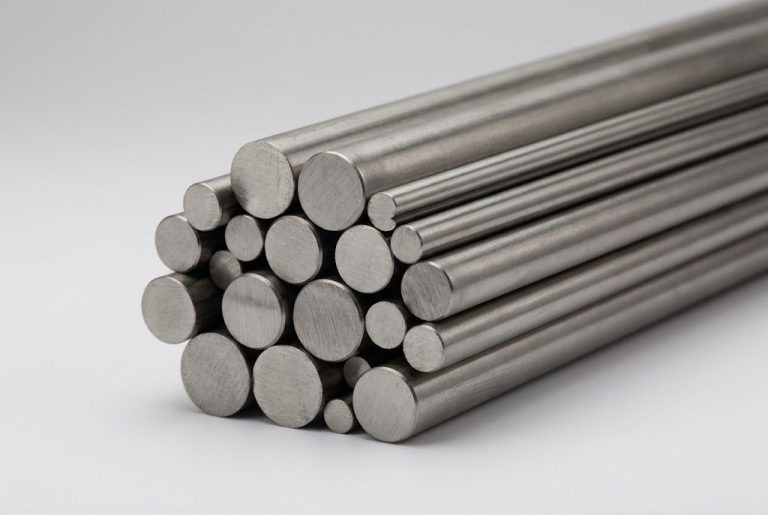
Monel K-500 in brief
| Buying point | Grade detail | Source and qualification |
|---|---|---|
| Identity | UNS N05500; W.Nr. 2.4375 | Special Metals; VDM also gives EN NiCu30Al and ISO NiCu30Al3Ti |
| Producer names | MONEL alloy K-500; VDM Alloy K-500, Nicorros Al; ATI K-500 | Special Metals, VDM and ATI producer data sheets respectively |
| Hardening mechanism | Precipitation through aluminum and titanium additions to the nickel-copper base | Special Metals and VDM; cold-work history also distinguishes the published mechanical values |
| Service condition | Normally age hardened before use, with an exception where nonmagnetic behavior is paramount | QQ-N-286G intended-use statement |
| Primary ASTM route | ASTM B865 for bar, rod, wire, forgings and forging stock | ASTM public scope explicitly identifies N05500 |
| Flat-product route | Sheet, strip and plate within QQ-N-286G | US federal specification; ASTM B127 names a different UNS grade |
| Main cautions | Pitting in stagnant seawater; environmental cracking under cathodic protection; filler-dependent weld strength | Special Metals and VDM; published studies abstracted by OSTI; welding guidance discussed below |
QQ-N-286G recommends annealed material for optimum tool life and identifies cold-drawn material with automatic machining. The drawing should specify aging before or after machining. Special Metals recommends rough machining with a small finishing allowance, followed by aging and final sizing.
Chemistry: separate limit sets
The principal column below reproduces the limits in QQ-N-286G Table I, in weight percent. Separate producer columns preserve conflicting limits. Neither the public ASTM B865 page nor the SAE AMS4676F page supplies its chemistry requirements, so these columns must not be described as their tables. Not listed means the cited producer table has no separate entry.
| Element, wt % | QQ-N-286G Table I | Special Metals limiting table | VDM composition table | ATI bar/billet cards | ATI plate card, QQ-N-286 Form 6 |
|---|---|---|---|---|---|
| Nickel | 63.0 min | 63.0 min, nickel plus cobalt | 63 min | 63.0 min | 63.0 min |
| Copper | 27.0-33.0, silver counted as copper | 27.0-33.0 | 27-33 | 27-33 | 27-33 |
| Aluminum | 2.30-3.15 | 2.30-3.15 | 2.3-3.15 | 2.30-3.15 | 2.30-3.15 |
| Titanium | 0.35-0.85 | 0.35-0.85 | 0.35-0.85 | 0.35-0.85 | 0.35-0.85 |
| Carbon | 0.18 max, total | 0.25 max | 0.18 max | 0.18 max | 0.18 max |
| Iron | 2.0 max | 2.0 max | 0.5-2 | 2.0 max | 2.0 max |
| Manganese | 1.5 max | 1.5 max | 1.5 max | 1.5 max | 1.5 max |
| Silicon | 0.50 max | 0.5 max | 0.5 max | 0.50 max | 0.50 max |
| Sulfur | 0.006 max | 0.01 max | 0.01 max | 0.01 max | 0.006 max |
| Cobalt | 0.25 max | Included with nickel | Not listed | Not listed | 0.25 max |
| Phosphorus | 0.02 max | Not listed | 0.02 max | Not listed | 0.02 max |
| Tin | 0.006 max | Not listed | 0.006 max | Not listed | 0.006 max |
| Zinc | 0.02 max | Not listed | 0.02 max | Not listed | 0.02 max |
| Lead | 0.006 max | Not listed | 0.006 max | Not listed | 0.006 max |
QQ-N-286G permits nickel determination by arithmetic difference and separately specifies product-check analysis variations; those variations are not additional heat-analysis limits. VDM alone gives a lower bound for iron. ATI’s plate chemistry agrees with the federal table, whereas its bar/billet cards omit several residual-element lines. The document on the purchase order therefore matters even when the grade designation agrees.
Physical properties and magnetic behavior
Special Metals calls its physical constants nominal, VDM labels its temperature-dependent data typical, and ATI warns that its technical-sheet values are typical rather than specification or final-design limits. ATI’s technical-sheet physical values below were read from the image pages of that sheet, which carry no text layer. Its product-page density is distinguished from its technical-sheet density.
| Property | Special Metals producer data sheet | VDM producer data sheet | ATI producer data |
|---|---|---|---|
| Density | 8.44 g/cm³ (0.305 lb/in³) | 8.5 g/cm³ (0.31 lb/in³) at 20 °C | Product cards: 8.45 g/cm³ (0.306 lb/in³); technical sheet: 8.47 g/cc (0.306 lb/in³) at 21 °C |
| Melting interval | 1315-1350 °C (2400-2460 °F) | Not stated | Not stated |
| Specific heat | 418.7 J/kg·°C at 21 °C, annealed before testing | 420 J/kg·K at 20 °C | Technical sheet: 408 J/kg·°K at 21 °C |
| Thermal conductivity | 17.2 W/m·°C at 21 °C, annealed before testing | 17.4 W/m·K at 20 °C | Technical sheet: 17.4 W/m·°K at 21 °C |
| Electrical resistivity | 0.615 µΩ·m at 21 °C; thermal-history qualification below | 61 µΩ·cm at 20 °C | Technical sheet: 0.61 microhm-m at 21 °C |
| Mean thermal expansion | 13.7 µm/m·°C over 21-100 °C, aged material | 13.7 ×10⁻⁶/K at 100 °C; reference temperature unstated | Technical sheet: 13.7 microns/m·°K over 21-93 °C |
| Elastic modulus | Tension 26.0 ×10³ ksi; torsion 9.5 ×10³ ksi | 179 GPa at 20 °C | Technical sheet: 179 GPa at 21 °C |
| Magnetic permeability | 1.0011 annealed/quenched to 1.0019 cold-drawn 20 %/aged, room temperature, 200 oersted | 1.0015 maximum at 20 °C | Technical sheet: 1.002 at 21 °C, H=200 oersteds / 16 kA/m |
Special Metals measured resistivity while cooling material equivalent to annealed with a small degree of aging; it expressly notes the influence of thermal history. Its Poisson’s ratio is 0.32 for aged material at room temperature, without a second source in the collected documents.
Magnetic transition figures also retain their conditions. Special Metals gives -210 °F for annealed, quenched material, -153 °F for annealed, aged material and -130 °F for cold-drawn 20 % and aged material, each at permeability 1.01. VDM gives Curie temperatures of -135 °C (-211 °F) solution annealed and -100 °C (-148 °F) solution annealed and aged. Special Metals additionally warns that selective oxidation during heating may leave a magnetic nickel-rich surface film, particularly noticeable on thin wire or strip; acid pickling or bright dipping can remove it.
Solution treatment and age hardening
QQ-N-286G separates mandatory processing requirements from explanatory heat-treatment notes. Its guidance explicitly allows different treatments rather than prescribing a universal recipe. The producer schedules likewise depend on incoming condition and form; the entries below remain separate instructions.
| Document and purpose | Solution treatment or annealing | Aging guidance |
|---|---|---|
| QQ-N-286G mandatory clauses | Minimum 1600 °F, then water quench | Any demonstrated process meeting the required mechanical properties |
| QQ-N-286G nonmandatory guidance | 1600-1900 °F, time suited to thickness, water quench; final anneal at 1900 °F for cold-drawn rods, 1800 °F for other products | May hold 1100-1125 °F for 8-16 hours, furnace cool at 15-25 °F/hour to 900 °F, then air cool |
| Special Metals producer practice | Normally 1800 °F hot-finished or 1900 °F cold-worked; normally less than 30 minutes to limit grain growth; usually water quenched | Soft, 140-180 HB or 75-90 HRB: 16 hours at 1100-1125 °F; furnace cool 15-25 °F/hour to 900 °F, then furnace/air cool or quench without a cooling-rate restriction |
| Special Metals, moderately cold-worked | No solution step given for this case | Material at 175-250 HB or 8-25 HRC: at least 8 hours at 1100-1125 °F; cool to 900 °F at no more than 15-25 °F/hour |
| Special Metals, fully cold-worked | No solution step given for this case | Material at 260-325 HB or 25-35 HRC: at least 6 hours at 980-1000 °F; cool to 900 °F at no more than 15-25 °F/hour |
| VDM producer practice | 850-1,000 °C, preferably 980 °C; 3-5 minutes/mm thickness; temperatures above 1,000 °C discouraged because of grain growth | 580-610 °C; flat products 3-5 hours, rods/forgings 4-16 hours; furnace cool approximately 12 °C/hour to 480 °C, then air cool |
Special Metals warns that material heated for any appreciable time at 1100-1400 °F will be overaged to an extent that depends on the time and temperature of exposure, and that overaged material has lower mechanical properties that subsequent aging cannot raise. It also discourages process-anneal exposure exceeding 1.5 hours because titanium carbide may form. These cautions make the complete thermal history relevant when a finished part must meet aged acceptance properties.
Hot forming, welding and finishing
Special Metals recommends hot working at 1600-2100 °F and discourages working below 1600 °F. VDM instead publishes 900-1,150 °C followed by rapid water cooling. Special Metals says the metal should be quenched from at least 1450 °F after hot working or before an interruption: slow cooling can partly age the material and create stresses leading to splitting or tearing on reheating. QQ-N-286G gives the same self-hardening warning, and VDM also connects air cooling with subsequent reheating cracks.
Welding advice must include the filler. Special Metals favors GTAW with MONEL filler metal 60, but states that this weld metal cannot age harden to match hardened parent material. Its separate discussion of welds attaining aged-parent strength refers to welding annealed material before aging; the supporting NASA weld figures used MONEL Filler Metal 64. VDM recommends its FM 60, identified as AWS A5.14 ERNiCu-7, and discusses subsequent aging for maximum strength. That statement does not resolve the Special Metals limitation for filler metal 60.
Special Metals advises against welding material already age hardened because ductility is greatly reduced. VDM calls for welding in the solution-annealed state and recommends annealing the assembly at 850-900 °C after welding but before aging, followed by cooling as rapidly as possible. VDM also warns against sulfur, phosphorus, lead and other low-melting-metal contamination during heating. For cyclically loaded parts, Special Metals’ fatigue discussion favors polished surfaces and records a detrimental effect from oxide produced by aging in air.
Mechanical requirements and nominal properties
The following acceptance values come directly from QQ-N-286G, rather than being inferred from producer ranges. Size means diameter or maximum distance between parallel surfaces, in inches. Yield uses a 0.2 % offset; elongation is measured in 2 inches or 4D under QQ-N-286G.
| QQ-N-286G form and condition | Size, inches | Tensile minimum, psi | Yield minimum, psi | Elongation minimum, % |
|---|---|---|---|---|
| Rounds, hot finished and aged | Up to 4¼ inclusive | 140,000 | 100,000 | 20.0 |
| Hexagons, squares, rectangles and forged parts, hot finished and aged | All sizes | 140,000 | 100,000 | 20.0 |
| Rounds, annealed and aged, hot finished or cold drawn | Up to 1 | 130,000 | 90,000 | 20.0 |
| Rounds, annealed and aged, hot finished or cold drawn | 1 and over | 130,000 | 85,000 | 20.0 |
| Rounds, cold drawn and aged | ¼-1 inclusive | 145,000 | 110,000 | 15.0 |
| Rounds, cold drawn and aged | Over 1 through 3 inclusive | 140,000 | 100,000 | 17.0 |
| Rounds, cold drawn and aged | Over 3 through 4 inclusive | 135,000 | 95,000 | 20.0 |
| Plate, hot rolled, annealed and aged | Up to 4 inclusive | 130,000 | 80,000 | 20.0 |
| Sheet/strip, cold rolled, annealed and aged | QQ-N-286G Table IV | 130,000 | 90,000 | 15 |
QQ-N-286G Table III carries a footnote excluding subsize tensile specimens below 0.250 inch diameter (see its 4.3.2.3); Table IV imposes no yield or elongation requirement below 0.020 inch sheet/strip thickness. Its unaged annealed rounds have hardness maxima of 185 HB / B90, while unaged annealed sheet/strip has B85 maximum. Unaged acceptance must not be replaced with an aged tensile row.
| Special Metals nominal form/condition | Tensile, MPa | 0.2 % yield, MPa | Elongation, % |
|---|---|---|---|
| Rod/bar, hot-finished, annealed | 621-758 | 276-414 | 45-25 |
| Rod/bar, hot-finished, aged | 965-1310 | 690-1034 | 30-20 |
| Rod/bar, cold-drawn, aged | 931-1276 | 655-1103 | 30-15 |
| Rod/bar, hot-finished, annealed and aged | 896-1138 | 586-827 | 35-20 |
| Seamless tube/pipe, cold-drawn, annealed and aged | 896-1241 | 586-827 | 30-15 |
Special Metals says these composite ranges span different product sizes and cannot serve as specification values; aged entries represent aging for maximum properties. VDM separately reports typical short-term solution-annealed and aged values of 690 MPa yield, 1,100 MPa tensile and 24 % elongation at 20 °C, for its specified dimensions. ATI’s plate card gives precipitation-treated minimums of 130 ksi tensile, 80 ksi yield and 20 % elongation under QQ-N-286, while its bar/billet cards show minimums of 130 ksi, 85 ksi and 20 % without stating a condition.
Temperature claims have different purposes. ATI describes good strength to 1,200 °F (648 °C); VDM describes high tensile strength to 650 °C (1,202 °F) when aged. Neither is a design allowable. Special Metals’ ASME Code Case 1192 bolting statement instead concerns Section VIII Division 1 stresses through 500 °F; the code case itself was not consulted for this page.
Corrosion behavior and environmental limits
Special Metals and VDM compare general corrosion resistance with alloy 400. VDM describes resistance to waters, concentrated salt solutions and alkalis, and ATI emphasizes flowing brine, brackish water and seawater. Flow conditions and applied electrochemical protection change the assessment.
| Environment or evidence | Finding and boundary | Source |
|---|---|---|
| Slow or stagnant seawater | Fouling may precede pitting; attack slows after an initially faster stage. VDM also warns of pitting in standing seawater. | Special Metals; VDM producer data sheets |
| Age-hardened material, general SCC comparison | Greater stress-corrosion cracking tendency in some environments than alloy 400 | Special Metals producer data sheet |
| Chloride-induced SCC | Described as virtually immune; separately warns of hot hydrofluoric-acid vapor cracking when aged and stressed near yield | VDM producer data sheet |
| Sodium chloride exposure | Highly resistant classification, including weldments and all conditions, for 3.5 % NaCl alternate immersion or 5 % salt spray | NASA MSFC-STD-3029, Table I-D and Table I criterion |
| Sour-gas immersion test | No cracks in age-hardened sheet U-bends after 6 days in saturated 3500 ppm hydrogen sulfide, acidic/basic pH 1.0-11.0; specimens 28-40 Rc | Special Metals producer data sheet |
| Cathodically protected subsea bolts | Hydrogen-embrittlement failures during normal protection operation; follow-up slow-strain-rate testing predicted embrittlement | Published study, Hydrogen embrittlement of cathodically protected subsea bolting alloys, OSTI abstract |
| Cathodic polarization in seawater-fastener evaluation | Slow-strain-rate tests and fracture analysis identified environmental-cracking susceptibility | Navy laboratory study, An environmental cracking evaluation of fastener materials for seawater applications, OSTI abstract |
NASA limits the guideline’s exposure setting to saltwater alternate immersion, salt fog, seacoast and slow-strain-rate salt-solution testing. That classification cannot erase the cathodic-protection findings or the hot-acid-vapor caution. The two cathodic-protection studies are cited from their published abstracts; the full papers were not reviewed. Separately, QQ-N-286G requires resistance to intergranular cracking and describes a slow-strain-rate tensile acceptance procedure at 700 °F under ASTM E8. That acceptance test and environmental service qualification answer different questions.
Product forms and specification coverage
Among the ASTM documents checked, ASTM B865 is the only one whose public scope names N05500. Its scope does not extend to flat products or pipe/tube. A producer’s document list supports a grade association, but it does not reveal unpublished acceptance tables.
| Form or route | Document and evidence |
|---|---|
| Rounds, squares, hexagons, rectangles; forgings/forging stock; cold-worked wire | ASTM B865-25 public scope expressly names N05500; ASTM lists it as active |
| Wrought forms under the federal specification | QQ-N-286G: Form 1 unaged bar/rod; Form 2 aged bar/rod; Form 3 sheet; Form 4 strip; Form 5 wire; Form 6 plate; Form 7 forgings, including forged bar/rod |
| Bars, forgings and forging stock | SAE AMS4676F covers hot-finished, precipitation-hardenable nickel-copper alloy. Special Metals, VDM and ATI provide its K-500 association; SAE’s public page does not name the UNS or grade. |
| Other commonly proposed ASTM routes | ASTM B564, B127, B164 and B472 do not list N05500 in their public scope lists. B127 names N04400; B164 names N04400 and N04405. |
| Plate, sheet and strip | QQ-N-286G coverage above; Special Metals also lists BS3072NA18 for sheet/plate, BS3073NA18 for strip, DIN 17750 and ISO 6208. Those latter documents were not inspected. |
| Pipe/tube | Special Metals lists BS3074NA18 for seamless pipe/tube and DIN 17751 for pipe/tube. No ASTM/ASME/AMS pipe or tube route was established by the checked standards-body pages. |
| Fasteners and welding fittings | ATI bar/billet cards list ASTM F467 and F468; their public ASTM scopes name no alloys. ASTM B366/B366M likewise names no UNS grades publicly, so it does not establish K-500 coverage here. |
SAE’s older base-page title uses nominal nickel 66, aluminum 3.0, titanium 0.6 and copper 30; SAE’s current AMS4676F title instead gives 66.5Ni – 3.0Al – 0.62Ti – 28Cu, hot-finished and precipitation hardenable. Cite the F revision explicitly. Special Metals and VDM also list NACE documents, but their actual hardness and condition requirements were not obtained. A listing alone cannot establish sour-service acceptance for the proposed condition.
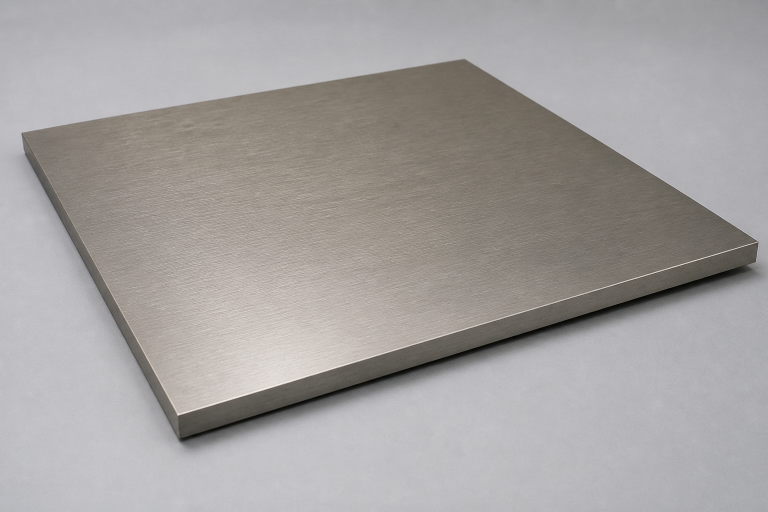
Where Monel K-500 is used
| Application area | Examples in producer literature |
|---|---|
| Marine and offshore equipment | Special Metals: centrifugal-pump shafts, chains, cables, fasteners and springs; VDM: propeller shafts, pump sleeves, wearing rings and seawater valve seals |
| Oilfield equipment | Special Metals: drill collars, instruments and nonmagnetic housings; ATI: packers, subsurface safety valves, drive shafts and impellers |
| Chemical and pulp processing | Special Metals: pump/valve components, paper-production doctor blades and scrapers |
| Instrumentation | Special Metals: sensors, electronic components and precision gyros; VDM: aircraft instrument parts |
Application examples do not qualify an individual design. Special Metals’ spring discussion gives 500 °F as a maximum useful temperature using a criterion of 5-6 % relaxation over 7 days. That spring-specific basis is distinct from the producers’ broader strength-temperature descriptions.
Common questions from buyers
Can chemistry be accepted against a generic grade description? Name the governing limit set. The federal and producer tables differ on carbon, sulfur, iron and residual-element treatment, so a trade name alone leaves acceptance ambiguous.
Does the grade arrive ready for its final duty? State the processing condition explicitly. QQ-N-286G normally intends aging before service, while annealed material may be selected for machining or forming. Rough machining, aging and finishing must be reconciled with the drawing’s final properties.
Can a marine fastener rely on the chloride-resistance description? Evaluate the protection system as well as seawater exposure. NASA’s salt-environment classification and the published cathodic-protection cracking reports concern different conditions, both relevant to a fastener assessment.
Will aging restore strength across a weld? Identify the filler and qualified procedure first. Special Metals excludes matching aged-parent strength for its filler metal 60 welds; VDM’s post-weld aging statement does not supply a filler-specific strength guarantee.
Which values belong on an inspection plan? Use requirements from the chosen specification and condition. Special Metals’ nominal ranges combine sizes, and ATI’s technical sheet labels its figures typical. Neither substitutes for the applicable acceptance requirements.
Specification detail with sources
Special Metals’ producer data sheet MONEL alloy K-500, Publication SMC-062 (2004), supplies its chemistry limits, nominal physical constants, condition-dependent magnetic values, composite mechanical ranges, processing guidance, corrosion cautions, specification listings and applications. VDM’s producer data sheet No. 4126, Revision 01 (November 2020), for VDM Alloy K-500 Nicorros Al supplies the independent chemistry and physical columns, annealing/aging schedules, welding advice and environmental qualifications. ATI’s producer technical data sheet, Version 1 (2011), supplies the typical physical figures transcribed from its image pages and its strength-temperature description; ATI’s product-page cards supply the separately attributed chemistry, density, form listings and minimum properties.
US federal specification QQ-N-286G (December 2000) provides the principal composition limits, mandatory processing clauses, guidance notes, mechanical requirements and wrought-form coverage. ASTM’s public scope pages establish the distinctions among product specifications; SAE’s AMS4676F page establishes its title and scope, without furnishing requirement tables. NASA MSFC-STD-3029 Revision A has a PDF effective date of February 24, 2005, while NASA’s catalogue node gives February 25, 2005 as the document date; the salt-environment statements here refer to the PDF. The published studies represented by the OSTI abstracts provide the cathodic-protection and polarization cautions. These documents say nothing about which mill supplies the material in an order placed with Beiyu. MONEL is a Special Metals Corporation group trademark; Nicorros Al is VDM’s trade name for the alloy.
Ordering Monel K-500
Include the UNS designation, form, dimensions, governing specification with edition, required condition and final inspection criteria in the RFQ. For welded parts, identify the filler and treatment sequence; for seawater fasteners, describe cathodic protection and service stresses. Separate chemistry restrictions beyond the chosen document from its standard requirements. The size table reproduces Beiyu Titanium’s published nickel-family ranges.
| Form | Published range |
|---|---|
| Round bar | Ø5.0 to 300 mm, lengths up to 6000 mm |
| Sheet | 0.8 to 3.0 mm thick, up to 1200 mm wide |
| Plate | 3.0 to 70 mm thick, up to 2500 mm wide |
| Seamless tube | 5 to 325 mm OD, wall 0.5 to 12 mm |
| Welded tube | Up to 1219 mm OD |
| Forged bar | Ø50 to 500 mm, up to 3000 mm long |
| Forged ring | 50 to 1000 mm OD, 10 to 500 mm ID, 20 to 300 mm high |
| Forged disc and block | Discs 50 to 1000 mm outside diameter and 20 to 500 mm thick; blocks 50 to 500 mm |
These ranges describe the nickel-family envelope; not every listed size exists in K-500, and the proposed dimensions and form are confirmed at quotation. Consult nickel alloy pipe and tube for tubular enquiries, the nickel alloy forgings guide for forged shapes, and nickel and nickel-based alloys for the wider product grouping. Identify required order records, including chemical/mechanical test results and dimensional inspection, so that quotation and acceptance use the same requirements.
For standard grades and sizes the typical lead time is 15 to 30 days from order confirmation or deposit to ex-works dispatch, sea transit time not included; special chemistry or mechanical requirements call for an adjusted melt recipe, so their lead time depends on the requirements and is confirmed with the quotation.