
Drawing-definedVessel and cavity geometry
Mo1 / Mo2 / MoLa / TZMGrade and condition specified separately
10.22 g/cm³Reference for estimating mass
Order requirementsFinished-part acceptance
Review the molybdenum vessel as a finished part. Material selection and dimensional acceptance need separate inputs, with the construction description agreed against the submitted drawing.
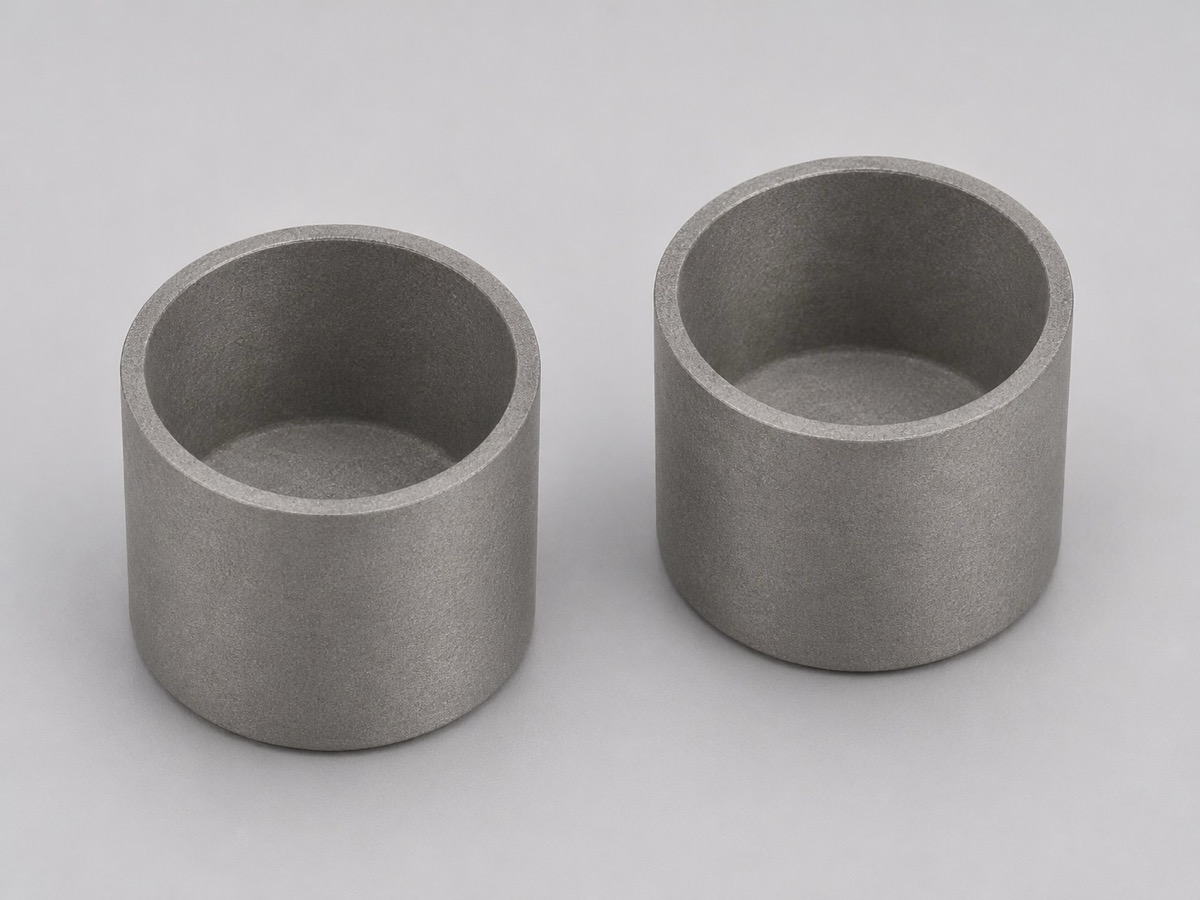
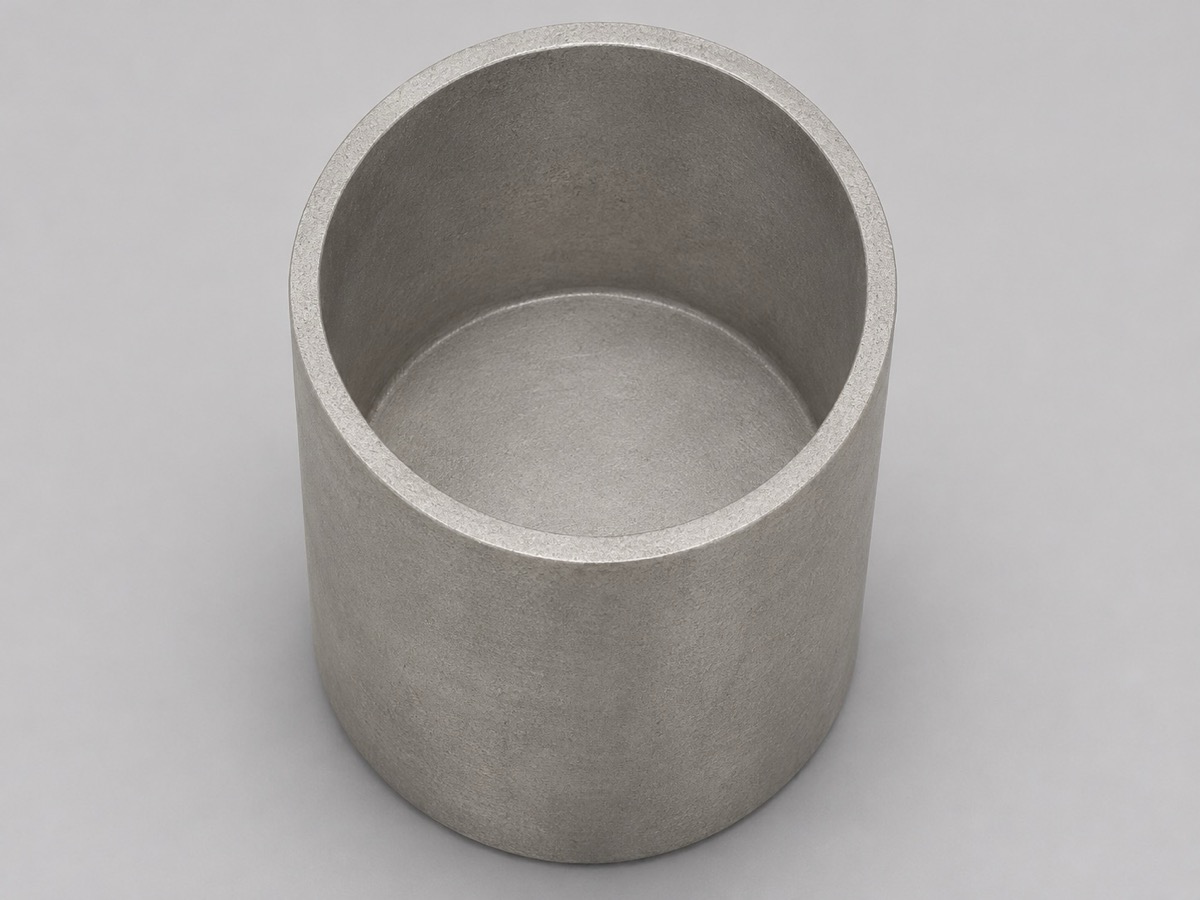
Molybdenum crucibles are supplied by Beiyu Titanium to drawing-defined dimensions. Include the required material, rim and support interfaces, cavity and base definition, plus a lid drawing where applicable. Construction is confirmed at quotation against the drawing.
Molybdenum category and component enquiries
Which molybdenum grade and condition fit your drawing?
Order molybdenum crucibles against a finished drawing and an identified material specification. The Beiyu Titanium product brochure lists crucibles among its molybdenum forms. Write the grade and condition on the enquiry when the design calls for them; the form name does not choose either. Beiyu reviews the drawing and confirms construction at quotation; check that response before approving the order.
| Requirement | Controlling input | Review output |
|---|---|---|
| Material | Mo1, Mo2, MoLa or TZM, and the condition, as the drawing requires | Agreed designation and material document scope |
| Finished part | Dimensions to the drawing | Quoted drawing revision and acceptance basis |
| Construction | Confirmed at quotation against the drawing | Description accepted before order release |
Pure molybdenum (Mo1, Mo2) is the more ductile material; TZM holds its strength and resists recrystallisation to a higher temperature than pure molybdenum. At a given grade, worked and stress-relieved material behaves differently from fully recrystallised material. Specify condition separately on the order: stress-relieved and recrystallised material cannot be treated as interchangeable.
If a crucible is fabricated from plate, the plate can be ordered to ASTM B386 when the drawing calls for it. Review molybdenum plate and sheet for that starting form and molybdenum bar and rod when discussing a round material requirement; construction remains a quotation decision.
What must a furnace enquiry tell the material reviewer?
Molybdenum is used for vacuum-furnace hot zones and supports. It oxidises in air at high temperature, so high-temperature use is in vacuum, hydrogen or inert atmospheres; give the atmosphere and the contained material on the enquiry. Suitability for the duty is confirmed by your engineering team; Beiyu reviews the drawing and the requested documents before quoting.
| Review field | What must be resolved |
|---|---|
| Atmosphere and process contents | Your engineering team confirms the material choice for the intended duty |
| Rim, base and support drawing | Agree the features to be measured |
| Documents and protection | Include required MTC or COC, marking and packing in the order |
For a material change, compare tungsten crucibles using the same drawing inputs.
What should the molybdenum crucible drawing show at the rim and base?
Show the cavity dimensions together with the features that locate the crucible in the assembly. Include the mating drawing for a lid that must fit the rim; the fit cannot be set from the vessel dimensions alone. Your drawing set must define the base support and inspection priorities; construction is confirmed at quotation against that drawing.
| Drawing field | Input needed | Molybdenum order decision |
|---|---|---|
| Grade and condition | Mo1, Mo2, MoLa or TZM; condition required by the drawing | Keep material condition distinct from grade identity |
| Rim and mating lid | Rim dimensions, lid requirement and mating features | Define the fit to inspect |
| Base and support contact | Bottom thickness and base geometry at the support | Identify the contact features on the assembly drawing |
| Cavity section | OD with ID or wall and cavity depth | Define material around the contents |
| Height datum | Overall height referenced to the support | Locate the rim relative to the assembly |
| Tolerances | Controlled features and inspection scope | Agree measurable acceptance requirements |
| Construction | Confirmed at quotation against the drawing | Review the description before order release |
What does a simple cup calculation include in its mass?
Example assumptions: take a cylindrical, open-top cup whose overall height H is 70.00 mm, outside diameter OD is 60.00 mm, cavity diameter ID is 50.00 mm and base thickness b is 5.00 mm. Assume straight walls and a flat base; exclude lids and all shaped rim or corner details. The chosen dimensions describe an arithmetic model, with no commercial size or customer example implied. Calculate V(cm³) = π × [H × OD² - (H - b) × ID²] ÷ 4 ÷ 1000 for these millimetre inputs. Multiply V by 10.22 g/cm³, Beiyu's reference density, used in our quotation weights, for molybdenum, to obtain grams. Account separately for the volumes of a shaped base or rim on the drawing; this cylindrical model cannot represent them.
| Cup-model result (example assumptions) | Calculated value |
|---|---|
| Wall | 5.00 mm |
| Cavity depth | 65.00 mm |
| Material volume | 70.29 cm³ |
| Mass | about 718 g |
The same example cup in tungsten, using 19.25 g/cm³ as Beiyu's reference density, used in our quotation weights, would be about 1,353 g. Include shaped rim and base features from your actual drawing when requesting a mass estimate.
Molybdenum order questions
Is ASTM B386 a crucible specification?
No. ASTM B386 can govern the plate when the drawing names plate as the starting material; the finished crucible is accepted against its own drawing.
What happens if construction is absent from the drawing?
Beiyu proposes the construction in the quotation, against the drawing. Check that description and approve it before ordering.
Specification detail with sources
The Beiyu Titanium product brochure lists the molybdenum forms as “Plate, rod, wire, boat, crucible and custom components”; crucible dimensions are to the drawing. Beiyu's reference density, used in our quotation weights, is 10.22 g/cm³ for molybdenum.
ASTM B386, the molybdenum plate and sheet specification, applies to plate when the drawing names it as the starting material. The plate can be ordered to ASTM B386 as the drawing requires; the finished crucible is accepted against its own drawing, with construction and dimensional inspection confirmed at quotation.
For standard grades and sizes the typical lead time is 15 to 30 days from order confirmation or deposit to ex-works dispatch, sea transit time not included; special chemistry or mechanical requirements call for an adjusted melt recipe, so their lead time depends on the requirements and is confirmed with the quotation. Crucibles are made to the buyer's drawing, so their lead time is confirmed with the quotation.
Bring the molybdenum vessel drawing and any mating lid details to quotation review, identifying rim fit, base geometry and material evidence for the finished-part acceptance decision.