
To drawingFinished dimensions
W1 / W2Pure tungsten grades
19.25 g/cm³Mass-estimate reference
Agreed scopeInspection and documents
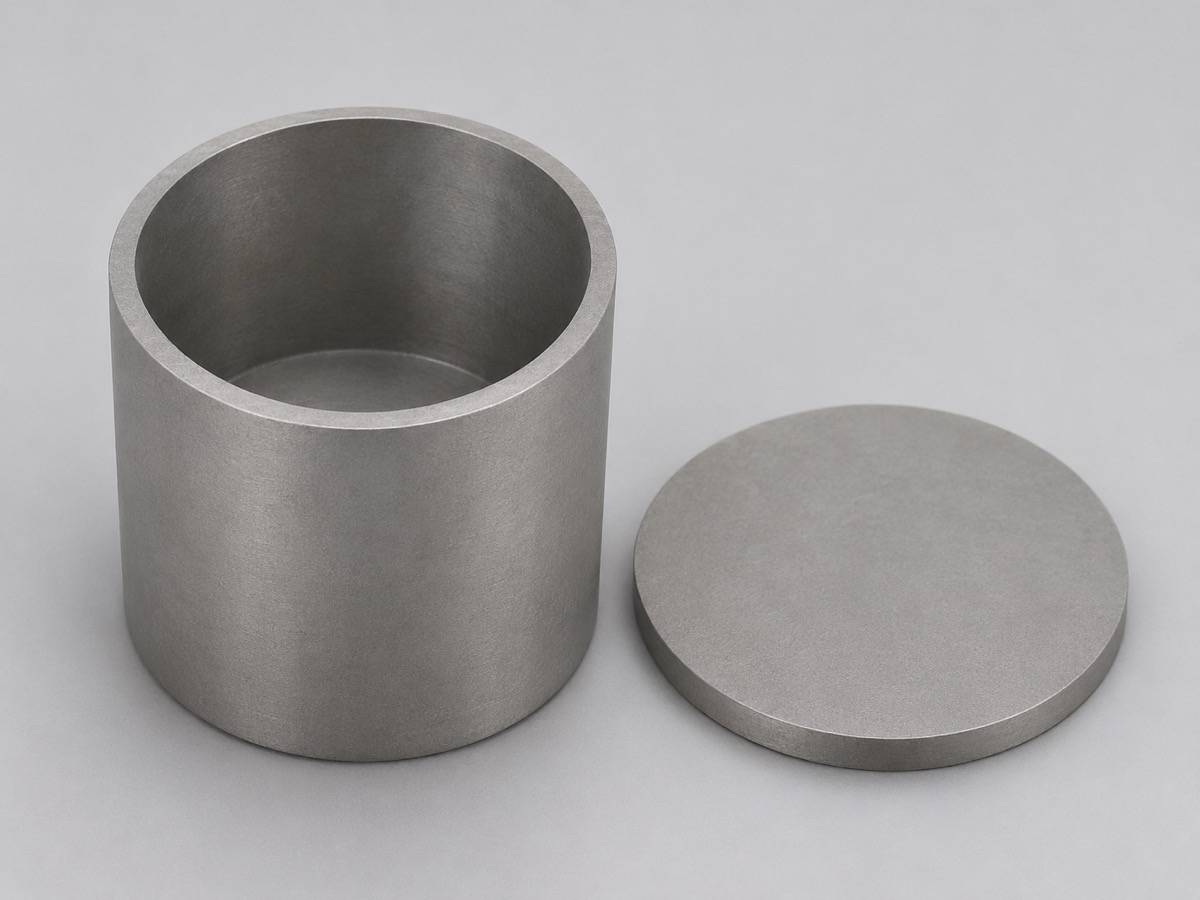
Resolve the complete tungsten crucible drawing. The cavity, bottom, lid and inspection requirements must accompany the material specification; construction is confirmed during quotation review.
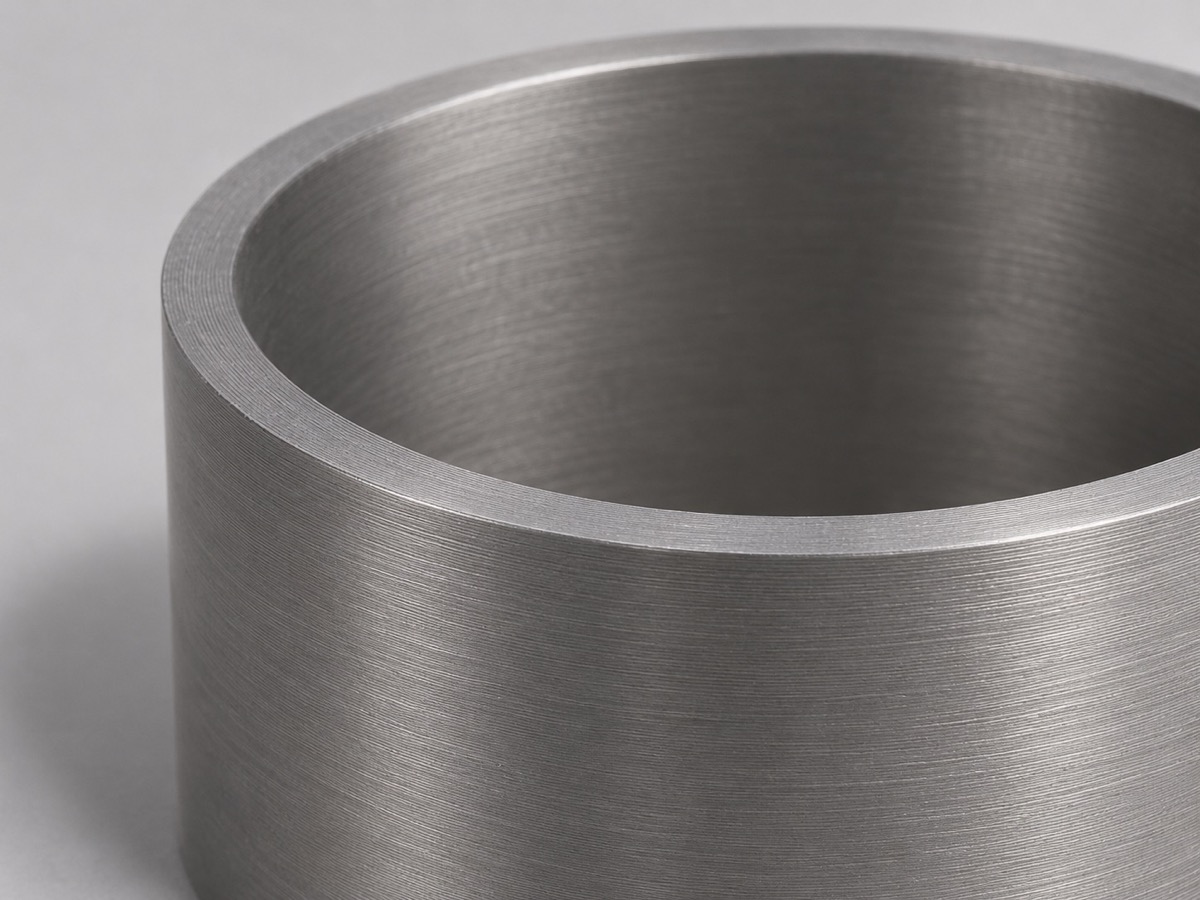
Beiyu Titanium supplies tungsten crucibles with dimensions to the drawing. State material, cavity geometry, bottom thickness and any lid requirement; construction is confirmed at quotation against the drawing.
Browse tungsten material and product forms
What defines the material acceptance for a tungsten crucible?
Define the crucible through its drawing and material requirement. Dimensions are to the drawing, and construction is confirmed at quotation against the drawing. For a crucible fabricated from plate, the plate can be ordered to ASTM B760 when the drawing calls for it; that document addresses the starting flat form. Submit the material specification and drawing; verify that the quotation distinguishes material evidence from finished-part acceptance.
| Order item | What controls it | Acceptance review |
|---|---|---|
| Tungsten material | W1 or W2 pure tungsten, or the composition named on the drawing | Compare the material document with the requested designation |
| Crucible geometry | Finished drawing and agreed tolerances | Confirm the dimensional inspection scope |
| Construction | Confirmed at quotation against the drawing | Approve the quoted description before purchase |
For a round material requirement, see tungsten bar and rod; tungsten product forms includes flat starting forms. Construction of your crucible is confirmed at quotation against the drawing.
Which drawing details must a tungsten crucible enquiry resolve?
Resolve the cavity and bottom as well as the outside envelope. Add the cavity dimension when the drawing gives OD without ID or wall, since outside diameter cannot establish the material section. Supply the current drawing and inspection priorities; Beiyu checks the dimensional definition before quoting, and you approve any open items.
| Drawing field | What to provide | Tungsten handling or fit check |
|---|---|---|
| Support envelope | OD, overall height, locating dimensions and tolerances | Identify the surfaces that locate the vessel |
| Cavity and bottom | ID or wall, cavity depth and bottom thickness | Resolve the section beneath and around the cavity |
| Lid interface | State whether a lid is needed; include its mating drawing | Mark the rim surfaces that determine lid fit |
| Handling-critical edges | Identify exposed edges and corners on the drawing | State protection required during handling and transit |
| Inspection priorities | Controlled dimensions and surface acceptance criteria | Agree checks at the fragile rim and other critical features |
| Construction | Confirmed at quotation against the drawing | Approve the proposed description |
At room temperature, pure tungsten combines hardness with brittleness. Identify the edges, corners and rim surfaces that affect handling or fit, and specify the protection these features need during transit.
What service information is needed before selecting tungsten?
Tungsten is used for high-temperature furnace parts and supports. In air, tungsten oxidises at high temperature, so elevated-temperature duty calls for vacuum or an inert atmosphere. State the atmosphere and the contained material on the enquiry. Whether tungsten suits the contained material is confirmed by your engineering team.
| You supply | Review or evidence required |
|---|---|
| Operating atmosphere and contained material | Your engineering review of material suitability |
| Drawing and fit requirements | Agreed dimensional records for the finished part |
| Document and packing requirements | MTC or COC and protective packing when included in the order |
When evaluating a different material, start with molybdenum crucibles and submit a separate material requirement.
How much does a tungsten cup weigh compared with molybdenum?
Example assumptions: an open cylindrical cup with OD = 40.00 mm, ID = 30.00 mm, overall height H = 50.00 mm and bottom b = 5.00 mm; no lid, taper, fillets or other features. These are chosen calculation inputs, not product sizes, an offered range or a customer case. Material volume V in cm³ = π/4 × [OD² × H - ID² × (H - b)] / 1000, using mm inputs; mass in g = ρ × V, with ρ = 19.25 g/cm³, Beiyu's reference density, used in our quotation weights, for tungsten. Estimate from the actual geometry for a drawing with a lid or tapered wall; the simple cup subtraction omits those features.
| Calculated item under example assumptions | Value |
|---|---|
| Wall | 5.00 mm |
| Cavity depth | 45.00 mm |
| Material volume | 31.02 cm³ |
| Mass | about 597 g |
The same example cup in molybdenum, using 10.22 g/cm³ as Beiyu's reference density, used in our quotation weights, would be about 317 g. Geometry is held constant for this mass comparison; your finished drawing determines the quotation estimate.
Tungsten crucible questions
Does ASTM B760 certify a finished crucible?
No. When the drawing calls for plate to that specification, treat it as a starting-material requirement; the finished vessel still has its own geometry and acceptance criteria.
Can a crucible be quoted from OD and height alone?
Add ID or wall, bottom thickness and the lid requirement. Without them the cavity is undefined and the part cannot be quoted. Beiyu reviews the completed drawing; confirm its revision and tolerances before ordering.
Specification detail with sources
Beiyu Titanium supplies tungsten crucibles in W1 or W2 with dimensions to the drawing. Beiyu's reference density, used in our quotation weights, is 19.25 g/cm³ for tungsten.
ASTM B760 covers wrought unalloyed tungsten plate, sheet and foil. When a crucible is fabricated from plate, the plate can be ordered to this specification when the drawing calls for it; this is a starting-form reference, not a crucible product specification. Plate documentation does not verify vessel geometry; finished-part acceptance follows the agreed drawing.
For standard grades and sizes the typical lead time is 15 to 30 days from order confirmation or deposit to ex-works dispatch, sea transit time not included; special chemistry or mechanical requirements call for an adjusted melt recipe, so their lead time depends on the requirements and is confirmed with the quotation. Crucibles are made to the buyer's drawing, so their lead time is confirmed with the quotation.
Send a tungsten crucible drawing that resolves the cavity, bottom section and lid interface, with tolerances marked for the construction and inspection review at quotation.