
Titanium anode baskets hold soluble metal in plating and electroforming cells, and the basket itself must not dissolve. Grade 1 and Grade 2 titanium do that job. Beiyu Titanium supplies the material side: bar, rod, sections and machined parts for basket fabrication, with an EN 10204 type 3.1 certificate by order scope.
Why titanium for an anode basket?
| Requirement in the cell | What titanium contributes |
|---|---|
| Carry current to the soluble metal | Conductive frame that stays passive in the electrolyte |
| Survive acidic plating baths | The stable oxide film on unalloyed titanium resists the bath instead of dissolving into it |
| Keep the deposit clean | The basket metal does not contaminate the plated layer |
| Refill without replacing hardware | Baskets outlast many charges of soluble anode metal |
The same passivity that protects the basket also means titanium itself is not the working anode here; the basket is a current carrier and container. Where the titanium piece is itself the working electrode, that is a coated anode, a different product covered in the MMO coated titanium anode guide.
Which grade for the basket, hooks and stems?
| Component | Grade | Why |
|---|---|---|
| Basket body and mesh frame | Grade 1 (UNS R50250) or Grade 2 (UNS R50400) | Formability for Grade 1, the general workhorse balance for Grade 2 |
| Hooks and hanger bars | Grade 2 | Machined or bent from bar, carries the mechanical load |
| Stems and current leads | Grade 2 bar or rod | Turned parts, threads cut where the connection demands it |
Both grades are ordered to ASTM B348 for bar and rod. Grade 2 chemical limits under that standard: oxygen 0.25, iron 0.30 percent maximum by weight, with minimum tensile strength 345 MPa in the annealed condition. If the drawing has tight forming radii on the frame, Grade 1 earns its place; otherwise Grade 2 is the default.
What material forms does a basket fabricator order?
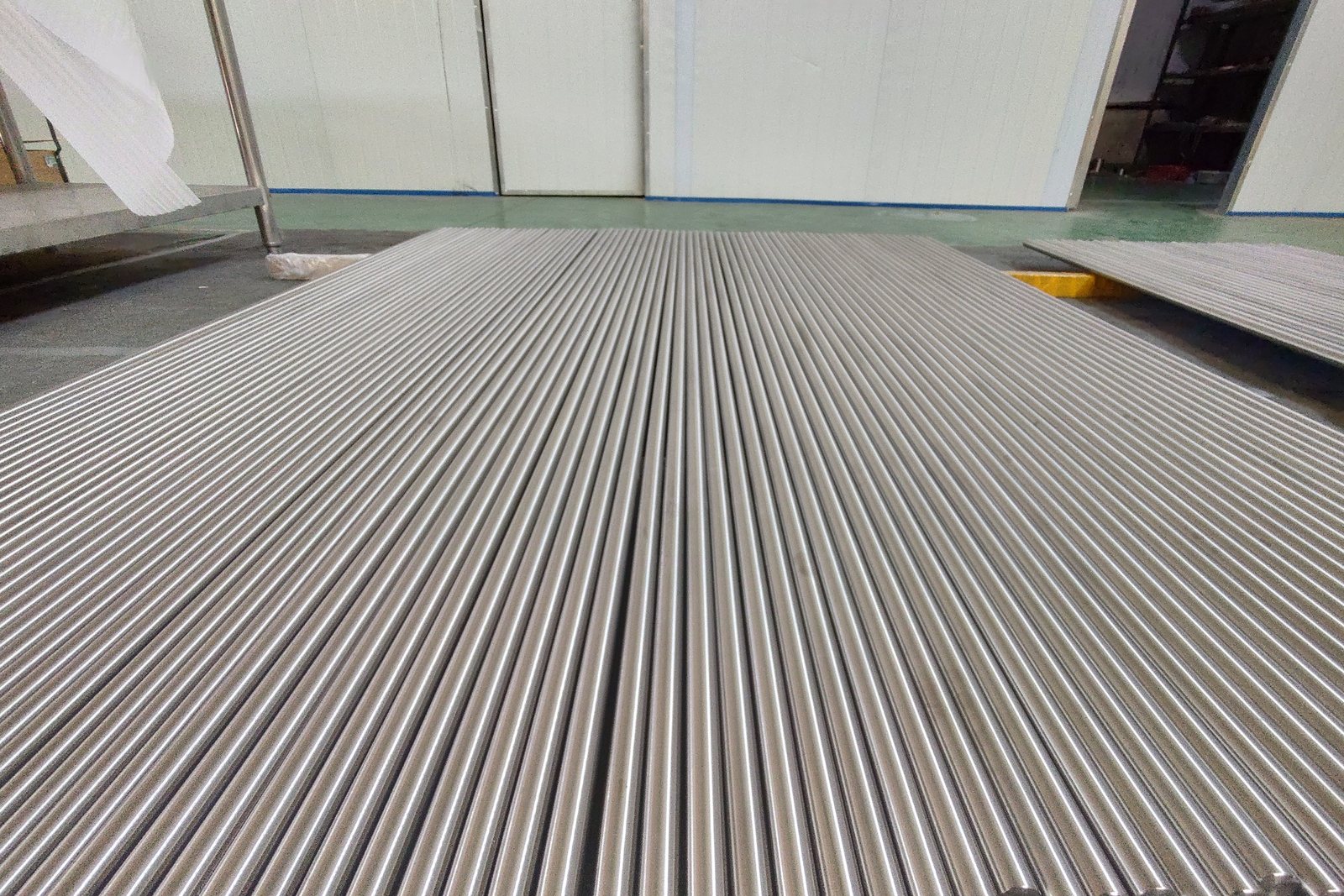
| Form | Beiyu supply range | Used for |
|---|---|---|
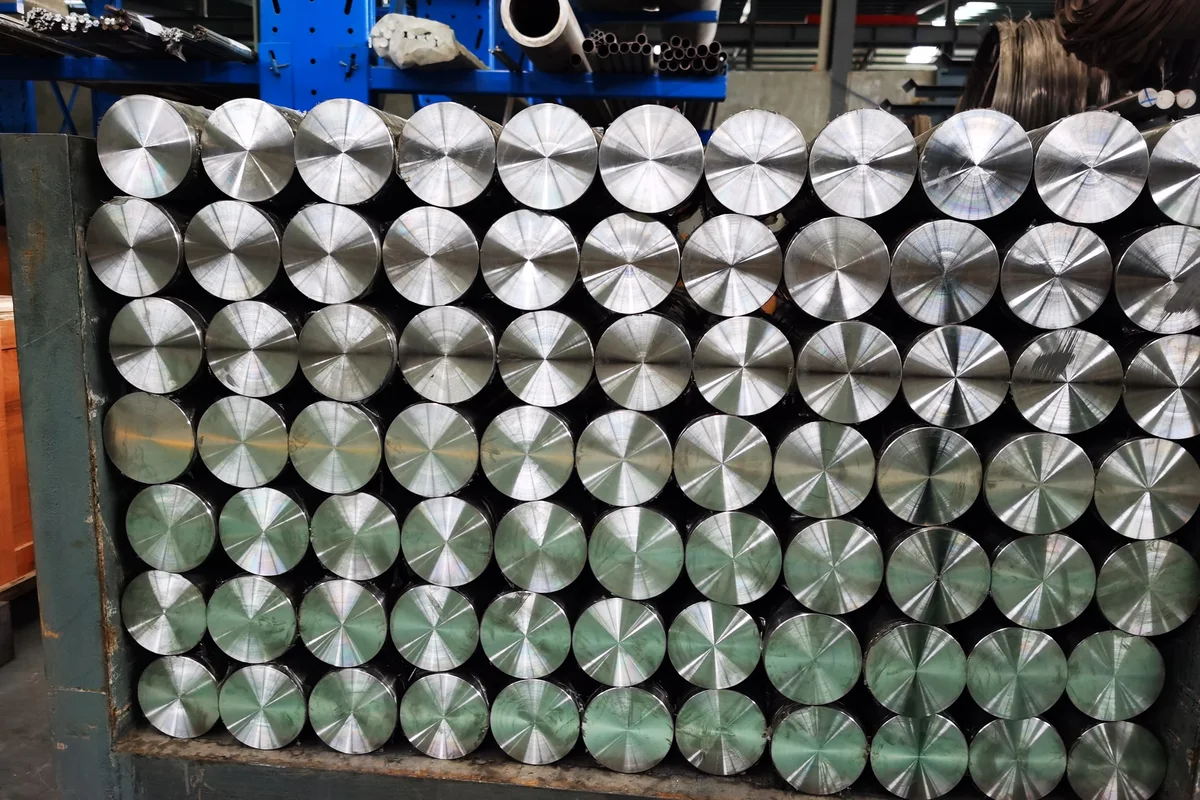
| Round bar and rod | 1 to 500 mm diameter, lengths to 6000 mm | Stems, hooks, hanger bars |
| Square and flat bar | Square 3 x 3 to 500 x 500 mm, flat 3 x 12.7 to 30 x 500 mm | Frames and support rails |
| Machined parts | To drawing | Threaded connectors, clamp blocks |
Mesh and expanded sheet are quoted case by case against the drawing; a quotable mesh drawing states the sheet thickness, the diamond long and short way dimensions, the open area, the overall panel size and the grade. With those five fields on the drawing the basket body is quotable alongside the bar items on one RFQ.
Why does Grade 1 bend tighter than Grade 2?
| Limit, weight percent | Grade 1 | Grade 2 |
|---|---|---|
| Oxygen max | 0.18 | 0.25 |
| Iron max | 0.20 | 0.30 |
| Carbon max | 0.08 | 0.08 |
| Nitrogen max | 0.03 | 0.03 |
Both columns are Table 1 of ASTM B348, and Table 2 of the same standard puts numbers on the consequence: Grade 1 runs 240 MPa minimum tensile with 24 percent minimum elongation against Grade 2 at 345 MPa and 20 percent, which is the formability margin that tight frame radii spend. There is also a purity lever specific to plating work: ASTM B348 clause 5.2 allows analysis of residual elements beyond Table 1 when it is agreed and written into the purchase order, so a shop worried about a particular contaminant in the bath can put that element on the order and get it reported per heat.
What should the basket RFQ contain?
| Field | Why it matters |
|---|---|
| Drawing or bar list | Baskets are fabricated items; the titanium content is quoted from the drawing |
| Grade per component | Frame, hooks and stems can carry different grades on one order |
| Bath chemistry named | Confirms Grade 1 or 2 is the right call for the electrolyte in use |
| Certificate scope | EN 10204 3.1 per heat, marking traceable to the certificate |
| Connection details | Thread sizes and contact faces decide the machined-part scope |
Specification detail with sources
Grade identities and limits are from ASTM B348: Grade 1 under UNS R50250, Grade 2 under UNS R50400 with oxygen at 0.25 percent maximum, iron at 0.30 percent maximum and tensile strength at 345 MPa minimum in the annealed condition. Certificate values are produced by the methods the standard cites, including E539 for X-ray fluorescence analysis and E8 for tension testing. Supply ranges for bar, rod and sections are Beiyu’s own published envelope, and each order carries an EN 10204 type 3.1 certificate with heat and pour numbers by order scope.
Scope note: the E539 and E8 citations settle how certificate values are produced and add no inspections beyond the order; residual-element analysis beyond Table 1 happens only when clause 5.2 is invoked in writing on the purchase order.
Frequently asked questions
Does Beiyu supply finished baskets or the material? Material and machined parts to drawing. Basket fabrication drawings are quoted for the titanium content: bar, rod, sections and machined components.
What details do you need to quote the mesh body? Sheet thickness, diamond long and short way, open area, panel size and grade; with those five on the drawing the mesh is quoted with the bar items on one RFQ.
What about coated anodes rather than baskets? Different product: a coated anode is itself the working electrode. See the MMO coated titanium anode guide and the titanium anode and cathodic protection guide.
Can the stems come with a 3.1 certificate? Yes, bar and rod ship with EN 10204 type 3.1 listing heat and pour numbers, the same document chain as any Beiyu bar order.
Does bath temperature change the grade choice? The bath chemistry and temperature belong on the RFQ so the grade call is confirmed against the duty; the corrosion logic by environment is covered in the titanium corrosion resistance grade guide.
Request a quotation for basket material
Send the drawing or the bar list, grade, standard, quantities and certificate requirement to the Beiyu RFQ page. Reviewed by Penn Ma, 15 years in titanium mill product export. Last reviewed: 2026-08-27.