
In a chlor-alkali cell the titanium is not doing the electrochemistry. The coating is. Titanium is there because it is a valve metal: where the coating wears through, the exposed substrate repassivates instead of dissolving, which is what lets the same anode base be recoated instead of being scrapped.
Which coating a chlorine duty takes
The coating family, not the substrate, decides which reaction the anode is built for, and putting the wrong family into a duty shortens its life:
| Coating family | What the coating is built for | Where it is normally supplied |
|---|---|---|
| Ruthenium based | Chlorine evolution | Diaphragm caustic production, sodium hypochlorite electrolysis |
| Iridium based | Oxygen evolution | Electrolytic copper foil, aluminium foil formation, electroplating, acidic service |
| Platinum plated | Platinum plating | Functional water electrolysis, precious metal plating |
Chlorine evolution and oxygen evolution are different electrochemistry, and a coating tuned for one is not a cheaper version of the other. A chlor-alkali enquiry that names only the anode size has not yet said which of the three it needs.
The operating envelope each coating is quoted within
Four numbers decide whether an anode suits the cell, and an enquiry that carries them can be answered in one pass:
| Coating family | Current density | Operating temperature | Coating thickness | Precious metal loading |
|---|---|---|---|---|
| Ruthenium based | Below 2000 A/m² | Stated with the duty | 5 to 20 µm | 5 to 20 g/m² |
| Iridium based | Below 2000 A/m² | Below 70 °C | Stated with the duty | 10 to 45 g/m² |
| Platinum plated | Below 4000 A/m² | Below 80 °C | 0.5 to 10 µm | Stated with the duty |
The ruthenium system is additionally bounded by acid strength and is supplied for hydrochloric service below 20 percent. Precious metal loading is the field enquiries tend to leave out, and it moves service life, so it belongs beside the active area rather than being left to the supplier to assume.
Read the current density row against your own cell before anything else. The published ruthenium envelope below 2000 A/m² is the figure carried for diaphragm and hypochlorite duty. Membrane chlor-alkali cells run considerably harder than that, so an enquiry from a membrane plant should state the cell type and its operating current density on the first line and have the envelope confirmed against it rather than assumed from this page.
Why the substrate can be reused
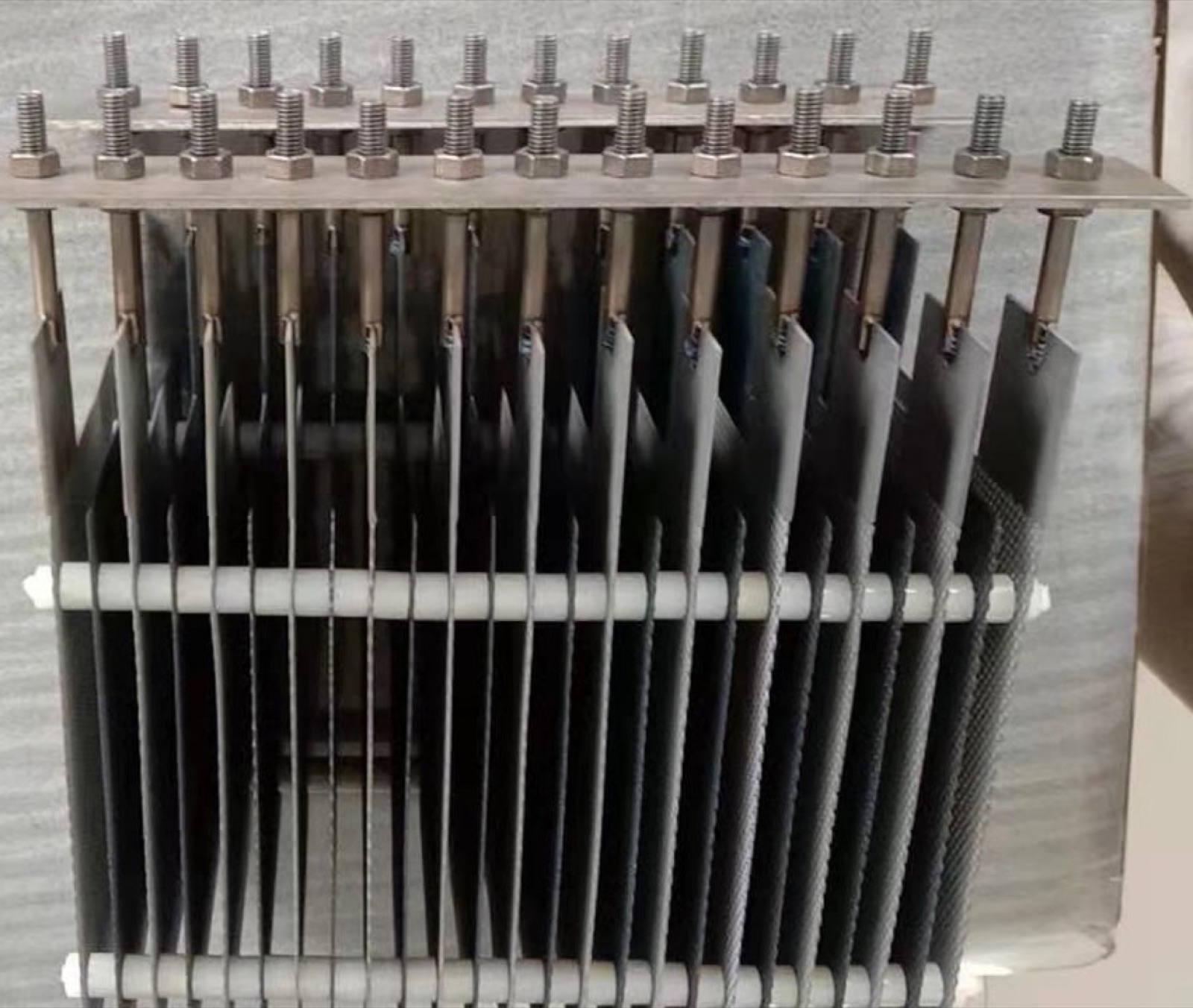
Titanium is a valve metal, so where a coating wears through the exposed base repassivates rather than corroding, and the same substrate can be stripped and recoated more than once. Stripping is done by molten salt, acid boiling or sulphate electrolysis, and the point at which recoating beats replacement is set by how much the rising cell voltage is costing. The decision to recoat is arithmetic rather than preference: recoating becomes the cheaper route once the loss from rising cell voltage exceeds what recoating costs.
A buyer who expects to recoat should say so at enquiry: it changes what the substrate drawing and the connection detail have to survive.
The substrate side of the order
ASTM B265 governs the titanium substrate that coated anodes are built on, and its interstitial caps are the working difference between substrate grades. Under ASTM B265, Grade 1, UNS R50250, limits oxygen to 0.18 percent and iron to 0.20 percent, giving the most formable base for mesh and deep-formed shapes; under the same specification Grade 2, UNS R50400, allows 0.25 percent oxygen and 0.30 percent iron against a 345 MPa minimum tensile strength. Because the coating does the electrochemical work, those composition caps are what an anode drawing should call out for the base material rather than a trade name.
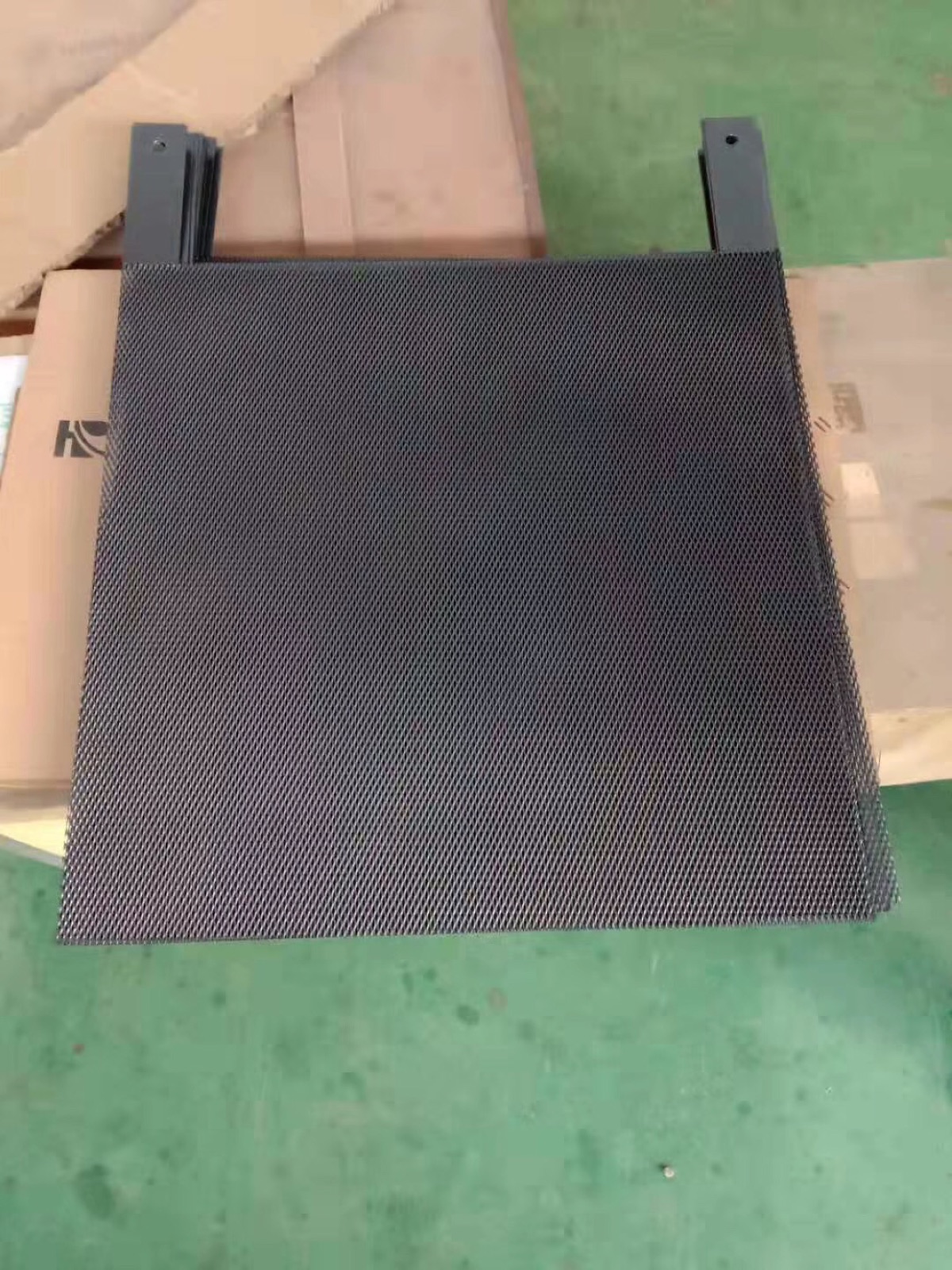
Form is a separate order line from coating. Anodes are produced as plate, rod, sheet, wire, mesh, tube, ring, strip and basket, and mesh is common in cell duty: it presents more active area for the same footprint and lets gas leave the surface. Which form suits a given cell is a design question the buyer answers, not one the coating family settles.
What a chlor-alkali anode enquiry has to state
The first five fields are the cell; the last two are the anode as a physical part. An enquiry missing the first five cannot be answered at all.
| Field | Why it decides the quotation |
|---|---|
| Cell type | Diaphragm, membrane or hypochlorite; it sets which envelope applies |
| Coating family | Ruthenium for chlorine evolution; the duty decides, not the price |
| Current density | Sits against the envelope above |
| Electrolyte and concentration | Ruthenium service is bounded below 20 percent hydrochloric |
| Operating temperature | Iridium and platinum systems carry temperature ceilings |
| Precious metal loading | Moves service life; not a supplier default |
| Substrate grade and form | Grade 1 or Grade 2, as plate, mesh, tube, ring, rod, wire or basket |
| Recoat intent | Changes the substrate and connection design |
Specification detail with sources
The coating figures on this page come from the Beiyu Titanium anode supply range: ruthenium based coatings below 2000 A/m² at 5 to 20 µm thickness and 5 to 20 g/m² loading, bounded below 20 percent hydrochloric acid; iridium based coatings below 2000 A/m² and below 70 °C at 10 to 45 g/m²; platinum plated coatings below 4000 A/m² and below 80 °C at 0.5 to 10 µm. Anodes are produced as plate, rod, sheet, wire, mesh, tube, ring, strip and basket, listed together rather than one form per duty, so this page does not pair a coating with a single shape.
The substrate composition caps are those of ASTM B265 for Grade 1, UNS R50250, and Grade 2, UNS R50400. The coating is described by its process, not by a material specification, which is why one anode order carries two acceptances. The titanium substrate gets an EN 10204 3.1 mill test certificate with heat number traceability; the coating is recorded against the process it was applied by.