
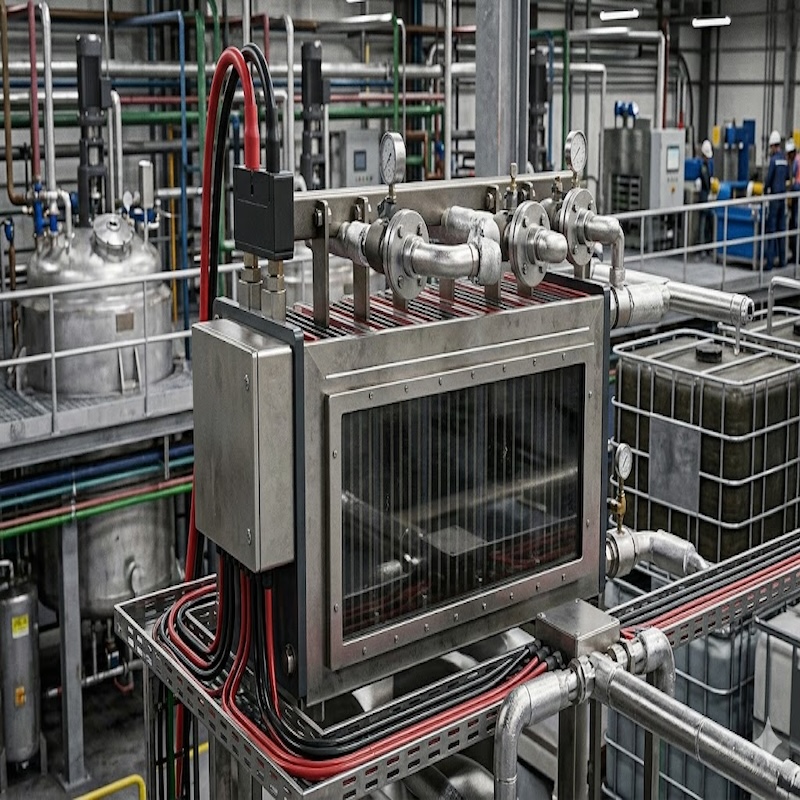
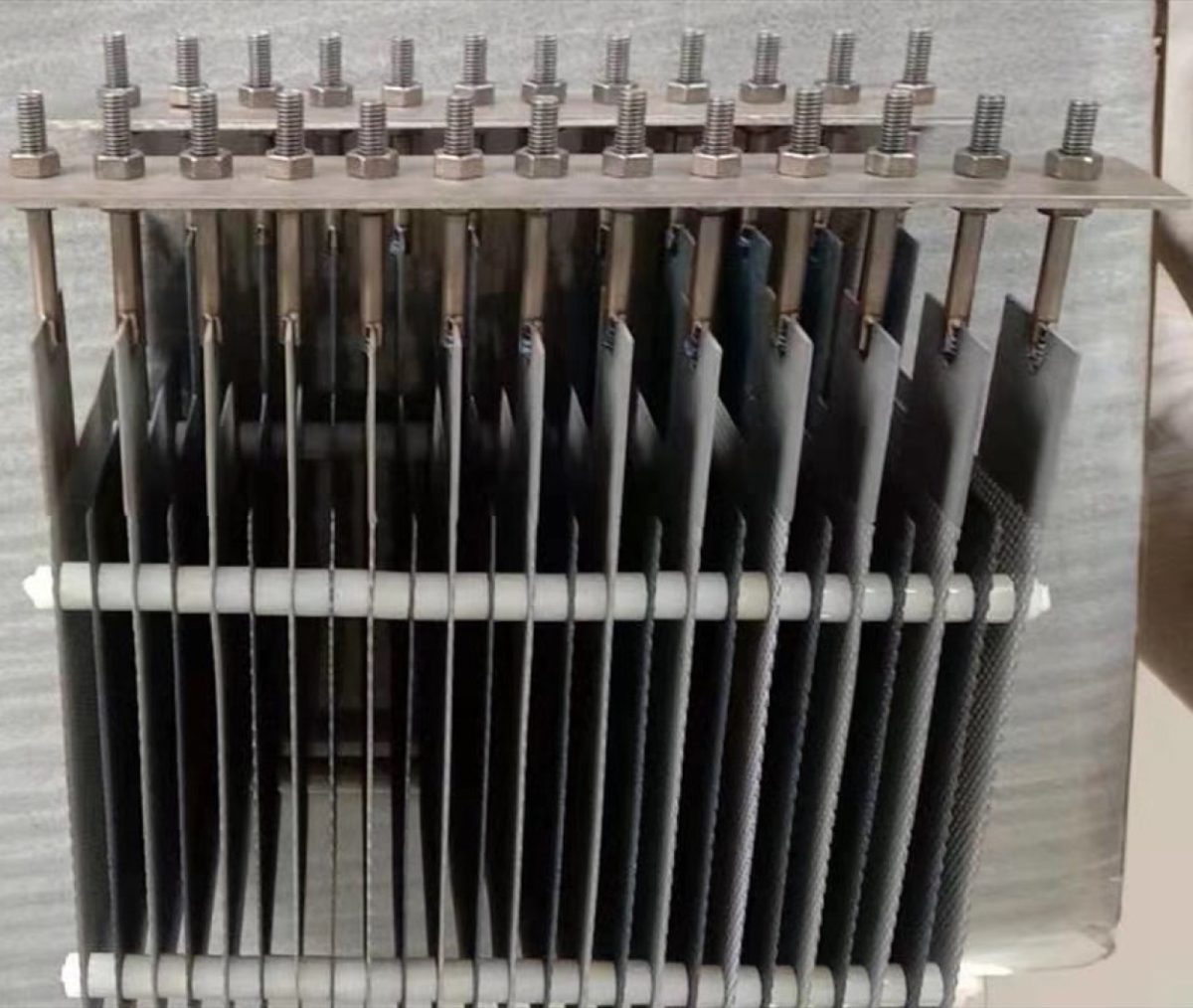

NaClO cellSodium hypochlorite generation
Active areaDefined from cell drawing
TerminalPower connection reviewed before quote
CoatingMMO type by operating medium
Acceptance is by the ordered specification. Values and coating notes are RFQ references only. Final chemistry, coating, dimensional inspection and documentation are confirmed by the purchase specification and mill or coating records.
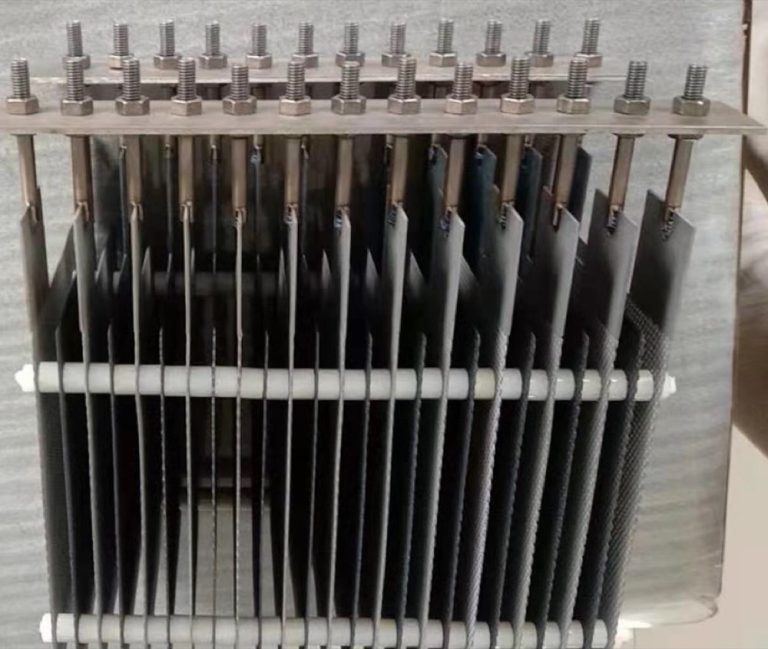
Sodium Hypochlorite Titanium Anode Group for Water Treatment Cells
A sodium hypochlorite titanium anode group is used inside electrolytic cells that generate sodium hypochlorite from salt solution. The titanium substrate provides corrosion resistance, while the active coating is selected according to the electrochemical reaction, chloride concentration, current density and expected operating conditions. Beiyu supplies drawing-based titanium anode groups for water-treatment equipment, disinfection systems and OEM electrochemical cells.
This product is not a standard shelf item. The final anode group depends on the cell structure, active area, electrode spacing, connection method and operating medium. Buyers should send a drawing or sample specification before quotation so the substrate form, coating requirement and documentation scope can be checked.
Grade and Standards
- Substrate grade: commercially pure titanium Grade 1 or Grade 2 is commonly used for anode plates, mesh, tube or fabricated frames.
- Coating systems: ruthenium-iridium, iridium-tantalum or other MMO coating systems may be considered according to the electrolyte and reaction requirement.
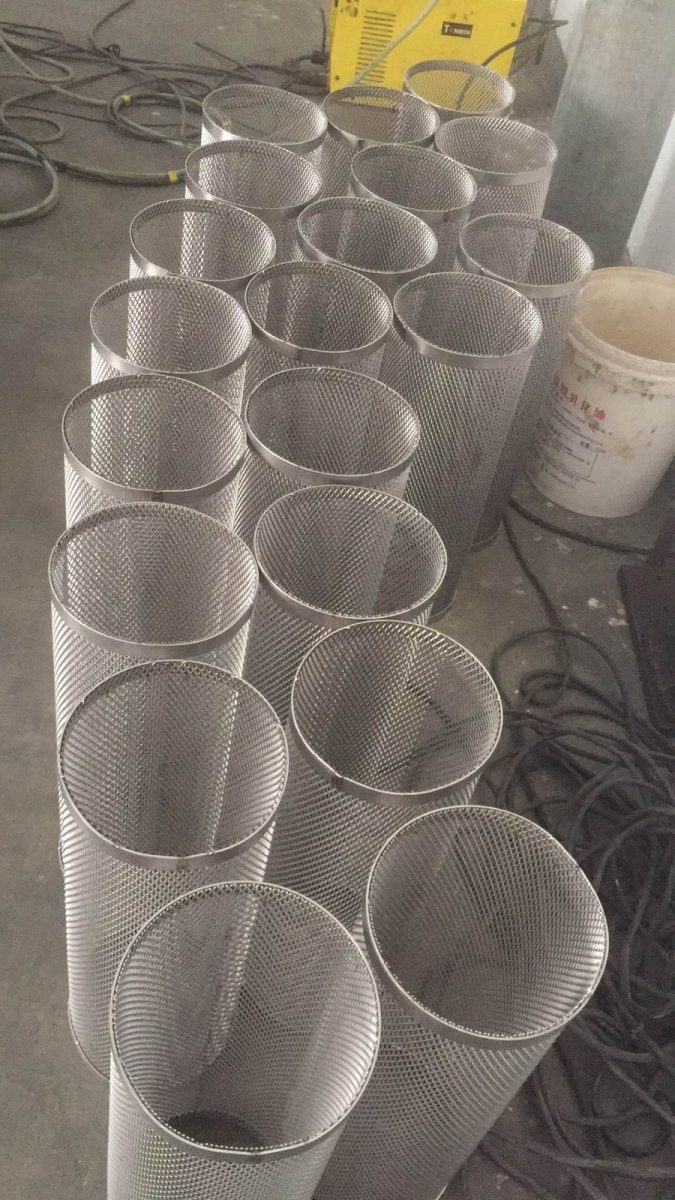
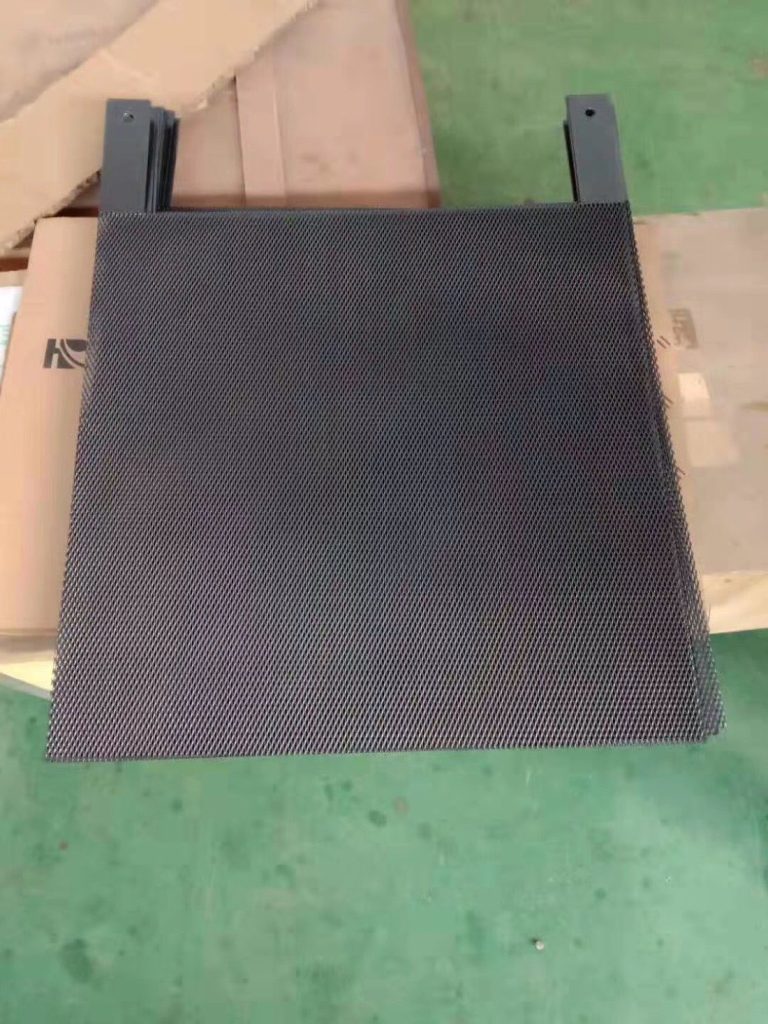
- Forms: plate, mesh, tube, rod, strip, frame assembly or drawing-based electrode group.
- Surface preparation: cleaning, pickling, blasting or other pretreatment can be discussed before coating.
Size, Tolerance and Surface
Define the anode group by cell drawing, including electrode size, spacing, active coating area, hole pattern, terminal connection, frame dimension, gasket interface and tolerance. Surface preparation and masked areas should be confirmed before coating.
Application Scope
Sodium hypochlorite anode groups are used in water disinfection equipment, swimming pool chlorination systems, brine electrolysis units, environmental treatment equipment and small on-site hypochlorite generation systems. The cell design must consider scale formation, chloride concentration, cleaning method and operating cycle, because these factors affect electrode maintenance and service performance.
Inspection and Documentation
Typical documentation may include substrate material certificate, dimensional inspection record, coating specification reference, packing list and export documents. If the project requires electrical testing, coating thickness information, third-party inspection or a specific report format, this should be stated before order confirmation.
Packaging and Export Information
Coated titanium anodes should be packed to avoid abrasion, bending and contact damage during shipment. Small electrode plates can be separated with protective material, while larger electrode groups may need rigid supports or wooden-case packing. Marking can be arranged by part number, drawing number, coating type or heat number when required.
RFQ Information Needed
- Cell drawing, electrode layout and connection detail
- Titanium substrate grade, form and dimensions
- Coating type, active area and current density if specified
- Operating medium, chloride concentration, temperature and cleaning method
- Quantity, inspection scope, documentation and packing requirements
FAQ
Can Beiyu quote a complete anode group from a drawing?
Yes. Send the drawing, active area, coating requirement and connection detail so the quotation can be checked against the cell design.
Which coating should be used for sodium hypochlorite generation?
The coating depends on electrolyte condition, current density and equipment design. Ruthenium-iridium and other MMO coatings are common options for chlorine evolution applications.
Can the anode group be packed for export?
Yes. Packing can be arranged to protect coated surfaces, connection areas and machined edges during international shipment.
Procurement Review Before Production
Before production starts, the anode drawing should be checked against the cell housing, gasket position, cable or busbar connection, spacing between electrodes and cleaning access. If the equipment will operate in hard water or variable brine concentration, the buyer should also describe the scaling tendency and maintenance method. These details help confirm whether the anode group should be supplied as individual plates, a welded frame, a replaceable module or a complete electrode assembly.
For repeat OEM orders, part numbers, coating references and packing labels can be kept consistent with the buyer's equipment drawings. For prototype orders, Beiyu can quote according to the first drawing revision and update the commercial offer after the final active area, connection detail and inspection scope are confirmed.
Common Applications
Sodium hypochlorite generator cells
Water disinfection equipment
Seawater and brine electrolysis
Replacement anode group assemblies
Specification detail with sources
An anode group is an assembly, and assemblies are quoted from a drawing rather than from a material line. The parts that have to be described separately are the anode elements with their substrate and coating, the cathode elements, the spacing and the fixing arrangement that holds the gap, the current connection and the sealing where conductors leave the wetted zone. An enquiry that gives only an overall size and a current rating leaves every one of those to the supplier's standard build.
The metal underneath the assembly still carries its own acceptance, and it is traced back further than most buyers expect. Composition is reported from the ingot, and the bar and billet specification ASTM B348 requires samples to be taken and reported from both the top and the bottom of the ingot rather than from one location (ASTM B348, chemical requirements table notes). That specification covers bar and billet rather than assembled electrodes, so it is not the acceptance basis for a group, but it shows what a heat number on an element certificate is standing for: a documented melt, sampled at more than one point. Beiyu Titanium reviews the drawing, the element specification, the connection arrangement and the inspection scope before quotation, and issues an EN 10204 3.1 mill test certificate with heat number traceability for the titanium parts.
What the cell reaction decides about the order
A hypochlorite generator makes its own disinfectant from brine, so the anode is sized against the reaction rather than against a tank volume. The main reaction is sodium chloride and water producing sodium hypochlorite and hydrogen. At the anode chloride is oxidised to chlorine, at the cathode water is reduced to hydrogen and hydroxide, and the chlorine then reacts with the caustic in solution to give the hypochlorite that leaves the cell.
| What the reaction produces | What it means for the order |
|---|---|
| Chlorine evolved at the anode | The coating family is fixed: this is chlorine evolution duty, so a ruthenium based system rather than an oxygen evolution one |
| Hydrogen evolved at the cathode | Gas has to leave the cell, so electrode spacing and the group arrangement are part of the enquiry rather than details |
| Hypochlorite formed in solution | Brine strength and flow set the concentration reached, so the electrolyte has to be stated with the current |
Salt chlorination systems run at a few thousand parts per million of salt, commonly around 3000 ppm, which is roughly 3 grams per litre and about a tenth of the salinity of seawater. That is industry practice rather than a Beiyu Titanium specification, and the exact set point comes from the cell manufacturer. It still belongs on the enquiry, because the operating point moves with the concentration and the cell duty the anode has to match is set by it.
The ruthenium coating on this duty is quoted below 2000 A/m² with a precious metal loading of 5 to 20 g/m² and a coating thickness of 5 to 20 µm. Those are Beiyu Titanium supply ranges for this duty, confirmed at quotation for the ordered combination. The substrate is certified on its own terms, to EN 10204 3.1 with heat number traceability.
Compare titanium anode products
Titanium anode category| Product | Material | Reference | Best for | Link |
|---|---|---|---|---|
| MMO Coated Titanium Anodes | Grade 1 / Grade 2 titanium substrate | Coating specification | General MMO anode requirements | View |
| Ru-Ir Titanium Anodes | Ru-Ir MMO coating | Drawing specification | Chlorine evolution and NaClO systems | View |
| Platinum Plated Titanium Anode | Pt plated titanium | Drawing specification | Electrochemical and water-treatment cells | View |
| Sodium Hypochlorite Anode Group | MMO titanium assembly | Cell drawing | NaClO generator replacement groups | Current page |
| Titanium Electrodes | MMO / Pt coating | Drawing specification | Custom electrode assemblies | View |
Related titanium products
Titanium anode category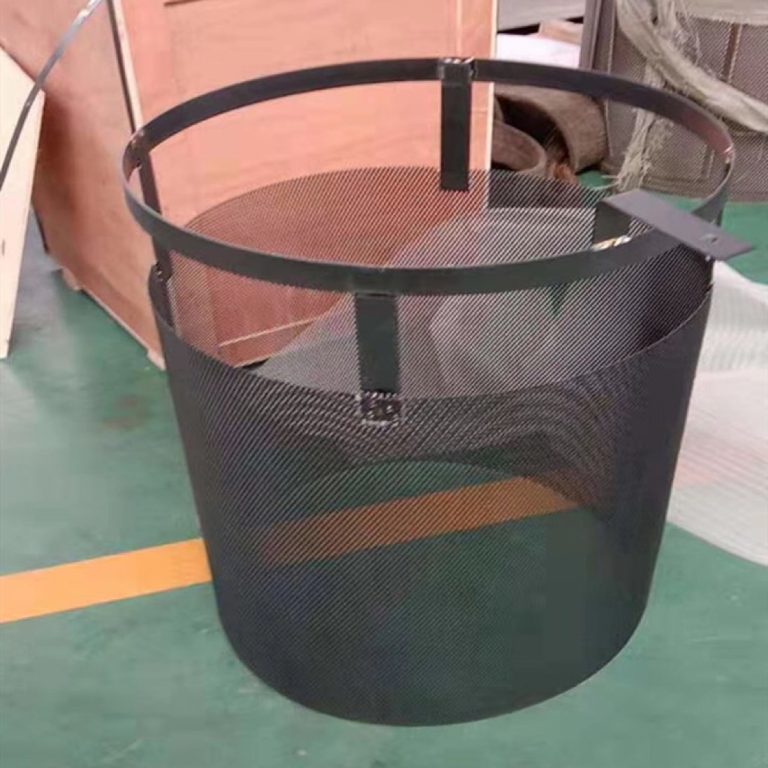
For a view of who else publishes this material and what each one states, see Sodium Hypochlorite Titanium Anode Suppliers: Five Company Pages Compared.
Request a quote for Sodium Hypochlorite Titanium Anode Group
Send drawing, grade or coating requirement, dimensions, operating data, quantity and certificate needs. Beiyu replies with quotation, lead time and documentation scope.