
The melting point of titanium is about 1668 °C for the unalloyed metal, the figure given in ASM Handbook data. By grade, the RMI Titanium Company Titanium Alloy Guide puts the commercial grades at approximately 1650 to 1700 °C, with Grade 2 at 1660 °C and Grade 5 at 1650 °C. The Beiyu Titanium Grade 2 data sheet gives about 1660 °C and notes that sources range from 1649 to 1671 °C. The sources are shown side by side below rather than reconciled into one number.
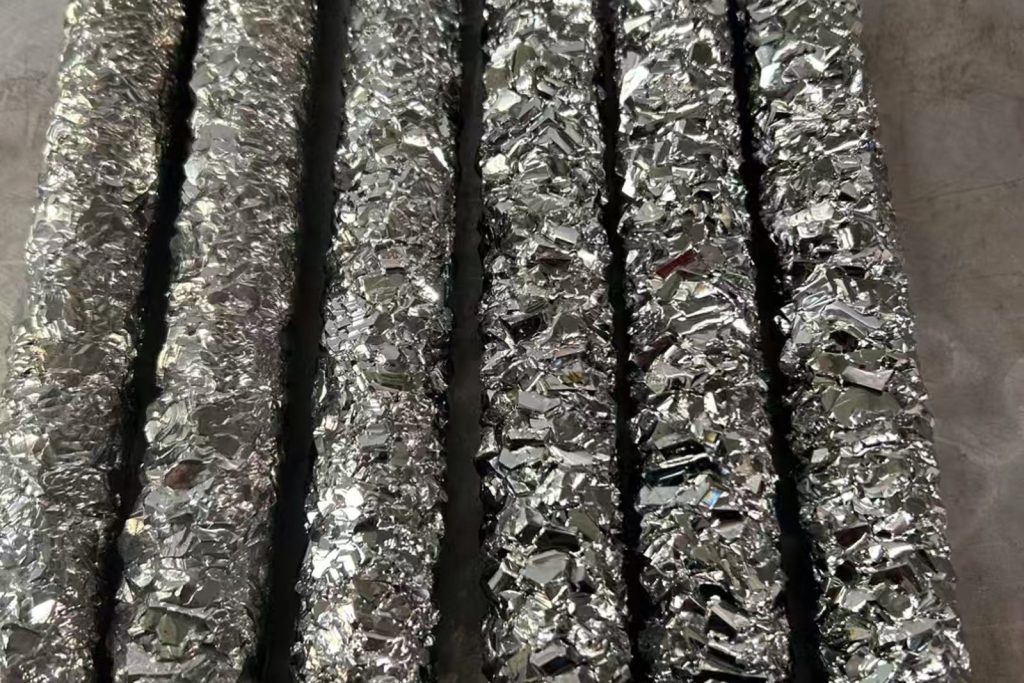
Titanium melting point by grade
All grade values in this table are taken from a single publication, the grade-by-grade data sheets of the RMI Titanium Alloy Guide (January 2000), and that guide calls them approximate. The same data sheets give each grade’s nominal beta transus, the temperature above which the alloy is entirely beta phase on heating, as the RMI guide defines it, and it is listed here because forging and heat treatment are planned against it.
| Grade | UNS | Melting point, approx. (RMI) | Nominal beta transus (RMI) |
|---|---|---|---|
| Grade 1 | R50250 | 1670 °C (3040 °F) | 890 °C (1630 °F) |
| Grade 2 | R50400 | 1660 °C (3020 °F) | 913 °C (1675 °F) |
| Grade 3 | R50550 | 1660 °C (3020 °F) | 920 °C (1690 °F) |
| Grade 4 | R50700 | 1660 °C (3020 °F) | 949 °C (1740 °F) |
| Grade 7 | R52400 | 1660 °C (3020 °F) | 913 °C (1675 °F) |
| Grade 12 | R53400 | 1660 °C (3020 °F) | 890 °C (1634 °F) |
| Grade 9 | R56320 | 1700 °C (3100 °F) | 935 °C (1715 °F) |
| Grade 23 | R56407 | 1650 °C (3000 °F) | 982 °C (1800 °F) |
| Grade 5 | R56400 | 1650 °C (3000 °F) | 996 °C (1825 °F) |
UNS numbers are shown for cross-reference only; ASTM B348 identifies each material by its grade number alone. For Grade 23 the table carries R56407, the number used alongside the ASTM B grades, while ASTM F136 carries R56401 for the implant version of the same alloy.
Three sources side by side
| Source | What it gives | Figure |
|---|---|---|
| ASM Handbook data | Unalloyed titanium, one value | 1668 °C |
| RMI Titanium Alloy Guide | One approximate value per grade | 1650 to 1700 °C across the grades above |
| Beiyu Titanium Grade 2 data sheet | One value for Grade 2, with the spread between sources noted | About 1660 °C, with a noted source spread of 1649 to 1671 °C |
The figures are close, and none of them is a specification value: ASTM B265 and ASTM B348 control chemistry, mechanical properties and dimensions, and neither sets a melting point, so it is not a value certified under either specification unless the order adds it. A design that depends on the exact figure should name the source it uses.
Beta transus: the temperature that matters in processing
For forging and heat treatment the working reference is the beta transus rather than the melting point, and for Grade 5 the published figures differ by source. RMI gives 996 °C; ASM Handbook data, quoted on the alpha case page, place it near 995 °C, the figure the AMS 4928 bar guide also uses; and the ASTM B381 forgings guide notes that sources commonly range from about 980 to 1010 °C. The alpha case page also covers the oxygen pickup that is fastest in the hot-working range just below the transus.
Titanium against other metals
| Metal | Melting point | Figure used |
|---|---|---|
| Aluminium, pure | 660 °C | ASM Handbook, as quoted on titanium vs aluminum |
| Titanium, unalloyed | 1668 °C | ASM Handbook data |
| Niobium | 2468 °C | Beiyu Titanium reference value (ASM Handbook data) |
| Molybdenum | 2610 °C | Beiyu Titanium reference value (ASM Handbook data) |
| Tantalum | 2996 °C | Beiyu Titanium reference value (ASM Handbook data) |
| Tungsten | 3410 °C | Beiyu Titanium reference value (ASM Handbook data) |
Where service temperature rather than weight or corrosion decides the material, the refractory metals sit well above titanium; they are supplied as molybdenum bar and rod, tantalum plate and sheet and other forms under refractory metals.
Common questions
What is the melting point of Grade 5 titanium? Approximately 1650 °C in the RMI guide, with a nominal beta transus of 996 °C.
What is the melting point of Grade 2 titanium? Approximately 1660 °C in the RMI guide; the Grade 2 data sheet gives about 1660 °C, noting a source spread of 1649 to 1671 °C.
Is titanium heavy? Density by grade and the weight of round bar per metre are tabulated on a separate page.
Is titanium conductive? Resistivity and thermal conductivity by grade are on is titanium conductive.
Specification detail with sources
The per-grade melting points and beta transus values draw on the RMI Titanium Company Titanium Alloy Guide (January 2000), where the melting point is listed as approximate: 1670 °C for Grade 1, 1660 °C for Grades 2, 3, 4, 7 and 12, 1700 °C for Grade 9 and 1650 °C for Grades 5 and 23. The 1668 °C figure for unalloyed titanium is ASM Handbook data, and the 660 °C figure for pure aluminium is from ASM Handbook Volume 2 as quoted on the titanium vs aluminum page. The Beiyu Titanium Grade 2 data sheet gives about 1660 °C and notes a spread of 1649 to 1671 °C between sources. The niobium, molybdenum, tantalum and tungsten figures are the reference values used on the Beiyu Titanium refractory metal pages, aligned to ASM Handbook data. ASTM B265 and ASTM B348 contain no melting point requirement.
What to put on the enquiry
A melting point or beta transus figure is a reference for design and processing, not an acceptance item, so the enquiry names the grade, the specification and the delivery condition. Beiyu Titanium supplies titanium in Grade 1, 2, 3, 4, 5, 7, 9, 12 and 23 as bar, plate, sheet, tube and forgings to ASTM and AMS specifications, with an EN 10204 3.1 mill test certificate by order scope.