
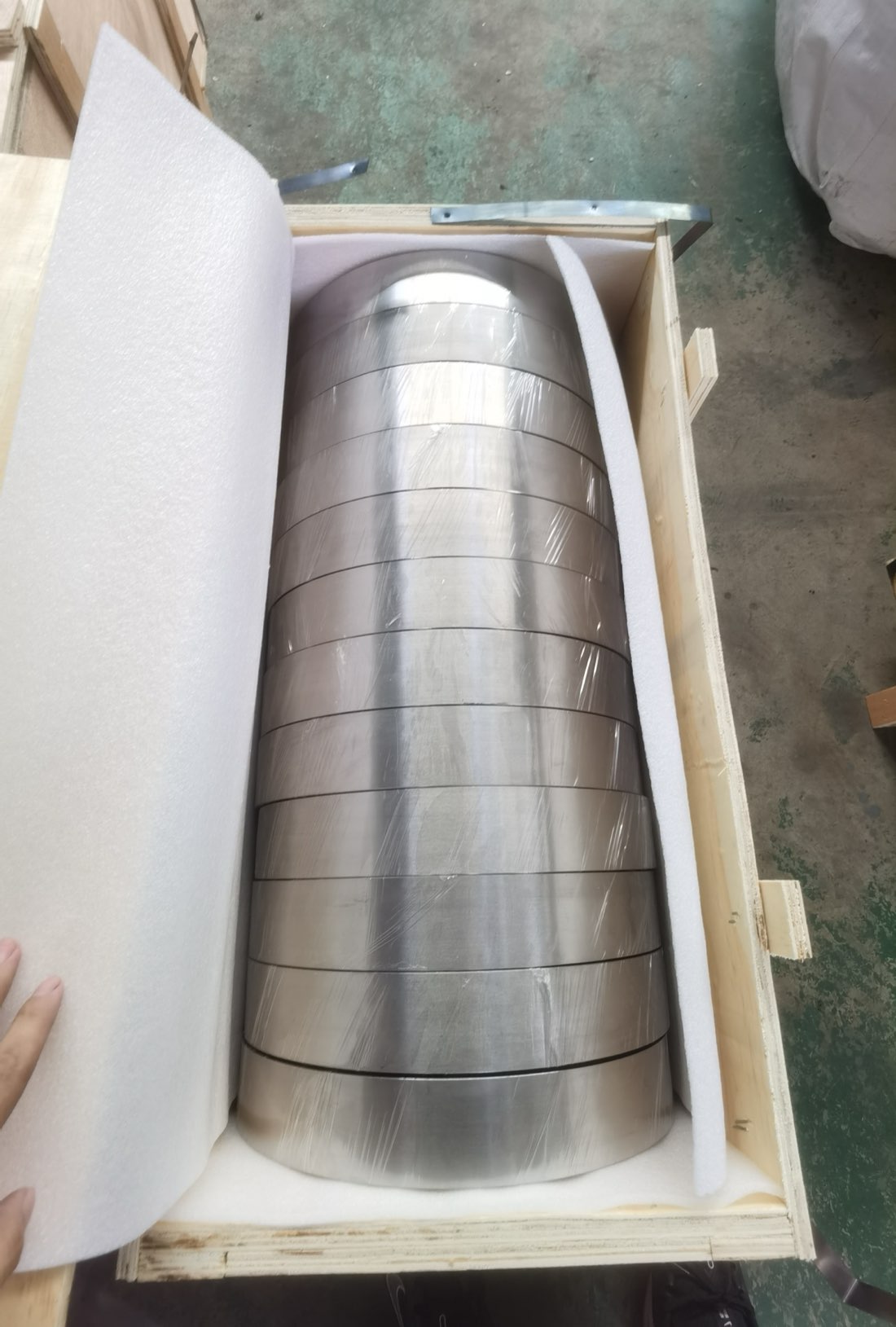
ASTM B381 is a material specification for titanium and titanium-alloy forgings. It defines covered grades and their chemical and mechanical requirements for products such as discs, rings, blocks and drawing-based forged parts. A complete forging RFQ also needs the grade, condition, drawing, dimensions, machining allowance, inspection scope and document requirements.
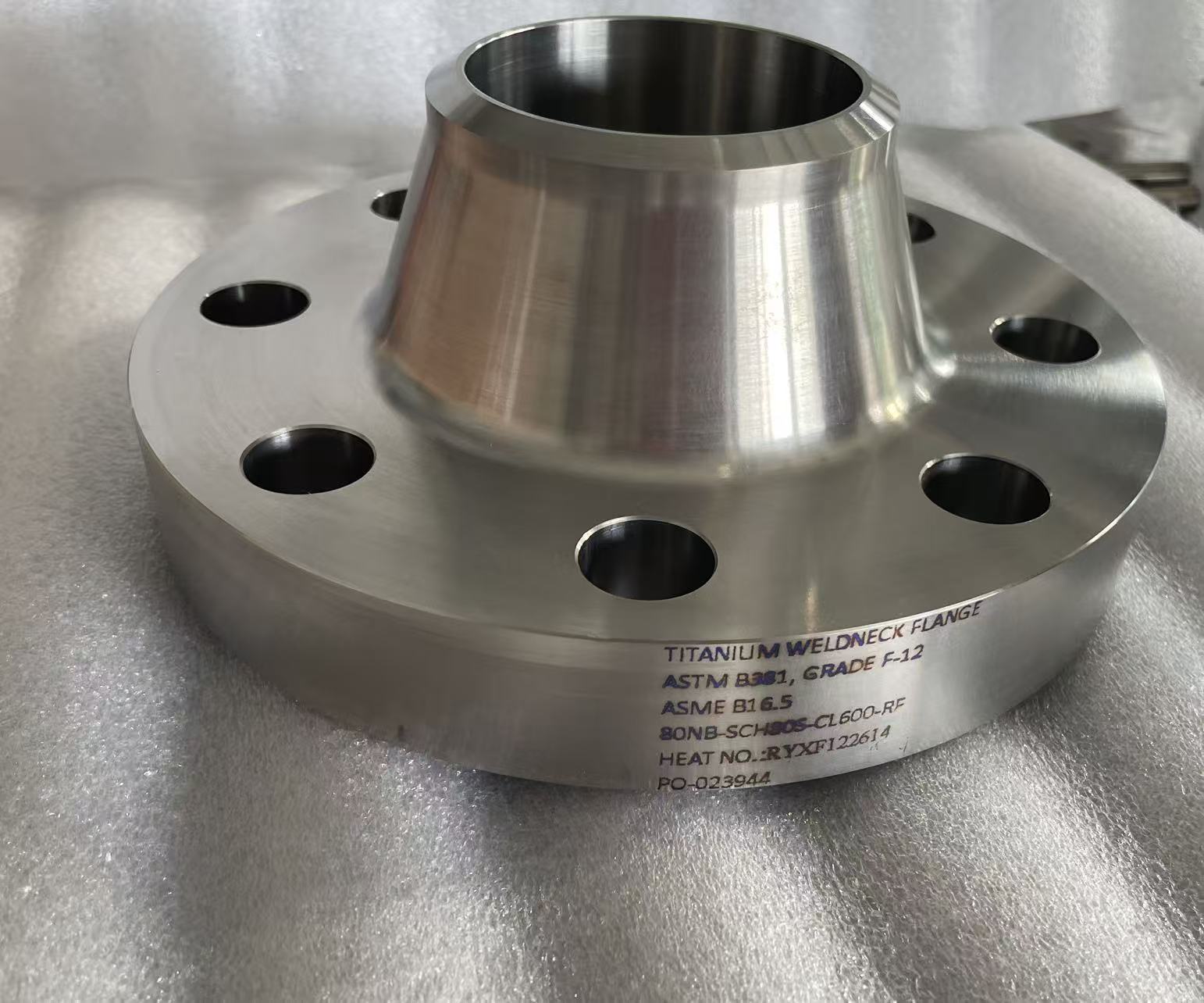
What ASTM B381 covers
Beiyu Titanium reviews ASTM B381 forging RFQs for selected grades and drawing-based forms. Chemistry, mechanical-property records, EN 10204 3.1 documentation, heat or lot traceability and any additional inspection are supplied to the scope agreed in the quotation and purchase order.
ASTM B381 applies to titanium and titanium-alloy forgings. It is not the governing specification for every titanium product form: bar and billet are covered by ASTM B348, sheet and plate by ASTM B265, and welding fittings by ASTM B363. The purchase order must identify the standard that applies to each delivered form.
A forging RFQ should state the B381 grade, condition, drawing with forged and finished dimensions, machining allowance, mechanical-test requirements, specimen location where relevant, and the required inspection and certificate package. Nondestructive examinations such as ultrasonic, radiographic or surface inspection are purchaser-specified when required.
For the two drawing questions that need more detail, use the forged-ring versus rolled-ring route guide and the forged-disc thickness and inspection guide.
To compare company pages before sending the same drawing, use the titanium forging suppliers list; its order follows a frozen result-page rule rather than a quality score.
Common ASTM B381 grades
Grade is selected by the corrosion environment, strength requirement, design code and inspection plan. The table is a screening reference; the current standard revision and purchase order govern.
| Grade | UNS | Minimum tensile (MPa) | Minimum yield (MPa) | Selection context |
|---|---|---|---|---|
| F-2 | R50400 | 345 | 275 | Corrosion-service flanges, valve bodies and fittings |
| F-5 | R56400 | 895 | 828 | Higher-strength discs, rings and structural forgings |
| F-7 | R52400 | 345 | 275 | Selected reducing-acid and crevice-sensitive services |
| F-12 | R53400 | 483 | 345 | Selected hot-chloride and brine process equipment |
| F-23 | R56407 | 828 | 759 | ELI forgings where the engineering specification calls for B381 F-23 |
The values shown are ASTM B381 minimums for the listed grades in the annealed condition. Verify the current revision, units, size or orientation provisions and all applicable supplementary requirements before placing an order. Test results and traceability documents are supplied to the ordered inspection and certificate scope.
ASTM B381 vs ASTM B363: forgings and welding fittings
ASTM B381 covers titanium forgings. ASTM B363 covers factory-made seamless and welded titanium welding fittings such as elbows, returns, caps, tees, reducers and lap-joint stub ends. A forged flange may be specified to B381 plus the applicable dimensional or design standard, while a welding elbow may be ordered to B363.
Both standards reference titanium grades and UNS identities, but their product forms, designations, manufacturing routes, tests and acceptance requirements are not interchangeable. Apply each standard only to the delivered form within its scope.
If a bill of materials includes both a forged flange and a welding elbow, list the governing material and dimensional requirements for each line item rather than using one standard for the entire assembly.
What does the F designation mean in ASTM B381?
The F prefix is the forging grade designation used inside ASTM B381, and the number matches the familiar titanium grade. F-1 is unalloyed titanium (UNS R50250), F-2 is unalloyed titanium (R50400), F-3 is unalloyed titanium (R50550), F-5 is the Ti-6Al-4V alloy (R56400), F-7 (R52400) and F-11 (R52250) are unalloyed titanium with 0.12 to 0.25 percent palladium, and F-12 is the 0.3 percent molybdenum, 0.8 percent nickel alloy (R53400). The standard runs from F-1 to F-38 and covers 39 grades in total, including the H suffix variants such as F-2H and F-7H. As a worked example, F-2 forgings with a section area up to 3 in.² (1935 mm²) are required to meet a minimum tensile strength of 50 ksi (345 MPa), a minimum yield strength of 40 ksi (275 MPa), 20 percent elongation and 30 percent reduction of area; for larger sections, the mechanical properties are agreed between the manufacturer and the purchaser.
One point catches buyers out. The ELI forging grade F-23 carries UNS R56407 under ASTM B381, and the industrial mill-product standards ASTM B348 for bar, B265 for plate and B863 for wire use the same number for Grade 23. Only the surgical implant specification ASTM F136 designates its Ti-6Al-4V ELI as UNS R56401. Cite the standard and the grade designation together on the purchase order so the mill certificate reports the number the drawing expects.
What condition and testing does ASTM B381 require?
ASTM B381 covers forgings supplied annealed, and for certain grades the property tables also list other supply conditions such as transformed-beta and solution-treated-and-aged material, so the purchase order should name the condition alongside the grade. Mechanical-property acceptance rests on tensile testing, reporting tensile strength, yield strength, elongation and reduction of area against the ordered grade and section size; hardness testing is performed where the order calls for it rather than as a default requirement. Nondestructive examination such as ultrasonic, radiographic or surface inspection is likewise applied where the purchaser specifies it rather than automatically on every order, so the required method, coverage and acceptance criteria belong on the purchase order. Where a forging is machined from the as-forged shape, state the machining allowance and the finished dimensions as well, since they decide the input weight and the practical forging route.
| Requirement | What the guide states about ASTM B381 |
|---|---|
| Supply condition | The purchase order should name the condition alongside the grade |
| Mechanical acceptance | Rests on tensile testing, reporting tensile strength, yield strength, elongation and reduction of area against the ordered grade and section size |
| Hardness testing | Performed where the order calls for it rather than as a default requirement |
| Nondestructive examination | Ultrasonic, radiographic or surface inspection is applied where the purchaser specifies it rather than automatically on every order, so the required method, coverage and acceptance criteria belong on the purchase order |
| Machining allowance | Where a forging is machined from the as-forged shape, state the machining allowance and the finished dimensions as well, since they decide the input weight and the practical forging route |
How titanium forgings are made: open die, closed die and ring rolling
Three routes cover most titanium forging orders. Geometry, section size, required grain-flow orientation, tolerance, quantity, tooling budget and inspection requirements all influence the route.
| Route | Typical forms | Tooling | Where it fits |
|---|---|---|---|
| Open die, also called free forging | Discs, blocks, shafts, sleeves, simple rings, stepped bars | Standard flat, V or swage dies; special tools may still be required, but there is no fully enclosed part-specific die set | Low quantities, large sections, prototypes and one-off replacements. Dimensions come out generous and the part is machined to size. |
| Closed die, also called impression die | Near-net-shape parts, flanged and contoured components | Part-specific die set, a real up-front cost | Repeat quantities where tooling can be amortized. Compared with open die, impression-die forging can provide closer as-forged dimensions and a smaller finish allowance; the economic benefit depends on part design, run size and downstream machining. |
| Ring rolling | Seamless rolled rings | Standard rolls for plain rectangular sections; shaped rolls and preform dies may be required for contoured rings | Rings where a continuous circumferential grain flow is wanted rather than a ring cut from plate or bored from a solid block. |
The practical trade-off is among tooling, setup, material yield, machining and quantity. Open die usually has low special-tooling cost and suits low quantities or sections outside impression-die limits, but its piece price is not inherently higher in every case. Impression dies add significant tooling cost; at sufficient repeat volume, closer-to-shape forging may reduce finish allowance and machining enough to lower total unit cost. Ring rolling produces a seamless ring and generally develops circumferential grain flow, but profiled rings may require dedicated tooling. State the intended route on the enquiry if the design requires one; where it is open, state the quantity and the finished dimensions and the route can be proposed against them.
Two constraints specific to titanium forging
Two titanium-specific process controls should be addressed during technical review. The purchaser normally specifies the required grade, condition, properties, dimensions, surface condition and inspection requirements; the producer controls the qualified forging temperature unless the purchase specification states otherwise.
The forging temperature is set against the beta transus. Every titanium alloy has a temperature above which the structure transforms fully to beta, and whether the material is worked above or below it changes the final microstructure and therefore the properties. For Ti-6Al-4V, published figures for the beta transus vary between sources, commonly in the range of about 980 to 1010 °C. It shifts with heat chemistry and with the method used to measure it, so it is a metallurgical property of the heat rather than a fixed process setpoint. ASTM B381 lists more than one supply condition for the corresponding grades, annealed being the common default, with transformed-beta and solution-treated-and-aged material appearing in the property tables for those grades. The condition therefore has to be named alongside the grade, and the current revision of the standard governs which conditions are available for the grade ordered.
Hot working in air produces alpha case, and it has to come off. Oxygen, with possible nitrogen pickup, diffuses into the surface and stabilizes a hard, brittle alpha-rich layer beneath the oxide scale. Residual alpha case can reduce fatigue performance and promote surface crack initiation. Removal may use machining and/or a qualified chemical-milling or acid-etching process; ordinary descaling alone is not proof of removal. The stock and dimensional allowance must cover the selected removal method and the verified affected depth, which is why stating the finished dimensions and the required surface condition matters on the enquiry. The mechanism and how to specify its removal are covered in our alpha case guide.
Beyond grade, standard, condition and finished dimensions with allowance, three further lines are worth stating when the design depends on them: the required grain-flow direction, any minimum forging reduction, and the nondestructive examination method with its acceptance level. ASTM B381 does not automatically include ultrasonic examination, so an NDE requirement has to be written onto the order rather than assumed. Beiyu Titanium supplies titanium forgings to ASTM B381 with EN 10204 3.1 mill test certificates traceable to the production heat, and reviews the drawing, condition and inspection scope before quotation.
Forging forms and how to specify them
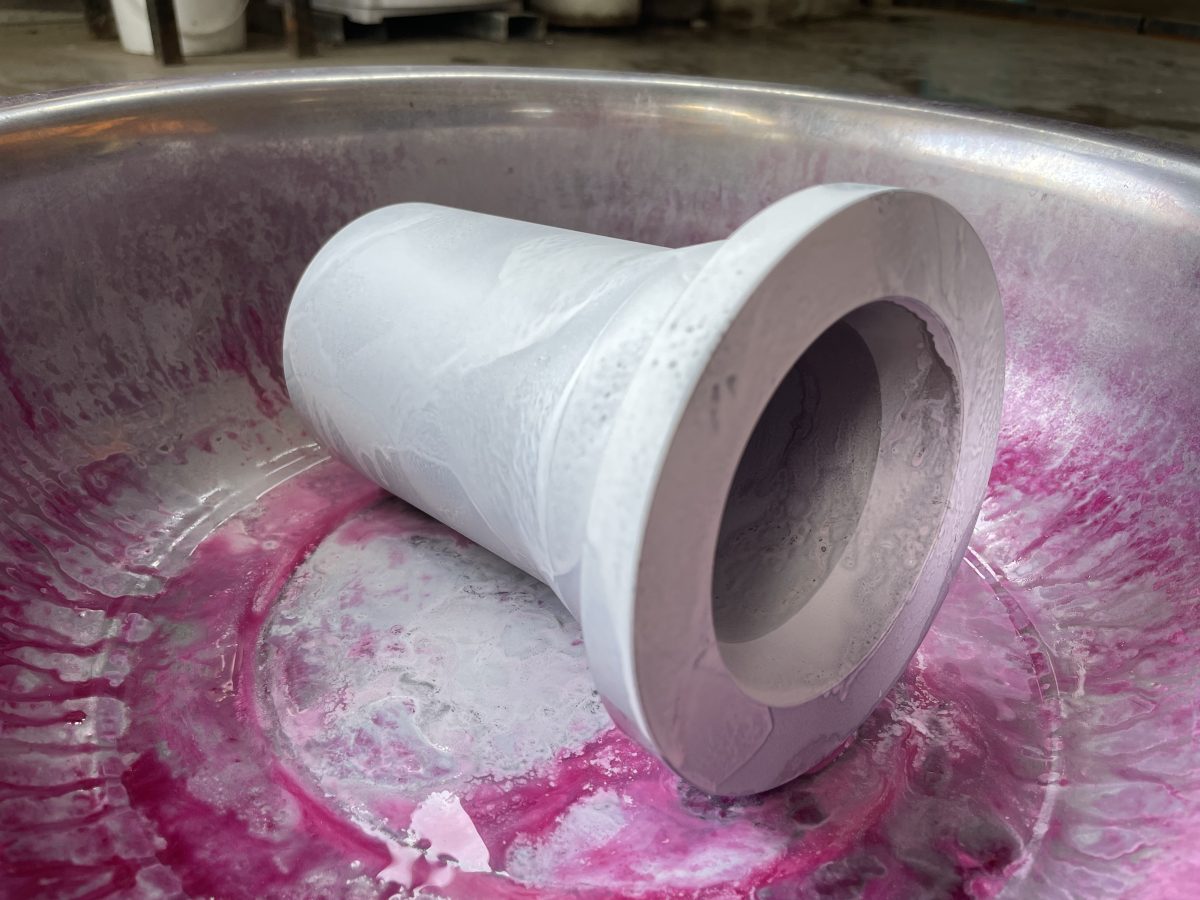
Common forms include discs, rings, blocks, sleeves, valve bodies, titanium flanges and drawing-based custom forgings. Because geometry and inspection are order-specific, the RFQ should include:
- Grade, condition and applicable standard revision.
- Drawing with forged and finished dimensions, tolerance and machining allowance.
- Required mechanical tests and specimen location or orientation.
- Nondestructive examination method, acceptance criteria and reporting requirement, if required.
- Heat or lot traceability, marking, EN 10204 3.1 MTC and third-party inspection requirements, when ordered.
| Field to state on a forging order | Detail |
|---|---|
| Grade and condition | Grade, condition and the applicable standard revision |
| Drawing | Forged and finished dimensions, tolerance and machining allowance |
| Mechanical tests | Required tests and the specimen location or orientation |
| Nondestructive examination | Method, acceptance criteria and reporting requirement, if required |
| Traceability and documents | Heat or lot traceability, marking, EN 10204 3.1 mill test certificate and third-party inspection requirements, when ordered |
ASTM B381 vs ASTM B348
ASTM B381 applies to forgings; ASTM B348 applies to titanium bar and billet. Do not assume that a B348 bar certificate alone demonstrates that a finished forging meets B381. The purchase order should define the delivered forging specification, grade, condition, tests and documents. If a separate input-material specification such as AMS 4928 is required, state it explicitly and confirm how it relates to the finished-forging acceptance plan.
| Point | What the guide states |
|---|---|
| Scope of ASTM B381 | Applies to forgings |
| Scope of ASTM B348 | Applies to titanium bar and billet |
| The error to avoid | Do not assume that a B348 bar certificate alone demonstrates that a finished forging meets B381 |
| What the purchase order should define | The delivered forging specification, grade, condition, tests and documents |
| Separate input-material specification | If one such as AMS 4928 is required, state it explicitly and confirm how it relates to the finished-forging acceptance plan |
Frequently asked questions
What is the difference between ASTM B381 and ASTM B348?
ASTM B381 is for titanium forgings; ASTM B348 is for titanium bar and billet. The delivered product form and purchase-order acceptance requirements determine which standard applies.
Which grades are common for titanium forgings?
Frequently requested grades include F-2, F-5, F-7, F-12 and F-23, but B381 covers a wider set. Select the grade from the corrosion, strength, temperature and code requirements.
What tests and documents come with B381 forgings?
Chemistry and mechanical-property records required by the ordered standard are combined with the purchaser-specified traceability, certificate and additional inspection scope. UT, radiography, surface inspection, EN 10204 3.1 or third-party inspection must be stated when required.
Is B381 F-23 the same UNS as ASTM F136?
No. ASTM B381 Grade F-23 is UNS R56407. ASTM F136 identifies wrought Ti-6Al-4V ELI material for surgical implant manufacture as UNS R56401. Use the standard and UNS specified by the engineering and regulatory requirements.
What should a forging RFQ include?
Grade, condition, drawing, forged and finished dimensions, machining allowance, quantity, tests, NDT acceptance criteria, marking, packing and certificate scope.
Forging grade selection guide
Use the titanium forging grade selection guide when ASTM B381 inquiries need a practical comparison of Grade 2, Grade 5, Grade 7, Grade 12 and Grade 23 for forged discs, rings, blocks, valve bodies and machined blanks.