
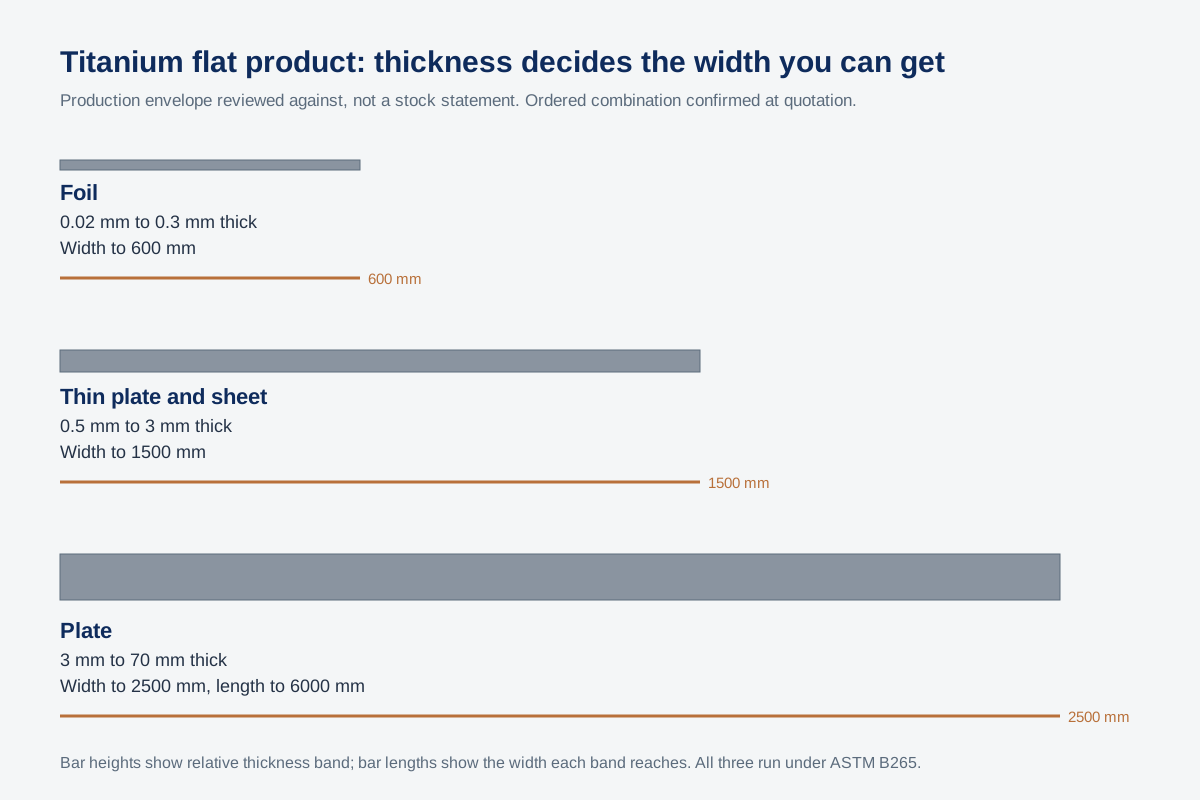
Sheet and plate are the same standard but not the same order line
ASTM B265 covers strip, sheet and plate together, so naming the standard does not tell the mill which one you want. The thickness does. What follows from it is the width and length you can get, the flatness you can expect and the surface the material arrives with.
| What the thickness decides |
|---|
| Which thickness band the item falls in |
| The widths and lengths available in that band |
| Whether the item is described as foil, sheet or plate |
The thickness bands Beiyu reviews against
| Form | Range |
|---|---|
| Foil | 0.02 mm to 0.3 mm thick, width to 600 mm |
| Thin plate and sheet | 0.5 mm to 3 mm thick, width to 1500 mm |
| Plate | 3 mm to 70 mm thick, width to 2500 mm, length to 6000 mm |
The envelope is a production capability, not a stock statement. Not every combination of grade, thickness, width and condition exists across the whole range, and the ordered combination is confirmed at quotation.
Width is the constraint buyers forget
The available width narrows as the material gets thinner. A part nested at one thickness may not nest at another, which is a cost question before it is a technical one.
| Thickness | Width available |
|---|---|
| Foil range | To 600 mm |
| Thin sheet range | To 1500 mm |
| Plate range | To 2500 mm |
Cut and edge condition belong on the line
Flat product is almost always cut before it is used. How it is cut changes what the buyer receives at the edge and how much of the ordered area is usable.
| Field | Why it is on the order |
|---|---|
| Finished sizes required | Decides how the ordered area is nested and how much is lost |
| Edge condition | Decides whether the edge can be used as it arrives |
| Flatness | Decides whether the plate can be laid up or formed without correction |
| Surface | State a roughness value only where it is an acceptance criterion |
Grade and condition still have to be named
| Field | Value to state |
|---|---|
| Governing standard | ASTM B265 for strip, sheet and plate |
| Grade and UNS | Named together, since the UNS follows the standard the order runs under |
| Condition | R / M / Y, stated on the order |
| Certificate | EN 10204 3.1 mill test certificate with heat number traceability, reporting scope by order |
What to state on the purchase order
Governing standard: ______ (ASTM B265)
Grade and UNS: ______
Thickness: ______
Width and length: ______ (state the finished sizes required)
Edge condition: ______
Flatness: ______ (state a value where it is an acceptance criterion)
Surface: ______ (state a roughness value only where it is an acceptance criterion)
Condition: ______ (R / M / Y)
State the thickness before the form name. Beiyu confirms the thickness, width and grade combination against the ordered standard before quoting, because the available width moves with thickness.
Specification detail with sources
ASTM B265 covers strip, sheet and plate together, so the standard number does not say which one you want; the thickness does. The grade chemistry is the same across flat product and bar: ASTM B348 sets Grade 2 at 0.25 percent oxygen maximum and 0.30 percent iron maximum, and Grade 5 at 0.20 percent oxygen maximum, 0.40 percent iron maximum, 5.5 to 6.75 percent aluminium and 3.5 to 4.5 percent vanadium (ASTM B348, chemical requirements).
| Form | Range Beiyu reviews against |
|---|---|
| Foil | 0.02 mm to 0.3 mm thick, width to 600 mm |
| Thin plate and sheet | 0.5 mm to 3 mm thick, width to 1500 mm |
| Plate | 3 mm to 70 mm thick, width to 2500 mm, length to 6000 mm |
Those ranges are Beiyu’s production envelope, not a stock statement, and the ordered combination is confirmed at quotation. On the document side, the reporting methods are the referenced ones: ASTM E8 for tension testing, ASTM E1409 for oxygen and nitrogen, ASTM E1447 for hydrogen and ASTM E1941 for carbon (ASTM B348, referenced documents). Naming a method settles how a value was produced. It does not decide flatness or edge condition, which are stated by the buyer, and it does not widen the heat analysis limits, since product analysis tolerances only cover interlaboratory variation (ASTM B348, product analysis).
Send a technical RFQ
For titanium sheet and plate RFQs, include the governing standard, grade and UNS, thickness, the finished width and length required, edge condition, flatness where it is an acceptance criterion, condition, quantity and the required mill test certificate.