
For seawater piping, 316L stainless steel is the wrong default. Its pitting resistance is too low for chloride immersion, so it pits and crevice-corrodes, usually at welds, deposits and stagnant zones. The two materials that actually survive seawater are copper-nickel and titanium. Copper-nickel (90/10 and 70/30) is the proven, biofouling-resistant choice for moderate-velocity piping. Titanium (Grade 2) is effectively immune to seawater corrosion, handles high velocity and is roughly half the weight, at a higher upfront cost. Choose by velocity, biofouling control, weight, service life and whole-life cost, not by purchase price alone.
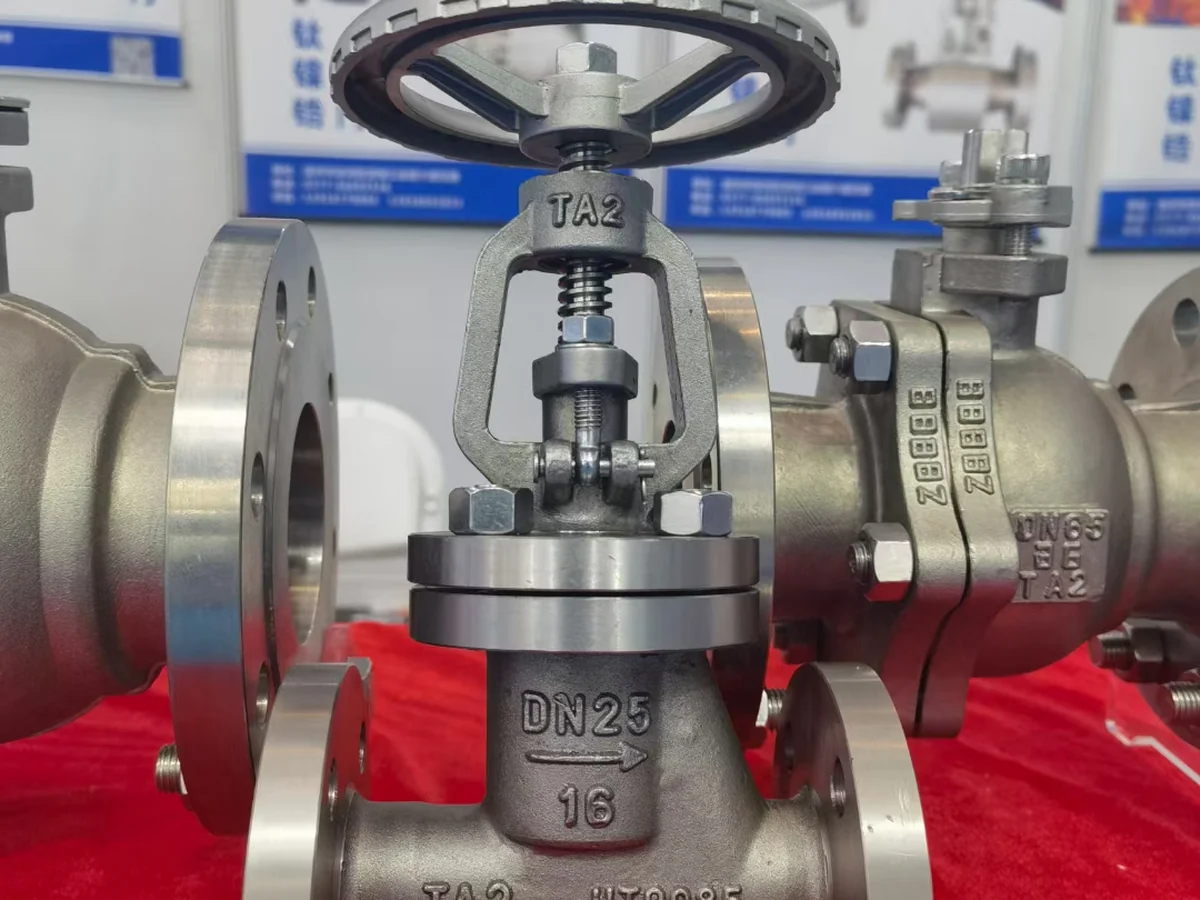
Beiyu Titanium supplies Grade 2 titanium tube, pipe and sheet to ASTM B338, B862 and B265 for seawater service. Inspection documentation and heat or lot traceability can be provided by order scope; identify the required EN 10204 type and reporting fields in the RFQ.
Specifying the wrong material for seawater is one of the most expensive mistakes in marine and offshore systems. Pick 316L to save money on the purchase order and you can be replacing leaking, pitted pipe within a few years, with the cost of the failure, the shutdown and the rework dwarfing what the right material would have cost. This guide compares the three materials honestly, including where titanium is not the answer.
The four things that decide a seawater piping material
You do not choose seawater piping by “how strong” or “how cheap” it is. Four service factors decide it:
| Selection factor | What the guide states |
|---|---|
| Corrosion immunity in chloride | Seawater is roughly 3.5 percent dissolved salts. The material has to resist pitting and crevice corrosion, not just general corrosion. |
| Biofouling | Marine organisms settle on surfaces. Some materials resist fouling chemically, others need separate antifouling control. |
| Flow velocity | Erosion-corrosion sets an upper velocity limit for some materials, while others tolerate high flow. |
| Weight and whole-life cost | Density matters offshore, and the purchase price is only part of the real cost over a 20 to 30 year service life. |
316L stainless steel: the cheap trap
316L is excellent in many environments, but seawater is not one of them. Its pitting resistance equivalent number (PREN) is only around 24 to 25, while reliable resistance to seawater pitting needs a PREN above roughly 40. The result is predictable: 316L pits and crevice-corrodes in seawater, especially at welds, under deposits and biofouling, and in stagnant or low-oxygen zones where the passive film cannot repair.
It can look fine on commissioning and fail months or years later, which is exactly what makes it a trap. If a chloride-immersion seawater system must use stainless, the correct grades are the high-alloy ones (6 percent molybdenum austenitics or super-duplex), not 316L. Standard 316L belongs in splash, atmospheric or low-chloride service, not in seawater immersion.
Copper-nickel: the proven seawater material
Copper-nickel alloys, mainly 90/10 (C70600) and 70/30 (C71500), are the traditional and still widely specified material for seawater piping in navy, offshore and desalination systems. Their advantages are real:
- Inherent biofouling resistance. Copper ions are mildly biocidal, so copper-nickel surfaces resist marine growth without separate antifouling. This is its single biggest advantage over titanium.
- Good general seawater corrosion resistance when a protective surface film is allowed to form, which is why commissioning procedures matter.
Its limits are equally real and decide where it does not fit:
| Copper-nickel limit | What the guide states |
|---|---|
| Velocity limit | Copper-nickel suffers erosion-corrosion above a flow velocity limit, commonly cited around 3.5 m/s for 90/10 and somewhat higher for 70/30. High-velocity service pushes you to titanium. |
| Sulfide-polluted water | In harbors and stagnant water with hydrogen sulfide, copper-nickel corrosion accelerates. |
| Ammonia sensitivity | Copper alloys are vulnerable to ammonia. |
Copper-nickel is the right answer for a great many standard, moderate-velocity, clean-seawater piping duties, and it is dishonest to push titanium where copper-nickel already does the job well.
Titanium (Grade 2): immune, light, high-velocity, higher upfront
Titanium is effectively immune to seawater corrosion. Its passive oxide film does not pit or crevice-corrode in ambient and moderate-temperature seawater regardless of chloride, which removes the failure mode that kills 316L. Its strengths over the other two materials:
For the corrosion mechanism behind that choice, see why titanium stays passive in seawater and where the crevice limits begin before comparing life-cycle cost.
| Titanium Grade 2 strength |
|---|
| Corrosion immunity. No seawater pitting or crevice corrosion in ambient service, and it does not corrode under deposits or biofouling the way stainless does. |
| No practical velocity limit. Titanium handles high-velocity and turbulent seawater where copper-nickel would erode. |
| Tolerance of sulfide-polluted and polluted water where copper-nickel struggles. |
| Roughly half the weight. Titanium density is about 4.5 g/cm3 against roughly 7.9 for steel and 8.9 for copper-nickel, which matters for offshore weight budgets. |
Its honest drawbacks:
- Higher upfront cost per metre than 316L or copper-nickel.
- No inherent antifouling. Titanium does not kill marine growth the way copper does, so a titanium seawater system still needs antifouling control (chlorination or design), even though, unlike stainless, the fouling will not cause under-deposit corrosion of the titanium itself.
- Hot tight crevices. In hot seawater above roughly 80 C in tight crevices, commercially pure Grade 2 can need upgrading to Grade 7 or Grade 12.
Comparison table
| Factor | 316L stainless | Copper-nickel 90/10, 70/30 | Titanium Grade 2 |
|---|---|---|---|
| Seawater pitting and crevice | Poor (PREN ~24, pits) | Good | Immune in ambient service |
| Biofouling | Poor (fouls and pits under deposits) | Resists fouling (copper biocidal) | Fouls but does not corrode under it |
| Velocity limit | Moderate | Limited (around 3.5 m/s for 90/10) | Effectively none |
| Sulfide-polluted water | Poor | Reduced resistance | Immune |
| Weight (density) | ~7.9 g/cm3 | ~8.9 g/cm3 | ~4.5 g/cm3 |
| Upfront cost | Lowest | Moderate | Highest |
| Whole-life in seawater | Often fails, replaced | Long with velocity control | Long, maintenance-free |
Decision logic
| Service case |
|---|
| Standard, moderate-velocity, clean seawater piping, fouling control wanted from the material itself: copper-nickel. |
| High velocity, sulfide-polluted water, weight-critical offshore, long maintenance-free life, or where past stainless and copper-nickel runs have failed: titanium. |
| Chloride-immersion seawater on a budget: not 316L. Use copper-nickel or titanium, or a 6Mo / super-duplex stainless if stainless is mandated. |
The whole-life cost view
The purchase-order comparison flatters 316L and then copper-nickel, and penalises titanium. The whole-life comparison often reverses it. A 316L seawater line that pits and is replaced twice over a plant life costs far more than a titanium line installed once, before counting the leaks, downtime and consequential damage. Titanium earns its higher upfront cost on critical, long-life and hard-to-access seawater systems where replacement is expensive. On a short-life, easy-access, moderate-duty line, copper-nickel or a high stainless may be the better economic answer. State the design life and access difficulty in the comparison, because they change the conclusion.
How Beiyu Titanium fits
Beiyu Titanium supplies Grade 2 titanium tube and pipe to ASTM B338 and B862, and sheet and plate to ASTM B265, for seawater and marine piping, condensers and heat exchangers. When EN 10204 3.1 documentation and heat or lot traceability are required, state the requested reporting scope in the RFQ. Where the duty genuinely suits copper-nickel or a high stainless, that is the honest recommendation. Where it needs titanium, for velocity, weight, sulfide service or maintenance-free life, send the velocity, temperature, crevice condition and design life, and the grade and form can be confirmed before quotation.
When titanium is the selected condenser or cooler material, the ASTM B338 titanium tube guide is the next stop for tube route, wall and test detail on exchanger orders.
Related guides and tools
Specification detail with sources
Tube acceptance values anchor the titanium option with specification numbers. ASTM B338 lists a minimum tensile strength of 345 MPa and a minimum yield strength of 275 MPa for Grade 2 tube, with 20 percent minimum elongation, and the same standard’s chemistry table caps iron at 0.30 percent and oxygen at 0.25 percent for the grade. Those limits, reported per heat on the mill certificate, are what a condenser builder verifies at receipt; the seawater behaviour discussed above is a property of the grade, not a certified test result.
Copper-nickel identity is likewise a composition question. UNS C70600 contains 9.0 to 11.0 percent nickel with iron at 1.0 to 1.8 percent, and C71500 contains 29.0 to 33.0 percent nickel, limits carried in ASTM B466, the seamless copper-nickel pipe and tube specification; the deliberate iron addition supports the film on which the 90-10 service record rests. Reading the nickel and iron lines on a copper-nickel certificate, exactly as the oxygen and iron lines are read on a titanium one, is the receipt-stage check that the alloy ordered is the alloy delivered.