
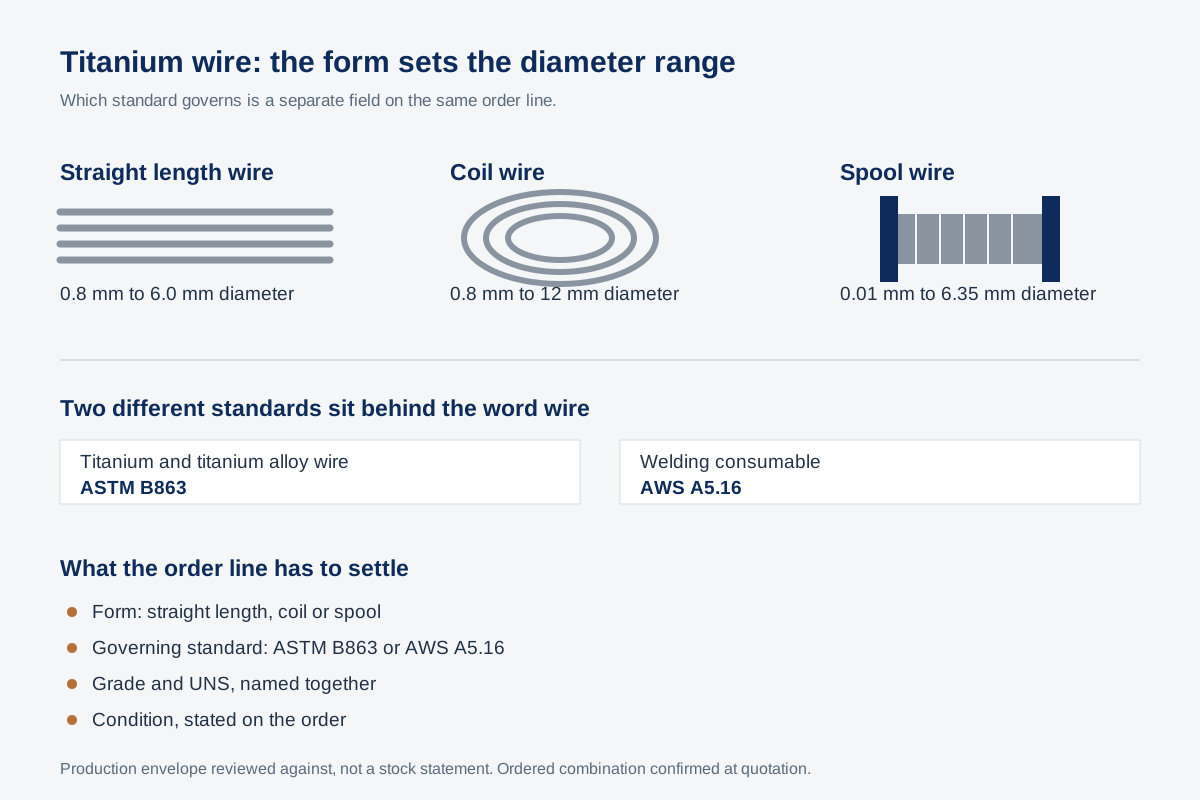
Titanium wire is drawn from 0.01 mm to 6.35 mm on spools, 0.8 mm to 12 mm in coil, and 0.8 mm to 6.0 mm in straight cut lengths up to 6,000 mm. General wire is ordered to ASTM B863, welding filler to AWS A5.16, and implant wire to ASTM F136 or F67.
Titanium wire is supplied across a range of grades, diameters and forms for fasteners, springs, mesh, medical components and welding. This guide covers the grades, the difference between general wire and welding wire, the forms we supply, and what to state on an enquiry so the right wire is quoted.
Titanium wire grades
Grade choice follows the part. Commercially pure grades are used for corrosion service and forming, and alloy grades are used for strength. The ordered items split the same way: thin titanium wire and Grade 1 material for forming work, Ti-6Al-4V ELI wire where strength or implant grade governs, and for joining, titanium TIG wire, titanium MIG welding wire, ERTi-7 welding wire for palladium-bearing joints, and thermal spray titanium wire for coating work.
| Grade | Type | Typical wire use |
|---|---|---|
| Grade 1 | CP, softest | Deep-formed parts, mesh, anode substrate wire |
| Grade 2 | CP, general | Fasteners, springs, mesh, general corrosion service |
| Grade 5 (Ti-6Al-4V) | Alloy, high strength | Aerospace and structural fasteners, springs |
| Grade 23 (Ti-6Al-4V ELI) | Alloy, ELI | Medical and implant wire |
| Grade 7 / Grade 12 | CP with Pd / lean alloy | Reducing-acid and chloride corrosion service |
General wire (ASTM B863) vs welding wire (AWS A5.16)
The same diameter of titanium wire is qualified to a different standard depending on use. ASTM B863 covers titanium wire for general use such as fasteners, springs, mesh and jewellery. AWS A5.16 covers titanium wire as a welding filler, with interstitial control for sound welds. State which one you need. If you are joining titanium, see the titanium welding wire guide.
| Standard | What it covers |
|---|---|
| ASTM B863 | Titanium wire for general use such as fasteners and springs |
| AWS A5.16 | Titanium wire as a welding filler |
Forms, diameters and surface
Titanium wire is supplied as straightened cut lengths and as layer-wound spools and coils. Diameter ranges differ by form, from spool wire at the fine end up to several millimetres for straight and coil wire, so they are taken from the supply envelope for the ordered form, and can be quoted by gauge where buyers work in AWG. Surface can be supplied descaled, pickled or bright drawn. State the diameter or gauge, the form and length or spool weight, and the surface condition.
When a 6 mm section could be specified as either straight wire or round bar, the 6 mm titanium order-field guide shows which form, tolerance, straightness, cut length and certificate fields must be stated together.
| Supply point | What the guide states |
|---|---|
| Forms | Straightened cut lengths, and layer-wound spools and coils |
Common applications
Titanium wire is used for corrosion-resistant fasteners and springs, woven and welded mesh, anode substrate and hanging wire for plating lines, spectacle frames and consumer parts, and medical components. Implant and surgical wire is specified to the medical standards covered in the medical-grade titanium guide.
What to put on a titanium wire RFQ
State the grade, the standard (ASTM B863 for general wire, AWS A5.16 for welding wire), the diameter or gauge, the form and length or spool weight, the surface condition, the quantity, and the certificate scope. Material is supplied with mill test certificates and EN 10204 3.1 by order scope. Browse the full titanium wire range or send requirements to [email protected].
| Field to state on a wire RFQ | Detail |
|---|---|
| Grade | The grade |
| Standard | ASTM B863 for general wire, AWS A5.16 for welding wire |
| Size | Diameter or gauge |
| Form | Form and length or spool weight |
Specification detail with sources
The industrial wire standard keeps a fixed grade-to-UNS map: under ASTM B863, Grade 1 is UNS R50250, Grade 2 R50400, Grade 5 R56400, Grade 7 R52400, Grade 9 R56320 and Grade 12 R53400, and Grade 23 ordered to B863 is R56407, with R56401 reserved for wire ordered to the implant specification ASTM F136. Writing the UNS beside the grade closes the most common identity gap on a wire order, because one nominal composition can sit under 2 different standards.
Beiyu cold-draws titanium wire and releases it in the three delivered conditions coded R, M and Y on its factory sheet, a field that sits alongside the surface condition this guide already asks for and is separate from it. Beyond the ASTM B863 and AWS A5.16 routes named above, Beiyu also quotes wire against ASME SB863, ISO 5832-2 and ISO 5832-3, and the same drawn stock feeds 2 uses outside the applications listed here, plating and anodising racks and eyewear frame components.