
Surface condition is an order field, not a finish preference
Peeled, turned and centerless ground describe how the bar left the mill, and each one arrives with a different diameter tolerance, a different surface and a different machining allowance already built in. Choosing between them is a procurement decision, not a cosmetic one.
| What the surface condition fixes |
|---|
| The diameter tolerance the bar can hold |
| How much stock the machinist has to remove |
| Whether a roughness value can be treated as an acceptance criterion |
Where each condition comes from on the production route
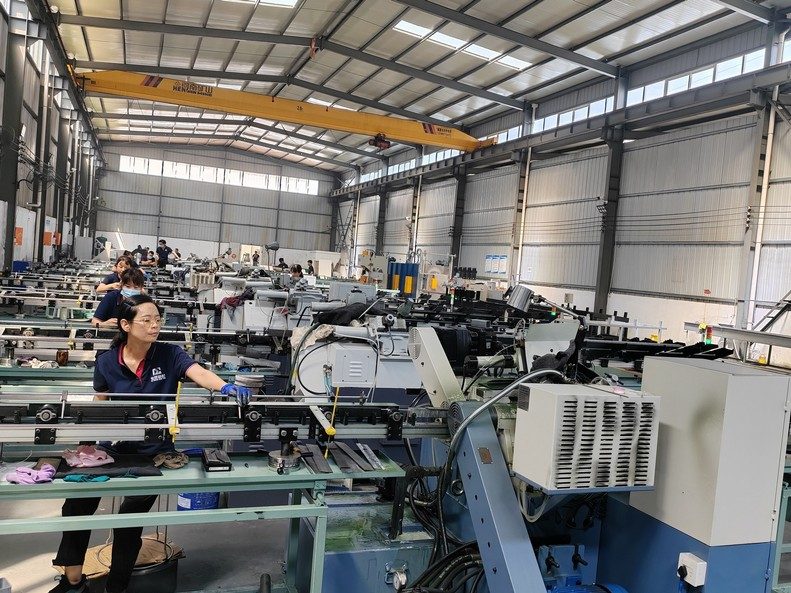
Beiyu’s bar route runs in a fixed order, and the surface condition is simply where the bar leaves that line.
| Step | What it produces |
|---|---|
| Annealing furnace | The delivery condition of the metal |
| Peeling and turning line | Peeled or turned bar |
| Straightening | Bow brought within the ordered value |
| Centerless grinding line | Precision ground bar |
| Polishing | Polished surface on ground bar |
| Automatic saw and facing | Cut length and end condition |
The tolerance that comes with each condition
The figures below are what Beiyu holds on the precision ground route. Peeled and turned bar are ordered to the dimensional tolerances of the governing product standard rather than to a ground-bar figure.
| Condition | Diameter tolerance |
|---|---|
| Precision centerless ground | Plus or minus 0.0127 mm as standard |
| Precision ground, tightened | Plus or minus 0.0076 mm where the drawing calls for it |
| Peeled or turned | To the tolerance table of the ordered standard, stated on the order |
What each condition is normally bought for
| Condition | What the buyer is usually solving |
|---|---|
| Peeled | Removing the mill surface before further processing |
| Turned | A defined diameter with stock left for the finishing cut |
| Precision ground | Feeding straight into automatic or sliding head machining without a roughing pass |
| Polished | A surface where roughness itself is an acceptance criterion |
Surface condition and delivery condition are two different fields
Annealed, cold worked and stress relieved describe the metallurgical condition. Peeled, turned and ground describe the surface. An order that states one and not the other is incomplete, because the same surface can be supplied on more than one delivery condition.
| Field | What it answers |
|---|---|
| Delivery condition | How the metal was treated, which drives the mechanical properties |
| Surface condition | How the outside of the bar was finished, which drives tolerance and allowance |
What the precision ground route is inspected to
The precision ground route carries five piece-by-piece checks. Peeled and turned bar are inspected to whatever scope the order agrees, not to this set.
| Inspection at 100 percent on the precision ground route |
|---|
| Ultrasonic flaw detection |
| Eddy current flaw detection |
| Surface optical inspection |
| Infrared laser diameter measuring |
| Straightness detection |
How to state it on the purchase order
Surface condition: ______ (peeled, turned, centerless ground or polished)
Delivery condition: ______ (state the metallurgical condition separately)
Diameter tolerance: ______
Surface roughness: ______ (state a value only where it is an acceptance criterion)
Machining allowance: ______ (state if stock must be left for a finishing cut)
Straightness: ______ mm per metre
Name the operation the bar goes into next. Not every surface, diameter and tolerance combination exists on the same route, so Beiyu confirms the combination against the ordered standard first.
Specification detail with sources
Surface condition and delivery condition are two different order fields, and ASTM B348 separates them. The standard covers annealed bar and billet (ASTM B348, scope), while finish is listed as its own item in the ordering information clause alongside grade number, product classification, chemistry, mechanical properties, marking, packaging, required reports and disposition of rejected material (ASTM B348, ordering information). So an order that names only annealed has not yet said whether the bar arrives peeled, turned or ground.
| Field | What it settles |
|---|---|
| Grade number | Chemistry and mechanical minimums |
| Delivery condition | The metallurgical state, annealed under this standard |
| Finish | The surface the bar arrives with, stated separately |
Chemistry is unaffected by which surface you choose: ASTM B348 sets Grade 2 at 0.25 percent oxygen maximum and 0.30 percent iron maximum, and Grade 23 ELI at 0.13 percent oxygen maximum with hydrogen at 0.0125 percent maximum (ASTM B348, chemical requirements). Those are heat analysis limits, and the standard states that product analysis tolerances do not broaden them (ASTM B348, product analysis). In Beiyu’s supply practice the tolerance and inspection figures quoted on this page belong to the precision centerless ground route; peeled and turned bar are ordered to the dimensional tolerances of the governing product standard instead.
Send a technical RFQ
For titanium bar RFQs, include grade, ASTM or AMS standard, diameter, delivery condition, surface finish, tolerance, the next machining operation, quantity and the required mill test certificate.