
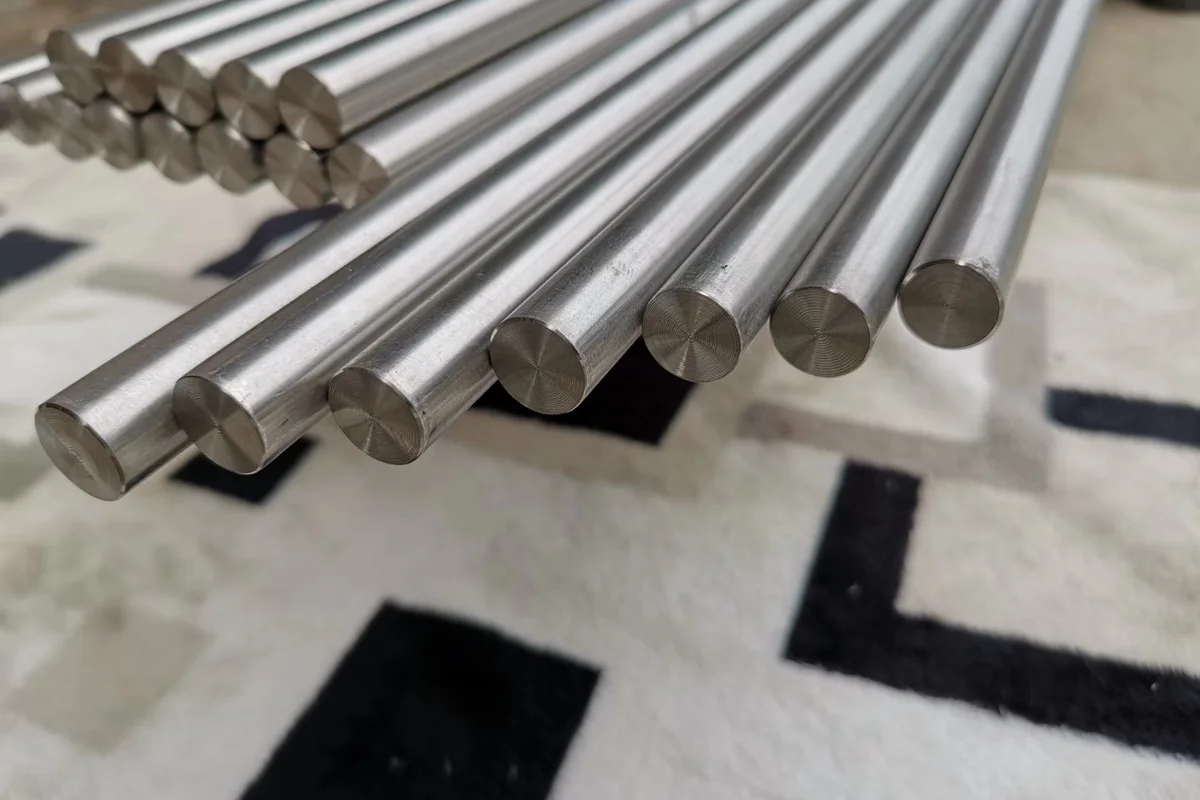
The bar section is an order line decision, not a shape preference
Round, square, flat and hexagon bar are not one product ordered in four outlines. Each section has its own size range, and the section sets the starting cross section the part is machined from.
Dedicated ordering pages per section: square bar sizes and ordering, hexagonal bar across-flats sizes, and round bar across the 1 to 500 mm range.
| What buyers weigh when choosing the section |
|---|
| The size range reachable in that section |
| The starting cross section the part is machined from |
| How the bar is held and fed on the machine |
The sections and the sizes Beiyu reviews against
| Section | Range |
|---|---|
| Round bar | 1 mm to 500 mm diameter |
| Square bar | 3 mm by 3 mm to 500 mm by 500 mm |
| Flat bar | 3 mm by 12.7 mm to 30 mm by 500 mm |
| Hexagon bar | Across flats to 17 mm |
The envelope is a production capability, not a stock statement, and not every combination of grade, section, size and condition exists across the whole range. The ordered combination is confirmed at quotation.
Length is capped for every section
The section changes the cross section available. It does not extend the length.
| Field | Value |
|---|---|
| Maximum length, all bar sections | 6000 mm |
| Cut length tolerance | Stated on the order, not implied by the section |
| End condition | Stated on the order, not implied by the section |
Where the tolerance figure comes from
A bar section can be quoted against an ISO tolerance class rather than a plus and minus figure. The class is not a single number, because it moves with the size, which is why it has to be paired with the ordered dimension.
| Field | What to state |
|---|---|
| Tolerance class | h6 to h9 or H6 to H9, named with the dimension it applies to |
| Which dimension it applies to | Diameter, across flats, or both flat bar dimensions |
| Surface condition | Named separately, since it is not implied by the section |
Which standard the section runs under
Bar is not one standard. Mill bar and forged bar are separate order lines with separate governing standards, and the certificate names one of them.
| Ordered as | Standard |
|---|---|
| Bar and billet | ASTM B348 |
| Forged round bar | ASTM B381 |
| Bar to an aerospace material specification | Named on the order alongside the ASTM standard |
What to state on the purchase order
Section: ______ (round, square, flat or hexagon)
Governing standard: ______ (ASTM B348, or ASTM B381 for forged bar)
Grade and UNS: ______
Size: ______ (diameter, side, both flat dimensions, or across flats)
Length: ______ (state the cut length and its tolerance)
Tolerance: ______ (state the class or the plus and minus value, with the dimension it applies to)
Surface condition: ______
Condition: ______ (R / M / Y, stated on the order)
Certificate: EN 10204 3.1 mill test certificate with heat number traceability, reporting scope by order
State the section and the size in the same line, and say what the bar feeds into. Beiyu confirms the section, size and tolerance combination against the ordered standard before quoting, because the reachable size range moves with the section.
Specification detail with sources
The product standard defines the boundary a bar section has to sit inside. ASTM B348 defines bar as a hot rolled, forged, extruded or cold worked semifinished solid section whose cross sectional area is 16 square inches, 10 323 square millimetres, or less, with rectangular bar not more than 10 inches, 254 millimetres, in width and more than 0.1875 inch, 4.8 millimetres, in thickness; a solid section above that area, whose width is less than five times its thickness, is billet (ASTM B348, terminology).
| Section | Range Beiyu reviews against |
|---|---|
| Round bar | 1 mm to 500 mm diameter, length to 6000 mm |
| Square bar | 3 mm by 3 mm to 500 mm by 500 mm |
| Flat bar | 3 mm by 12.7 mm to 30 mm by 500 mm |
| Hexagon bar | Across flats to 17 mm |
Those ranges are Beiyu’s production envelope, not a stock statement, and the ordered combination is confirmed at quotation. Tolerances are not a single figure either: ASTM B348 routes them to its dimensional tables (ASTM B348, dimensions, weight and permissible variations), which is why a class or a plus and minus value has to be paired with the dimension it applies to. Naming a section settles the geometry. It does not by itself set the tolerance, and it does not carry a tolerance table entry from one section to another. Chemistry is unaffected by the section: Grade 2 remains 0.25 percent oxygen maximum and 0.30 percent iron maximum, and Grade 5 remains 0.20 percent oxygen maximum (ASTM B348, chemical requirements).
Send a technical RFQ
For titanium bar RFQs, include the section, the governing standard, grade and UNS, the size expressed for that section, length with its tolerance, the tolerance class or value with the dimension it applies to, surface condition and the required mill test certificate.