
A titanium export shipment travels with six documents, and one identifier ties them together: the heat number. If the number on the EN 10204 type 3.1 certificate matches the packing list, the bundle tags and the marking on the metal, the order clears receiving in minutes. Where that chain breaks, containers sit. After fifteen years of export shipments, this is the file we build for every order.
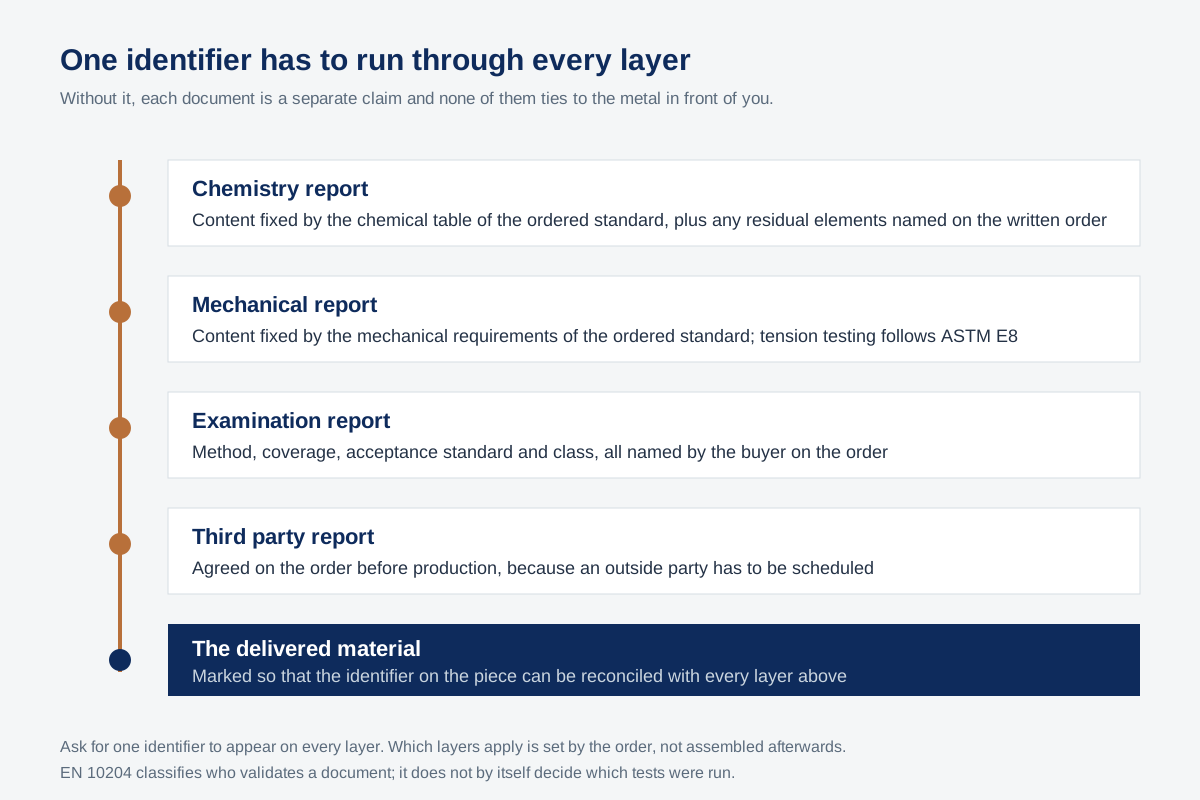
Which documents travel with a titanium order?
| Document | What it proves | What to check on it |
|---|---|---|
| EN 10204 type 3.1 certificate | Actual chemistry and mechanicals per heat | Heat and pour numbers, the standard your PO named, values against the grade limits |
| Packing list | What is in which bundle or crate | Every bundle maps to a heat listed on the 3.1 certificate |
| Commercial invoice | Transaction record for customs | Description, HS code and quantities consistent with the packing list |
| Certificate of origin | Country of manufacture, where the destination asks for it | EU imports of titanium run on MFN terms and usually clear without one; other destinations differ, so state the requirement on the order |
| Bill of lading or air waybill | Carriage contract and title | Consignee and notify party exactly as your customs broker needs them |
| Insurance certificate (CIF shipments) | The cover actually bought for the voyage | Class of cover stated; under Incoterms 2020 CIF the default is minimum ICC(C) unless the contract names ICC(A) |
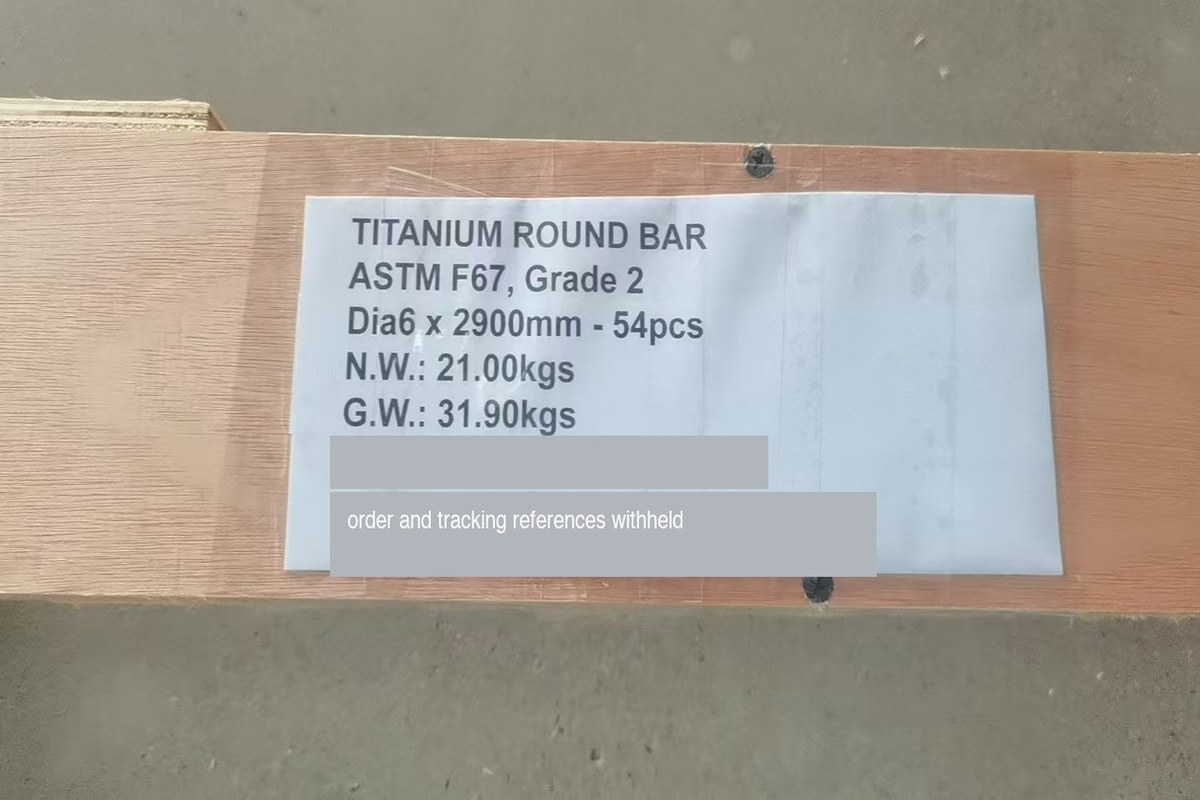
ASTM B348 itself drives part of this file: clause 16.1 requires, unless the order specifies otherwise, a metal tag stamped with the purchase order number, the specification number, the nominal size and the heat number, or the same information marked on the box, with bars of 25.4 mm and over stamped with the heat number within 50.8 mm of one end.
What does each Incoterm leave on your desk?
| Term | Supplier handles | You handle | Risk passes |
|---|---|---|---|
| EXW (works) | Making goods available | Everything from the factory gate | At the works |
| FCA (named place) | Export clearance, handover to your carrier | Main carriage, insurance, import side | At handover to your carrier |
| FOB (port of loading) | Export clearance, delivery on board | Freight, insurance, import clearance, duty | On board at the load port |
| CIF (port of discharge) | Freight and insurance to your port | Import clearance, duty, on-carriage, destination port charges | On board at the load port |
| DAP (named place) | Carriage to your door | Import clearance and duty | At the named place |
| DDP (named place) | Everything including duty | Unloading | At the named place |
Four practical notes from the export side. Under CIF the cargo is already at your risk once on board at the load port, and the seller’s insurance defaults to minimum ICC(C) cover unless the contract names ICC(A). Under DDP into the EU, check who acts as importer of record, because a non-EU seller usually has no EU VAT registration and the import VAT deduction can land badly; DAP with your own clearance often works out cleaner. FCA is the containerised replacement for FOB. And release control follows payment, not the Incoterm: the shipper named on the bill of lading is the seller under FOB too, so the telex release moves when the payment terms say it moves. And under CIF, ask in advance what the seller’s forwarder charges at destination, because DTHC, document and release fees at the discharge port are the classic CIF dispute, not the freight itself.
Where do titanium shipments actually get stuck?
| Failure | What happens | Prevention |
|---|---|---|
| Wood packaging without the IPPC stamp | Hold at the border, on-site fumigation or re-export at your cost | Crates and pallets must carry the ISPM-15 heat-treatment marking; ask for a photo of the stamp with the pre-closing marking photos |
| HS code mismatch between invoice and declaration | Customs query, days of delay | Titanium moves under heading 8108: unwrought forms under 8108.20, wrought bar, plate, tube and wire under 8108.90 subheadings that differ by form; agree the final digits with your broker before shipment |
| Certificate arrives after the metal | Receiving cannot release material to production | Documents emailed at sailing, originals in the document pouch |
| Bundle tags lost in transit | Metal cannot be tied to the certificate | Stamped marking on the metal per ASTM B348 clause 16.1, plus marking photos taken before packing |
| Consignee name differs from import licence | Broker cannot clear | Lock the exact legal names on the order confirmation |
One line that saves EU buyers a recurring question: titanium under heading 8108 is not among the product groups in Annex I of the EU CBAM regulation, which covers cement, iron and steel, aluminium, fertilisers, electricity and hydrogen, so titanium mill products need no CBAM declaration data.
Specification detail with sources
The marking requirements above are from ASTM B348 clause 16.1: unless the order specifies otherwise, a metal tag with purchase order number, specification number, nominal size and heat number, or the same information marked on the box, with bars 25.4 mm and over stamped within 50.8 mm of one end. The certificate layer is EN 10204 type 3.1 by order scope, listing heat and pour numbers per heat shipped. In Beiyu’s export practice every crate list maps bundles to certificate heats line by line, and marking photos are taken before lids close so the receiving side sees the tags even if transit damages them.
Scope note: Incoterms describe the split of cost, risk and clearance duties between the parties; they are trade terms, not quality documents, and nothing in them replaces the certificate chain above.
Frequently asked questions
Can the 3.1 certificate be issued before production finishes? No. It reports actual test results for the shipped heats, so it is finalized after final inspection. What can be shared early is the format and a prior example with identifiers withheld.
Who issues the certificate of origin? The exporter prepares it and, where the destination requires, a chamber of commerce certifies it. State the requirement on the purchase order so the right version ships the first time.
What HS heading does titanium bar fall under? Titanium mill products move under the unwrought and wrought titanium headings, and the exact subheading depends on form and processing. Agree it with your broker before shipment rather than debating it at the border.
What should a first titanium import order specify about documents? Name the certificate type, the marking content, the marking photo requirement and the exact consignee wording on the RFQ itself; the checklist in the titanium bar RFQ checklist covers the material side of the same order.
Put the document list on the RFQ
Send the grade, standard, dimensions, quantity, destination port and the document list your import process needs to the Beiyu RFQ page. Reviewed by Penn Ma, 15 years in titanium mill product export. Last reviewed: 2026-08-29.