
No. Titanium is paramagnetic, not ferromagnetic, and a household magnet will not stick to it. Relative magnetic permeability sits just above 1.0 in the commercial grades listed below, which is why engineering practice treats titanium as non-magnetic rather than weakly magnetic. The distinction matters once a drawing asks for a guaranteed figure, because the material specifications do not verify one.
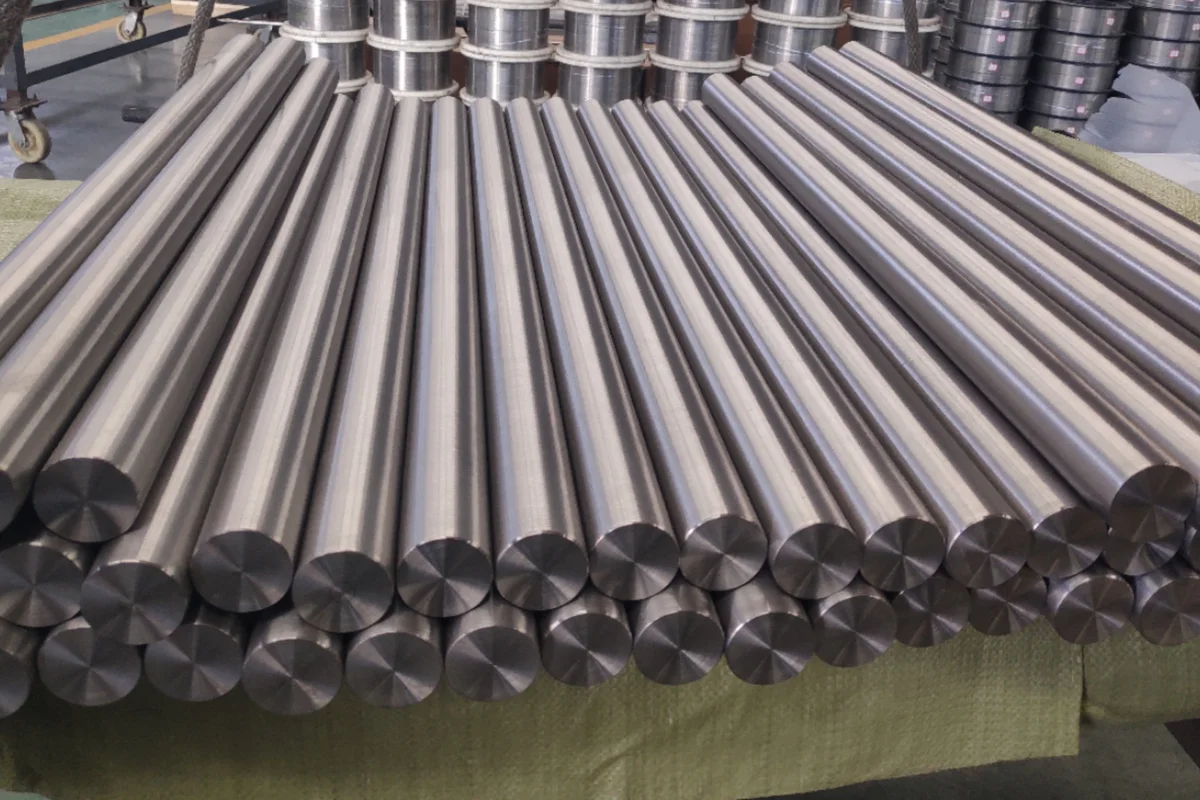
What paramagnetic means in a number
A ferromagnetic metal has a relative permeability in the hundreds or thousands. Titanium sits at the other end. The figures Beiyu Titanium publishes for the grades below are close enough to 1.0 that the response is measurable with instruments but not with a magnet in your hand.
| Grade | What the Beiyu data sheet states | Type of figure |
|---|---|---|
| Grade 5 (Ti-6Al-4V, UNS R56400) | Relative permeability 1.00005 at 1.6 kA/m | A measured value at a stated field strength |
| Grade 23 (Ti-6Al-4V ELI) | Relative permeability 1.01 or lower | An upper bound, not a measured value |
| Grade 2 (CP titanium, UNS R50400) | Paramagnetic, only marginally above 1.0 | A qualitative description |
Read the third column before comparing the rows. The Grade 23 entry is a ceiling rather than a measurement, so it does not mean Grade 23 responds more strongly than Grade 5; it means nobody has published a measured figure for it here.
There is also a compositional reason that holds regardless of the measured value. None of these alloys contains a ferromagnetic phase. Grade 5 is titanium with aluminium and vanadium, Grade 2 is unalloyed. Iron is present, but only as a residual element capped by the chemistry table of the grade, and it sits dissolved in the titanium lattice rather than forming a separate phase for a field to align.
The part a materials answer leaves out
This is where a materials answer and a purchasing answer separate. ASTM B265 and ASTM B348, the specifications titanium sheet, plate and bar are commonly ordered against, set chemical composition, mechanical properties and dimensional tolerances. Neither mentions magnetic permeability anywhere in its text. A certificate issued to those specifications is not required to carry a permeability value, because the specification never asked for one.
Nor is there a ready-made clause to invoke. B265 does carry supplementary requirements that apply when the purchase order calls for them, but they cover other matters entirely, beginning with surface bend testing; B348 has no supplementary requirements section at all. So a permeability limit is an additional test agreed on the purchase order rather than a standard option with a number.
The practical consequence: an enquiry that says “must be non-magnetic” without naming a limit, a measurement method and a field strength is asking for something no mill certificate can confirm, and it will come back for clarification. An enquiry that names all three can be quoted.
| What the drawing says | What a B265 or B348 certificate shows | What to add to the order |
|---|---|---|
| Non-magnetic material | Nothing about permeability | The permeability limit, the method, the field strength |
| Relative permeability below a stated value | Nothing about permeability | An agreed additional test and who witnesses it |
| No magnetic requirement | Chemistry and mechanicals only | Nothing; the grade already answers the question |
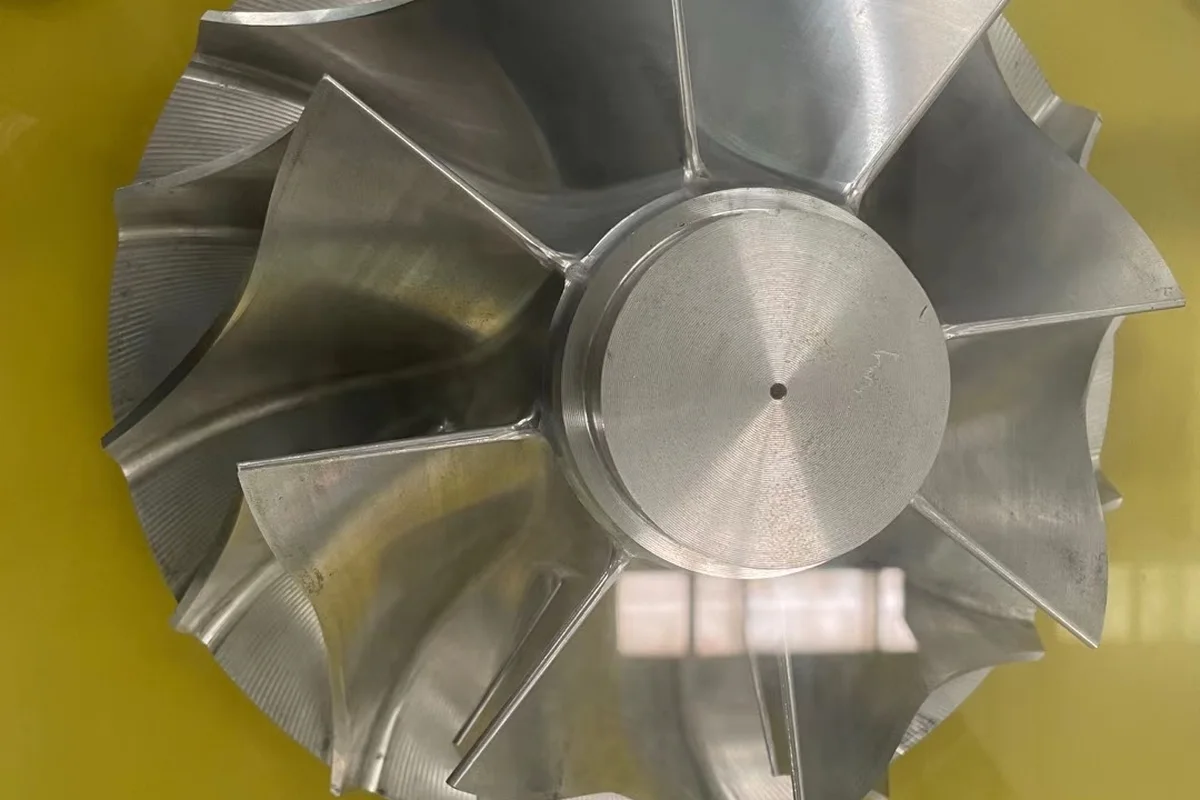
Where the answer actually changes a decision
For most parts it does not. Titanium is chosen for corrosion resistance, strength-to-weight or biocompatibility, and its magnetic behaviour is a property nobody has to think about. Three situations are the exception, and in all three the reason to reach for titanium is that the alternative would disturb something.
| Situation | Why titanium is reached for | How the requirement is usually written |
|---|---|---|
| Imaging and instrument environments | Housings, fasteners and fittings sit inside or near a field and must neither move nor distort it | As a material call-out, sometimes with a permeability ceiling |
| Sensing and measurement | A magnetically responsive housing changes what the sensor inside it reads | As a material call-out on the housing drawing |
| Assemblies where a stray field reads as a fault | The part has to be invisible to the detection system around it | As a permeability ceiling |
Any row that states a ceiling needs the agreed test described above, because the ceiling is the part the material specification does not cover.
Common follow-up questions
Is titanium magnetic, and will a magnet stick to it at all? No. The response is too weak to overcome the weight of the magnet.
Is Grade 5 titanium magnetic, and is it more magnetic than Grade 2? Both are paramagnetic and both are treated as non-magnetic. The published Grade 5 figure of 1.00005 and the Grade 2 description of marginally above 1.0 sit in the same practical band.
My titanium part attracted a magnet. What happened? The most common benign cause is surface iron picked up from steel tooling, wire brushing or shot blasting, which is removed by pickling rather than by rejecting the part. A response that persists after cleaning is a signal that the item is not the material it is labelled as, or that something ferromagnetic is attached or embedded. Either way it is worth resolving before the part goes into service.
Does titanium rust? No. Rust is iron oxide, and titanium has no iron phase to form it. Titanium carries a passive titanium dioxide film instead, which is a different mechanism and the reason it performs as it does in seawater and oxidising acids.
The wider set of published titanium figures, and which of them a certificate actually reports, is set out in titanium facts.
Can titanium be made magnetic by heat treatment or cold work? No. The alloys supplied here contain no ferromagnetic phase for processing to develop, so titanium magnetic behaviour does not change with condition the way hardness or strength does.
Is titanium magnetic enough to matter in an MRI or a sensor housing? It is specified for those environments precisely because it is not. A guaranteed limit still has to be written onto the order, since the material specification does not verify one.
Specification detail with sources
The relative permeability figure of 1.00005 at 1.6 kA/m quoted above is the value carried on the Beiyu Titanium Grade 5 data sheet; the ceiling of 1.01 or lower is carried on the Grade 23 data sheet, and the paramagnetic description on the Grade 2 data sheet. The statement that permeability is not verified reflects the text of ASTM B265 and ASTM B348 themselves: neither specification contains the words magnetic or permeability, B265’s supplementary requirements begin with surface bend testing rather than any magnetic property, and B348 carries no supplementary requirements section. A permeability limit is therefore agreed between purchaser and supplier and stated on the order.
Ordering titanium where the magnetic requirement is real
Beiyu Titanium supplies titanium bar, plate, sheet, tube and forgings in Grade 1, 2, 5, 7, 9, 12 and 23 against ASTM and AMS specifications, with an EN 10204 3.1 mill test certificate by order scope. Where a permeability limit applies, send the limit, the measurement method and the field strength together with the grade, dimensions and tolerance, so the test can be arranged and priced with the quotation rather than discovered at inspection.