
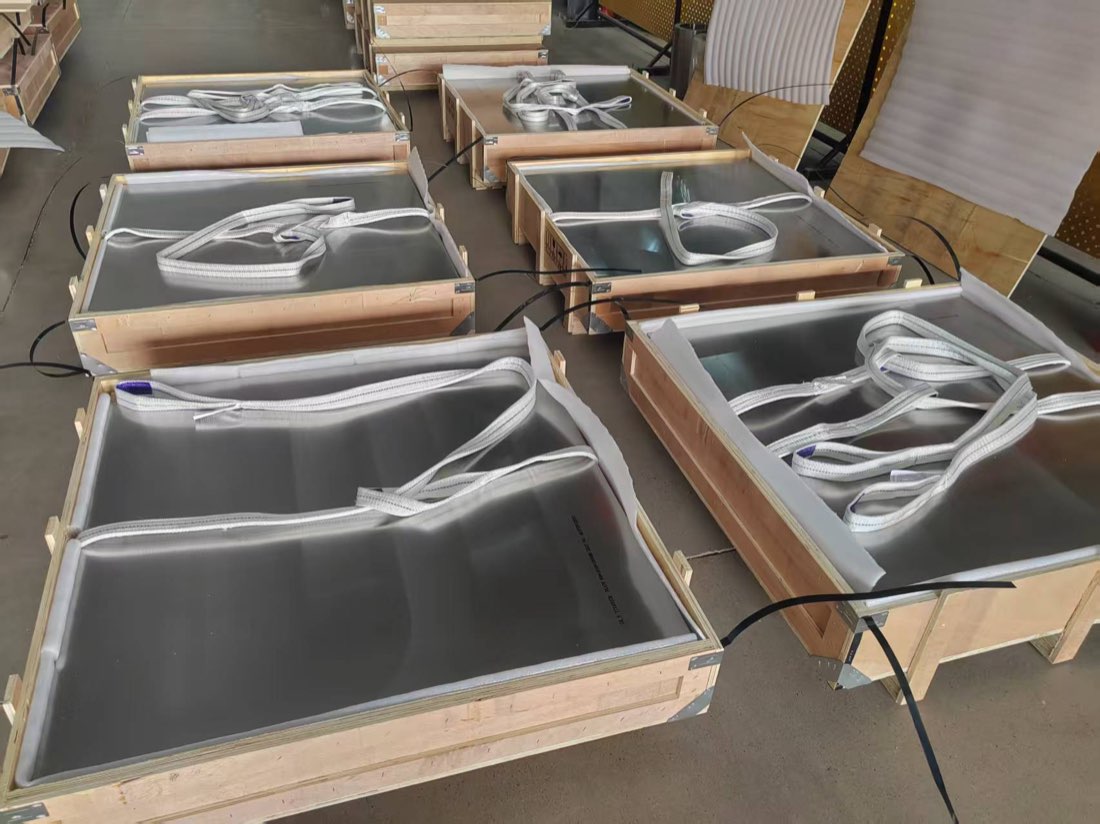
Choose a titanium plate or sheet grade by corrosion environment first, then the strength the part needs, then budget. Grade 2 is the corrosion default for tanks, heat exchangers and chemical equipment; Grade 5 (Ti-6Al-4V) is the strength choice for structural and aerospace plate; Grade 7 and Grade 12 handle aggressive acids and hot brine; Grade 23 (ELI) is for toughness-critical and medical-related plate. Most flat-product over-specification comes from reaching for an alloy grade when commercially pure plate would pass.
The plate-grade decision in one table
| Grade | Character | Strength | Corrosion | Typical plate use | Product |
|---|---|---|---|---|---|
| Grade 2 | Commercially pure, weldable | Moderate | Excellent in seawater and oxidising media | Pressure vessels, tanks, heat-exchanger plate, chemical equipment | Grade 2 sheet & plate |
| Grade 5 | Ti-6Al-4V alloy | High | Good, not as corrosion-led as Gr2/7 | Structural and aerospace plate, machined plate parts | Grade 5 (6Al-4V) plate |
| Grade 7 | Pd-alloyed CP | Moderate | Best in reducing acids and crevice conditions | Plate for aggressive chemical service | Grade 7 sheet |
| Grade 12 | Ti-0.3Mo-0.8Ni | Moderate-high | Improved crevice resistance in hot brine | Hot chloride and process-equipment plate | Grade 12 plate |
| Grade 23 | Ti-6Al-4V ELI | High, high toughness | Good | Fracture-critical and medical-related plate | Grade 23 ELI plate |
Grade 2: the corrosion default for flat product
Commercially pure Grade 2 is the most specified titanium sheet and plate for corrosion service. It resists seawater, wet chlorine and oxidising acids, welds readily and forms well, which is why most titanium pressure vessels, tanks and heat-exchanger plates are Grade 2. For ASME code equipment the same plate is ordered to ASME SB-265. Start at Grade 2 and move up only if strength or a specific acid demands it.
| Grade | What the guide states |
|---|---|
| Grade 2 | The most specified titanium sheet and plate for corrosion service. It resists seawater, wet chlorine and oxidising acids, welds readily |
| Grade 5 (Ti-6Al-4V) | Carries roughly twice the strength of Grade 2 at a low density, used for structural and aerospace plate and machined-from-plate parts. It is less corrosion-led than Grade 2 |
| Grade 7 and Grade 12 | Where the plate sees reducing acids, crevice-prone joints or hot chloride brine and commercially pure Grade 2 can be outpaced |
| Grade 23 (ELI) | Grade 5 with extra-low interstitials, raising fracture toughness and ductility. Specified for fracture-critical and medical-related plate |
Grade 5 (Ti-6Al-4V): the strength plate
Grade 5 carries roughly twice the strength of Grade 2 at a low density, used for structural and aerospace plate and machined-from-plate parts. It is less corrosion-led than Grade 2 or 7 and harder to form. For aerospace flat product, order to AMS 4911.
Grade 7 and Grade 12: when Grade 2 is not enough
When the plate sees reducing acids, crevice-prone joints or hot chloride brine, commercially pure Grade 2 can be outpaced. Grade 7 adds palladium for the best resistance in reducing and crevice conditions; Grade 12 adds molybdenum and nickel for improved crevice resistance in hot brine at a lower cost than Grade 7. Both are chosen on the corrosion case, not on strength.
Grade 23 (ELI): toughness-critical plate
Grade 23 is Grade 5 with extra-low interstitials, raising fracture toughness and ductility. It is specified for fracture-critical and medical-related plate where the cleaner chemistry matters, and it follows ASTM F136 for surgical-implant flat product.
Form, thickness and cost notes
Thin-gauge titanium sheet is usually cold-rolled, annealed and pickled or polished; heavier plate is hot-rolled, annealed and descaled. Grade 2 and Grade 5 are the most stocked and economical; Grade 7, because of its palladium content, is usually the most expensive per kilogram. Specify the lowest grade that meets the corrosion and strength case, and state thickness, width, length and surface so the right rolling route is quoted.
| Product | Route the guide describes |
|---|---|
| Thin-gauge titanium sheet | Usually cold-rolled, annealed and pickled or polished |
| Heavier plate | Hot-rolled, annealed and descaled |
How to order plate once the grade is set
State the standard and grade (for example Grade 2 to ASTM B265, or ASME SB-265 for code work), the thickness, width and length, the surface condition, and the certificate package. See the ASTM B265 sheet & plate guide for the specification detail, and the grades comparison for the property reference table.
| Field to state | Detail |
|---|---|
| Standard and grade | For example Grade 2 to ASTM B265, or ASME SB-265 for code work |
| Dimensions | Thickness, width and length |
| Surface condition | The surface condition required |
| Certificate | The certificate package required |
Frequently asked questions
Grade 2 vs Grade 5 titanium plate, which do I need?
Grade 2 for corrosion service, tanks, heat exchangers and weldable fabrications; Grade 5 (Ti-6Al-4V) when the plate is load-bearing and needs about twice the strength. For a corrosion part, Grade 2 is usually correct and cheaper.
Can titanium plate be supplied to ASME SB-265?
Yes. ASME SB-265 mirrors ASTM B265, so titanium plate for code equipment can be dual-certified on request.
When should I pay for Grade 7 plate instead of Grade 2?
Only when the service is reducing acids or crevice conditions Grade 2 cannot handle. Grade 12 is a lower-cost step up for hot brine.
Which titanium plate grades are most economical?
Grade 2 and Grade 5 are the most stocked and lowest cost. Specify the lowest grade that meets the requirement.
What the plate grade decision leaves for the order
The grade answers the service question. The order still has to answer how the plate is accepted, examined and documented, and those are the fields that decide whether it can go into fabrication as delivered.
| Field | What it controls | Where it belongs |
|---|---|---|
| Thickness with its tolerance | Fit up and weld preparation | Stated together, not thickness alone |
| Surface condition | The starting point for any cleaning or finishing | Stated apart from the delivery condition |
| Delivery condition | The metallurgical state as delivered | Its own line |
| Examination scope | What is inspected and to which acceptance class | The purchase order text |
The figures on a plate certificate have a named basis
| What is reported | Method the specification references | What naming it settles |
|---|---|---|
| Oxygen and nitrogen | ASTM E1409 | Interstitials reported on a stated basis |
| Hydrogen | ASTM E1447 | Determined by a named method |
| Carbon | ASTM E1941 | Reported by combustion rather than an unstated technique |
| Tensile properties | ASTM E8 | How the strength figures were generated |
| Rounding of reported values | ASTM E29 | Whether a borderline figure passes at all |
Naming a method settles how a value was produced. It does not add an examination the order did not request, and it does not make a heat analysis and a later product analysis interchangeable.
Specification detail with sources
The additions that move flat product up the corrosion ladder are small and fixed by ASTM B265: Grade 7 carries 0.12 to 0.25% palladium, Grade 12 carries 0.2 to 0.4% molybdenum with 0.6 to 0.9% nickel, and Grade 23 is Grade 5 chemistry with oxygen capped at 0.13% instead of 0.20%. On the identity line, Grade 23 plate ordered to B265 is UNS R56407; R56401 applies only to flat product ordered to the implant specification ASTM F136.
| Grade | Addition fixed by ASTM B265 |
|---|---|
| Grade 7 | 0.12 to 0.25 percent palladium |
| Grade 12 | 0.2 to 0.4 percent molybdenum and 0.6 to 0.9 percent nickel |
Beiyu rolls titanium flat product in 13 standard grades, Grades 1 through 7 plus 9, 11, 12, 16, 17 and 23, which adds 2 lower-palladium options, Grade 16 and Grade 17, to the five headline grades compared here. In Beiyu’s supply practice the thickness also fixes the rolling window, 0.5 to 3 mm at widths up to 1500 mm and 3 to 70 mm at widths up to 2500 mm, so the grade choice and the gauge can be checked against the same sheet.
Request titanium plate by grade
Tell Beiyu the service (corrosion environment, load, temperature), the thickness, width, length and surface, and the right grade and condition will be confirmed before quotation. Contact [email protected].
Related titanium guides
- ASTM B265 Titanium Sheet & Plate Guide
- AMS 4911 Titanium Sheet & Plate Guide
- Titanium Grades Compared: Grade 2 to 23
- Which Titanium Bar Grade to Order
Standards and sources
Grade designations and UNS numbers follow ASTM B265 and B348; medical flat product follows ASTM F136 (Ti-6Al-4V ELI), and ASME code plate follows ASME SB-265. The corrosion behaviour for the palladium and molybdenum-nickel grades reflects published titanium corrosion data. Confirm mechanical properties against the mill test certificate for the heat, and state the grade and standard on the purchase order.
| Scope | Standard the guide names |
|---|---|
| Grade designations and UNS numbers | ASTM B265 and B348 |
| Medical flat product | ASTM F136 (Ti-6Al-4V ELI) |
| ASME code plate | ASME SB-265 |