
Grade 12 titanium forgings cannot be compared by alloy name and finished weight alone. The order must connect UNS R53400 to a drawing shape, starting stock, forging sequence, annealed condition, machining allowance, test-coupon location, nondestructive examination and heat-to-piece genealogy. Those controls are especially important for rings, valve bodies, discs and blocks used in corrosive pressure equipment. The five sources below show published routes; they do not approve a supplier or prove an offered lot.
How this five-company source set was built
The comparison used the query Grade 12 titanium forging supplier R53400 ASTM B381 on 1 September 2026. Inclusion required a company-owned page that connected Grade 12, R53400 or F12 to forgings and exposed a useful form, process, size, inspection or document field. Beiyu, India-based companies, marketplaces, directories and rankings were removed. Supplier tables were treated as leads, not standards. Conflicting identifiers were rejected. The purchase order and original heat records remain authoritative.
| Company | Owned resource | Published scope | Proof still due |
|---|---|---|---|
| Tricor Metals | Forgings and billet page | Grade 12 within rings, discs, blocks, hollows and custom-profile routes | Correct R53400 identity, producer, stock, route, coupon and NDE |
| TSM (tsm-titanium.com) | Titanium forging range | Grade 12, B381, process types, size, heat treatment and testing prompts | Offered shape, actual capability, heat, sequence and acceptance records |
| TNTI | Grade 12 data and supply page | R53400 identity, B381 forgings and broader product-form context | Specific forged line, drawing, source, condition and lot data |
| Online Titanium | B381/SB381 supplier page | F12 within forged components and inspection/document options | Producer, heat, shape, revision, test basis and availability |
| Guanxin Forging | Forged-shape capability | R53400/Grade 12 in a B381 forged-shape capability page | Drawing fit, titanium-specific route, condition, inspection and trace |
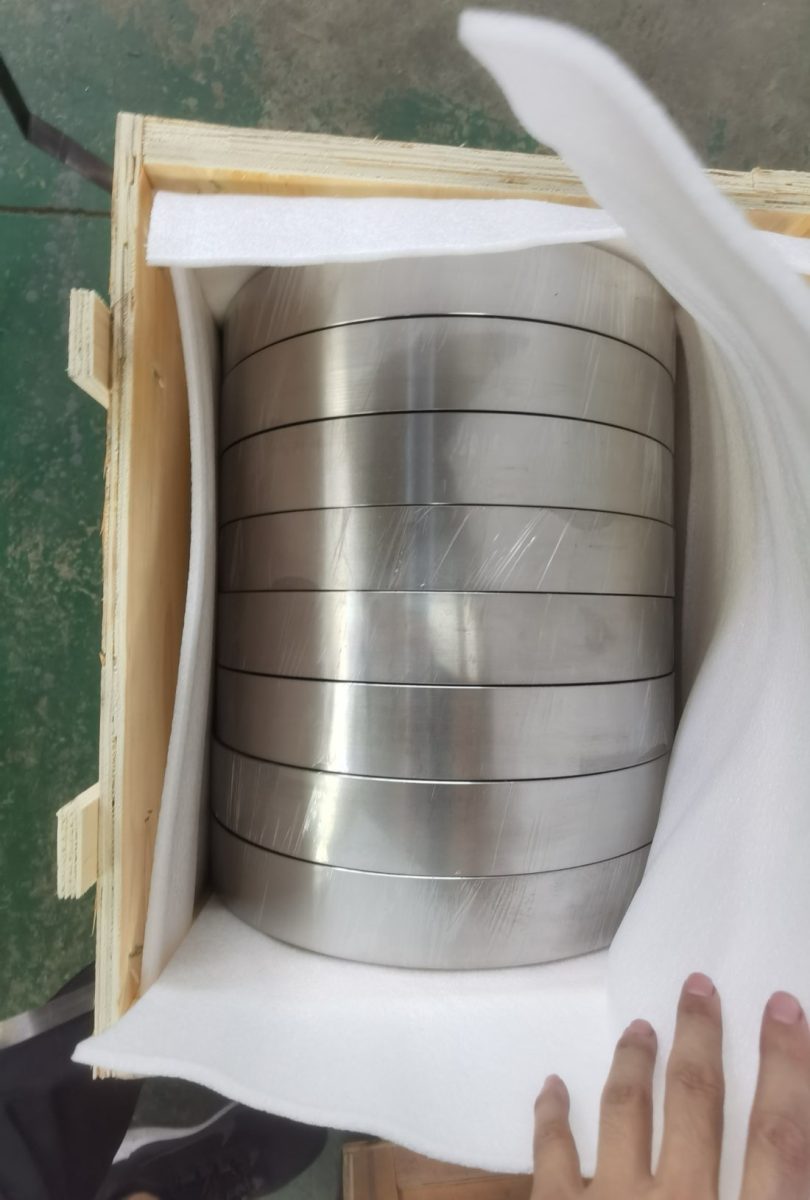
Bind R53400 to the forged shape and heat
State Grade 12 / UNS R53400 and the exact ASTM B381 or ASME SB381 revision, then attach the forging drawing. Identify ring, disc, block, shaft, sleeve or custom preform; include finished envelope, rough-forged envelope, machining allowance, grain-flow intent and datums. Ask the supplier to name the melt source, parent ingot or billet, forging subcontractors and final heat-treatment site. The drawing should show zones that cannot be repaired and locations where a test coupon may be removed without invalidating the part. If pressure-equipment code rules or an approved-vendor list apply, place them in the RFQ instead of assuming B381 supplies them.
| Control point | Buyer input | Required supplier return |
|---|---|---|
| Identity | Grade 12/R53400, B381 or SB381 revision and source restrictions | Original heat chemistry, producer, parent stock and deviations |
| Shape | Finished and buy-to-forge drawing, datums and stock allowance | Forged envelope, machining model, weight and process feasibility |
| Thermal route | Working window, annealed condition and prohibited repair/reheat | Forging and furnace sequence, load record and final condition |
| Coupons | Location, orientation, prolongation/removal rule and tests | Coupon map, specimen identity and actual mechanical results |
| NDE/genealogy | UT/PT zones, method, coverage, criteria and piece marking | Plan, reports and heat-parent-forging-piece chain |
Plan coupons before metal flows
A Grade 12 valve-body blank may begin as billet, receive several reductions, be annealed, proof machined and then examined. If the purchase order asks for a coupon after the forging is complete but never reserves a prolongation, the supplier may have no representative test location. Agree the coupon source, orientation and removal point before work begins. Map critical wall transitions, bosses and bore intersections on the drawing so the forging plan can place metal flow and inspection access deliberately. If the part will be weld overlaid, bored or finish heat treated by another party, define which condition the forging supplier certifies. Website statements about corrosion service do not replace the equipment designer’s review of hot brine, crevices, deposits, temperature and upset chemistry.
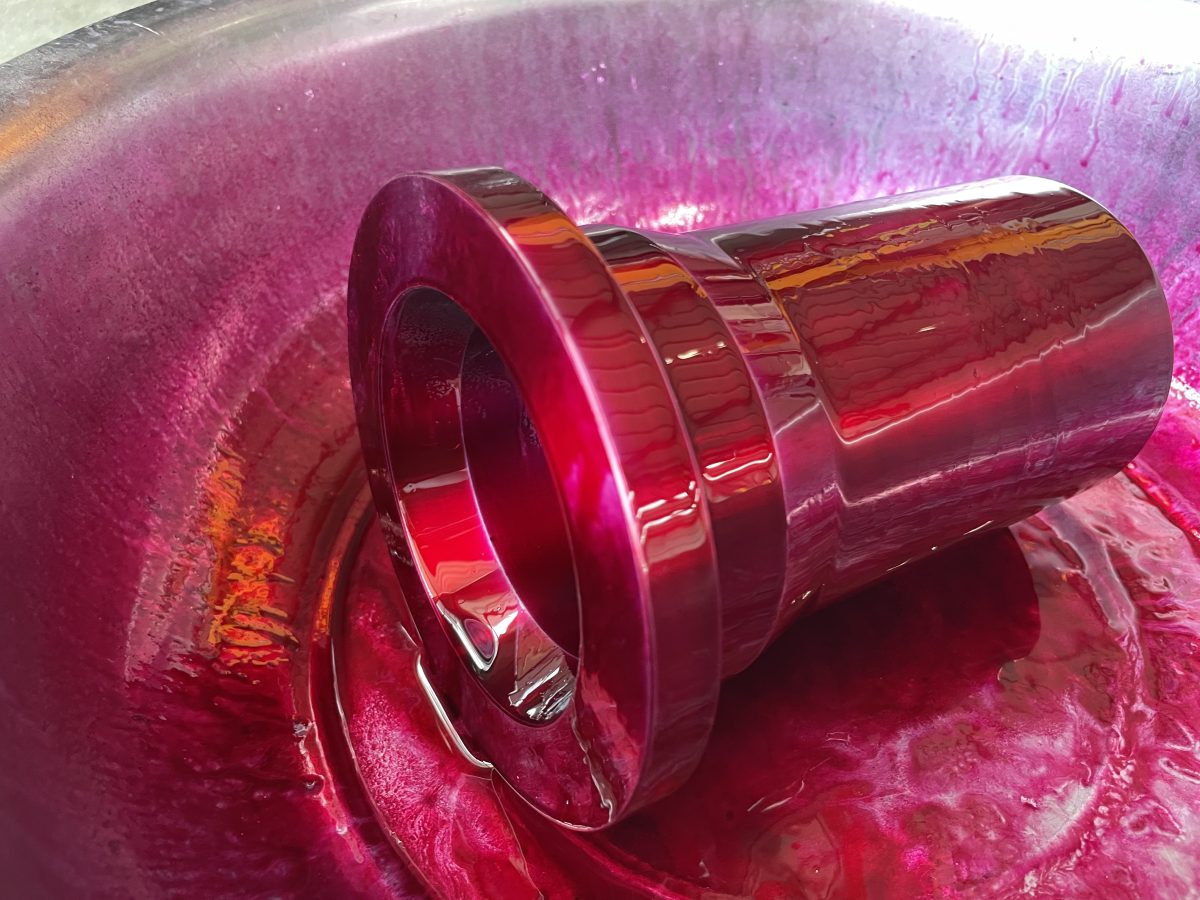
Reconcile the forging genealogy
At release, follow one selected part backwards. Its permanent mark should connect to the final dimensional report, PT and UT reports, heat-treatment load, mechanical-test record, original MTC, parent billet and source heat. Review actual nickel and molybdenum results under the ordered R53400 limits and investigate any copied UNS conflict. Confirm that UT coverage and acceptance match the drawing geometry and ordered method; a statement such as UT passed is insufficient. PT should identify the stage and surfaces examined. Inspect as-forged or proof-machined surfaces for laps, seams, grinding, weld repair, residual alpha case or evidence of interstitial contamination. Record final allowance so a clean forging still contains enough stock for the buyer’s machining plan.
Make route differences visible
Require each bidder to return the same route sheet. A lower mass or shorter lead time may reflect different starting stock, fewer reductions, a different coupon plan or omitted examination. Price technical options separately, but keep them beside the affected operation so reviewers can see what changes the deliverable.
| RFQ group | Buyer states | Supplier returns |
|---|---|---|
| Duty | Part function, process media, design condition and code boundary | Material assumptions, exclusions and required engineering decisions |
| Material | R53400, revision, melt/source and condition restrictions | Producer, heat, parent stock, route and deviations |
| Drawing | Finished/rough geometry, allowance, datums and grain-flow intent | Manufacturing model, input mass, stages and subcontractors |
| Testing | Coupon plan, chemistry, tensile, UT/PT and dimensional hold points | ITP, specimen map, methods, criteria and reports |
| Traceability | Piece marking and complete genealogy to original melt | Indexed chain through cut, forging, heat treatment and machining |
| Commercial | Quantity, trial piece, packing, destination and required date | MOQ, yield, route lead time, validity and exclusions |
Beiyu enquiry route for Grade 12 forgings
Beiyu sits outside the five-company comparison. Its Grade 12 forging enquiry starts with R53400, the exact material revision and a controlled finished plus buy-to-forge drawing. The return records source heat, parent stock, forging stages, thermal history, machining allowance, coupon location and orientation, UT/PT zones, acceptance criteria, dimensional results, piece marks, quantity and delivery. Current capability is confirmed against the geometry and inspection plan rather than inferred from a general forging page.
Use the Grade 12 titanium forgings, general titanium forging comparison, titanium forging grade selection and titanium forgings for chemical processing for the product route, broader comparison and adjacent engineering controls. Send drawings, quantity, inspection scope, required date and destination with the controlled schedule. Resolve every returned exception before award.
Related supplier lists and supply ranges
- titanium forgings supply range
- Grade 7 Titanium Forging Suppliers
- Top Titanium Forging Suppliers
- all supplier lists by product family
Specification detail with sources
Beiyu Titanium publishes this list and is not part of the comparison above. For readers who want the publisher’s own figures on the same basis they would ask of any supplier on this page, the material is specified to ASTM B381, and each order carries an EN 10204 type 3.1 certificate with heat and pour numbers by order scope.
Forgings are quoted from the drawing; ring rolling and open die forging both run in the Beiyu production route, with the ring envelope covering OD 50 to 2000 mm, ID 10 to 900 mm and height 20 to 400 mm.
These are Beiyu published supply figures and inspection parameters, not limits taken from the standard; limit values belong to ASTM B381 and are confirmed against the exact edition named on the purchase order. Certification is stated as a production capability, and no stock position, delivery time or price is implied by any figure on this page.