
Most tungsten ends up in cemented carbide. The US Geological Survey estimates that about 60% of the tungsten consumed in the United States in 2025 went into cemented carbide parts for cutting and wear-resistant applications, mainly in construction, metalworking, mining and oil and gas drilling. The rest went into alloys and specialty steels; into electrodes, filaments, wires and other components for electrical, electronic, heating, lighting and welding applications; and into chemicals. Two properties sit behind the metal uses: the USGS describes tungsten as having the highest melting point and one of the highest densities of all metals, and this site uses 19.25 g/cm3 as its reference density for weight estimates. The largest use, cemented carbide, depends on a different property, the hardness of tungsten carbide.
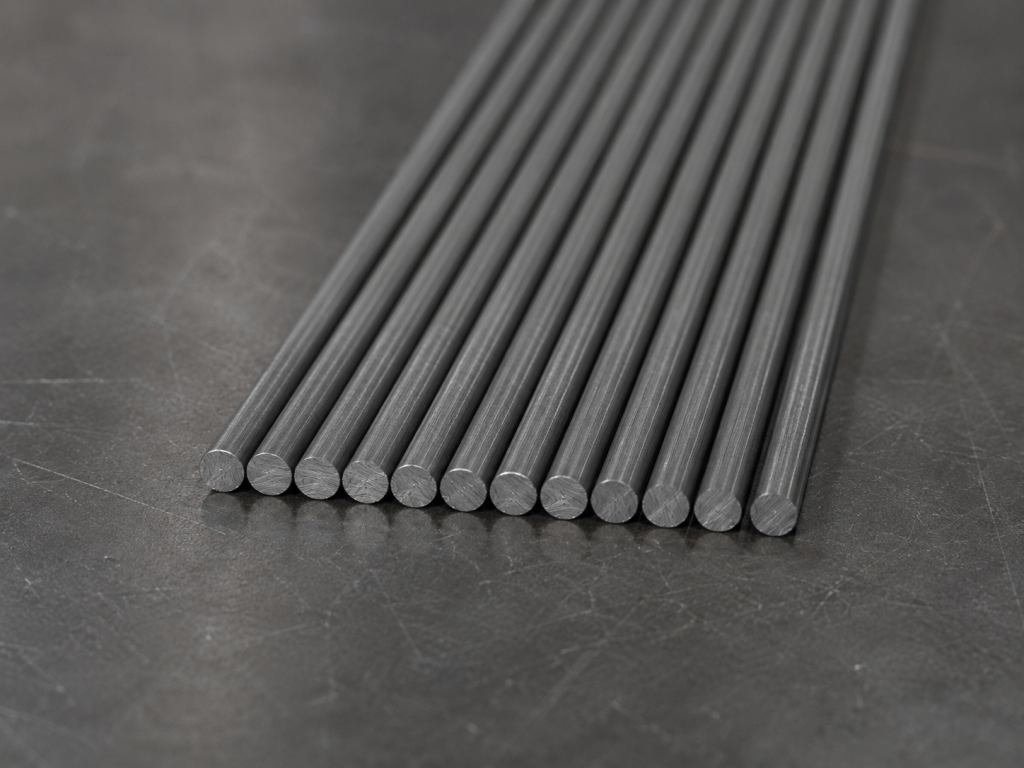
Where tungsten goes, by product family
| Product family | What it is | Typical uses |
|---|---|---|
| Cemented carbide | Hard tungsten carbide grains held in a metal matrix | Cutting tools, drilling and mining tools, wear parts; about 60% of US consumption |
| Alloys and specialty steels | Tungsten as an alloying element | Specialty steels and other alloys |
| Pure tungsten mill products | Wire, rod, bar, sheet, plate and foil | Filaments, welding electrodes, furnace heating elements and parts, X-ray tube components, electrical contacts |
| Tungsten heavy alloy | Tungsten bonded with nickel-iron or nickel-copper | Balance weights and counterweights, rotating inertia members, radiation shielding, vibration damping |
| Chemicals | Tungsten compounds | Chemicals for various applications |
The split matters to a buyer because the solid product families are bought against different documents: carbide by grade and binder, heavy alloy by ASTM B777 class, pure tungsten flat products by ASTM B760, and pure tungsten bar or rod by the buyer’s own material specification.
Pure tungsten: wire, rod and sheet for heat and electrons
Pure tungsten is used where a part has to survive temperatures that would melt or soften other metals, or has to emit electrons or X-rays.
| Use | Form | Why tungsten |
|---|---|---|
| Lamp and electron tube filaments | Drawn wire, including thoriated filament wire | Withstands the temperatures at which a filament glows or emits electrons; ASTM F288 covers wire for electron tubes and lamps |
| TIG (gas tungsten arc) welding electrodes | Pure and oxide-dispersed tungsten rod | Serves as the non-consumable electrode; AWS A5.12 classifies pure and oxide-dispersed tungsten electrodes for gas tungsten arc welding and plasma arc welding and cutting |
| Furnace heating elements and hot-zone parts | Rod, wire, sheet | Used in high-temperature furnaces, run in vacuum or inert gas because tungsten oxidises in hot air |
| X-ray tube anodes and cathode filaments | Disc, wire | Described by the IAEA as the optimum anode material for diagnostic X-ray tubes; the cathode filament is typically tungsten wire of about 0.2 to 0.3 mm |
| Flat parts made to drawing | Plate, sheet and foil | Parts cut to drawing from plate, sheet or foil; ASTM B760 covers wrought unalloyed tungsten plate, sheet and foil and names no specific applications |
Ordinary incandescent filaments have been phased out in many countries, but tungsten wire is still specified for lamps and electron tubes (ASTM F288), and the welding and furnace uses do not depend on lighting.
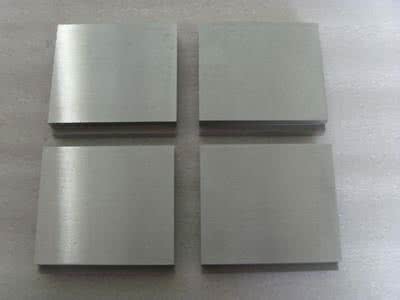
Tungsten heavy alloy: weight in a small space
Heavy alloy keeps most of tungsten’s density but machines far more easily than pure tungsten, which is why it is used for non-furnace duties. ASTM B777 lists it for uses that need a lot of mass, or a lot of radiation stopping power, in a small envelope: among its intended uses are weights and counter-balances for static or dynamic balancing, high-speed rotating inertia members, radiation shielding and vibration damping. The standard also notes that stiffness, radiation attenuation and density all rise as the tungsten content of the alloy rises. The binder also changes the magnetic answer: nickel-iron grades are slightly magnetic and nickel-copper grades are not, as set out on the is tungsten magnetic page.
Cemented carbide: the largest use
Cemented carbide is not tungsten metal. It is made by sintering tungsten carbide powder with a cobalt or nickel binder into parts for cutting and wear resistance. Its hardness and wear resistance are what the cutting and wear-resistant applications buy, and the USGS names construction, metalworking, mining and oil and gas drilling as the main industries for those carbide parts.
Common follow-up questions
Is tungsten still used in light bulbs? Far less than before. Incandescent filaments have been phased out in many countries, but ASTM F288 still specifies tungsten wire for lamps and electron tubes, and the welding, furnace and X-ray uses do not depend on lighting.
Why is tungsten used for radiation shielding? Because of its density and high atomic number (Z = 74). ASTM B777 ties radiation attenuation to tungsten content in heavy alloy, and medical physics references describe tungsten as a highly attenuating material for X-ray work.
What is tungsten used for in welding? As the non-consumable electrode in TIG welding and plasma arc welding and cutting. AWS A5.12 classifies pure and oxide-dispersed tungsten electrodes for these processes.
Is tungsten a critical mineral? Yes. Tungsten is on the final 2025 US list of critical minerals published by the USGS in November 2025, and on the European Union’s fifth list of critical raw materials, from 2023.
Specification detail with sources
About 60% of the tungsten consumed in the United States was used in cemented carbide parts for cutting and wear-resistant applications, with the remainder in alloys and specialty steels, in electrical, electronic, heating, lighting and welding components, and in chemicals (USGS Mineral Commodity Summaries 2026, Tungsten). Tungsten is described as having the highest melting point and one of the highest densities of all metals, and tungsten metal powder as the feedstock for coils, contacts, electrodes, filaments, rods, sheets and wires (USGS Minerals Yearbook 2021, Tungsten). ASTM B777 lists weights and counter-balances, rotating inertia members, radiation shielding and vibration damping among the intended uses of tungsten-base high-density alloy and states that stiffness, radiation attenuation and density increase with tungsten content (ASTM B777, §1.3). ASTM F288 covers tungsten wire for electron tubes and lamps, including thoriated filament wire (ASTM F288, scope), and AWS A5.12 classifies pure and oxide-dispersed tungsten electrodes for gas tungsten arc welding and plasma arc welding and cutting (AWS A5.12M/A5.12). Tungsten is described as the optimum anode material for diagnostic X-ray tubes, with a cathode filament typically of tungsten wire about 0.2 to 0.3 mm in diameter (IAEA, Diagnostic Radiology Physics, 2014, §5.3). Tungsten is on the final 2025 US list of critical minerals (US Geological Survey, November 2025) and on the EU’s fifth list of critical raw materials (European Commission, 2023).
The 19.25 g/cm3 density is the reference value this site uses for tungsten weight estimates.
Ordering tungsten for these uses
State the material family first: pure tungsten and heavy alloy are ordered against different documents.
| Material family | Document that governs the order | What the enquiry states |
|---|---|---|
| Pure tungsten bar or rod | The buyer’s material specification | Grade (W1 or W2), diameter, length, condition, surface |
| Pure tungsten plate, sheet or foil | ASTM B760 | Thickness, width, length, condition, surface |
| Tungsten heavy alloy | ASTM B777, with the class | Composition and class, dimensions, any magnetic requirement |
The tungsten category page lists the Beiyu Titanium range: W1 and W2, plus W-Ni-Fe, W-Mo, W-Cu and W-La. Tungsten bar and rod is reviewed in diameters from 1.6 mm to 70 mm against the buyer’s own material specification, since ASTM B760 is written for flat products, not bar, and ASTM B777 applies once a heavy alloy class is ordered. Send the composition, dimensions, condition, surface and required documents, and these are checked against the drawing before a quotation is issued.
For the W-Mo, W-Cu and W-La compositions, state the composition and the document you are ordering against; these are reviewed the same way as pure bar and rod.