
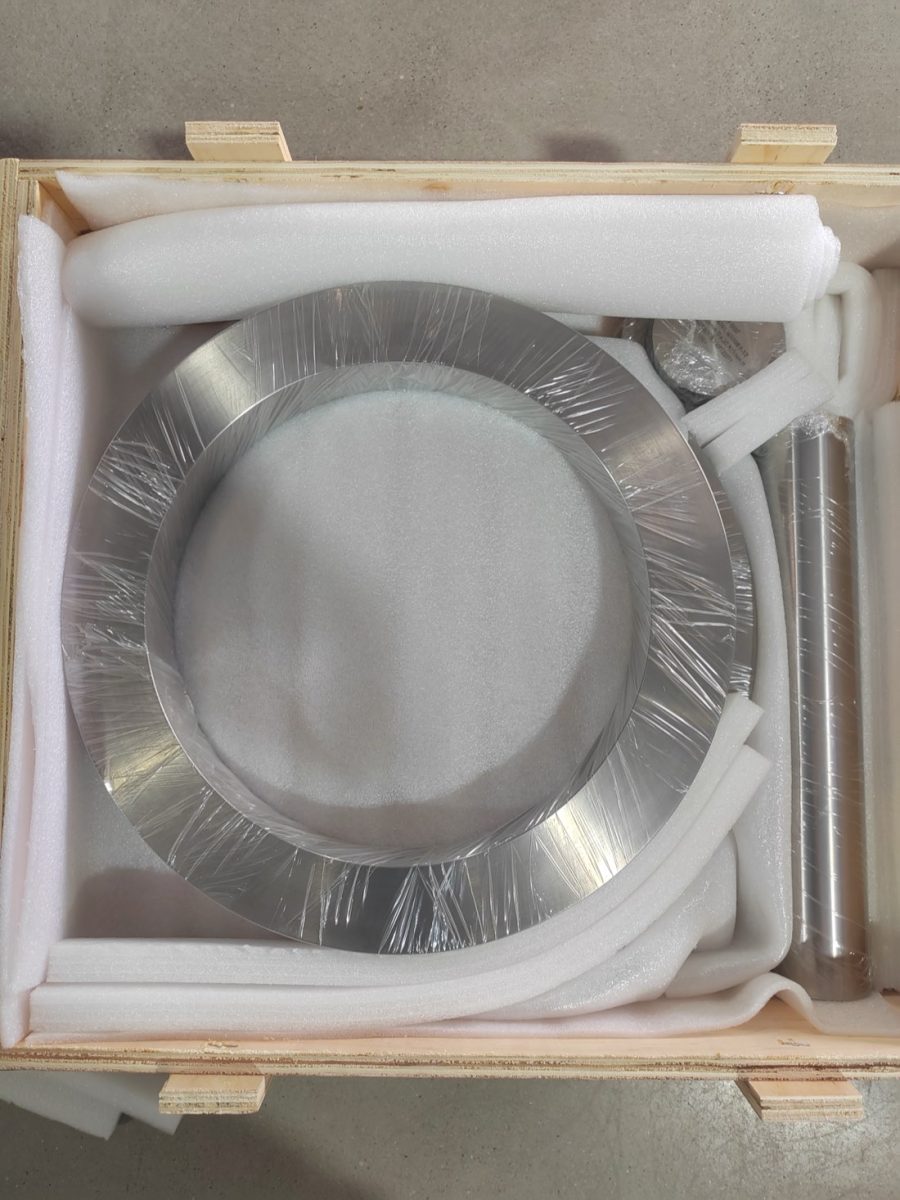
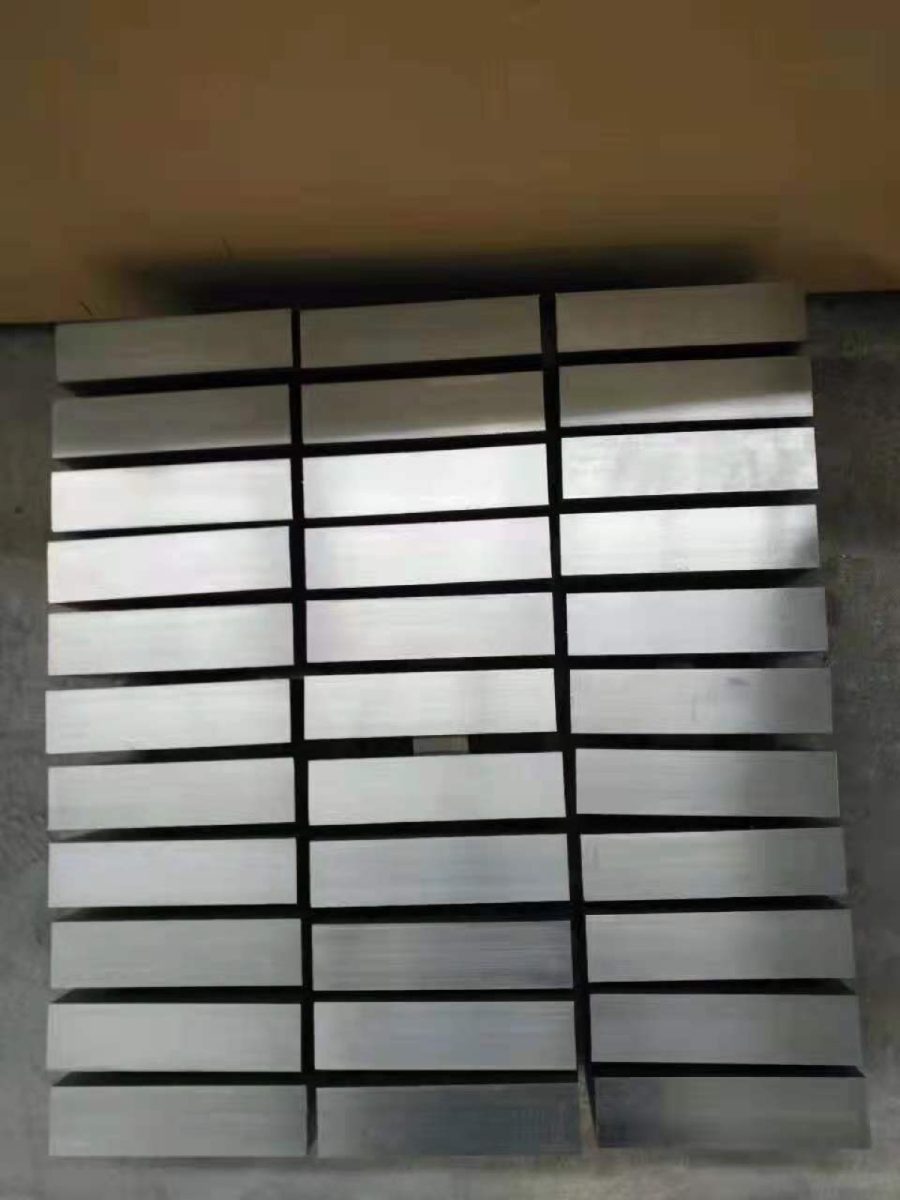
Titanium slabs and billet for forging and rolling stockApplicable standard or RFQ reference
Grade, slab/billet size, weight, surface, chemistry and ultrasonic needCore information needed for quotation
Thickness, width, length, section size, weight and cutting allowanceDimensional review before production
MTC / EN 10204 3.1Traceability documents when required
Acceptance is by the ordered specification. Final grade, chemistry, dimensions, inspection and documentation are confirmed by the purchase specification and mill test certificate.
Titanium Slabs and Billet for Forging, Rolling and Machining
Titanium slabs and billet are used as starting stock for forged products, rolled plate, bar conversion, machined blocks and custom titanium components. Buyers normally request this material when the final part requires a specific grade, heat number, section size or machining allowance before downstream processing.
Beiyu quotes titanium slabs and billet according to the buyer's grade, standard, dimensions and intended processing route. The RFQ should identify whether the material will be forged, rolled, cut into blocks, machined directly or used for a customer-controlled production step.
Grades and Standards
- Common grades: Grade 2, Grade 5 / Ti-6Al-4V, Grade 7, Grade 12 and project-specified titanium alloys.
- Possible references: ASTM B348 for titanium bar and billet-related material, ASTM B381 for forgings when the billet is converted into forged parts, or customer material specification.
- Condition: forged, hot-worked, annealed or project-specified condition depending on grade and downstream process.
Size and RFQ Details
For slabs, buyers should state thickness, width, length, tolerance, surface condition and cutting requirement. For billet, provide diameter or section size, length, tolerance, weight or quantity and whether saw-cut ends are acceptable. If the billet is used for forging, include required forging ratio, machining allowance and any ultrasonic testing requirement.
Applications
Titanium slabs and billet are used for titanium plate rolling, ring and sleeve forgings, machined blocks, valve and pump components, aerospace-related blanks, chemical equipment parts and custom industrial titanium components. The final material choice should follow the drawing, process route and acceptance standard.
Inspection and Documentation
Buyers may request mill test certificate, heat number traceability, chemical composition, mechanical properties, dimensional inspection and EN10204 3.1 documentation. Ultrasonic testing, PMI testing or third-party inspection should be specified before quotation when required by the purchase specification.
Packing and Export Information
Billet and slab material should be marked by grade, size and heat number when traceability is required. Heavy pieces may need wooden pallet or wooden case packing, corrosion-resistant wrapping and protection at machined or saw-cut surfaces.
FAQ
What is the difference between titanium billet and titanium slab?
Billet is normally a bar-like starting stock for forging, machining or conversion. Slab is wider stock commonly used for rolling, plate production or cut-to-size industrial blanks.
What information is needed for a titanium billet RFQ?
Send grade, standard, diameter or section size, length, quantity, tolerance, condition, surface requirement and document requirements.
Can billet be quoted for forging projects?
Yes. Include the final forged part drawing, grade, forging allowance, heat treatment condition and inspection requirement so the billet route can be reviewed correctly.
Procurement Notes for Conversion Stock
When titanium slabs or billet are purchased for conversion, the buyer should define the next operation before quotation. Material intended for rolling may need different section size, surface condition and heat control than billet intended for forged rings or machined blocks. If the downstream process is controlled by the buyer, include the target final product, expected yield allowance and any acceptance criteria that must be maintained after cutting or forging.
For repeat orders, it is useful to keep grade, heat number, size tolerance, marking method and packing method consistent across shipments. If multiple billets are ordered for one project, state whether heat separation, individual marking or bundled packing by size is required.
Titanium billet is semi-finished conversion stock, hot worked or forged from ingot to a cross-section larger than 16 in.², and converted onward into forgings, bar or other mill product. It is covered by ASTM B348, the same specification that covers titanium bar, and it is ordered by grade, section size, condition and the certificate the downstream standard requires.
What is titanium billet, and how does it differ from ingot, slab and bar?

ASTM B348 separates bar from billet by cross-section, not by how far along a process route the material sits. Under the standard, bar is a semi-finished solid section of 16 in.² or less, while billet is hot worked or forged from ingot, has a cross-section larger than 16 in.², and has a width less than five times its thickness. Slab is broad flat stock for the rolling route and is a different form again. Ingot is the melted form the others are worked from, produced by vacuum arc remelting or other consumable melting routes. These are related product forms rather than four sequential stages, which is why one order can legitimately call for bar and another for billet out of the same heat.
The practical difference on an order is the cross-section and what the material is expected to do next. Bar is normally bought to be cut and machined. Billet is bought to be forged, extruded or rolled again, so the buyer cares about section size, internal soundness and the starting condition rather than a finished surface.
Titanium billet grades, UNS numbers and chemistry
ASTM B348 covers bars and billets across the commercially pure and alloyed titanium grades. The grades below are the ones ordinarily ordered as conversion stock. Limits are heat analysis maximums in percent unless the entry says otherwise.
| Grade | UNS | W.Nr | Nominal composition | Selected chemistry limits, weight percent max |
|---|---|---|---|---|
| Grade 1 | R50250 | 3.7025 | Unalloyed titanium | O 0.18, Fe 0.20, N 0.03, C 0.08, H 0.015 |
| Grade 2 | R50400 | 3.7035 | Unalloyed titanium | O 0.25, Fe 0.30, N 0.03, C 0.08, H 0.015 |
| Grade 5 | R56400 | 3.7165 | Ti-6Al-4V | O 0.20, Fe 0.40, N 0.05, C 0.08, H 0.015 |
| Grade 7 | R52400 | 3.7235 | Unalloyed plus 0.12 to 0.25 Pd | O 0.25, Fe 0.30, N 0.03, C 0.08, H 0.015 |
| Grade 12 | R53400 | 3.7105 | Ti-0.3Mo-0.8Ni | O 0.25, Fe 0.30, N 0.03, C 0.08, H 0.015 |
| Grade 23 | R56407 under ASTM B348 | 3.7165 | Ti-6Al-4V ELI | O 0.13, Fe 0.25, N 0.03, C 0.08, H 0.0125 |
Note the Grade 23 row. Under ASTM B348, B265, B863 and B381 the ELI grade is UNS R56407; only the surgical implant specification ASTM F136 designates its Ti-6Al-4V ELI as UNS R56401. Ordering ELI billet against the wrong number is a routine cause of certificate disputes, and the distinction is set out in our Grade 23 titanium data sheet.
Mechanical properties: why the B348 table does not settle a billet order
This is the point that causes the most argument at goods inward. ASTM B348 Table 2 gives its mechanical minimums for sections up to 3 in. thick and up to 10 in.² in area. Billet, by the standard's own definition, has a cross-section larger than 16 in.², so those figures sit outside the range they were written for. Mechanical requirements for billet-size sections are agreed between the purchaser and the manufacturer, and that agreement belongs on the purchase order rather than being assumed from the table. The values below are the Table 2 reference minima in the annealed condition, useful for the grade comparison and for the bar-size end of an order, not automatically an acceptance standard for a large billet.
| Grade | Tensile strength, min | Yield strength 0.2 percent, min | Elongation, min |
|---|---|---|---|
| Grade 1 | 240 MPa (35 ksi) | 138 MPa (20 ksi) | 24 percent |
| Grade 2 | 345 MPa (50 ksi) | 275 MPa (40 ksi) | 20 percent |
| Grade 5 | 895 MPa (130 ksi) | 828 MPa (120 ksi) | 10 percent |
| Grade 7 | 345 MPa (50 ksi) | 275 MPa (40 ksi) | 20 percent |
| Grade 12 | 483 MPa (70 ksi) | 345 MPa (50 ksi) | 18 percent |
| Grade 23 | 828 MPa (120 ksi) | 759 MPa (110 ksi) | 10 percent |
ASTM B348 also sets a reduction of area minimum that ASTM B265 flat product does not carry, and tension testing follows Test Methods E8 and E8M. Where the billet will be converted further, the properties that matter are usually those of the finished part after conversion, so the order should state whether the acceptance test applies to the billet as supplied or to the converted product.
Billet as forging stock, and where slab sits
ASTM B381 section 5.1 requires the material used for forgings to conform to ASTM B348, so a purchase order written to B381 already imposes the stock requirement; it does not have to be argued for. Citing B348 separately is worth doing when the stock has to be reported and certified in its own right, for example when the buyer wants a certificate for the billet as delivered as well as for the finished forging. Where billet feeds a rolling or extrusion route instead, state which standard the finished form will be accepted against, because that is not implied by the stock standard.
Slab is the exception buyers most often overlook. ASTM B348 does not cover slab, so a slab requirement has to be written out on the purchase order in its own terms: chemistry, condition, dimensions and any inspection. Beiyu Titanium supplies ASTM B348 billet with EN 10204 3.1 mill test certificates traceable to the production heat, and supplies slab to the chemistry, condition and dimensions agreed on the order. Our ASTM B381 forgings guide covers the forging side, and the ASTM B348 bar and billet guide covers the stock side.
Standards and equivalents for titanium billet
| Scope | ASTM | ASME | Note |
|---|---|---|---|
| Bar and billet | ASTM B348 | SB-348 | The governing specification for billet |
| Forgings from billet | ASTM B381 | SB-381 | Requires stock conforming to B348 |
| Plate and sheet from slab | ASTM B265 | SB-265 | Flat product route |
| Aerospace Grade 5 bar and forging stock | AMS 4928 | - | Holds hydrogen and iron tighter than ASTM B348 |
| European designation | - | - | Werkstoffnummer in the 3.7xxx series, see the cross-reference |
Where a drawing carries a German material number rather than an ASTM grade, the titanium grade cross-reference tool maps the designations against each other.
How to specify titanium billet on an order
A billet enquiry that can be quoted without a second round of questions states seven things: the grade and UNS number; the governing standard, normally ASTM B348 or its ASME equivalent; the section shape and size, round or square, with the tolerance that matters for the conversion route; the length or the piece weight; the condition, as-forged, annealed or as agreed; what the billet will be converted into and against which standard that finished form will be accepted; and the certificate requirement, normally EN 10204 3.1 with heat-number traceability. Beiyu Titanium supplies titanium billet and slab to ASTM B348 with EN 10204 3.1 mill test certificates traceable to the production heat.
Common applications
Review export and fabrication support22
Ti
Titanium
Plate and sheet rolling stockConfirm grade, size, tolerance, surface, inspection and certificate scope before quotation.Forging billet preparationConfirm grade, size, tolerance, surface, inspection and certificate scope before quotation.Machining block stockConfirm grade, size, tolerance, surface, inspection and certificate scope before quotation.Heat-traceable titanium conversion workConfirm grade, size, tolerance, surface, inspection and certificate scope before quotation.
Specification detail with sources
Slabs and billet are input material for a later operation, and the standard that governs them sits one stage before the standard that governs a finished forging. ASTM B381 requires material conforming to ASTM B348 when forgings are produced to it (ASTM B381, materials and manufacture), which puts bar and billet at the start of the route and the forged shape at the end of it. ASTM B348 gives the grade, UNS number and composition for each grade in its scope, listing Grade 2 as unalloyed titanium under UNS R50400, Grade 5 with 6 percent aluminum under UNS R56400 and Grade 23 under UNS R56407 (ASTM B348, scope).
A slab going on to rolling and a billet going to a forging press are both starting stock. Whether a piece is a forging follows from the work done on it, and ASTM B381 defines a forging as any product of work on metal formed to a desired shape by impact or pressure in hammers, forging machines, upsetters, presses or related forming equipment (ASTM B381, terminology).
| Stage | Standard usually named | Confirmed range |
|---|---|---|
| Bar and billet input | ASTM B348 | Round 1 mm to 500 mm diameter, length to 6000 mm |
| Slab for later rolling | Named by the buyer on the order | Section size taken from the drawing or the rolling schedule and confirmed at quotation |
| Forged bar | ASTM B381 | Diameter 50 mm to 500 mm, length to 3000 mm |
| Ring and disc forgings | ASTM B381 | Ring outside diameter 50 mm to 2000 mm, bore 10 mm to 900 mm, height 20 mm to 400 mm. Disc outside diameter 50 mm to 2000 mm, height 20 mm to 500 mm |
| Block forgings | ASTM B381 | 50 mm to 600 mm across the governing section |
Beiyu reviews slab and billet enquiries against those ranges, which are a supply envelope rather than a stock or output statement. The confirmed ranges cover bar, billet and the forged shapes, so a slab section is quoted from the drawing or the rolling schedule the buyer works to.
Reported chemistry and tensile values are produced by referenced methods, among them ASTM E8 for tension testing and ASTM E1409 for oxygen and nitrogen by inert gas fusion (ASTM B381, referenced documents). Naming a method explains how a reported result was obtained. It does not create an inspection requirement by itself, and on starting stock the stage matters: ultrasonic examination, macro or micro examination and witnessed inspection are ordered items with their own method, extent and acceptance criteria, and an examination carried out on the billet does not cover the forging or the rolled product made from it later.
Largest forged sizes reviewed against, in both units
The envelope above is written in millimetres because that is how the drawing usually arrives. Buyers working to inch drawings compare capacity in inches, so the same limits are restated below in both units. Nothing here is new capability; it is the same envelope expressed so it can be compared against a supplier list without converting anything first.
| Forged form | Largest size reviewed against | Same limit in inches | Governing dimension |
|---|---|---|---|
| Ring | Outside diameter up to 2000 mm | up to 78.7 in | Outside diameter, with inside diameter to 900 mm (35.4 in) and height to 400 mm (15.7 in) |
| Disc | Outside diameter up to 2000 mm | up to 78.7 in | Outside diameter, with thickness to 500 mm (19.7 in) |
| Block | Up to 600 mm across the governing section | up to 23.6 in | The section named on the drawing |
| Forged round bar | Diameter up to 500 mm, length to 3000 mm | up to 19.7 in diameter, 118 in long | Diameter, then length |
These are production envelope limits reviewed against, not a stock statement, and not every combination of grade, size, condition and inspection exists across the whole range. The ordered combination is confirmed at quotation. Where a drawing sits outside a limit above, say so in the enquiry rather than rounding the part down, because the answer may simply be no, and knowing that early is worth more than a rounded drawing.
Two fields decide the answer faster than the size itself. The governing dimension is the one the tolerance applies to, and on a ring that is not always the outside diameter. The supply condition, stated as R or M on the order, belongs on the same line as the size, since the same nominal size in a different condition is a different piece of work.
Compare related titanium products
Titanium BilletProduct
Reference
RFQ focus
Commercial Titanium Ingot
CP and alloy
Remelt stock
>
Titanium Slabs and Billet
Forging / rolling stock
Conversion stock
Solid Titanium Block
Machining blank
CNC block stock
>
Grade 5 Forging Block
ASTM B381
Forging stock alternative
>
Request a quote for Titanium Slabs and Billet | Forging and Rolling Stock
Send grade, standard, size, condition, quantity and certificate requirements. Beiyu replies with quotation, lead time and documentation scope.