
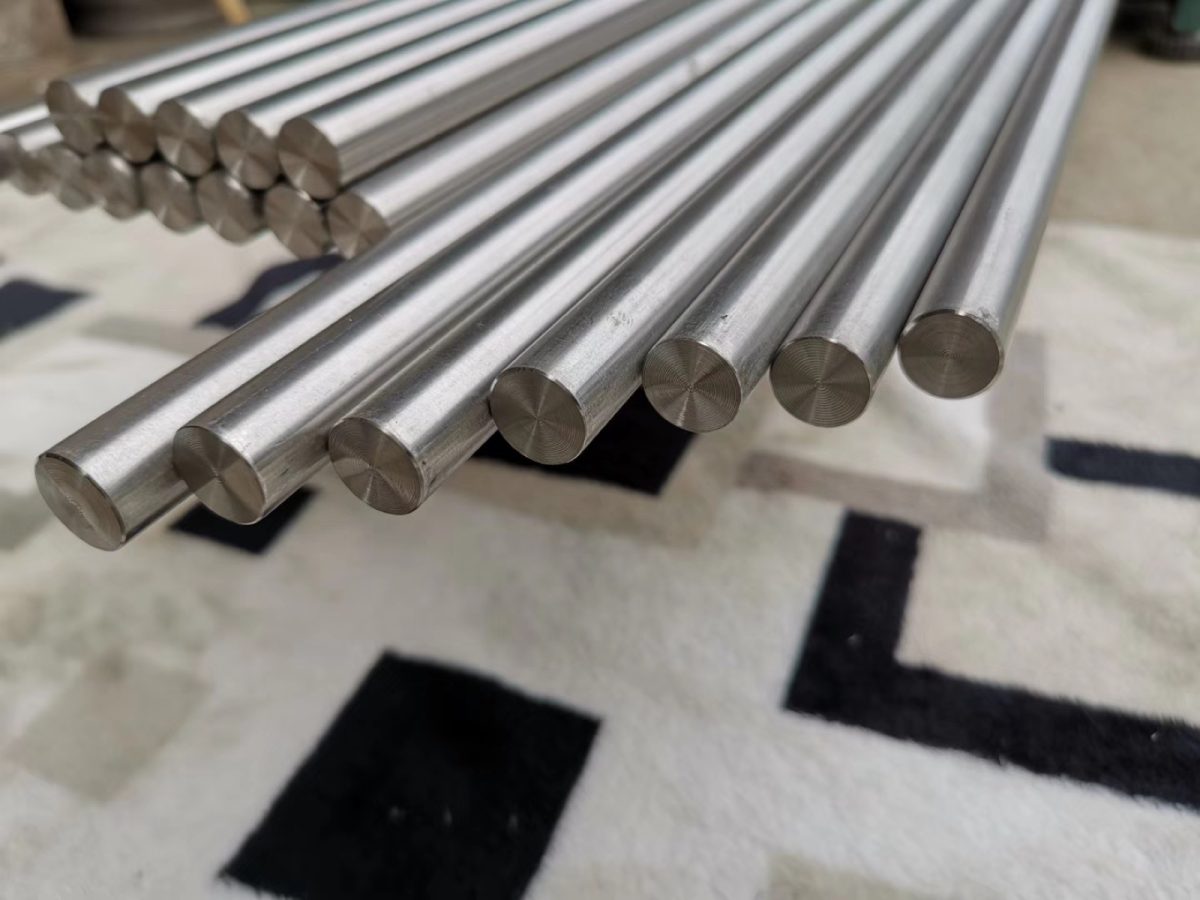
Grade 23 titanium is Ti-6Al-4V ELI, the extra low interstitial version of the Ti-6Al-4V alloy. ELI means the melt is held to tighter oxygen and iron limits than Grade 5, and under the ASTM B-series to a tighter nitrogen limit as well. Those interstitials are what make Ti-6Al-4V notch sensitive, so cutting them buys fracture toughness, damage tolerance and ductility that survives cryogenic temperatures, in exchange for about 7 percent lower minimum tensile strength.
Grade 23 titanium chemical composition
Grade 23 and Grade 5 are the same alloy system. Aluminium and vanadium barely move; what changes is the interstitial and iron ceiling. Limits below are heat analysis from ASTM B348 Table 1, which B265, B381 and B863 repeat, with Grade 5 and F136 alongside.
| Element (weight %) | Grade 23, ASTM B-series | Grade 5, ASTM B-series | ASTM F136 implant |
|---|---|---|---|
| Aluminium | 5.5 to 6.5 | 5.5 to 6.75 | 5.50 to 6.50 |
| Vanadium | 3.5 to 4.5 | 3.5 to 4.5 | 3.50 to 4.50 |
| Oxygen, max | 0.13 | 0.20 | 0.13 |
| Iron, max | 0.25 | 0.40 | 0.25 |
| Nitrogen, max | 0.03 | 0.05 | 0.05 |
| Carbon, max | 0.08 | 0.08 | 0.08 |
| Hydrogen, max | 0.0125 | 0.015 | 0.012 (some published reprints show 0.0125) |
| Yttrium, max | not specified | not specified | 0.005 |
| Residuals, each / total, max | 0.1 / 0.4 | 0.1 / 0.4 | 0.1 / 0.4 |
| Titanium | balance | balance | balance |
Three rows carry nearly all of the engineering difference: oxygen drops from 0.20 to 0.13 percent maximum, iron from 0.40 to 0.25, nitrogen from 0.05 to 0.03. Oxygen is a cheap strengthener, but it stiffens the alpha phase and makes the alloy notch sensitive, so every point removed trades strength for toughness. Iron concentrates in the beta phase and encourages segregation, so ELI pulls it down too.
Two details get flattened by most published Grade 23 data sheets. The industrial B-series holds nitrogen tighter than the implant standard, 0.03 against 0.05 percent, so F136 is not uniformly stricter than B348. And F136 adds a specific yttrium limit of 0.005 percent, where the B-series only catches yttrium under its 0.1 percent per-element residual cap, yttrium from crucible refractory being an implant cleanliness concern.

Grade 23 titanium mechanical properties
Specification minimums for annealed material, not typical values. The ASTM F136 column applies to bar and forgings from 4.75 mm up to but not including 44.45 mm in section. Above that section size F136 drops to 825 MPa (120 ksi) tensile, 760 MPa (110 ksi) yield, 8 percent elongation, and a reduction of area of 20 or 15 percent depending on the size bracket, so an F136 order must state the section size before the acceptance values are settled.
| Annealed minimum | Grade 23, B348 bar | Grade 5, B348 bar | Gr 23, B381 forging | ELI, F136 (4.75 to under 44.45 mm) |
|---|---|---|---|---|
| Tensile strength, min | 828 MPa (120 ksi) | 895 MPa (130 ksi) | 828 MPa (120 ksi) | 860 MPa (125 ksi) |
| Yield strength, 0.2 percent offset, min | 759 MPa (110 ksi) | 828 MPa (120 ksi) | 759 MPa (110 ksi) | 795 MPa (115 ksi) |
| Elongation in 4D, min | 10 percent | 10 percent | 10 percent | 10 percent |
| Reduction of area, min | 15 percent | 25 percent | 25 percent | 25 percent |
ASTM B265 sheet, strip and plate carries the same 828 and 759 MPa minimums for Grade 23, and 895 and 828 for Grade 5, with 10 percent elongation and no reduction of area requirement.
Note the reduction of area row. B348 accepts 15 percent for Grade 23 bar in the annealed condition while demanding 25 percent for Grade 5, and B348 itself requires 25 percent for Grade 23 in the transformed-beta condition; B381 requires 25 percent for Grade F-23 forgings. A drawing calling Grade 23 and separately demanding 25 percent reduction of area asks for more than B348 bar guarantees, and that belongs at order stage, not inspection. B348 also limits these properties to longitudinal sections up to 76 mm thick and 64.5 cm2 in cross section.
Fracture toughness, fatigue and low-temperature ductility
This is why ELI exists, and no specification table shows it: none of B348, B265, B381 or F136 make fracture toughness an acceptance requirement. Treat it as material behaviour, not a certified number.
ATI and Carpenter both state the ELI grade has superior damage tolerance, meaning fracture toughness and fatigue crack growth rate, plus better cryogenic properties. Carpenter adds that toughness rises with lamellar and coarser alpha plus beta structures, so beta annealed Grade 23 outperforms mill annealed at identical chemistry. ATI notes ELI welds beat standard grade welds on ductility, impact strength and toughness.
Published typical plane strain fracture toughness puts Grade 23 around 75 to 90 MPa·m^0.5 against roughly 55 to 75 for Grade 5. These are literature ranges, not specification minimums: toughness varies with microstructure, form and orientation, and is not certified unless bought as a supplementary requirement.
Carpenter publishes axial fatigue limits for annealed Ti-6Al-4V ELI at a stress ratio of 0.06 to 0.1 of 400 to 700 MPa (60 to 100 ksi) smooth, and 140 to 270 MPa (20 to 40 ksi) notched at a stress concentration factor of 3. The spread is wide because high cycle fatigue is governed by microstructure and surface condition: surface finish and the absence of alpha case decide fatigue life as much as the grade on the certificate.
Low temperature is where the interstitial argument becomes unambiguous. Grade 5 loses ductility as temperature falls, because oxygen-strengthened alpha resists slip. Grade 23 keeps usable elongation to liquid hydrogen temperature: published research on ELI with oxygen near 0.10 percent reports yield strength around 1600 MPa and elongation to fracture up to 12 percent at 20 K. Cryogenic vessel and cryogenic component specifications therefore tend to call ELI rather than Grade 5, though which grade applies is set by the governing standard and the purchase order, not by a general rule.
Grade 23 titanium physical properties
Physical properties are essentially unchanged from Grade 5. Typical published data at room temperature.
| Property | Value |
|---|---|
| Density | 4.43 g/cm3 (0.160 lb/in3), range 4.42 to 4.47 |
| Solidus | 1593 to 1616 C (2900 to 2940 F) |
| Liquidus | 1636 to 1674 C (2976 to 3046 F) |
| Beta transus | 975 C (1790 F), range 963 to 991 |
| Modulus of elasticity | 105 to 115 GPa |
| Shear modulus | 41 to 45 GPa |
| Poisson ratio | 0.31 to 0.34 (commonly quoted 0.342) |
| Thermal conductivity | 6.6 to 7.0 W/m·K |
| Specific heat capacity | 526 to 570 J/kg·K at 20 C |
| Coefficient of thermal expansion | 8.6 x 10^-6 /K (20 to 100 C), 9.2 (20 to 315 C) |
| Electrical resistivity | 168 to 175 µΩ·cm |
| Magnetic response | none, relative permeability 1.01 or lower |
Two of these drive shop-floor decisions. Thermal conductivity near 6.7 W/m·K is roughly a seventh that of carbon steel, so cutting heat stays in the tool rather than the chip. Beta transus near 975 C sets the annealing ceiling: exceed it and the equiaxed structure is gone.
Which UNS number applies to Grade 23, R56407 or R56401?

Both are correct. Which belongs on your certificate depends on the standard you ordered to, not on the words Grade 23. This is the most common documentation error on ELI purchases, and several widely cited Grade 23 data sheets print R56401 regardless.
The rule is simple. Every ASTM B-series industrial specification designates Grade 23 as UNS R56407. Only ASTM F136, the surgical implant specification, carries R56401, and that number sits in its title.
| Standard ordered | Product forms covered | Grade designation in the standard | UNS number |
|---|---|---|---|
| ASTM B265 | strip, sheet, plate | Grade 23 | R56407 |
| ASTM B348 | bar, billet | Grade 23 | R56407 |
| ASTM B381 | forgings | Grade F-23 | R56407 |
| ASTM B863 | wire | Grade 23 | R56407 |
| ASTM F136 | strip, sheet, plate, bar, forging bar and wire for surgical implant manufacture | Ti-6Al-4V ELI | R56401 |
| ASTM B348 / B265, Grade 5 | bar, sheet, plate | Grade 5 | R56400 |
The published scope of ASTM B348 reads, verbatim, Grade 23, UNS R56407, titanium alloy, 6 percent aluminum, 4 percent vanadium with extra low interstitial elements, ELI. B265 and B863 use identical wording; B381 uses Grade F-23, UNS R56407. ASTM F136 is titled Standard Specification for Wrought Titanium-6Aluminum-4Vanadium ELI Alloy for Surgical Implant Applications, UNS R56401. The International Titanium Association and ATI both publish ELI under R56407.
Why it matters commercially: if your drawing calls ASTM B348 Grade 23 and the certificate prints R56401, the certificate does not match the specification ordered, and a receiving inspector can reject it. The reverse happens too, with F136 implant stock certified R56407 and the device quality system flagging a traceability gap. The numbers are not interchangeable, because the acceptance packages differ: F136 adds a yttrium limit, allows higher nitrogen, and applies its own product requirements.
Rule for buyers: put the standard first and let the UNS follow it. If a quotation says Grade 23 to ASTM B348 but writes R56401, the F136 number, settle which goes on the certificate before the heat is allocated.
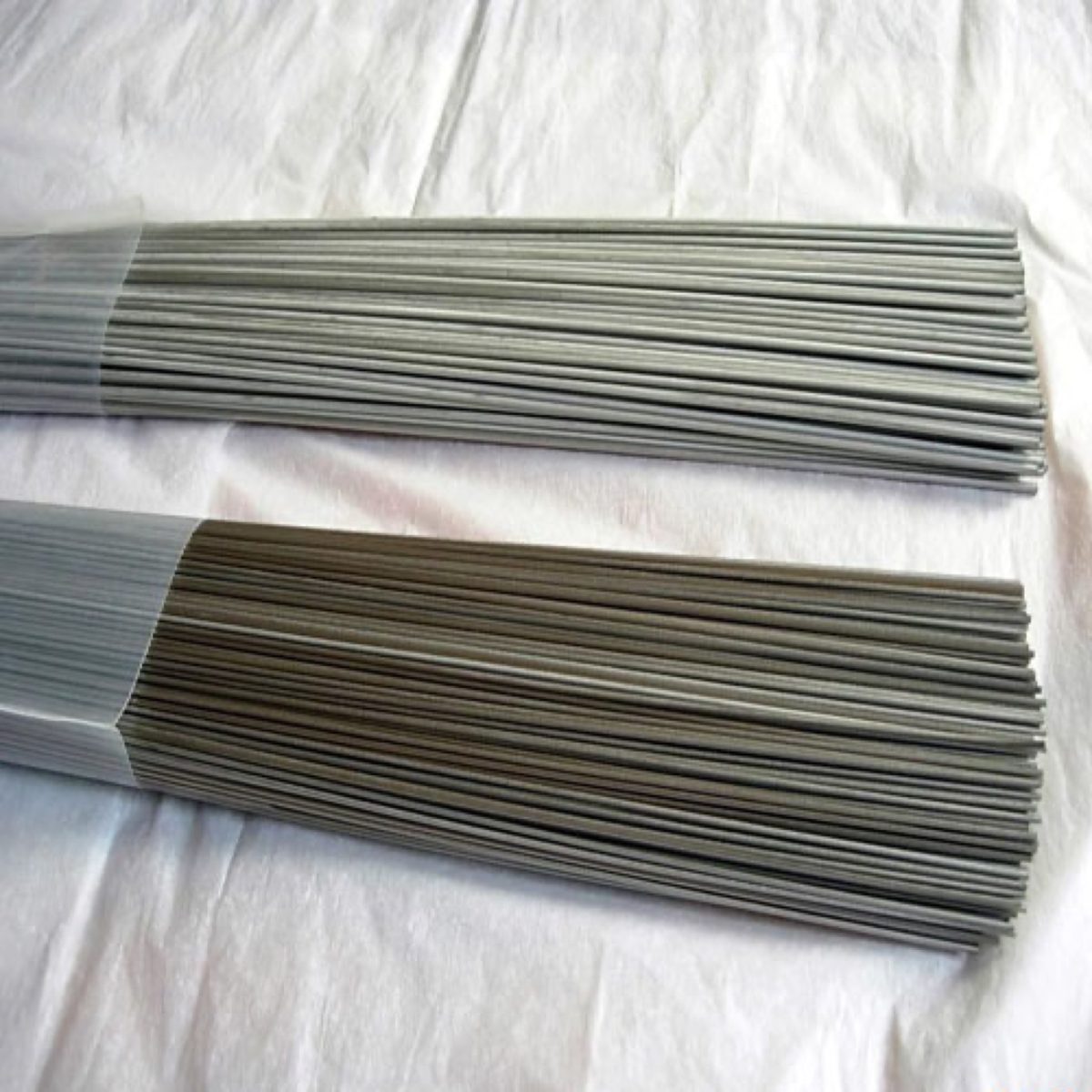
Standards and product forms
Grade 23 is covered across the mill product range. The applicable specification is set by product form, and the UNS follows it.
| Product form | Primary ASTM specification | Other common specifications |
|---|---|---|
| Bar and billet | ASTM B348 Grade 23 | AMS 4930, AMS 4931, ASTM F136 |
| Sheet, strip and plate | ASTM B265 Grade 23 | AMS 4907, ASTM F136 |
| Forgings | ASTM B381 Grade F-23 | ASTM F136 |
| Wire | ASTM B863 Grade 23 | AMS 4956, ASTM F136 |
| Weld wire | AWS A5.16 ERTi-23 | – |
| Seamless and welded pipe | ASTM B861, ASTM B862 | – |
| Fittings | ASTM B363 | – |
| Surgical implant stock | ASTM F136 | ISO 5832-3 |
Acceptance detail by form is in our ASTM B348 bar and billet guide and ASTM B265 sheet and plate guide. See also Ti-6Al-4V ELI titanium bar.
Grade 23 vs Grade 5: when the extra ELI cost is worth paying
Grade 5 is the correct default. It is more widely stocked and carries 895 MPa minimum tensile against 828, so on a statically loaded part sized by yield strength the ELI grade costs more and returns less strength per kilogram.
Grade 23 earns the extra cost when the failure mode is a crack rather than a stress level: fracture-critical parts where a defect must be tolerated rather than avoided, fatigue-loaded parts near their endurance limit, welded assemblies where weld ductility governs, cryogenic service, and implant stock. The cost sits in the melting route, not the alloy content: a 0.13 percent oxygen ceiling calls for selected feedstock and, in normal industry practice, multiple vacuum arc remelting, which narrows what any heat can be certified as.
The choice is worked case by case in our Grade 5 vs Grade 23 titanium comparison. For an RFQ that is still comparing Grade 2, Grade 5 and the corrosion grades in bar form, use the titanium bar grade selection guide.
Applications
Surgical implants. Ti-6Al-4V ELI to ASTM F136 and ISO 5832-3 is the workhorse alloy for load-bearing permanent implants: hip and knee stems, spinal rods and pedicle screws, trauma plates, bone screws, dental components. Biocompatibility comes from the passive titanium dioxide film that reforms instantly in air or body fluid, letting the alloy tolerate chloride brine chemistry. Fatigue is the second reason, an implant being cyclically loaded over millions of cycles. Beiyu supplies mill product in this grade, bar, plate, wire and forgings, which implant manufacturers machine and validate as devices. We do not manufacture finished implants. Detail sits in our medical grade titanium standards guide and the ASTM F136 ELI bar page.
Cryogenic service. Cryogenic vessels, liquid hydrogen and liquid oxygen hardware, and cold-end test rig structures, where retained ductility below minus 196 C is the selection driver.
Fracture-critical and fatigue-loaded parts. Damage-tolerant airframe and rotorcraft components, subsea hardware, pressure vessel sections, and any part designed to a damage-tolerance rather than safe-life philosophy, where the allowable is set by crack growth rather than yield.
How to specify Grade 23 titanium on an order
Most disputes here are documentation disputes. An unambiguous line item carries:
- Standard and grade together, for example ASTM B348 Grade 23, or ASTM F136. Never Grade 23 alone.
- The UNS number matching that standard, R56407 for the B-series and R56401 for F136, so the certificate is checkable on receipt.
- Form, dimensions and tolerance class, plus whether mill annealed or beta annealed where toughness is the driver.
- Surface condition, since alpha case removal governs fatigue life.
- Anything beyond the standard, such as reduction of area above the B348 minimum, an ultrasonic class, or a toughness or fatigue test, raised as a supplementary requirement at enquiry.
- Certification required, including the heat number shown.
Beiyu Titanium supplies Grade 23 mill product to ASTM specifications. When EN 10204 3.1 documentation and heat or lot traceability are required, state the requested results and traceability fields in the RFQ. Send the drawing or specification line and Beiyu will confirm the grade, standard, UNS designation and document scope in the quotation.
Frequently asked questions
Is Grade 23 titanium stronger than Grade 5?
No, not in static strength. Grade 5 has the higher specification minimum, 895 MPa tensile and 828 MPa yield, against 828 and 759 for Grade 23 in the same annealed bar form. Grade 23 is tougher, not stronger: it resists crack initiation and growth better, holds ductility at cryogenic temperature, and performs better in fatigue and in welds.
Can ASTM B348 Grade 23 bar be used to make implants?
Not as a substitute for ASTM F136. The chemistry overlaps heavily, but F136 is what medical device quality systems and regulators recognise for implant stock, and it carries its own UNS number, R56401, plus a yttrium limit and its own product requirements. B348 Grade 23 is industrial, and ordering it for an implant creates a traceability gap that surfaces in a device audit.
Why does Grade 23 titanium cost more than Grade 5?
The cost is in the melt, not the alloy content. Holding oxygen to 0.13 percent maximum and iron to 0.25 percent requires selected feedstock and multiple vacuum arc remelting, and narrows the window within which a heat can be certified, so more of any melt fails to qualify. The uplift varies with form, volume and certification package.
Does Grade 23 titanium contain nickel?
No. Nickel is not an alloying element in Ti-6Al-4V ELI. The composition is titanium with 5.5 to 6.5 percent aluminium and 3.5 to 4.5 percent vanadium, plus controlled interstitials and iron. Nickel is not intentionally added, but like any residual element it can be present in trace amounts, controlled by the residual limit of 0.1 percent per element and 0.4 percent total. Whether a given material is suitable for a nickel-sensitive patient is a decision for the device manufacturer and the clinician against the mill certificate, not something the grade alone settles.
For a view of who else publishes this material and what each one states, see Grade 23 Titanium Bar Suppliers: Five Company Pages Compared.
Specification detail with sources
Ti-6Al-4V ELI implant paperwork runs through two parallel documents, and their acceptance values are not identical. ISO 5832-3, the implant standard for wrought Ti-6Al-4V, lists a minimum tensile strength of 860 MPa, a 0.2 percent proof stress of 780 MPa and 10 percent elongation, close to but not the same as the ASTM F136 bar values tabulated above. A heat certified only to ISO 5832-3 therefore does not automatically satisfy an F136 purchase order, because each document samples and reports against its own clauses, and a device file citing both needs the acceptance basis stated line by line.
For aerospace rather than implant buying, the same ELI chemistry is ordered to SAE AMS 4930, which covers Ti-6Al-4V ELI bars, wire, forgings and rings in the annealed condition, or AMS 4931, the duplex annealed version used for fracture-critical hardware. Verification of the interstitial claim on any certificate rests on the analytical methods: ASTM E1409 covers determination of oxygen and nitrogen in titanium by inert gas fusion, and ASTM E1447 covers hydrogen by inert gas fusion thermal conductivity. Citing those method standards on the order ties the laboratory technique to the limits being certified.