
How the three company pages were selected
We ran the query titanium anode manufacturers on Google with United States and English settings on 2026-08-29 and froze the first page of organic results. We included a URL when the company owned it, the page offered titanium-substrate anodes, and the company described manufacturing or manufacturing plus supply. The same rule excluded supplier-authored top lists, directories, paid placements, local results and Beiyu’s page.
Google returned nine organic URLs in the frozen sample. Four led to supplier-authored list articles, one to a directory, and one to a company page that chiefly offered platinum-clad niobium while discussing plated titanium as a comparison. Three company pages met the rule. Their order carries no score for quality, capacity, delivery or price, because a product page cannot establish those points.
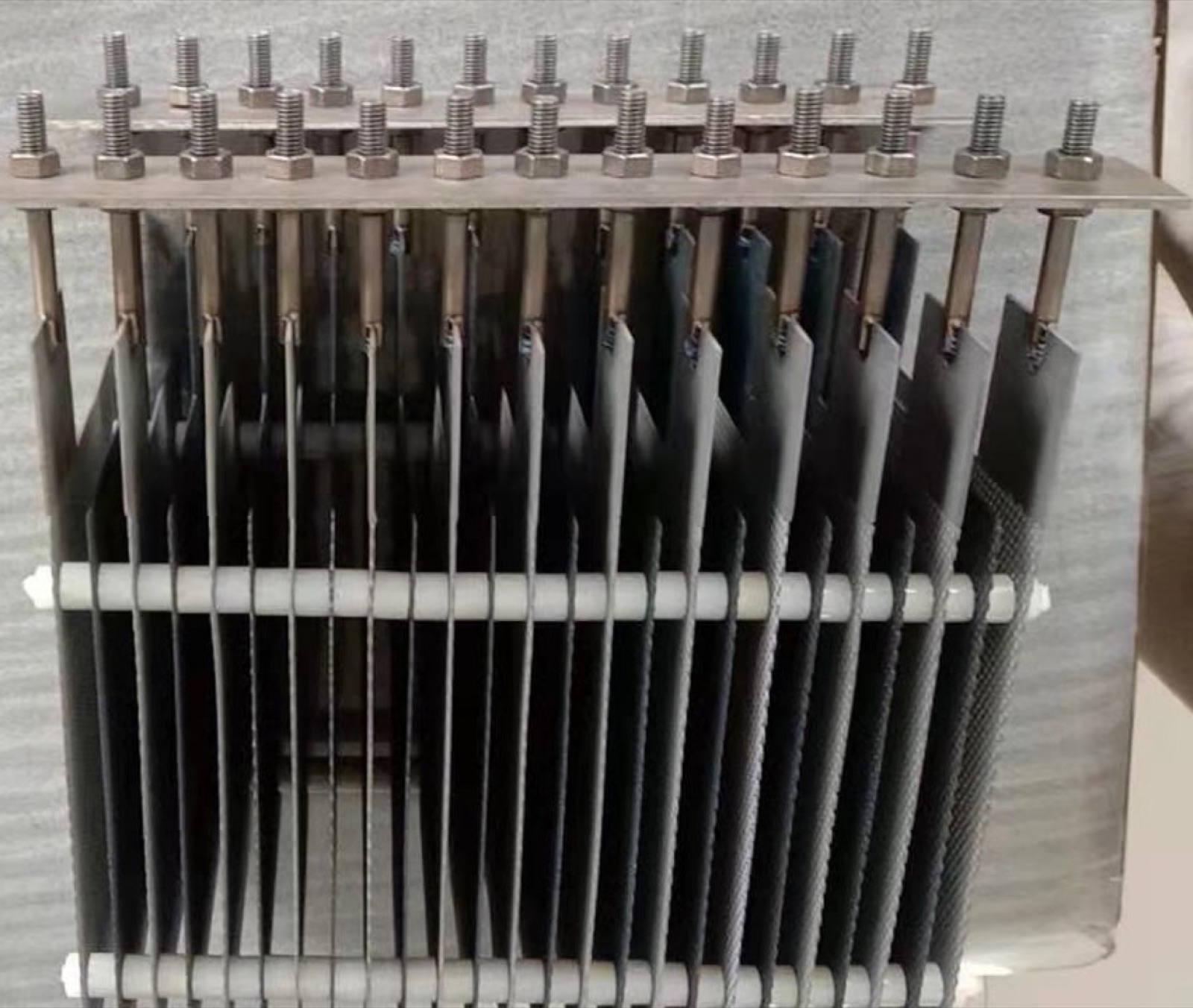
Titanium anode company pages that met the rule
| Company page | Role stated on its site | Coatings and forms its page names | Selection inputs its page publishes |
|---|---|---|---|
| Hele Titanium | Factory-direct titanium-anode manufacturer | Ru-Ir, Ir-Ta, platinum, PbO2 and project-specific coatings; mesh, plate, tube, rod, ribbon, wire, basket, disc and drawing-based assemblies | Electrolyte, target reaction, current density, voltage, temperature, pH, geometry, connection and service-life target |
| Optimum Anode Technologies | Manufacturer of anodes for trivalent-chrome plating; the result is carried on Titan Metal Finishing | IrOxide TCA coating on commercially pure titanium; application-sized fabricated anodes rather than a published general size range | Electrical and mechanical needs of the specific plating application |
| Stanford Advanced Materials | Its anode hub states that it manufactures and supplies anodes | Platinum on Grade 1 or Grade 2 titanium; rod, wire, mesh or sheet are named in two different tables | Platinum thickness, substrate thickness, width, mesh dimensions, substrate grade and listed standards |
The label not stated means that the reviewed page leaves the field open. For example, the Optimum page does not publish a general size envelope, so the table says application-sized instead of filling the gap from a directory or another supplier’s page.
Where the published specification fields need clarification
A buyer has to identify the titanium grade, physical product form and purchase specification that will appear on the order and the material document. The reviewed pages leave different parts of that route open:
| Company page | Substrate grade/form wording on the reviewed page | Product standard wording | Clarification to request |
|---|---|---|---|
| Hele Titanium | Mesh, plate, tube, rod, ribbon, wire, basket and disc are named; no single substrate grade is assigned to all of them | No substrate product standard stated | Grade and standard for the ordered mesh, plate, tube or other form |
| Optimum Anode Technologies | Commercially pure titanium fabricated to the application size | No substrate product standard stated | Commercially pure grade, product form and governing standard |
| Stanford Advanced Materials | The upper table says Grade 1/2 with rod, wire or mesh; the detailed table says Grade 1 with mesh, wire or sheet | ASTM B265, ASTM F67 and ASTM F136 are listed together | Which one grade, form and purchase specification will govern the supplied substrate |
The Stanford list needs a form-and-grade check. ASTM B265 covers plate, sheet and strip. ASTM F67 covers unalloyed titanium for surgical-implant applications, while ASTM F136 covers wrought Ti-6Al-4V ELI for surgical implants rather than Grade 1 commercially pure titanium.
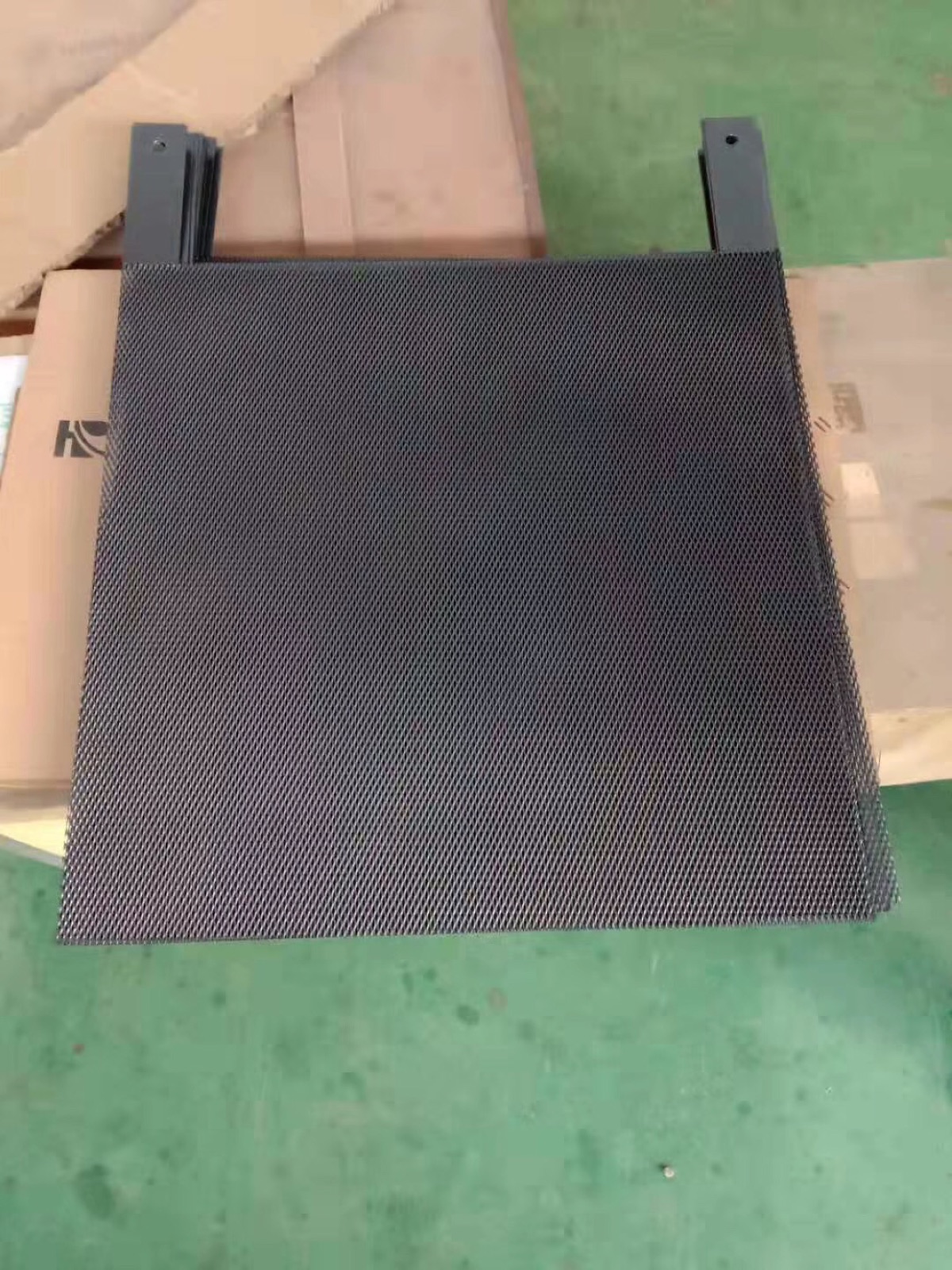
A numeric coating envelope outside the list
The table above uses only the three companies’ pages. We keep Beiyu’s figures outside the list and use them here to show the numeric fields that make an anode quotation testable:
| Beiyu coating family | Published current-density envelope | Temperature | Coating or loading field |
|---|---|---|---|
| Ruthenium based, chlorine evolution | Below 2000 A/m² | State the duty temperature | 5 to 20 µm and 5 to 20 g/m²; hydrochloric service below 20% |
| Iridium based, oxygen evolution | Below 2000 A/m² | Below 70 °C | 10 to 45 g/m² |
| Platinum plated | Below 4000 A/m² | Below 80 °C | 0.5 to 10 µm |
These figures apply to the stated Beiyu supply envelope and do not score the companies above. A membrane chlor-alkali cell, a plating bath and a cathodic-protection groundbed use different operating points; the cell designer’s current density and electrolyte control the selection.
Fields to send before comparing quotations
| RFQ field | Why it changes the anode | What to ask the supplier to return |
|---|---|---|
| Target reaction and application | Chlorine evolution, oxygen evolution and plating duty use different catalytic systems | Proposed coating family and the stated basis |
| Electrolyte, concentration, pH and temperature | The same coating name does not carry one envelope across every bath | Compatibility statement tied to the supplied operating window |
| Current density and active area | These set current output and coating demand | Rated current at the agreed active area |
| Titanium grade and product form | Mesh, plate, tube and rod need the product specification that covers the ordered substrate | Grade, governing substrate standard and material-document scope |
| Coating thickness or precious-metal loading | A coating family name alone does not make two quotations comparable | The measurable coating field, unit and inspection basis |
| Drawing, connection and uncoated zones | Tabs, cable joints, welds and masked areas control installation and current distribution | Approved drawing with active and inactive areas marked |
| Design-life target and inspection | Life claims depend on the operating window and acceptance method | Inspection records and any life basis agreed for that order |
Limits of a public-page comparison
A public product page cannot prove available production capacity, current lead time, coating uniformity on a future order or performance in an electrolyte the page did not test. Supplier-published service-life figures are therefore not used to order the list. A buyer can use the table to identify which questions a page already answers, then compare the returned drawings, coating fields and inspection scope on equal terms.
Where Beiyu Titanium sits
Beiyu Titanium published this comparison and is deliberately outside the list. Beiyu supplies industrial coated titanium anodes in plate, rod, sheet, wire, mesh, tube, ring, strip and basket forms. Quotations are built from the application, electrolyte, current density, temperature, active area, coating family, substrate grade, drawing, precious-metal field and requested inspection/document scope; the numeric table above states the current Beiyu envelope rather than implying that one coating fits every cell.
Specification detail with sources
We took company roles, coating families, forms and selection inputs only from the three linked company pages, checked 2026-08-29. The standards distinction uses the published scopes of ASTM B265 for titanium plate, sheet and strip, ASTM F67 for unalloyed titanium in surgical-implant applications and ASTM F136 for wrought Ti-6Al-4V ELI in surgical implants. Beiyu’s coating-envelope figures come from its anode supply range and apply only within the stated duty and order confirmation.
Related pages
- Titanium anodes by coating family and form
- MMO coated titanium anode guide
- Titanium in chlor-alkali cells
- Titanium anode basket material grades
Published by Beiyu Titanium. Beiyu Titanium is the publisher of this page and is not included in the list or ranked against the companies in it. The order follows the Google result sequence after the stated exclusions; it is not a recommendation.