
A forged ring and a rolled ring arrive at the same shape by different routes, and in industry practice the choice follows the ring’s proportions rather than a preference for one process. Open-die forging suits thick, small-bore rings; ring rolling suits thin-walled rings of large diameter. What Beiyu Titanium publishes is the supply envelope, not a route: which route a given ring takes is confirmed against the drawing at quotation.
What the two routes actually do differently
Open-die forging works a billet down between flat or shaped dies and pierces it, so the wall stays heavy relative to the bore. Ring rolling takes a pierced preform and reduces the wall between a driven roll and a mandrel while the diameter grows, which is how a large, thin ring is produced without an enormous starting billet. The grain follows the deformation in both cases, but a rolled ring carries circumferential flow around the full circumference, which is the property most ring drawings are actually specifying when they call for a forged ring rather than a cut-from-plate one.
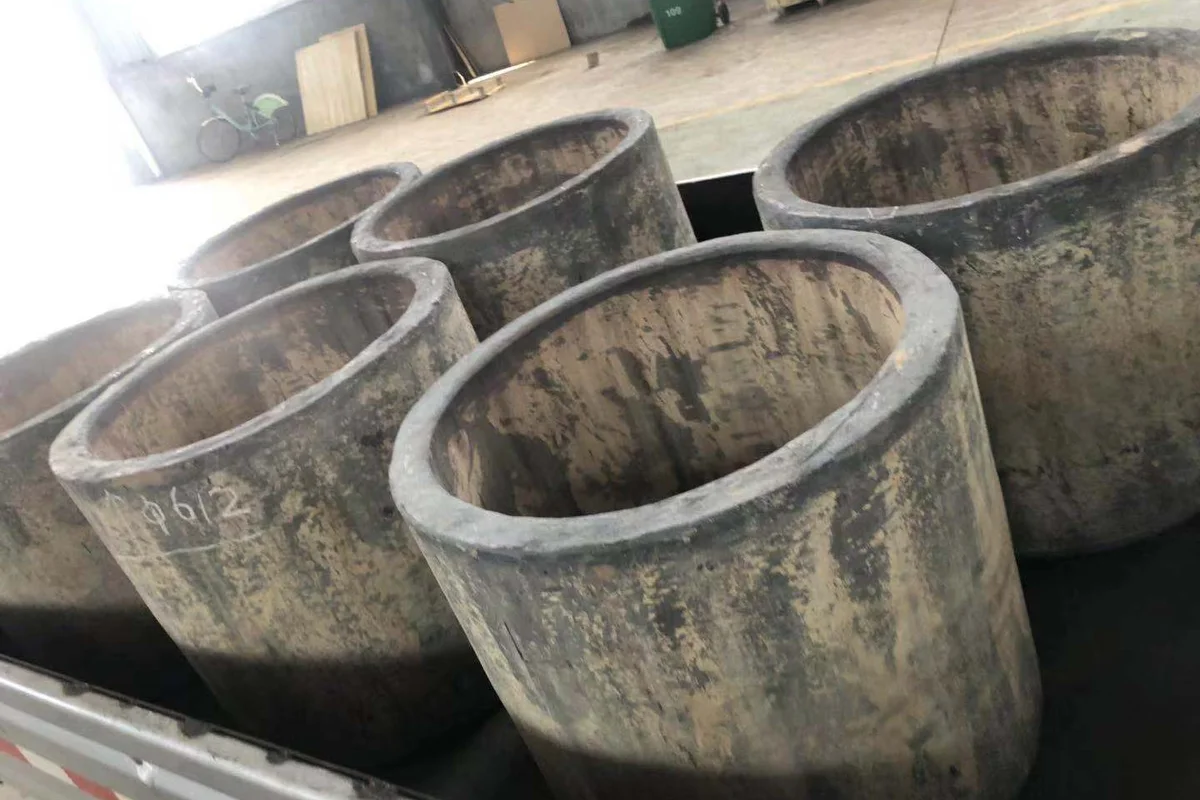
The forged shape envelope, and what it implies for ring route
Beiyu Titanium supplies titanium forgings in four shape families, and the ring row is the one that decides the route question:
| Shape | Supply range |
|---|---|
| Ring | Outside diameter 50 to 2000 mm, inside diameter 10 to 900 mm, height 20 to 400 mm |
| Disc | Outside diameter 50 to 2000 mm, thickness 20 to 500 mm |
| Forged round bar | Ø50 to 500 mm, length to 3000 mm |
| Block | 50 to 600 mm |
The two ring diameters work as a pair. An outside diameter near the top of the range with an inside diameter near the bottom is a heavy-wall part that belongs to the open-die route; an outside diameter in the same region with a bore in the upper half of its range is a thin-wall ring and belongs to ring rolling. A drawing that gives only outside diameter and height has not yet said which one it is.
The three numbers a ring drawing has to carry
Outside diameter, inside diameter and height are not interchangeable with an outside diameter plus a wall thickness, because the wall is derived and the bore is machined. Quoting from a derived figure is where tolerance disputes start.
| Field | What it settles |
|---|---|
| Outside diameter | Whether the ring is inside the 50 to 2000 mm range at all |
| Inside diameter | Wall thickness, and with it the forging route |
| Height | Whether one ring is forged or several are cut from a taller sleeve |
| Machining allowance | Whether the figures given are finished or as forged |
| Delivery condition | R or M as supplied, stated on the order |
| Grade with UNS number | Decides the specification the certificate reports against |
Machining allowance is the line that disappears most quietly. As forged and finished are two different drawings. A ring quoted against finished dimensions with no allowance stated gets forged to the wrong stock.
Which specification the order names
Titanium forgings are quoted against ASTM B381 with its ASME SB381 adoption. Where the part is an implant component, ASTM F67 and ASTM F136 apply instead, with ISO 5832-2 and ISO 5832-3 as the international equivalents. Aerospace forging work is ordered against AMS 4928, AMS 4967, AMS 4965, AMS 4981, AMS 6931 or AMS-T-9047 as the drawing names. The grades supplied across these routes are Grades 1 to 7, 9, 11, 12, 16, 17 and 23, plus Ti-6242, Ti-6246 and Ti-15333.
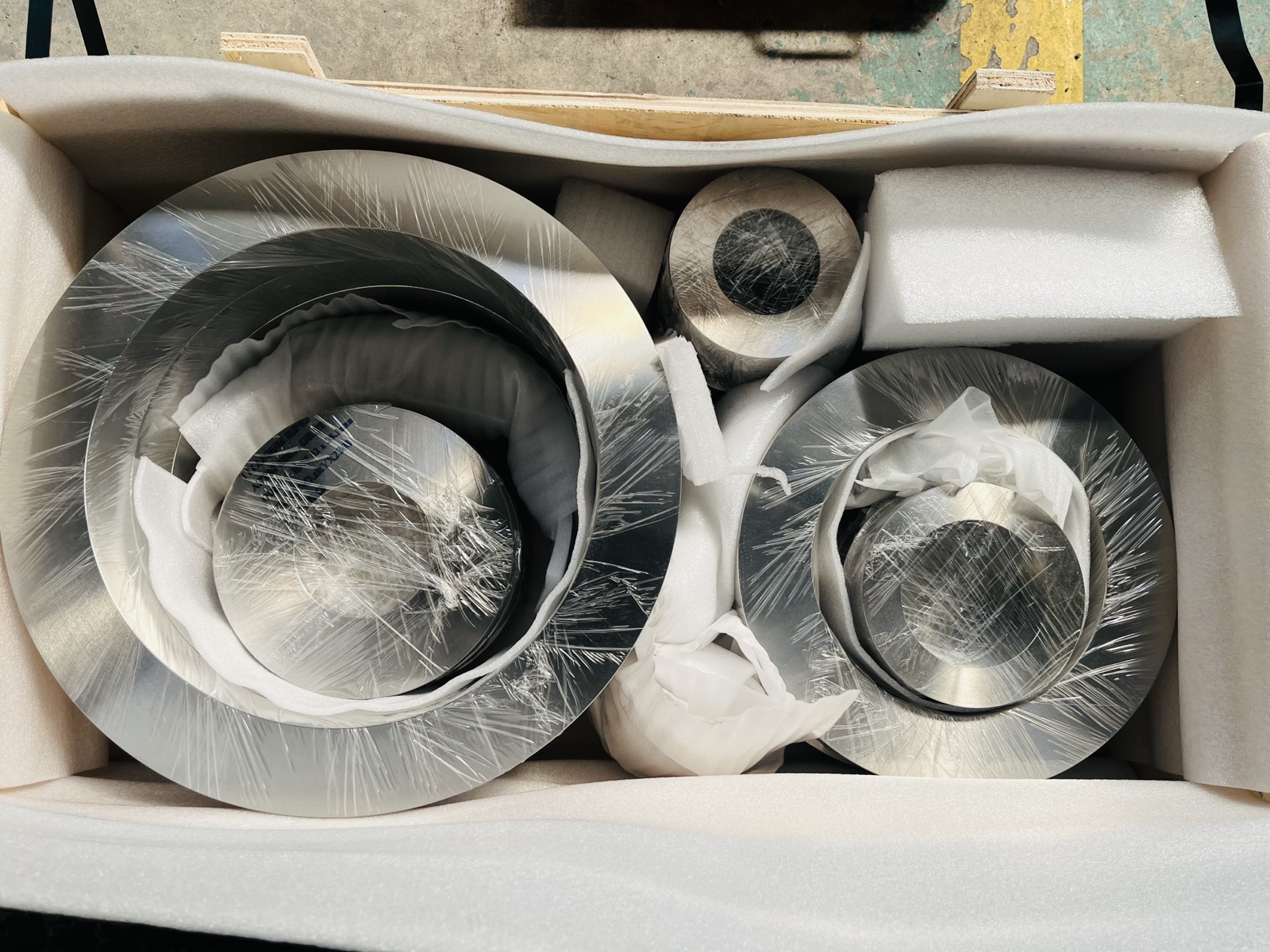
When a ring should not be a forging at all
Two cases send the enquiry elsewhere, and saying which of the three routes the part is on removes a round of clarification:
| Situation | Route | What governs the size |
|---|---|---|
| Outside diameter below the forged ring range | Machined from forged round bar | Bar range, Ø50 to 500 mm |
| Ring is essentially a flange | Flange route | The dimensional standard, not the forging envelope |
| Heavy wall, bore small relative to outside diameter | Stays inside the forged ring row | Ring row of the forged envelope |
| Thin wall, large diameter | Stays inside the forged ring row; route confirmed at quotation | Ring row of the forged envelope |
Specification detail with sources
The shape envelope on this page comes from the Beiyu Titanium forged product supply range, which lists rings at outside diameter 50 to 2000 mm with inside diameter 10 to 900 mm and height 20 to 400 mm, discs at outside diameter 50 to 2000 mm with thickness 20 to 500 mm, forged round bar at Ø50 to 500 mm in lengths to 3000 mm, and blocks at 50 to 600 mm. Those ranges are quoted at family level and do not mean every grade is available at every point in every shape; the ordered combination is confirmed at quotation.
The specifications named alongside that range are ASME SB381 and ASTM B381, ASTM F67 and F136, ISO 5832-2 and 5832-3, and AMS 4928, AMS 4981, AMS 4967, AMS 4965, AMS 6931 and AMS-T-9047. The supply range names them for forged product as a group rather than one specification per shape, so this page does not pair a standard with a ring or with a disc; that pairing comes from the order. Delivery condition is stated as R or M, the forging route is hot forging and the supplied surface is machined bright. Certification is EN 10204 3.1, carrying the heat number through to whatever the order asks the report to cover.