
Niobium and tantalum sit next to each other on the periodic table and behave like close cousins: both are refractory metals, both form stable passive oxide films, and both are selected for acid service where stainless steel or titanium may not be suitable. Engineers usually compare them when the corrosion environment is severe and the purchase decision must balance resistance, weight and cost. The question is rarely just “can it handle this?” it is “do I need tantalum, or will the lighter, lower-cost niobium do the job?”
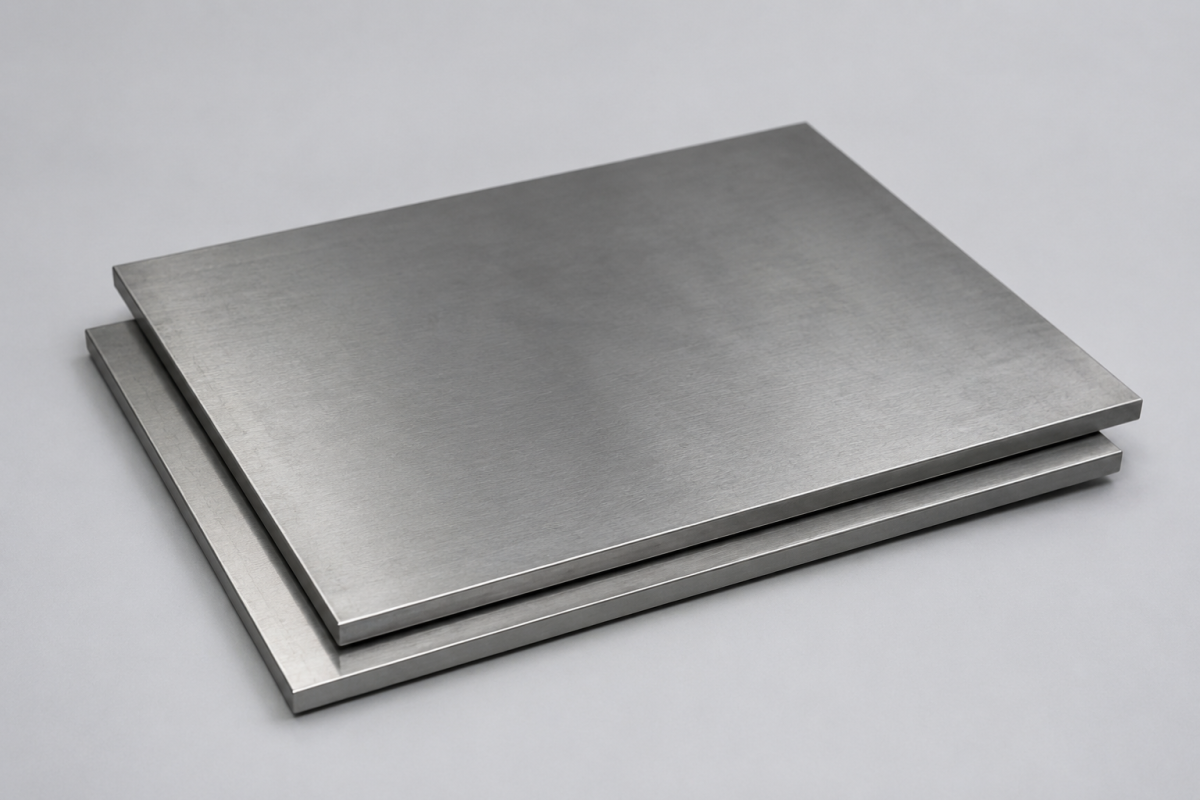
The headline differences
| Property | Niobium (Nb) | Tantalum (Ta) |
|---|---|---|
| Density | 8.57 g/cm³ | 16.69 g/cm³ (~2× Nb) |
| Melting point | 2,468 ° C | 2,996 ° C |
| Relative cost | Lower | Much higher |
| Hot-acid corrosion resistance | Very good in selected acid service | Extremely strong in many severe acid environments |
| Common standard (tube) | ASTM B394 | ASTM B521 |
Tantalum is one of the strongest engineering metals for severe acid corrosion service, including many hydrochloric, sulphuric, nitric and organic acid environments. Niobium can resist many of the same media, but its safe operating envelope in the hottest and most concentrated reducing acids is narrower. The trade you are making is corrosion margin vs. Weight and cost.
When niobium is the right call
| When niobium fits | What the guide states |
|---|---|
| The acid is aggressive but not at tantalum’s extreme | For many dilute or moderate-temperature acid duties, niobium’s resistance is more than enough, at roughly half the density and a fraction of the cost. |
| Weight matters | At 8.57 g/cm³ niobium is about half the weight of tantalum, which helps in large parts and aerospace. |
| Superconductors and electronics | Niobium and its alloys (Nb-Ti, Nb₃ Sn) are the basis of superconducting magnets; niobium is also used in capacitors and sodium-vapour lamps. |
For these, see our niobium pipe and tube (Nb1 / Nb1Zr, ASTM B394) and niobium bar and sheet.
When you need tantalum
| When tantalum fits | What the guide states |
|---|---|
| Boiling, concentrated reducing acids | Hot HCl and concentrated H₂ SO₄ that push niobium (and titanium) to their limit are where tantalum is often the only metal that survives. |
| Thin-wall heat-transfer parts | Tantalum heat exchangers, bayonet heaters and thermowells give long life in media that would eat other metals. |
| Capacitors and implants | Tantalum’s stable oxide and biocompatibility make it a standard for both. |
For these, see tantalum pipe and tube (ASTM B521) and tantalum plate and sheet (ASTM B708).
The tantalum in hot acid service guide carries that selection into a form-by-form size and RFQ map.
What both metals cannot handle
Neither niobium nor tantalum (nor titanium) resists hydrofluoric acid or fluoride-bearing media, fuming (oleum) sulphuric acid / free SO₃, or hot concentrated alkalis: all attack them. Tantalum also absorbs hydrogen and embrittles above ~300 °C, so it is avoided in cathodic or hydrogen-charging service. Always check the exact medium, concentration and temperature against a corrosion chart before selecting.
| Medium neither metal handles | What the guide states |
|---|---|
| Hydrofluoric acid or fluoride-bearing media | Attacks both |
| Fuming (oleum) sulphuric acid or free SO3 | Attacks both |
| Hot concentrated alkalis | Attacks both |
A simple selection rule
Start with niobium. If the medium is hot, concentrated reducing acid, or the part is a thin-wall heat exchanger that must last for years in such service, step up to tantalum and accept the weight and cost. Where titanium is at its corrosion limit but the acid isn’t at tantalum’s extreme, zirconium is also worth comparing.
FAQ
Is niobium just a cheaper tantalum?
Not exactly: it is lighter and cheaper with very good corrosion resistance, but tantalum still wins in the most aggressive hot acids. Choose by the actual medium, not by price alone.
Why is tantalum so much more expensive?
Tantalum is rarer and harder to extract and refine, and its density means more mass per part. Niobium is more abundant and lighter.
Can I clad steel with niobium or tantalum instead of using solid?
Yes. Loose or explosion-bonded tantalum/niobium linings are common for large vessels, giving the corrosion barrier at lower metal cost. Send your geometry with an Send an enquiry.
Do you supply both metals with certificates?
Yes. Niobium and tantalum are supplied to ASTM B394 / B521 / B708 with mill test certificate and EN 10204 3.1 documentation on request.
What the order has to state once the metal is chosen
Choosing between niobium and tantalum settles the material and almost nothing else. Both are bought in small quantities against tight drawings, so the fields that decide acceptance are the ones a general corrosion argument never touches.
| Order field | What it settles | Consequence of leaving it open |
|---|---|---|
| Metal with its UNS number | Which composition limits apply, since both are supplied unalloyed and alloyed | An alloyed variant is quoted against an unalloyed expectation |
| Governing specification | The acceptance basis and the certificate wording | The certificate reports to a table the buyer is not checking |
| Product form with dimensions | Whether sheet, rod, tube or wire requirements apply, read with tolerance | A drawing class arrives without the size band it is read against |
| Delivery condition | The metallurgical state as delivered | The condition is set by the mill default |
| Surface condition | The finish, stated apart from the condition | Two fields are answered as one |
| Reports required | The reporting scope on the certificate | A compliant document still answers less than incoming inspection expects |
The pattern is not specific to refractory metals. The bar and billet specification ASTM B348 lists surface condition, marking, packing, the reports required and the disposition of rejected material among the items a titanium order is expected to carry (ASTM B348, ordering information), and the same fields go unanswered on a niobium or tantalum enquiry for the same reason: they belong to the order rather than to the metal.
For a view of who else publishes this material and what each one states, see Niobium Bar Suppliers: Five Company Pages Compared.
Specification detail with sources
ASM melting-point data set the temperature side of the frame this comparison runs on: niobium melts at 2468 degrees C against tantalum at 2996 degrees C. The densities this site uses for them are 8.57 and 16.69 g/cm3 respectively. The ASTM product standards split the two metals just as cleanly, B394 for niobium tube against B521 for tantalum tube and B708 for tantalum plate, a separate specification family from the titanium standards, which is the paperwork reminder that a refractory-metal order is a different supply chain, not a higher titanium grade.
| Property | Niobium | Tantalum |
|---|---|---|
| Density | 8.57 g/cm3 | 16.69 g/cm3 |
Beiyu Titanium’s own mill range is titanium and nickel alloy, and Beiyu’s first-party contribution to this choice is the envelope to exhaust before pricing a refractory metal: for reducing-acid duty short of tantalum’s extreme, Beiyu supplies Grade 7 (UNS R52400) and Grade 12 (UNS R53400) titanium in bar, plate and tube. Beyond titanium’s corrosion limit, Beiyu supplies Hastelloy C-276 and C-22 seamless tube to ASTM B622 from 5 to 325 mm OD in 0.5 to 12 mm walls, and in Beiyu’s RFQ reviews over 15 years of export work, enquiries that arrive specifying tantalum regularly resolve to one of those two cheaper families once the actual acid concentration and temperature are on the table.
Send a technical RFQ
For niobium or tantalum RFQs, include material form, grade or purity, corrosion medium, dimensions, tolerance, quantity and certificate requirement.