
Explosive cladding bonds a titanium layer to a structural backing so that one plate does two jobs: the titanium meets the process fluid, and the backing carries the pressure. That split is also where most clad enquiries go wrong, because a single thickness figure on a drawing does not say which of the two layers it belongs to.
What a clad plate is, and why one thickness number is never enough
A clad plate is not an alloy and not a coating. It is two metals metallurgically bonded across their full area, and each one is ordered against its own thickness, its own material specification and its own acceptance. Beiyu Titanium supplies clad product made by explosive cladding and hot extrusion, delivered machined bright, in titanium clad steel, stainless clad steel, nickel and nickel alloy clad steel, copper clad steel, and zirconium, tantalum and niobium clads.
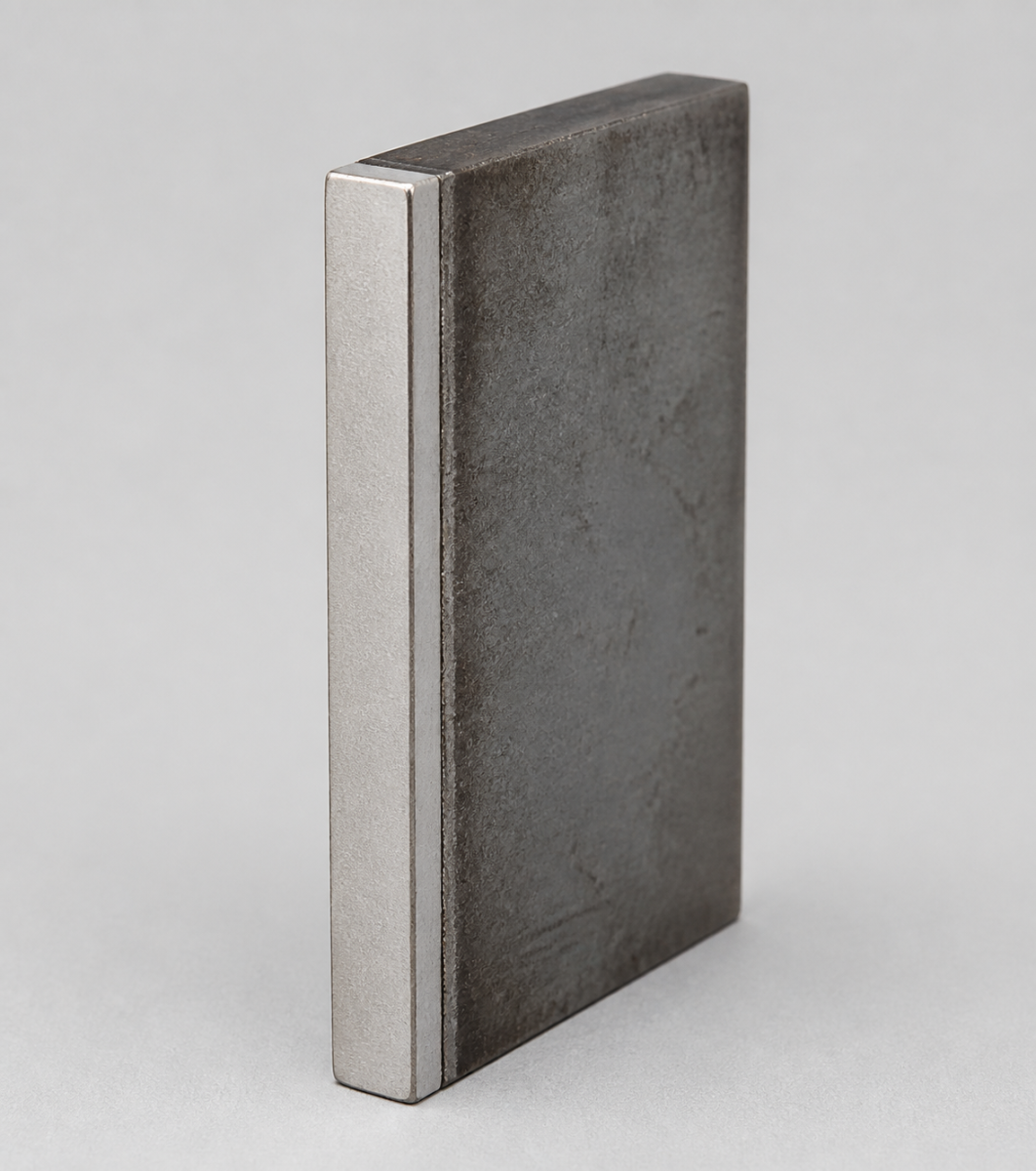
Because the two layers are separate order lines, a single thickness inside the band where the two printed rows overlap does not identify itself. A drawing calling for “20 mm clad plate” sits inside both rows as printed, and the two readings are different products at different cost. The fix is not a rule of thumb; it is naming the layer beside the number.
The two thickness rows, exactly as the supply range prints them
The Beiyu Titanium supply range lists clad plate as two separate rows rather than one combined thickness, and the rows are reproduced here without being merged or reinterpreted:
| Row as printed | Thickness | Width and length |
|---|---|---|
| Based metals | 1 to 30 mm | Under 5000 mm wide, under 15000 mm long |
| Clad metals | 7 to 300 mm | Under 5000 mm wide, under 15000 mm long |
Two things follow from that table, and both belong on the enquiry. First, the width and length limits are shared, so plan area is a single constraint while thickness is not. Second, an order has to state which row it is quoting against, because the two ranges overlap between 7 and 30 mm and a figure inside that band does not identify itself. Beiyu Titanium reads the pairing off the drawing rather than assuming one, because assuming it is how a plate gets bonded to the wrong face thickness.
Clad bar, rod and wire
The same bonding route is supplied in bar form, and the section decides the range. Beiyu Titanium supplies titanium copper clad bar, stainless copper bar and nickel copper bar in the sections below, all under 6000 mm long.
| Section | Range |
|---|---|
| Based metal thickness | 1 to 3 mm |
| Rectangle | 20 to 150 mm wide by 6 to 30 mm thick |
| Square | 10 to 30 mm |
| Round rod | 8 to 50 mm diameter |
| Wire | 2.0 to 8.0 mm |
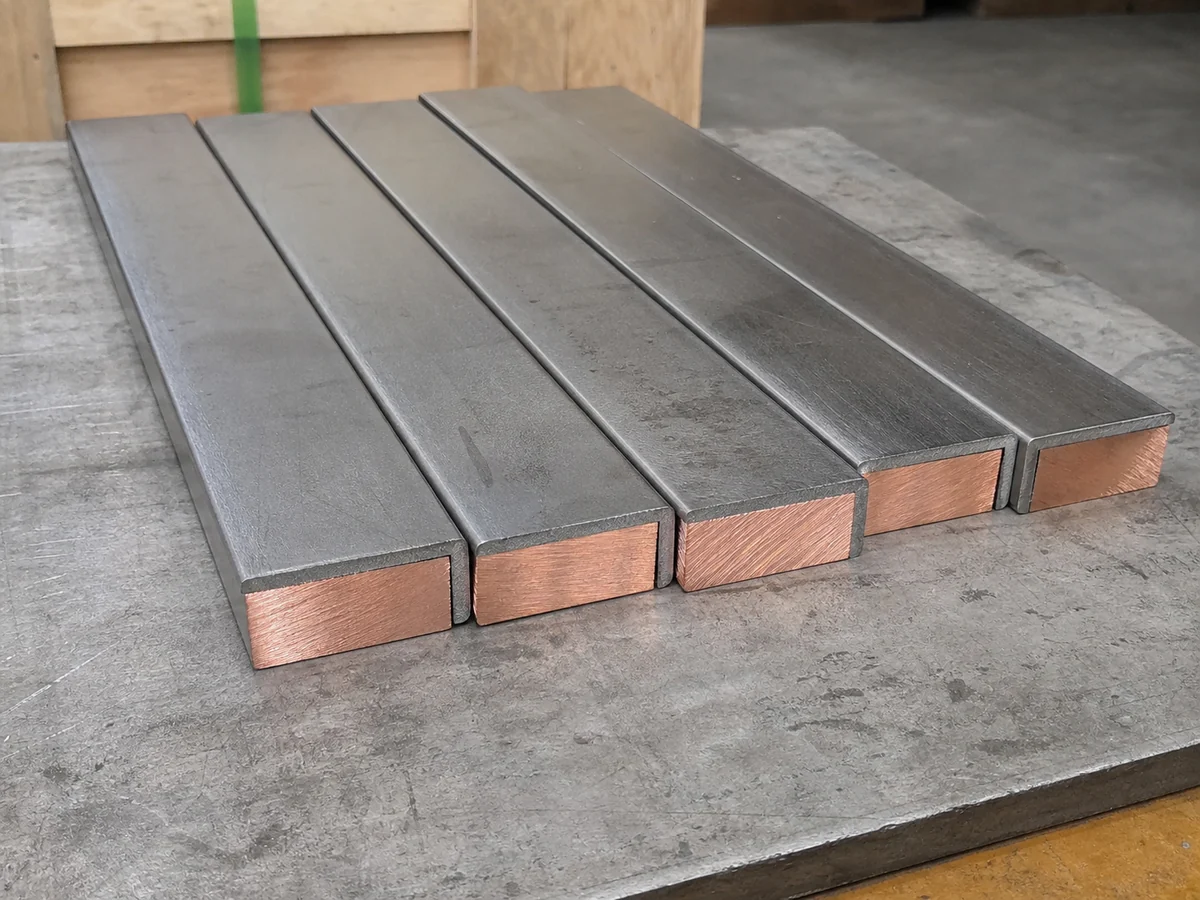
Clad bar is bought for a different reason than clad plate. Plate is bought to separate a corrosive process from a pressure boundary; titanium clad copper bar is bought where a conductor has to survive the electrolyte around it, which is why it appears in electrolysis and plating hardware rather than in vessel shells.
The standards a clad order is written against
Clad product carries a different documentation set from mill product, because the bond is an acceptance in its own right. The specifications named against Beiyu Titanium clad supply are ASTM B898 and its ASME adoption SB-898, ASME SA-265, ASME SA-263 and SA-264, and GB/T 12769. An order names which of these governs, and that choice follows the vessel code the fabricator is building to rather than the material alone.
What a clad plate enquiry has to state
These are the fields that let a clad enquiry be quoted in one pass instead of three:
| Field | Why it decides the quotation |
|---|---|
| Which layer each thickness refers to | The two printed rows overlap between 7 and 30 mm |
| Backing material and its specification | Steel grade is an order line of its own, not implied by the titanium grade |
| Titanium grade with its UNS number | Decides the corrosion side of the plate |
| Plate plan size | Width and length share one envelope regardless of thickness |
| Governing clad specification | ASTM B898 / ASME SB-898, ASME SA-265, ASME SA-263 and SA-264, or GB/T 12769 |
| Bond acceptance and inspection scope | The bond is examined separately from either parent metal |
| Edge preparation and forming intent | Whether the plate is dished, rolled or welded changes the edge treatment |
Clad plate and clad ingot are made to the buyer’s requirement rather than to a stock size, so the ranges above are the commonly supplied envelope and not a statement that every combination is held. The exact layer combination is confirmed against the drawing at quotation.
Specification detail with sources
Every dimension on this page comes from the Beiyu Titanium clad supply range and is quoted at the level that range states it. Plate is listed in two rows, based metals at 1 to 30 mm and clad metals at 7 to 300 mm, both under 5000 mm wide and under 15000 mm long; bar is listed with based metal at 1 to 3 mm, rectangle 20 to 150 mm by 6 to 30 mm, square 10 to 30 mm, rod 8 to 50 mm diameter and wire 2.0 to 8.0 mm, under 6000 mm long. The specifications named alongside them are ASTM B898 and its ASME adoption SB-898, ASME SA-265, ASME SA-263 and SA-264, and GB/T 12769.
One limit is worth stating plainly rather than smoothing over. The supply range prints the two plate rows under the labels reproduced above and does not say which layer a given order should place in which row, so this page does not decide it either. That is a drawing question, and an enquiry that names the layer beside each thickness removes the only genuine ambiguity in a clad plate order. Certification follows the same split as the product: the bond is recorded on its own, alongside the EN 10204 3.1 documents covering each parent metal.