
Product Details
Titanium Clad Steel Plates
Review grade, standard, size, surface, inspection and packing details before quotation.
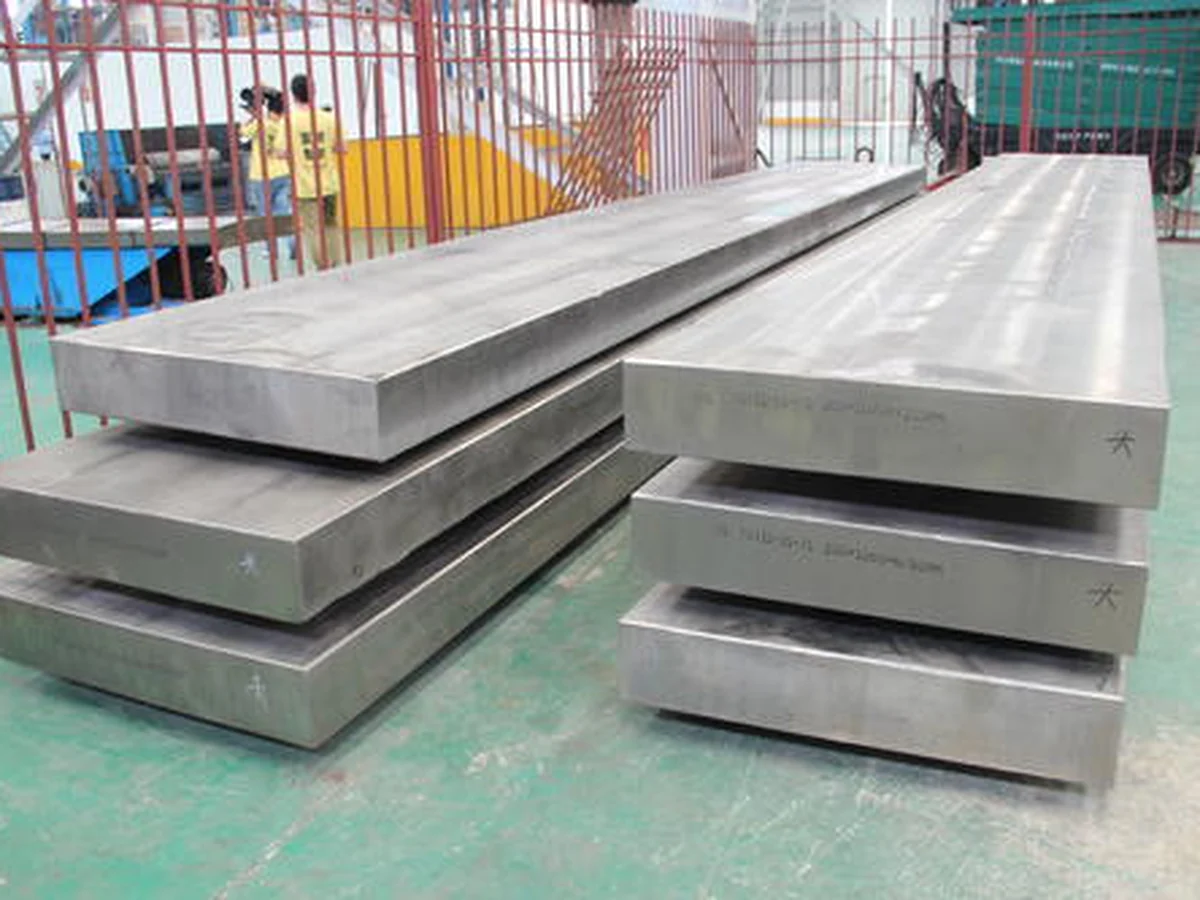
Titanium Clad Steel Plates
Titanium clad steel plate for vessels, tube sheets, transition parts and corrosion-service equipment where titanium corrosion resistance is combined with steel structural support. Quote by titanium grade, steel grade, cladding thickness, plate size, drawing and inspection scope.
- DocumentsMTC and EN 10204 3.1 on request
- TraceabilityHeat number and inspection scope confirmed
- RFQ detailsGrade, standard, size, tolerance, quantity
- PackingExport protection by product form and length
Product Introduction
Titanium clad steel plate / project bonding specificationApplicable standard or RFQ reference
Steel base grade, titanium grade, clad thickness, plate dimensions and testing scopeCore information needed for quotation
Base thickness, titanium layer, width, length, flatness and toleranceDimensional review before production
MTC / EN 10204 3.1Traceability documents when required
Acceptance is by the ordered specification. Final grade, chemistry, dimensions, inspection and documentation are confirmed by the purchase specification and mill test certificate.
Titanium Clad Steel Plate for Vessels and Equipment Parts
Titanium clad steel plate is selected when titanium is needed on the process side and steel is needed as the structural backing material. It is used in corrosion-service vessels, tube sheets, transition sections, reactor parts and chemical equipment components where a full titanium plate may not match the project design or cost target.
Each order should be reviewed against the drawing and inspection requirement. Important details include steel base grade, titanium grade, titanium layer thickness, total thickness, plate size, bonding method, edge preparation and any forming or welding steps after delivery.
Specification Items
| Cladding metal | Grade 1, Grade 2, Grade 7, Grade 12 or project-specified titanium. |
|---|---|
| Base plate | Carbon steel, stainless steel or project-specified steel grade. |
| Thickness | Total thickness, steel base thickness and titanium layer thickness should be stated separately. |
| Testing | Bonding inspection, ultrasonic testing, shear test, bend test, dimensional report or other tests when required by the specification. |
| Export documents | MTC, EN 10204 3.1 certificate, heat traceability and packing list by plate number when required. |
How is the titanium-to-steel bond verified?
Clad plate ordered to ASTM B898 is accepted on bond integrity, not on appearance. The standard requires a minimum shear strength of 140 MPa (20 ksi) between the titanium cladding and the steel base, and the bond area is examined ultrasonically to the coverage and acceptance class agreed on the purchase specification. A bend test can be added when the plate will be formed after delivery.
The RFQ should therefore state three things next to the plate sizes: the shear test requirement, the UT coverage (full scan or grid) with its acceptance class, and any forming or welding planned after delivery, because post-processing affects which bond tests make sense.
How thick should the titanium layer be?
The titanium layer works as the corrosion barrier while the steel base carries the structural and pressure load, so the two thicknesses are specified separately and should never be merged into one total on the RFQ. Vessel and tube-sheet projects commonly specify a titanium layer in the range of 1.5 to 3 mm on a carbon-steel base sized by the design code. Treat that as a typical planning range only: the project drawing and design calculation govern, and thicker cladding is quoted where wear, weld-overlay at nozzles or repeated re-rolling is expected.
Applications
- Chemical reactor and vessel lining plates
- Steel-backed titanium tube sheets
- Heat exchanger and evaporator components
- Transition plates and corrosion-service fabrication parts
FAQ
Is titanium clad steel plate quoted from stock size or drawing?
Most projects should be quoted from a drawing or plate schedule because grade, thickness, bonding test and final fabrication route affect the quotation.
Can inspection documents be supplied?
Documents can be prepared according to the purchase specification, such as material certificate, bonding inspection, dimensional report and EN 10204 3.1 certificate when required.
Common applications
Review export and fabrication support22
Ti
Titanium
47.867 u
4.51 g/cm3
Titanium clad steel plate / project bonding specification
4.51 g/cm3
Titanium clad steel plate / project bonding specification
Large chemical vesselsConfirm grade, size, tolerance, surface, inspection and certificate scope before quotation.Corrosion-resistant steel-backed platesConfirm grade, size, tolerance, surface, inspection and certificate scope before quotation.Heat exchanger and reactor partsConfirm grade, size, tolerance, surface, inspection and certificate scope before quotation.Cost-sensitive titanium-lined equipmentConfirm grade, size, tolerance, surface, inspection and certificate scope before quotation.
Compare related titanium products
Clad TitaniumProduct
Reference
RFQ focus
Titanium Clad Plates
Project bonding spec
Corrosion lining plate
>
Titanium Clad Steel Plates
Steel-backed Ti plate
Large equipment plate
Titanium Clad Copper Bar
Conductive composite
Busbar and connector work
>
Titanium Cathode Plate
Grade 1 / 2
Electrochemical plate
>
Related RFQ pages
Clad TitaniumSpecification detail with sources
The Beiyu Titanium supply ranges carry clad plate in more combinations than titanium on steel: titanium clad steel, stainless steel clad steel, nickel and nickel alloy clad steel, copper clad steel, and zirconium, tantalum and niobium clads. What they do not carry is a published thickness range, because the layer thicknesses are set per order from the service conditions rather than offered as stock sizes.
The documents listed against clad plate include ASME SA263, SA264 and SA265 together with GB/T 12769. They are listed for the entry as a whole rather than against a particular material pair, so this page does not assign one of them to titanium on steel specifically; which applies follows the pair and the buyer's design documents. Naming the pair is therefore the first field of a clad plate enquiry, ahead of any dimension, since the pair is what decides both the document and the bond testing that goes with it.
For a view of who else publishes this material and what each one states, see Titanium Clad Steel Plate Suppliers: Five Company Pages Compared.
Request a quote for Titanium Clad Steel Plates
Send grade, standard, size, condition, quantity and certificate requirements. Beiyu replies with quotation, lead time and documentation scope.